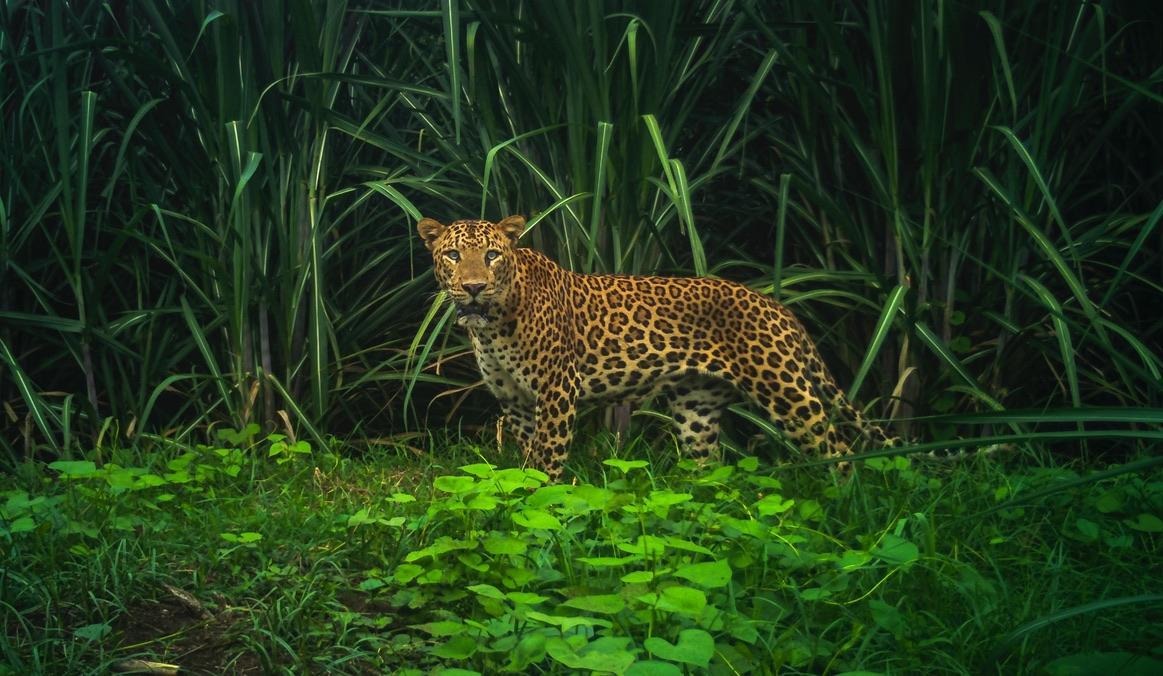
Feature image: Leopard moving through sugarcane fields. Photo credit: Navaz Dahya, Vansda, 2025
Leopards, known for their adaptability among large carnivores, have long coexisted with human communities across Asia and Africa. In India, they are found in almost every state, inhabiting forests, rugged hills, semi-urban areas, and farms. This high adaptability distinguishes them from other big cats such as lions and tigers, which need significant, undisturbed habitats. Leopards have learned to thrive in diverse environments, including sugarcane fields, tea estates, orchards, and city outskirts. For generations, rural people saw leopards as an integral, sometimes feared, part of their environment. Encountering a leopard or its pugmarks was not always a sign of danger; it was simply part of life in landscapes shared by humans and wildlife.
Over the past two decades, technological advancements have significantly altered the way humans and leopards coexist. The widespread use of surveillance devices, such as camera traps, CCTV, and smartphones, along with the extensive reach of social media, has altered the way wildlife encounters are perceived and understood. A leopard seen crossing a road, resting, or drinking water can now be instantly photographed, uploaded, and shared. What might have gone unnoticed once can now go viral, often with sensational headlines and alarmist comments. This evolving perception has transformed the image of the leopard from a silent neighbour to a potential threat, marking a shift from coexistence to conflict in many areas.
Shared landscapes
Leopards have historically shown remarkable resilience and adaptability. Their ability to survive in fragmented habitats and areas heavily altered by humans is largely thanks to their stealth, nocturnal habits, and highly versatile diet. Unlike tigers, which primarily depend on wild ungulates and dense forests, leopards can survive on smaller prey and quickly adapt to available food sources, such as livestock, feral dogs, and pigs, where wild prey is limited. This opportunistic feeding behaviour allows them to thrive in environments that are unsuitable for many other large carnivores.
Invisibility plays a crucial role in maintaining coexistence. Leopards are often called “the ghosts of the forest” because they can remain unseen even near human settlements. For centuries, rural villagers were aware of their presence through indirect signs, such as tracks, scat, or occasional livestock kills, but seldom saw the animals directly. This invisibility created a psychological buffer, encouraging tolerance. People considered leopards as part of the environment without needing daily reminders of their closeness.
Cultural beliefs have historically fostered coexistence. In many regions of India, leopards feature in folklore, mythology, and local religious stories. Some communities view them as incarnations of local deities or guardians of sacred groves. This cultural acceptance reduced fear, enabling humans and leopards to coexist peacefully without ongoing conflict.
Increasing visibility
Camera traps, introduced in the 1990s, transformed wildlife research by offering ecologists unprecedented insights into elusive species, including their movement, population, and behavioural patterns. Created for scientific purposes, these devices have now spread beyond research, complemented by the rapid growth of CCTV networks in urban and rural areas. Although these technologies have enhanced our understanding and management of wildlife, they have also diminished the invisibility that once allowed for peaceful coexistence.
In the digital age, visibility often signals threat. A leopard spotted on camera is no longer just a sign of biodiversity; it is frequently viewed as a security risk. Each new sighting or video can potentially cause panic, especially when shared widely on social media. News outlets often sensationalise these events, showing dramatic footage with alarming headlines. This creates a cycle of fear: greater visibility leads to more anxiety, prompting public demands for authorities to capture or eliminate the animals. Over time, this reduces acceptance and increases hostility, even among communities that have coexisted peacefully with leopards for generations.
Examples from across India clearly demonstrate this change. In Mumbai, for example, leopards that live within and near Sanjay Gandhi National Park have coexisted with over two million residents for a long time. Scientific research indicates that these leopards are skilled at avoiding humans and mainly feed on stray dogs. However, with CCTV cameras now present on almost every street and in every compound, every leopard movement is recorded and shared online. Even non-threatening sightings can cause public concern, with residents calling for the immediate capture or relocation of leopards, despite evidence suggesting that translocated leopards often return or cause new conflicts elsewhere.
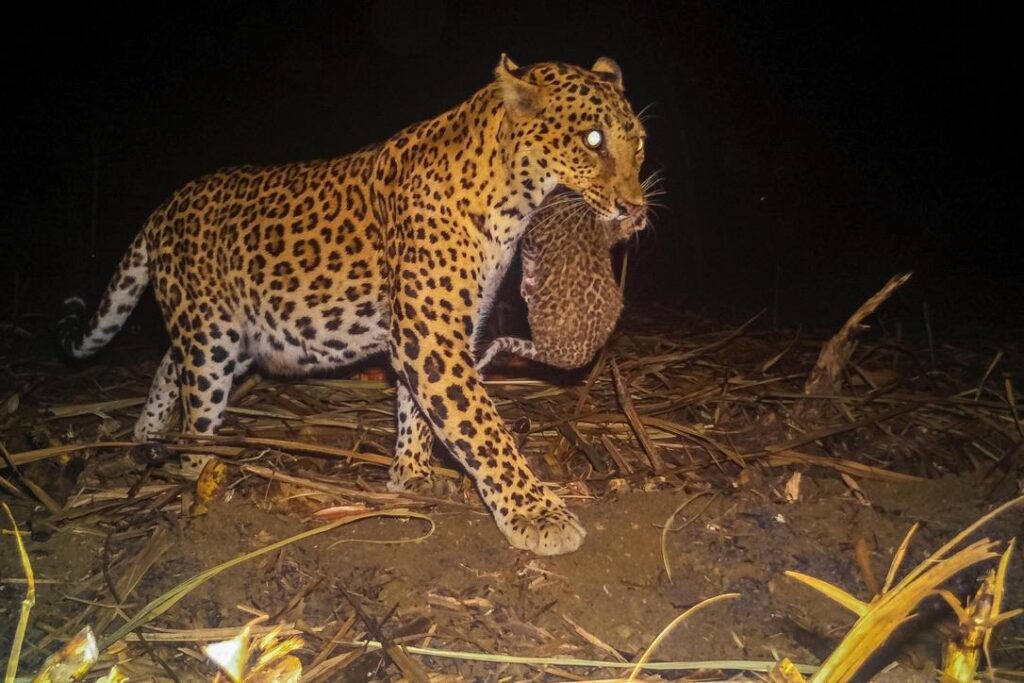
In rural areas of Maharashtra and Gujarat, sugarcane fields have become crucial habitats for leopards. These dense plantations provide shelter for females with cubs and an abundance of prey, including small mammals and dogs. Traditionally, local farmers have accepted this coexistence. However, videos showing leopards emerging from these fields often go viral on social media, where they are seen as threats. Such portrayals stigmatise local communities living near these animals, labelling them as residents of ‘danger zones’ and leading to unnecessary wildlife interventions.
In the hill regions of Uttarakhand and Himachal Pradesh, leopards have lived alongside mountain communities for hundreds of years. However, modern technology has shifted how these interactions are perceived. Incidents that once seemed isolated or manageable now attract widespread media coverage, fuelling the idea of a growing ‘leopard threat’. Every attack or sighting is rapidly turned into a spectacle, often ignoring the ecological and social factors involved in human-leopard relations.
The growth of social media has also significantly changed how wildlife is discussed publicly. Leopard sightings are no longer confined to local news; they go viral and are widely shared, often losing ecological details. This digital spread has three main effects. First, it fosters the view of leopards as dangerous intruders, even if they aren’t truly threatening. Second, it increases public pressure on forest officials to respond quickly, often through capturing, relocating, or killing the animals instead of supporting long-term coexistence. And third, it sustains harmful stereotypes that obscure the vital ecological functions of leopards as top predators and managers of prey populations.
Rethinking coexistence
Despite their controversial reputation, leopards play a vital role in ecosystem stability, even in areas altered by human activities. By hunting feral dogs, pigs, and herbivores, they regulate populations that could otherwise threaten crops, spread diseases, or outcompete native species. In farmland regions, their presence indirectly supports farmers by lowering crop damage from herbivores. Ecologically, leopards serve as barometers of environmental health, as their continued presence indicates healthy predator-prey dynamics and sufficient prey populations. The disappearance of leopards from these areas would suggest wider ecological decline and diminished ecosystem resilience.
The primary issue today is not removing leopards from human areas, but instead changing human attitudes toward coexistence. While technology has sometimes increased fear, it can also support conservation. Essential strategies include media outlets practising ethical reporting with ecological context and avoiding sensationalism. Community awareness programs can educate residents about leopard behaviour and provide them with proper responses to encounters. Tools such as camera traps and GPS collars should be employed to promote understanding, focusing on scientific facts rather than fearmongering. Additionally, sharing stories of successful coexistence where leopards and people share space peacefully can challenge negative perceptions.
At the policy level, wildlife authorities should transition from reactive approaches, such as indiscriminate capture, to proactive coexistence strategies that emphasise education, monitoring, and conflict prevention. This involves enhancing livestock protection, restoring wild prey populations, and encouraging livelihood incentives that foster tolerance. By combining technology, educational efforts, and traditional ecological knowledge, it is possible to maintain landscapes that benefit both human communities and leopard populations.
Leopards have coexisted with humans for centuries, adapting to various environmental challenges. Recently, the change isn’t in leopard behaviour but in how they are perceived, shaped by technology, media, and fear. In an era of omnipresent surveillance, leopards are no longer invisible, leading to reduced tolerance and coexistence. Recognising their ecological role and improving public understanding are crucial for restoring harmony. By leveraging technology as a tool for connection rather than division, communities can help ensure leopards remain vital parts of shared habitats, embodying resilience and coexistence rather than conflict.
Further Reading
Athreya, V., M. Odden, J. D. C. Linnell and K. U. Karanth. 2016. A cat among the dogs: Leopard (Panthera pardus) diet in a human-dominated landscape in western Maharashtra, India. Oryx 50(1): 156–162. https://doi.org/10.1017/S0030605314000106.
Surve, N. S., S. Sathyakumar, K. Sankar, D. Jathanna, V. Gupta and V. Athreya. 2022. Leopards in the city: The tale of Sanjay Gandhi National Park and Tungareshwar Wildlife Sanctuary, two protected areas in and adjacent to Mumbai, India. Frontiers in Conservation Science 3: 787031. https://doi.org/10.3389/fcosc.2022.787031.