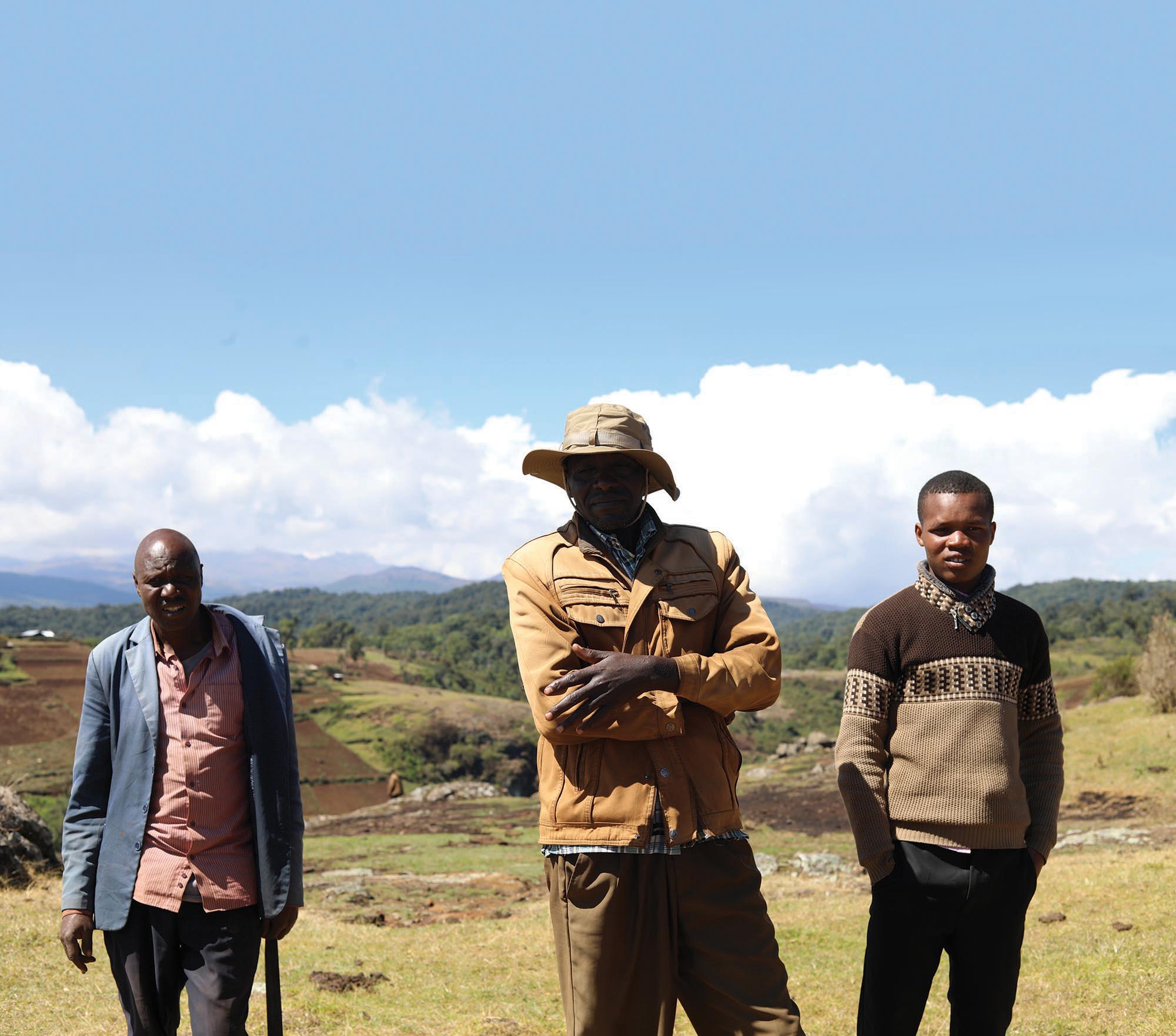
Feature image: Three generations of Mosopisyek, the two oldest of whom were born and lived in the forests of Mount Elgon before eviction
For centuries, the Mosopisyek people have called the high-altitude forests of Mount Elgon, an extinct volcano marking the Uganda-Kenya border, their home. They managed to forge a life out in this terrain, their survival becoming intricately linked to the land—relying on livestock grazing, hunting, and gathering from the resources of the forest. However, in the name of conservation, first, the British colonial government and then the Ugandan government forcibly evicted them, leaving them landless and marginalised. Today, the Mosopisyek continue their struggle for recognition and the right to return to their ancestral lands.
A legacy of displacement
The Mosopisyek’s forced displacement began during the colonial era when British authorities designated parts of the mountain a forest reserve in 1938. This move aimed to protect the forest’s biodiversity but overlooked the Indigenous communities residing in it.
In the 1950s, the British imposed further restrictions on forest access, criminalising traditional practices such as hunting and gathering. This disrupted the Mosopisyek’s way of life, forcing them to adapt to an unfamiliar system of land use regulations. While colonial authorities framed these measures as essential for environmental protection, they largely served British economic interests by prioritising timber extraction and resource control over Indigenous land rights.
Post-independence, in 1983, the Ugandan government allocated 6,000 hectares of land in Kween and Bukwo—neighbouring districts situated on the slopes of Mount Elgon—for the tribe’s resettlement, acknowledging their ancestral claims. But in 1993, Mount Elgon was upgraded to a national park, leading to mass evictions by the Uganda Wildlife Authority (UWA). Houses were destroyed, and families who had lived in the forests for generations were rendered homeless. By the early 2000s, an estimated 6,000 Mosopisyek people had been displaced, many without compensation or alternative livelihoods.
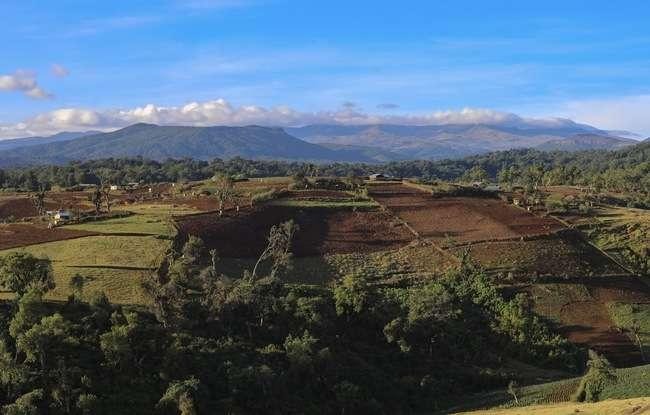
The consequences of this fortress conservation approach have been devastating. Stripped of their land and traditional way of life, the Mosopisyek have faced poverty, discrimination, and statelessness. Living on the fringes of their former homeland, they lack access to basic services such as education and healthcare.
A 2024 report by the International Work Group for Indigenous Affairs highlighted that, between October 2022 and November 2023, the Mosopisyek community suffered the destruction of 96 houses, the arrest of 70 community members, and the impoundment of 1,295 animals, leading to severe food insecurity.
Without legal recognition, they have struggled to assert their rights and traditional practices, such as cattle grazing and collection of medicinal plants, with these further being criminalised under conservation laws. Encounters with UWA rangers often result in arrests and violence between both parties, which in the long run has further marginalised the community.
Forest roots
For centuries, the Mosopisyek people’s way of life has been intricately tied to the forest and its resources. Their traditions and survival strategies reflect a coexistence and an intimate understanding of their environment—knowledge that has been passed down through generations.
One of the traditions that is central to their way of life is beekeeping. The Mosopisyek make and craft beehives from hollowed-out logs, bark, and vines, then position them high in the trees to protect them from predators. Honey is more than just a food source; it holds medicinal value, is used in rituals, and is a key ingredient in lakwek, a fermented honey-based drink consumed during social gatherings and ceremonies. Crafting these hives takes patience, skill, and deep knowledge of local trees—especially since only three species native to the region, including Elgon teak and red cedar, are used. These specific woods are even believed to shape the flavour of the honey itself.
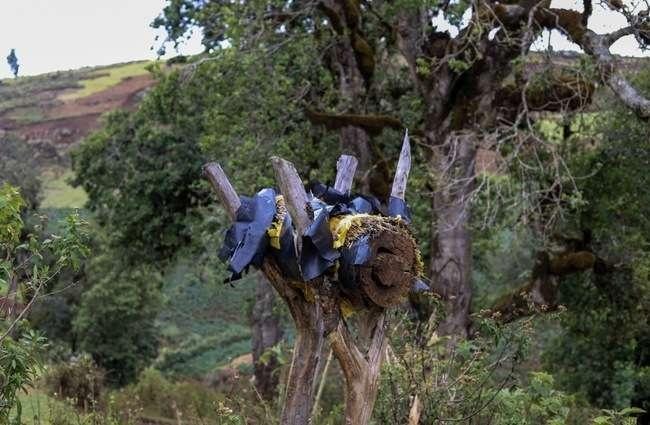
Beekeeping is also important in Mosopisyek traditional marriage practice, where the bride’s father climbs up a tall tree to plant a beehive, cuts the branches on his way down, and any suitor who manages to climb up this branchless tree and successfully harvest the honey will be the rightful man for the bride.
Historically, hunting was an integral part of their subsistence, carried out with deep respect for nature. Using bows, arrows, and carefully placed traps, they selectively hunted antelope, buffalo, and birds, among other animals. However, with hunting now criminalised under conservation laws, the Mosopisyek have lost a key component of their diet and traditional way of life.
Herbal medicine remains central to their culture and the heavy reliance on it is further reinforced by the poor access to modern healthcare, primarily because resettlement areas like Yatui village are so remote. Elders hold vast knowledge of the healing properties of plants, using them to treat ailments ranging from fevers to infections. Since access to the forest has been restricted, the Mosopisyek have begun creating communal herb gardens within their settlement areas. These gardens ensure they can still practise their traditional medicine without the risk of being arrested for trespassing in the national park.
Another striking aspect of their culture is the use of soil in home decoration. Women and children collect different shades of earth to mix natural paints, which are applied to homes in intricate patterns. These designs are not only decorative, but also serve as a cultural identity marker.
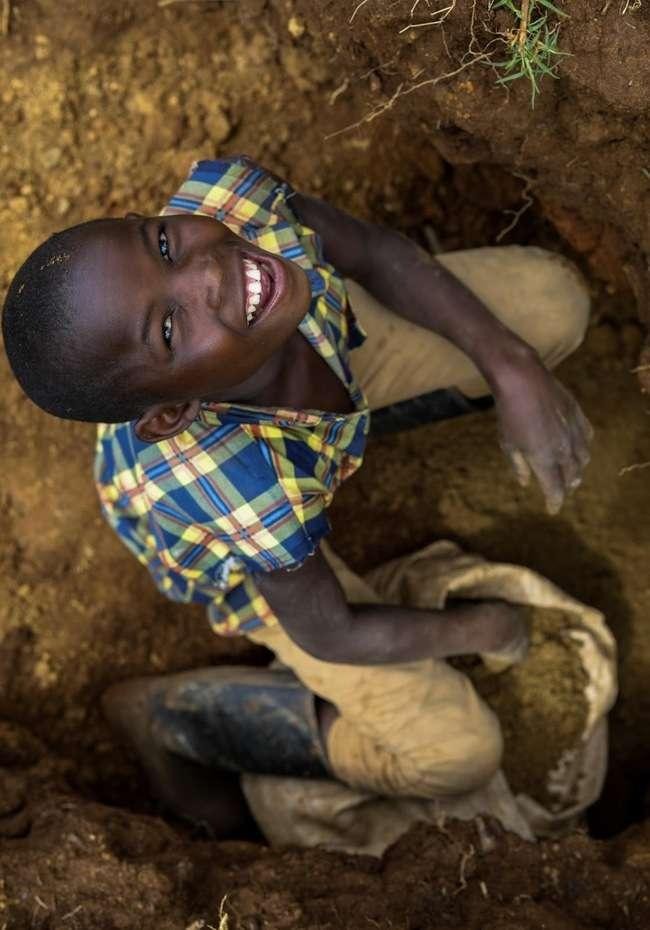
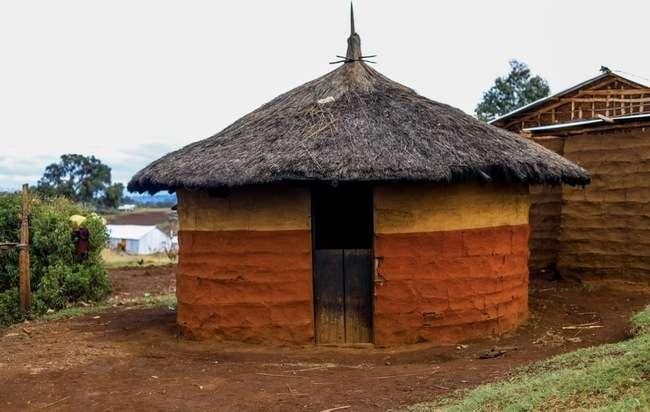
The evictions from the forest directly changed the Mosopisyek way of life. But they managed to adapt and become small-scale farmers, allowing them in a limited way to still practise their traditions. But with heavy restrictions on forest access, their culture is slowly dying, according to Francis Barber, a Mosopistek leader and healer.
The conservation debate
The Mosopisyek’s plight raises critical questions about fortress conservation, which seeks to protect biodiversity by excluding human communities. Conservation was the argument used when Mount Elgon was designated as a protected area, citing a fragile ecosystem that needed to be safeguarded from human encroachment. The park is indeed home to diverse flora and fauna, including rare plant species and endangered wildlife, in addition to serving as a vital water catchment area for surrounding regions.
However, Indigenous rights advocates contend that the Mosopisyek have historically lived in harmony with the forest, managing its resources sustainably long before formal conservation policies were introduced. Research indicates that Indigenous stewardship can enhance biodiversity rather than degrade it. A 2021 report by the Rights and Resources Initiative found that forests managed by Indigenous peoples often have equal or higher biodiversity levels compared to protected areas managed by state agencies.
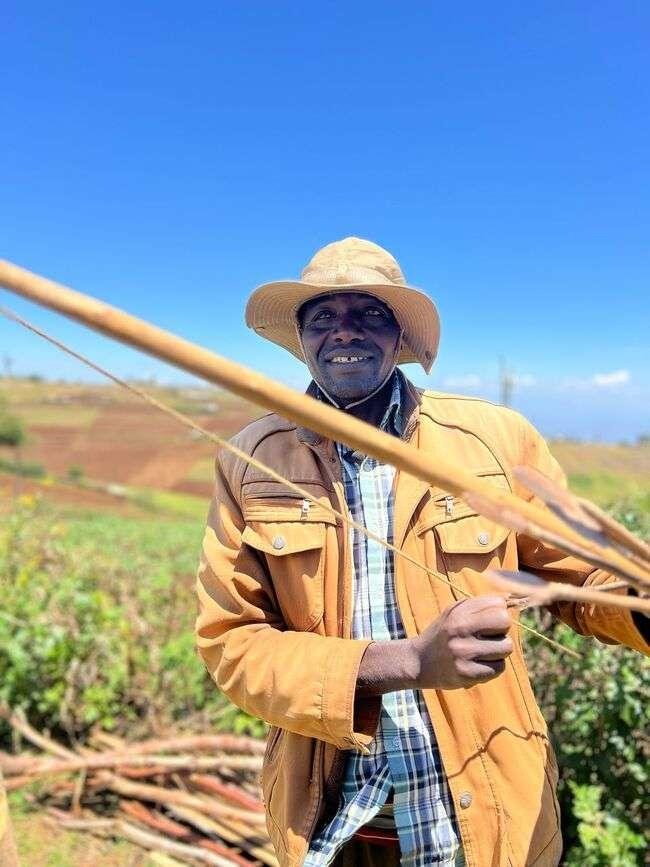
The situation on Mount Elgon is not unique; across Africa and other continents, Indigenous communities have been displaced in the name of conservation. In Cameroon, the Baka people have faced similar evictions from protected areas, leading to loss of livelihood and cultural erosion. In Kenya, the Ogiek community’s struggle for land rights in the Mau Forest mirrors the Mosopisyek’s challenges.
An uncertain future
In 2005, the Mosopisyek took their case to the Ugandan High Court, which ruled in their favour, recognising them as the rightful owners of their ancestral land and ordering the government to grant them formal land titles. However, nearly two decades later, this ruling remains largely unimplemented. Bureaucratic inertia, competing interests, and conservation policies that favour tourism revenue over Indigenous rights continue to hinder progress.
The Mosopisyek have also sought justice beyond Uganda’s borders. They have appealed to international human rights organisations and regional bodies, hoping to pressure the Ugandan government into action. However, these efforts have yet to yield tangible results, leaving the community in a state of limbo.
Cases like the Mosopisyek’s are playing out across the world with countless people being affected, and with limited capacity and agency to act against state agencies and brutal conservation practices. A report by Amnesty International suggests integrating Indigenous knowledge and involving local communities in conservation efforts can lead to more sustainable and equitable outcomes.
Co-management approaches, where Indigenous communities participate in decision-making processes, have shown promise in various parts of the world. In Australia, the involvement of Aboriginal communities in managing national parks has led to improved conservation outcomes and strengthened cultural ties to the land. Similarly, in Canada, Indigenous Protected and Conserved Areas (IPCAs) have been established, recognising the role of Indigenous peoples in preserving biodiversity.
Implementing such models in Uganda would require significant policy changes and a commitment to upholding Indigenous rights. It would involve granting the Mosopisyek legal recognition, ensuring their participation in conservation planning, and providing support for sustainable livelihoods that align with environmental goals.
Further Reading
Campese, J., T. Sunderland, T. Greiber and G. Oviedo. 2009. Rights-based approaches to conservation: Exploring issues and opportunities for conservation and development. Gland, Switzerland: IUCN.
Dowie, M. 2009. Conservation refugees: When protecting nature means kicking people out. https://orionmagazine.org/article/conservation-refugees/. Accessed on January 9, 2026.
Petursson, J. G. and P. Vedeld. 2015. The “nine lives” of protected areas. A historical-institutional analysis from the transboundary Mt Elgon, Uganda and Kenya. Land Use Policy (42): 251–263. https://doi.org/10.1016/j.landusepol.2014.08.005.
Rights and Resources Initiative. 2015. Protected areas and the land rights of Indigenous peoples and local communities: Current issues and future agenda. https://rightsandresources.org/wp-content/uploads/RRIReport_Protected-Areas-and-Land-Rights_web.pdf. Accessed on January 9, 2026.