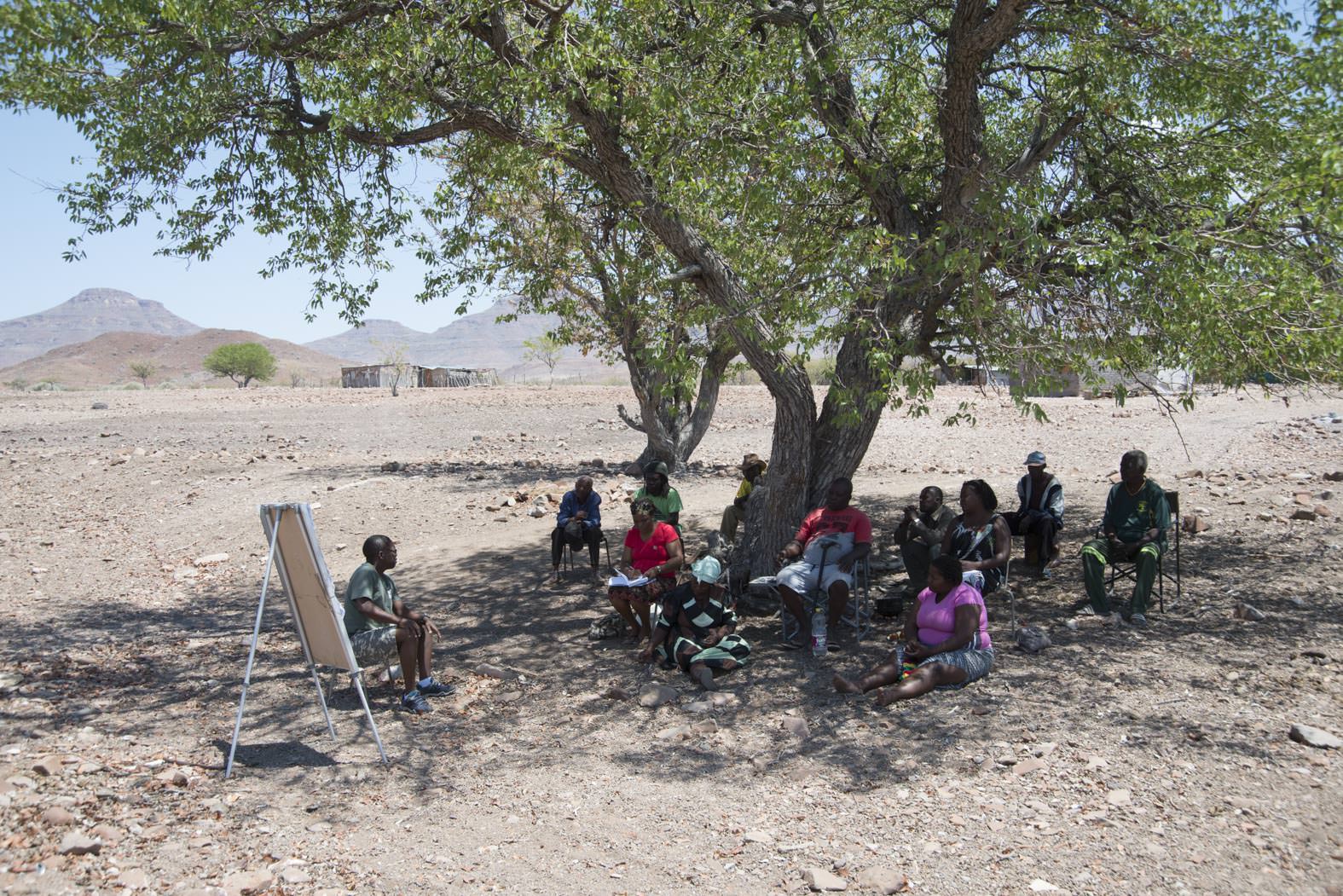
Feature image: Community members discussing Communal Conservancies in Namibia (Photo credit: NACSO/WWF Namibia)
Despite global nature conservation and restoration targets, and the implementation of numerous conservation actions around the world, the decline in biodiversity continues. Conservation and restoration initiatives offer promising solutions, but we need them to be more effective, implemented on a greater scale, across biomes, populations, and to last well into the future.
So how can we get pockets of good practice to catch on and spread (i.e., scale), in order for conservation initiatives to have the necessary positive, lasting impact around the world? Over the past ten years, we (the Catalysing Conservation team) have been working to uncover what makes different conservation initiatives scale. Here we present some of our top tips for scaling, based on case studies from around the world.
One: Initiatives should be compatible with the lives of local people, reflecting their needs and aspirations
Imagine being told that the vegetable patch in your garden needs to be replaced with wildflowers. Wildflowers are pretty, but the vegetable patch provides food for your family and lowers your grocery bill. You are reluctant to adopt the new practice because it is not compatible with your current needs. One of our key findings was that compatibility of initiatives with local practices motivates people to adopt conservation programmes. This includes, for example, the degree to which the initiative is consistent with peoples’ values, past experiences, and needs.
The Cairngorms National Park stretches across mountains, moorlands, and forest in northeastern Scotland, and supports rare and diverse species such as the golden eagle and red squirrel. The area is also home to landholders, including local farmers and gamekeepers. These landholders can participate in woodland creation schemes and choose to create mixed native woodland on their land in a bid to restore forests.
When we investigated what motivated them to create mixed native woodland on their land, we found they were more likely to do so if they thought woodland was compatible with what they used their land for. Arable farmers, for example, were generally against planting trees on fields with good soils to grow crops, as this could lead to a loss of income. However, changes in farming practices with the use of larger farm machinery had, in many cases, created “dead corners”—areas of the field where tractors and harvesters turn. Many farmers saw these uncropped areas as ideal for woodland creation.
We find similar results across different initiatives and geographical locations. In a study that explored peoples’ motivations to adopt a community-based conservation programme across five separate initiatives, compatibility of the programme to fit with local customs was often highlighted as critical for adoption. “Each and every location has their own customs,” said one participant. “An approach that works in one village doesn’t necessarily work in the other.”
Two: The costs and benefits of an initiative must balance to have overall benefits for participants
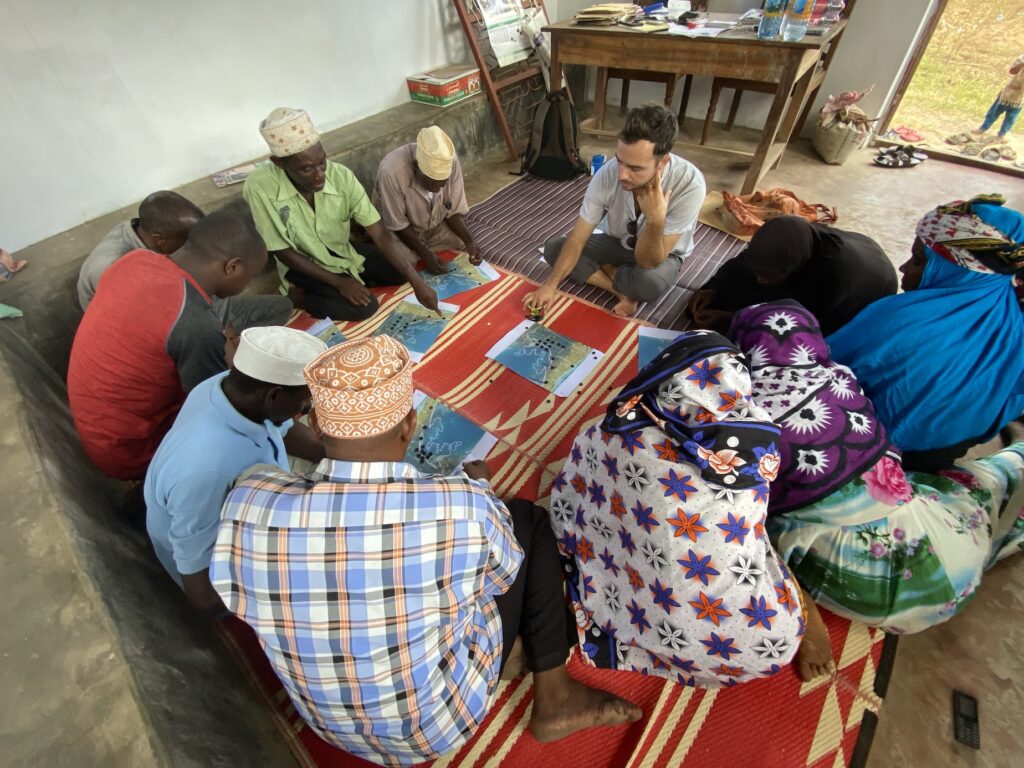
Before investing time or money into a new project or habit, you will likely have weighed up the pros and cons and decided that your investment is worthwhile. Participating in a conservation initiative is similar, and initiatives have a wide range of potential benefits and costs. It is not one specific benefit that drives engagement but the overall benefits that influence adoption.
Locally Managed Marine Areas (LMMAs) are areas under Indigenous protection, where communities set fishing rules to help protect and restore the marine ecosystem. In Madagascar, for example, non-governmental organisations (NGOs) which support LMMA implementation give livestock (chickens and goats) to participants, to compensate for any loss of earnings from fishing restrictions. Villagers identified these economic benefits as important in their decision to adopt the initiative. However, they also highlighted inequalities in livestock distribution across the community, which led to conflict. Initiative design should therefore reflect local perceptions of fairness. In this case, both fishers and non-fishers believed that livestock should be distributed to everyone in the community, not just to fishers.
Benefits are not fixed and may change over time and across geographical regions, as an initiative spreads. Territorial Use Rights for Fisheries (TURFs), like LMMAs, are marine areas where a group has exclusive fishing rights, but with fishing organisations leading their management. In Chile, fishing organisations were initially motivated to adopt TURF programmes for economic reasons. However, over time other benefits like marine tenure and status became more important.
Three: Designing initiatives that respond to people’s motivations for engaging in them will support adoption
We are all motivated by different things. It follows then, that different people will engage in conservation initiatives for a variety of reasons.
The Atlantic Forest in Brazil is a biodiversity hotspot, which is crucial for safeguarding for future generations. One aim of restoration initiatives here is to incentivise landholders to plant trees on their land. However, we have found differences between what motivates large and small landholders to participate in this region. For example, large landholders with an average of 500 hectares of land (equivalent to more than 700 football fields) participated in restoration initiatives to comply with environmental legislation. And uncertainty over changes to legislation by future governments hindered the participation of some large landholders. Moreover, certain carbon offsetting programmes offered incentives that resulted in higher earnings than if the land was not used for restoration.
In contrast, smallholders were motivated by the compatibility of the initiative with their existing land use. Many smallholders rely on cattle ranching for income, and they perceived restoration as interfering with the use of land for cattle grazing. “People […] depend on the space on the property for income (from grazing),” said one smallholder who had not participated in the restoration initiative, “so they are afraid that they would lose this space (to restoration).” It was not only the immediate benefit that mattered, but also how secure that benefit would be in the future.
Four: Long-term and quality external support is key
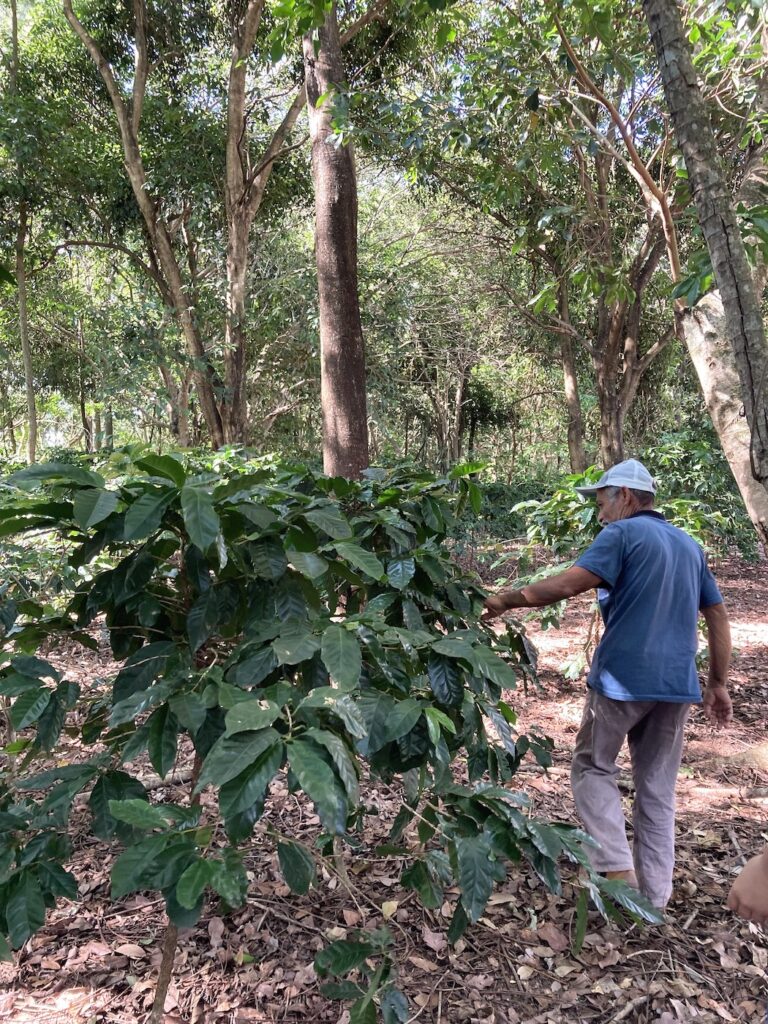
External support, such as covering start-up costs, hosting workshops, facilitating engagement with other actors, and other forms of extended support are often provided by NGOs and external agencies when restoration and conservation initiatives begin. We found that such support is key to helping people adopt an initiative. In Brazil’s Atlantic Forest, NGOs provide financial support for both small and large landholders who participate in a restoration programme. This support was key for landholders to engage—none of the landholders we interviewed could afford to fully fund the programme on their land and only 3 percent of landholders had invested some of their own money to get started. Aside from financial support, the NGOs provided training on forest plot management for smallholders, and linked large landholders with companies that could carry out the restoration work for them.
Extended support was also key to the spread of five community-based conservation initiatives across Namibia, Nepal, Fiji, Madagascar, and Chile. “I think the presence of an outside supporting organisation is very, very important […],” said one interviewee. Yet, the support must be targeted to community needs. People reported that they felt communities were not always provided with the support they needed, or that opportunities for training were missed: “[…] our fishermen know nothing about monitoring samples […]. It is so sad for me because I saw a lot of money go by, and I think we could have done a lot better,” said another interviewee. Similarly, we must ensure it is the community, and not the overarching organisations, who benefit from the support. “One of the many problems is that the external funding is going to NGOs, rather than to communities, because the communities […] don’t have a bank account,” reported a different interviewee.
Therefore, organisations must provide quality support, be trusted, and be there for the long term as initiatives scale.
Five: Learning from peers can drive an initiative to scale
Peer-to-peer learning and seeing others around you succeed are important factors motivating people to participate in conservation and restoration initiatives.
Smallholders in Gujarat, India, commonly cultivate cotton and pulses on their land. Restoration schemes in the area support the planting of native trees on their farmland. We asked farmers who engage in the scheme what motivated them to participate, and asked those who didn’t engage what prevented them from doing so. Farmers reported that seeing outcomes of fellow farmers helped them decide whether to participate. This peer-to-peer learning happened for both positive outcomes (helping the initiative to spread), and also when the outcome was negative. “I don’t think it is viable based on the experiences of other farmers near me […],” one farmer said, suggesting that he wouldn’t participate because of poor outcomes experienced by his neighbours.
In Fiji, learning from others also seems to have been key to the spread of a local initiative. The Fiji Locally Managed Marine Areas (FLMMA) Network supports villages with the design and implementation of fishing plans that account for the needs of the community, as well as the environment. We found that nearly 75 percent of participants had a nearest neighbour who had also participated in the network. This suggested adoption is driven, in part, by peer-to-peer learning. Learning can be organic, or encouraged through facilitated exchange processes, or by designing moments of learning within the adoption process. Learning from our peers can be a powerful way in which ideas spread.
Critically, not all conservation initiatives can or should be scaled. In fact, scaling certain programmes may be harmful. Pressures to scale can incentivise poor practice and exclusion of local communities. This can lead to abandonment of the initiative in the long term, or even harm to local livelihoods, economic instability, and rise of conflict between communities. Thus, before planning for scale, we must carefully consider whether an initiative should be implemented at scale, and the impact scaling may have on others. By choosing the right initiatives to scale, we can support both ecosystems and the communities that rely on them.
Understanding what motivates people to adopt conservation initiatives is vital to help conservation succeed around the world. Our research provides insights that can guide practitioners when designing initiatives that can scale, whilst delivering benefits to people and nature. For example, proactively addressing factors such as compatibility of an initiative or its benefits, and facilitating peer-to-peer learning, will ultimately help the initiative to succeed in the future.
Further Reading
Jagadish, A., A. Freni-Sterrantino, Y. He, T. O’ Garra, L. Gecchele, S. Mangubhai, H. Govan et al. 2024. Scaling Indigenous-led natural resource management. Global Environmental Change 84: 102799. https://doi.org/10.1016/j.gloenvcha.2024.102799.
Joglekar, A., A. Jagadish, C.B. Jardim, L. Cullen, A. Souza, T. Pienkowski, R. M. Chiaravalloti et al. 2025. Landholders’ engagement in restoring Brazil’s Atlantic Forest is linked with livelihood compatibility and legal compliance. International Forestry Review 27(S1).
Lewis-Brown, E., H. Beatty, K. Davis, A. Rabearisoa, J. Ramiaramanana, R. M. Ewers and M. Mills. 2025. Improvements for better scaling of locally managed marine areas. Conservation Biology 39(5): e70091. https://doi.org/10.1111/cobi.70091.
Lewis‐Brown, E., H. Beatty, K. Davis, A. Rabearisoa, J. Ramiaramanana, M. B. Mascia and M. Mills. The importance of future generations and conflict management in conservation. 2021. Conservation Science and Practice 3(9): e488. https://doi.org/10.1111/csp2.488.
Mills, M., M. V. Touchon, E. Denis, S. Milligan, Y. Zuffetti, Z. Ahmad, Z. Husain et al. 2025. Scaling out community conservation initiatives: experts identify economic and social benefits, compatibility with needs, and external support as key. Conservation Letters 18(3): e13100. https://doi.org/10.1111/conl.13100.
Pienkowski, T., A. Jagadish, W. Battista, G. C. Blaise, A. P. Christie, M, Clark, A. P. Emenyu et al. 2024. Five lessons for avoiding failure when scaling in conservation. Nature Ecology & Evolution 8: 1804–1814. https://doi.org/10.1038/s41559-024-02507-4.