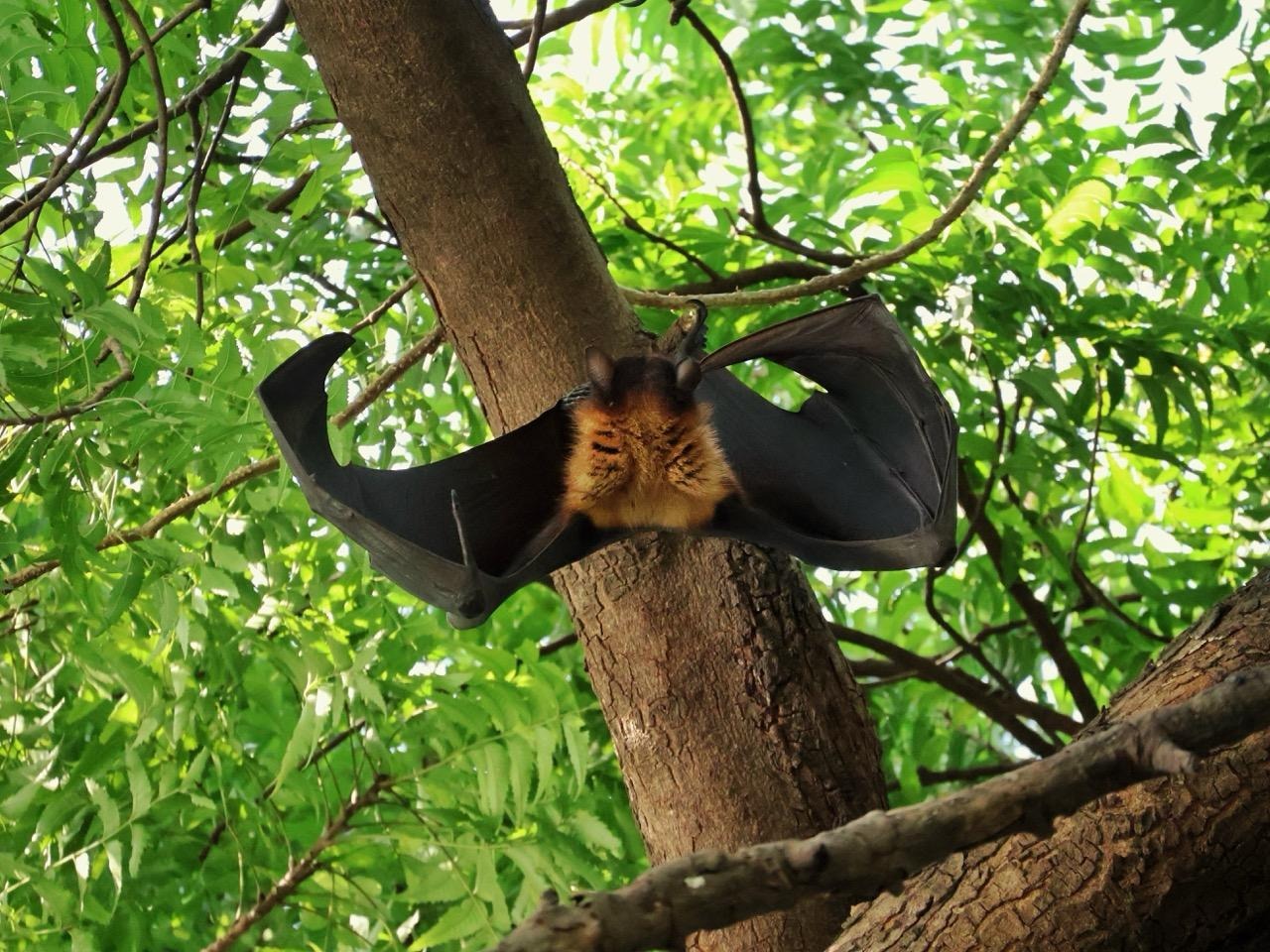
Feature image: An upside-down Indian flying fox flapping its large, leathery wings
I was home for a knee injury, a result of many small follies built up over time; but staying in bed, waiting for it to heal was the longest six weeks of my life! Under the tight supervision of my mother, I was allowed to sit in the backyard and look at Delhi’s urban wildlife. Soon, I migrated to the garden during the morning and evening activity peaks. Armed with my camera, I waited for birds and monkeys. Meanwhile, my laptop ran long codes deciphering bat phylogenies and long models for my ongoing study on them.
One evening, I stayed out long after the birds had gone home, and while I became a feast for mosquitoes, I looked up to see large, black shadows fly across the sky. I knew then, I was going to be dragging my parents around Delhi, looking for its nocturnal residents—bats. When people found out, they often asked, “Why bats? They stink and spread disease!”
Yet, in the heart of the capital city, nobody seemed to notice trees laden with the largest bats in the country, as well as in the world—Indian flying foxes (Pteropus medius). There, at Hauz Khaz, one among many places I visited, I saw the largest roost I had witnessed to date. Squawking and loud, several hundred bats hung upside down, flapping their wings, right above hundreds of blissfully unaware human passers-by.
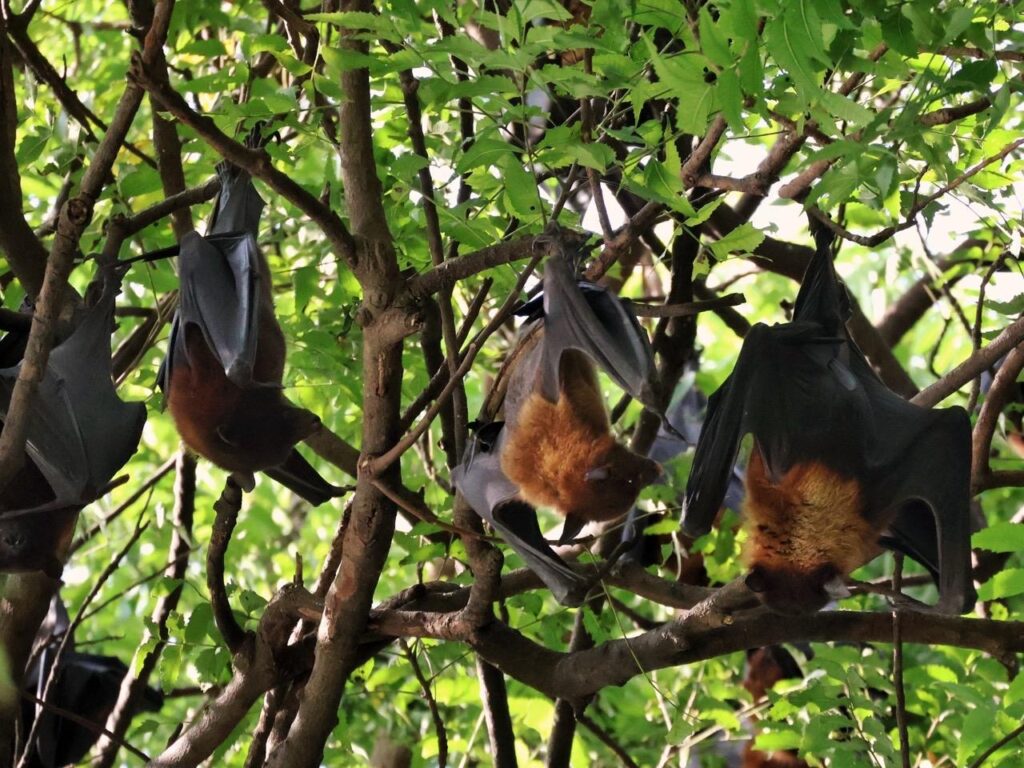
Looking up at them, amma wondered aloud, “How do they occupy such a highly urbanised space in these large numbers?” I wasn’t sure then, but their mere presence throughout a densely populated Delhi meant something was helping them thrive, be it their adaptability or resilience.
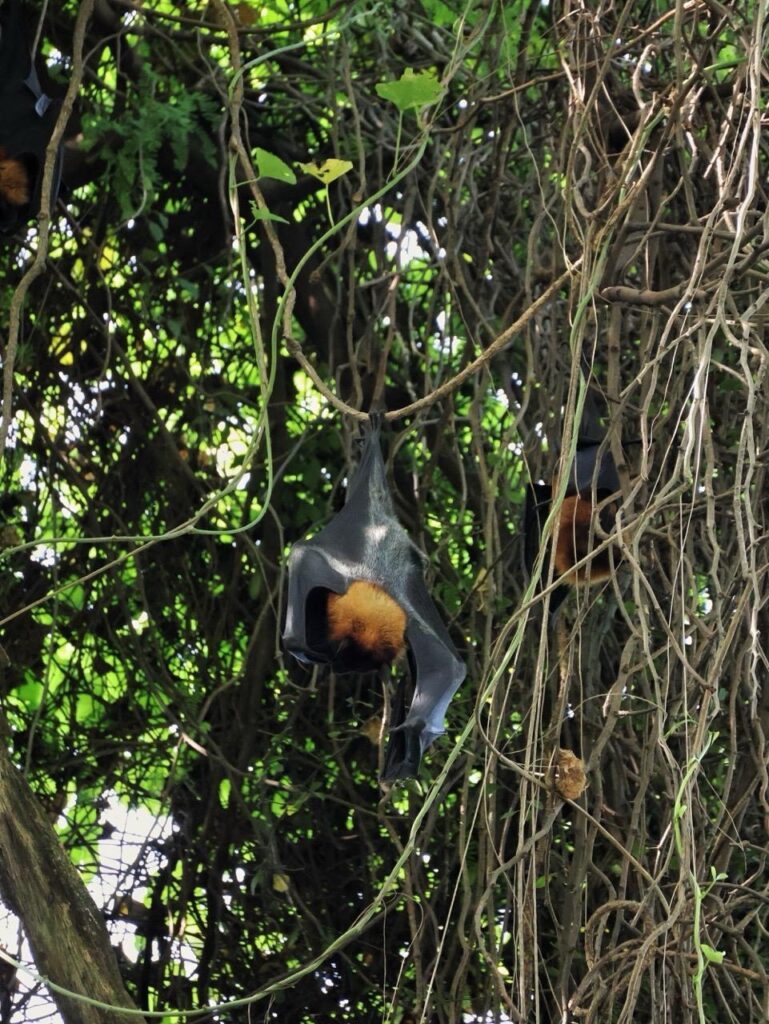
Orange and loud, the Indian flying fox is native to the Indian subcontinent. Equipped with a keen sense of smell and excellent night vision (no, not as blind as a bat!), these large frugivores leave their day-roosts at dusk and spend hours feeding on a variety of fruits. Their roles as seed dispersal and pollination agents are pivotal for the regeneration of fruiting trees and maintaining the resilience of plant communities.
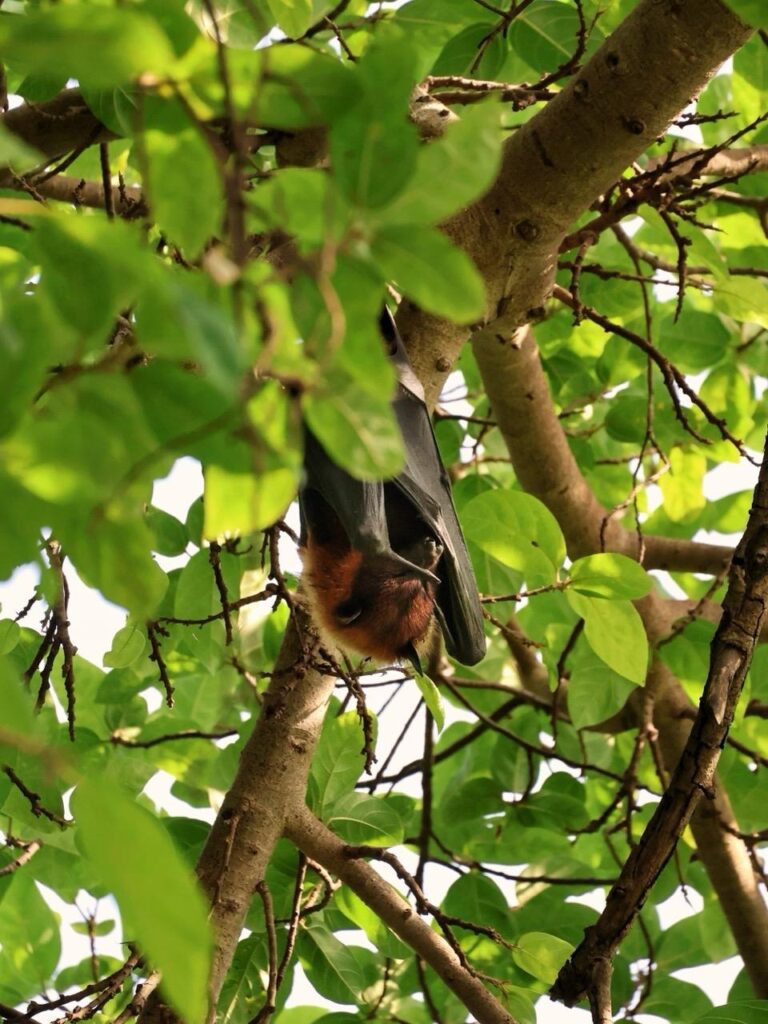
Unfortunately, irrespective of the range of ecosystem services flying foxes provide, they are often persecuted for feeding on cultivated crops. Previously considered vermin, they were granted legal protection under Schedule II of India’s Wildlife Protection Act (2021 Amendment Bill). However, this certainly does not protect them from the environmental challenges they face—shrinking habitats and rising urban temperatures.
Degradation of their natural habitats has pushed bats toward agricultural orchards and closer to human settlements, increasing the potential for conflict and heightening the risk of pathogen transmission across species in the area. Despite these troubles, these animals have managed to carve out an urban niche for themselves. Though classified as ‘Least Concern’ on the IUCN Red List due to their large numbers, their populations are beginning to show a gradual decline.
Lacking sweat glands, flying foxes spend their day in the shade of trees, roosting close to water bodies. They drench their fur in water or saliva and fan their large wings to cool themselves down. Regrettably, these methods were no match for the 2024 heatwaves that battered northern India. Suddenly, hundreds of these large fruit bats were dropping dead from dehydration. These mass deaths serve as a reminder that climate change is continually pushing wildlife towards extinctions—global and local.
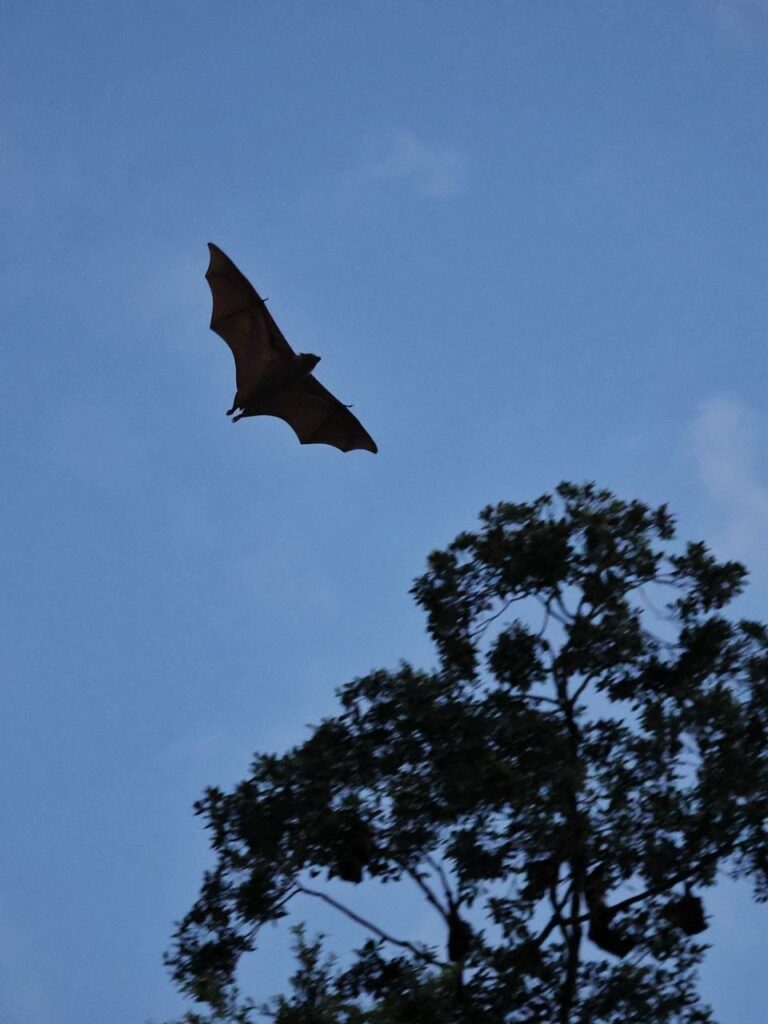
While the healing of my knee slowed down considerably from all my Delhi hiking, if you, dear readers, happen to turn your gaze skywards at dusk, you will find these enigmatic mammals, flying in steadily darkening skies, preparing for their nightly feasts. As you look up at them, be reminded that their presence, among other animals, serves to keep forests and urban landscapes healthy.
Further Reading
Gould, L. A deadly recipe: Flying foxes, extreme heat and climate change. Land for Wildlife. https://www.lfwseq.org.au/deadly-recipe-flying-foxes-extreme-heat-climate-change/. Accessed on January 28, 2026.
Jha, S. 2024. Heatwaves and killing India’s fruit bats, crucial to pollination and seed dispersal. https://scroll.in/article/1070400/heatwaves-are-killing-indias-fruit-bats-crucial-to-pollination-and-seed-dispersal. Accessed on January 28, 2026.
Kale, A. and P. Runwal, 2017. Indian flying foxes. Nature in Focus. https://www.natureinfocus.in/animals/indian-flying-foxes. Accessed on January 28, 2026.