By D. Cingulatus
Insect narrator, Misunderstood icon
6:45 AM: Rise and stain
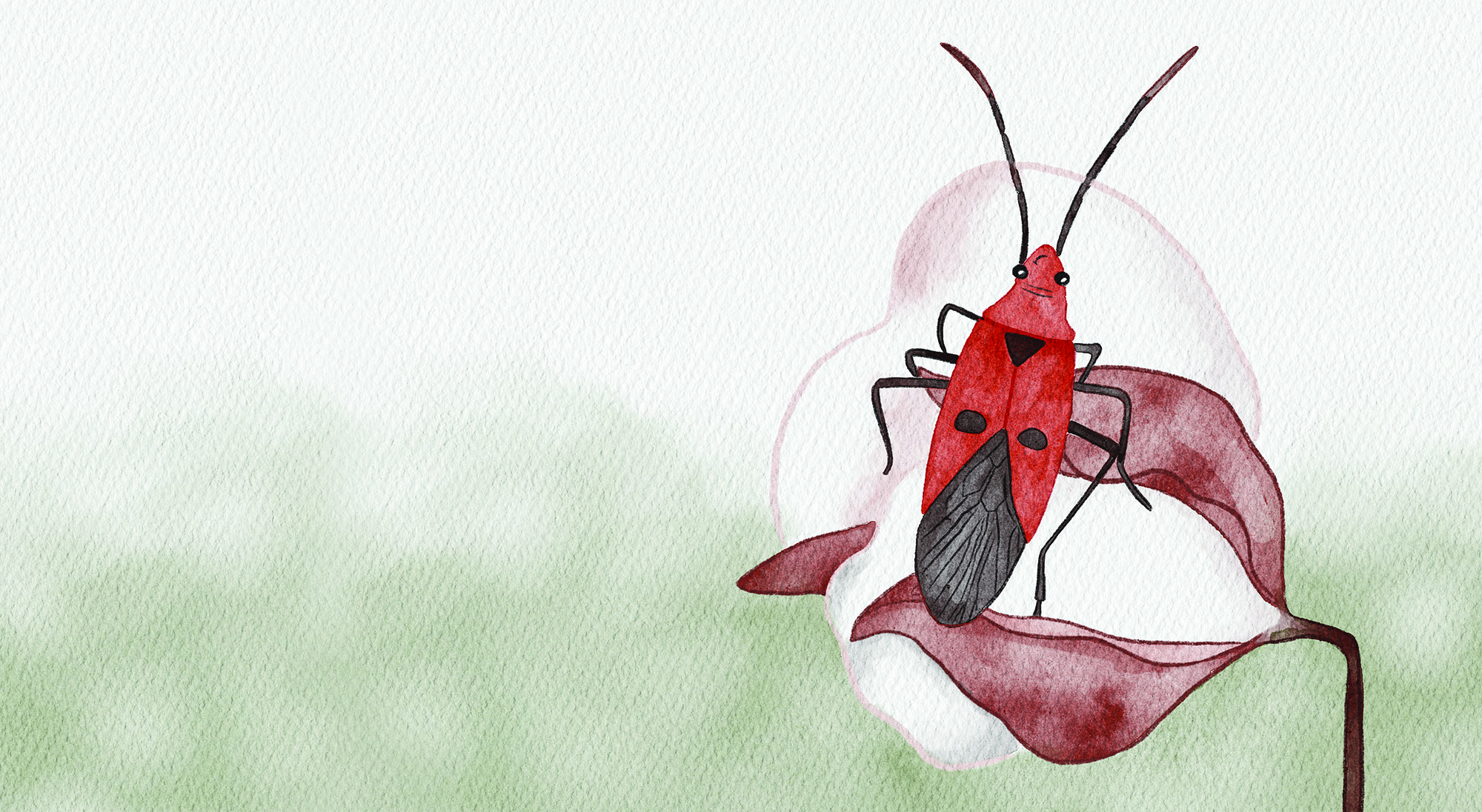
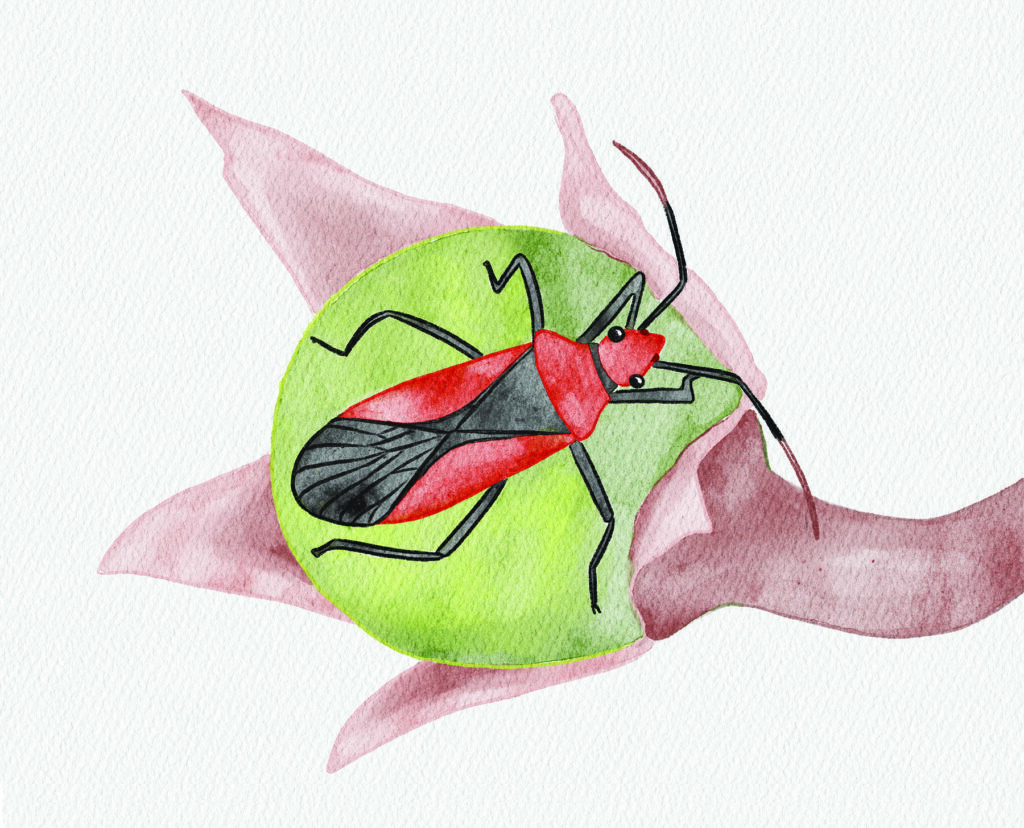
The sun is up and the rays are warm on my wings. This means it’s time to stretch my six little legs and scurry up the cotton plant. You might be wondering what I do for breakfast. Well, I dig my needle-mouth into the soft cotton seed and succkkk. Yum!
Before you question my dining choices, no I do NOT eat the cotton. That all-white fluffy ball? Not my cup of tea. It’s the seeds I’m interested in. Fibrous, nutty, and full of plant power that will keep me energised for the adventures that await my day.
But they call me the ‘cotton stainer’. Dysdercus cingulatus to be precise. Dramatic, right? Sounds like I’ve spoiled someone’s fresh laundry.
Ugh, how do I explain this? What really happens is quite different from what you’ve been told about me. Here’s what I actually do: after I sip all the goodness from the cotton seed, I leave some of my—how shall I put it—bug business behind. If you don’t clean the cotton properly during processing, that gooey yellow liquid will stain the cotton. I don’t do it on purpose. This is survival.
9:01 AM: Bright red family
No, I’m not alone out here.
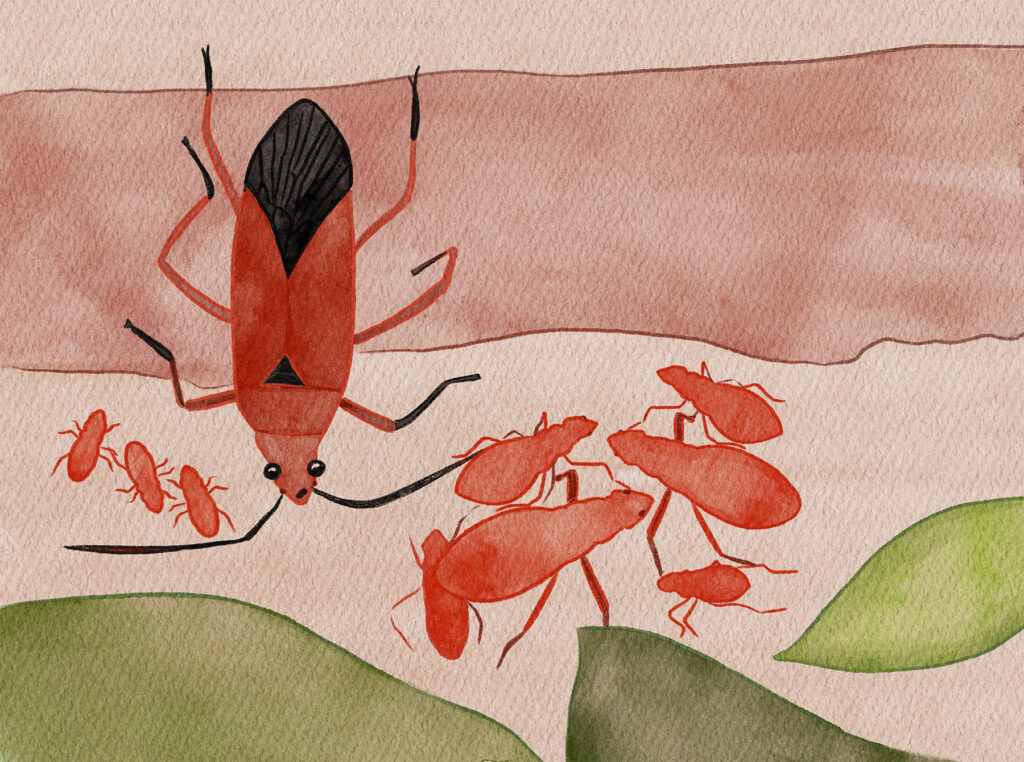
There are also the nymphs, our little ones that scurry all over leaves in bright red packs. Big energy balls, but wingless as of now. Soon they’ll grow up, sprout their wings and it’ll finally be their turn to get their pilot licence.
We always stick together. Do you think it’s easy being at the bottom of the food chain? Birds, ants, wasps, you name it—they all want a taste of the stainer. Imagine being preyed on and still getting blamed for staining your food. You’d want to pick a different struggle. And yet, we’re here. Playing our own little role in maintaining the food chain.
12:30 PM: Pest control
Pest control? More like a fancy term for mass assasination. Giant, poison rains sprayed from cans and planes. You might think they’re protection for cotton plants. But here’s the deal: when you blast the field with chemicals, you don’t just get us. The leaves curl up into scared fists, the soil grows sour and the wildflowers vanish. Even the farmers suffer from the toxins. Did you know that cotton occupies third place for the most pesticide use in India?
They think “No bugs, no stains!” But ever wondered why that cotton looks a little extra clean? So unnaturally perfect? Maybe the stains we leave behind are signs. They tell you stories of where your cotton really comes from. That they were grown with care, not chemically treated.
Want better protection? Plant some flowers. Mix the crops. Let the good bugs do their job! We understand nature’s balance better than you think.
5:00 PM: A history lesson
You think I’m modern trouble?
Haha! Our ancestors have been around since before cotton became a crop. We’ve been around for so long that even scientists relied on our poop stains to study insect coloration and natural dyes! Not so useless are we?
Yes, we snack and we stain. But we’re also small traces of what is forgotten, in a world full of chemicals and pesticides.