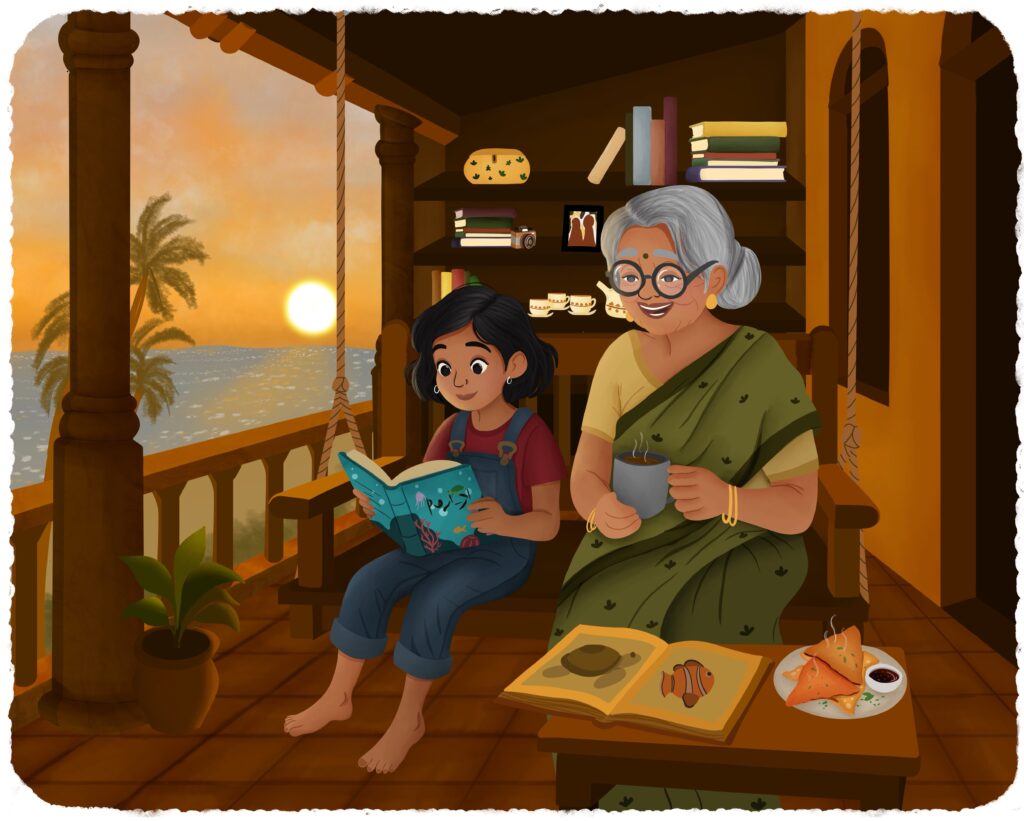
In the coastal village of Tonka, nestled between cliffs and waves, 10-year-old Chilu was spending her holidays at her Aaji’s cosy old house on a low cliff, overlooking the sea.
Every evening, as Aaji made snacks with tea, Chilu sat on the verandah swing, legs swaying and nose buried in one of Aaji’s fascinating books about animals and wild places. Aaji had spent years working with forest officials and researchers, helping protect creatures that were often unseen. Her bookshelf was full of field journals, hand-drawn maps, and stories.
One night, as the sky turned inky and the stars twinkled bright, Chilu spotted something unusual on the beach below. Small dark shapes were slowly pulling themselves ashore.
She squinted.
“Turtles?” she whispered, jumping off the swing.
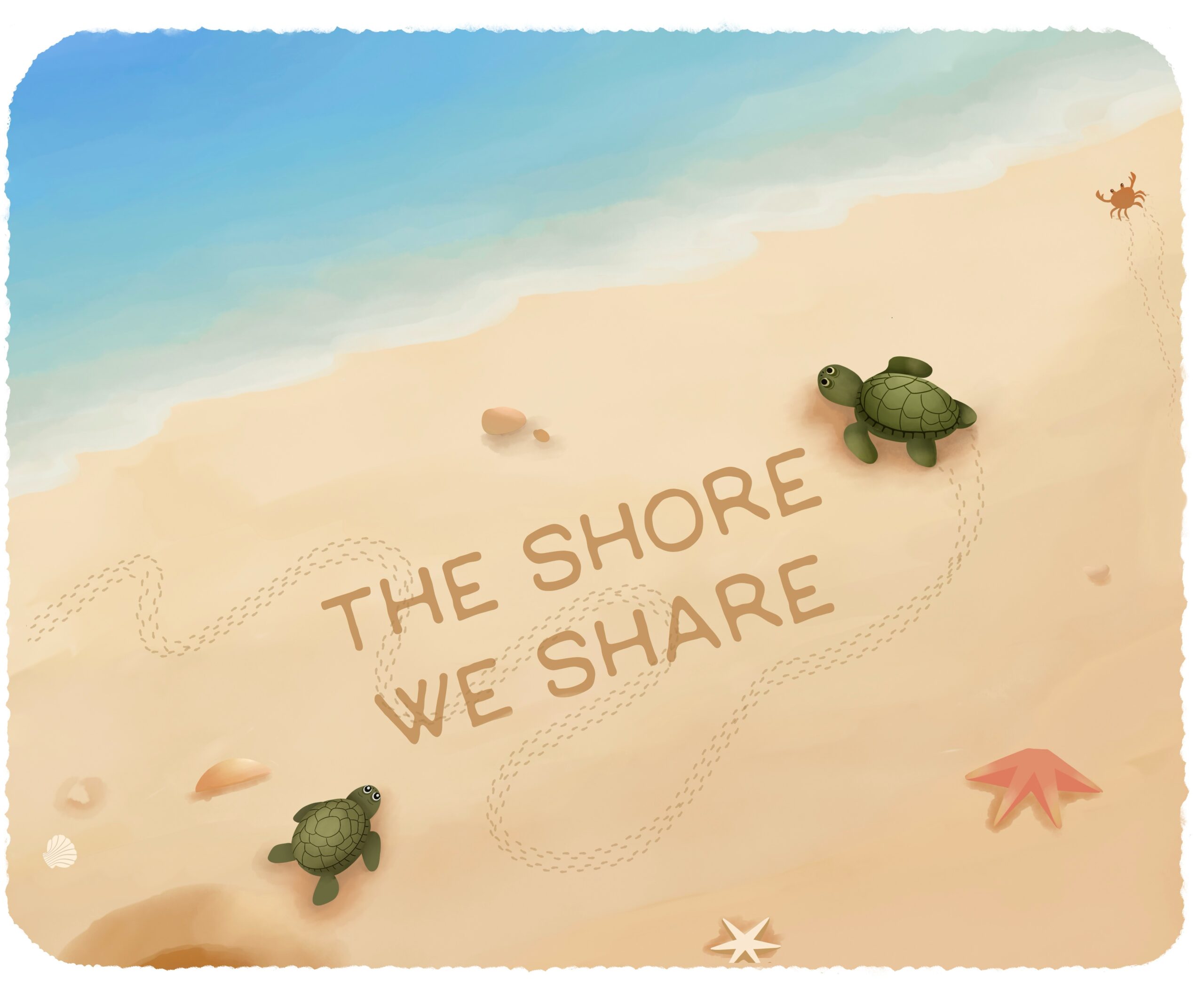
Barefoot, she raced down the narrow path to the beach, the salt breeze in her hair. By the time she reached the sand, the creatures were already digging, flippers flinging soft sand behind them in perfect rhythm.
She ran back up to Aaji, heart pounding.
“Aaji, come quick! There are turtles! Big ones! On the beach!”
Aaji chuckled, setting down her cup of tea.
“Ah, they’ve come early this year,” she smiled. “Come, let’s go meet our visitors.”
They walked down the cliff hand in hand, and Aaji turned on her torch but kept it low, shielding the beam with her palm.
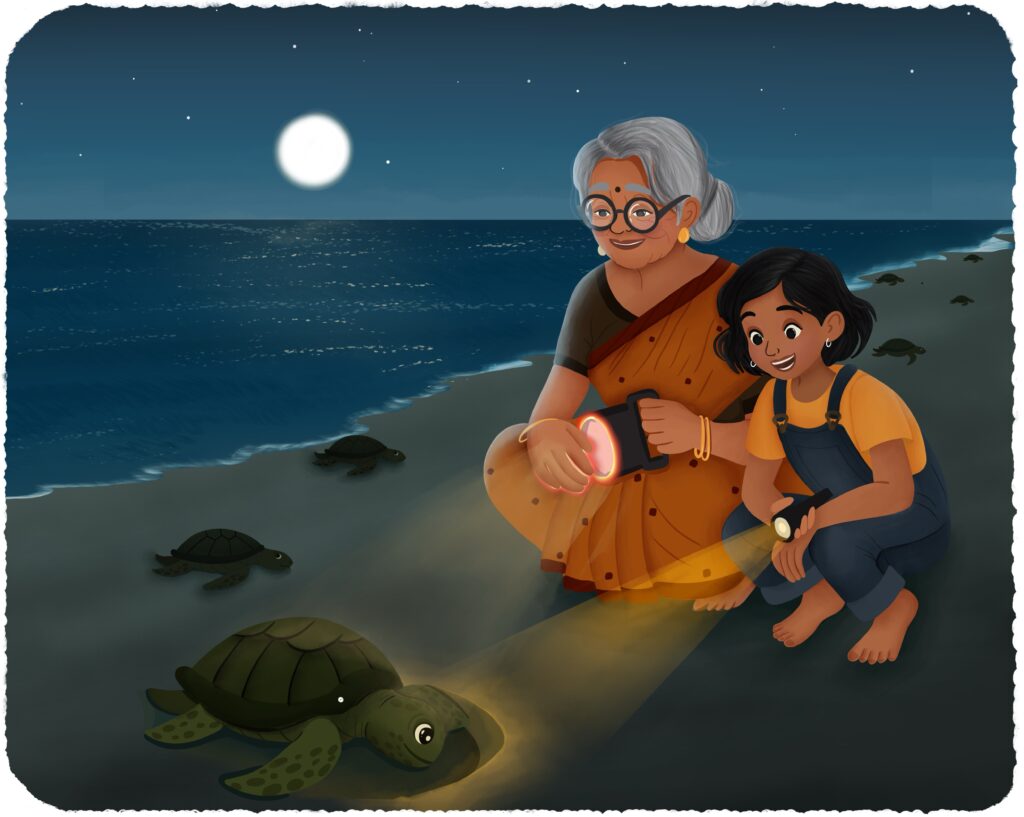
“These are olive ridley sea turtles,” Aaji whispered as they watched from a respectful distance. “They’ve crossed thousands of kilometres just to come lay eggs here, right on this very beach.”
Chilu gasped, watching the mother turtles dig silently in the sand.
“They always come back to the beach where they were born,” Aaji continued. “Because the sand remembers, it holds their memories.”
Chilu leaned closer. “How do the babies find the sea?”
Aaji pointed to the glimmering moon.
“They follow the light of the moon reflected on the water. It’s like a glowing path that tells them where to go.”
She paused, and then added, “Even early in the mornings or on cloudy days, they look for the brightest direction—usually the ocean. But if there are bright lights from buildings, street lamps, or even phone screens, they can get confused and head the wrong way.”
Chilu looked down at her small torch.
“So I shouldn’t shine it too much?”
Aaji nodded gently.
“Only if you really need to. Just enough to help. Until the stars take over.”
Chilu nodded slowly, still watching.
“Can I come tomorrow?”
Aaji grinned. “Of course, I’ll show you how we take care of them.”
The next morning, just after sunrise, Chilu and Aaji walked down the path to the beach hand in hand, where a few volunteers and forest guards were already at work. The sun was still low, casting long shadows across the sand.
Aaji knelt beside a set of faint, crisscrossing tracks.
“Look closely, Chilu. These are from a turtle that came to lay her eggs last night. See the way she dragged her flippers?”
Chilu crouched beside her, nodding in amazement.
The team gently followed the tracks to a spot where the sand looked freshly turned. Aaji explained, “We never dig unless we’re sure. But once we find the nest, we place bamboo markers around it so no one steps on it by mistake.”

They watched as a volunteer carefully placed a small wooden tag into the sand. Aaji read it aloud: “March 14,2025, 93 eggs.”
“Do we always leave the eggs here?” Chilu asked.
“Not always,” Aaji said. “If a nest is too close to the tide or in a spot where dogs might find it, we move it to a safer hatchery nearby. But we try to disturb the nest as little as possible.”
They walked a little further, where another volunteer was fixing a red cloth over a resort’s outdoor light.
“Some of the resorts now help by covering bright lights or using red filters during nesting season,” Aaji told her. “Bright white lights confuse the turtles, remember?”
Chilu nodded. “Just like my torch!”
“Exactly,” Aaji smiled. “And sometimes, when a mother turtle is healthy and calm, we attach a small geo-tracker to her shell. That way, we can learn about her journey across the oceans.”
Chilu’s eyes widened.
“Like a turtle map!”
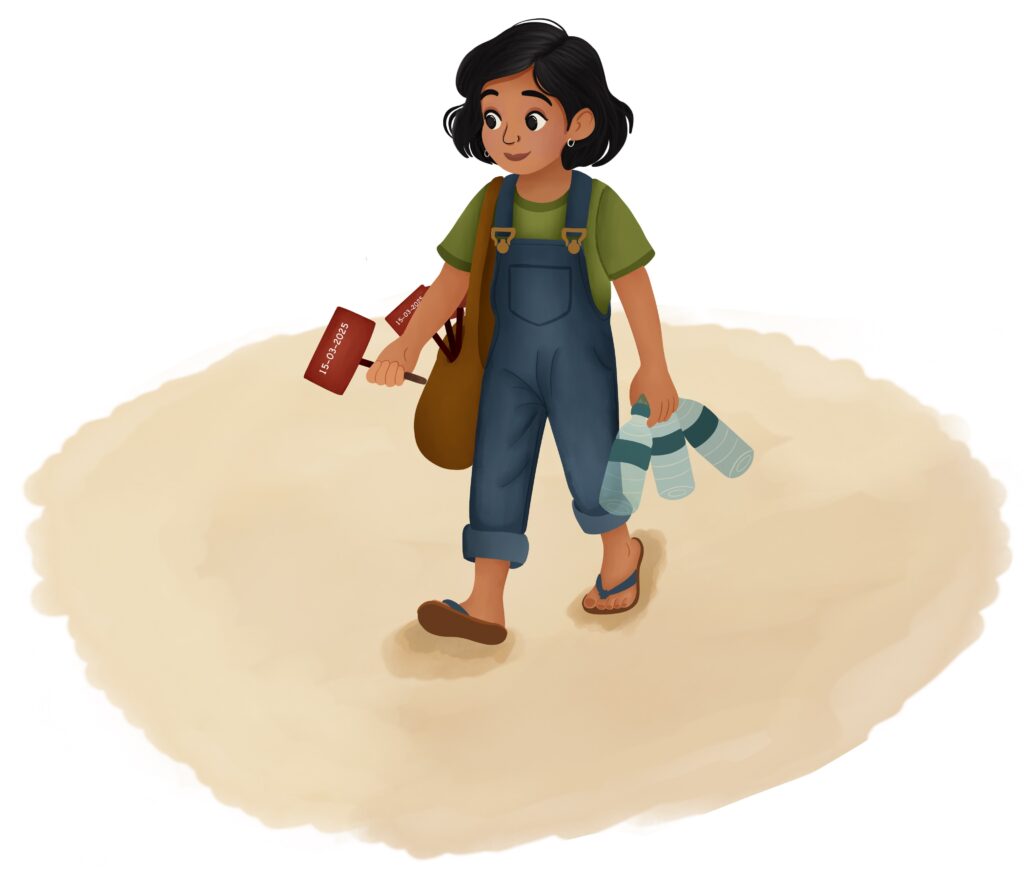
For the next few weeks, every morning became a new kind of adventure. Chilu carried water bottles for the team, helped count the bamboo markers, and even made her own “Do Not Disturb” and date signs.
She never touched the nests, but she watched everything—careful, quiet, and full of questions.
One soft moonlit evening, Chilu spotted a nest near the rocky path leading to the beach. Aaji had already gone to the other end of the shore with the guards, so Chilu ran home and picked up one of her handmade signs.
She knelt down to place it gently in the sand, when suddenly, the ground near her feet moved.
A tiny flipper poked out. And then another.
“They’re hatching!” she whispered.
She quickly stepped back. As she quietly watched, one by one, dozens of hatchlings began wriggling out, their round eyes blinking under the moon. Most turning instinctively toward the shimmering sea.
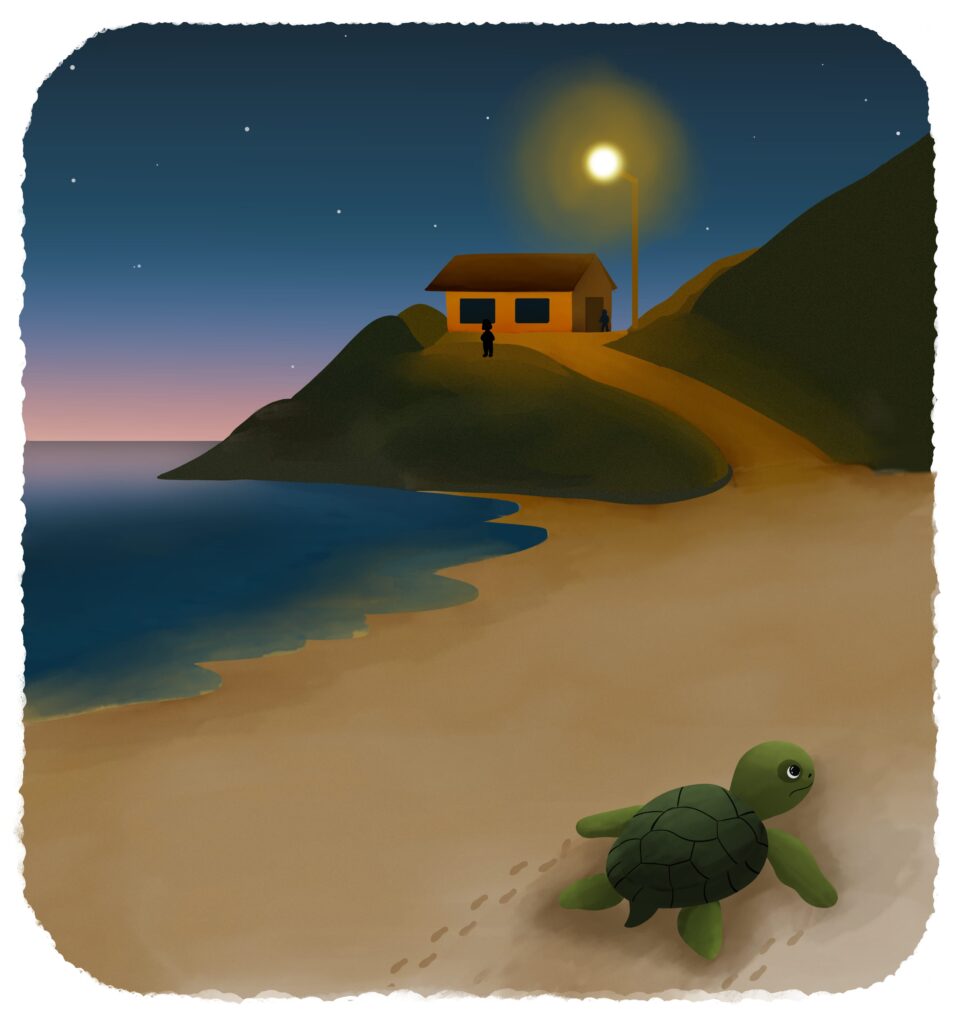
But suddenly one hatchling spun the wrong way. It scuttled towards the hill, toward the village, toward the streetlight that hadn’t been switched off.
Chilu’s heart stopped.
She ran up the sandy path.
The shopkeeper, busy closing down for the day, looked up, surprised.
“That light!” Chilu pointed urgently. “It’s confusing the baby turtle. They follow the moon to reach the sea, but your light is too bright!”
The man blinked, and then glanced over her shoulder. He spotted the tiny hatchling, no bigger than his hand, wobbling toward the roadside.
“Ayy, sorry about that, kid,” he said, rubbing the back of his neck. “I totally forgot, I’ll turn it off right away.”
He hurried inside and flipped the switch. The street went dark. For a moment, all was still. Then the moonlight gently filled the beach again.
Chilu crouched behind the little turtle, clicking on her small torch and pointing it carefully toward the sea—low and steady.
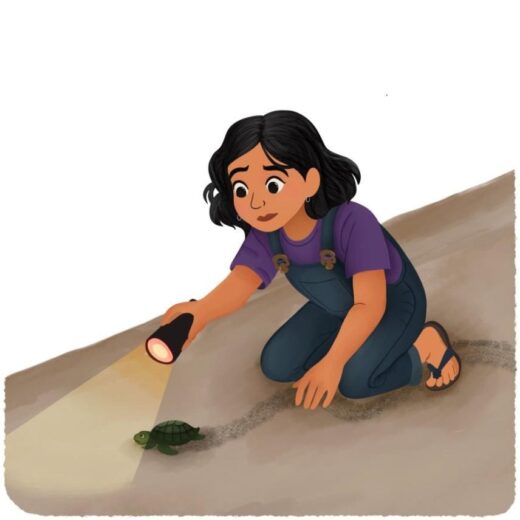
“This way, little one,” she whispered. “Like Aaji said, only until the stars take over.”
The hatchling paused, and then turned. It followed the gentle light, inching slowly, until the waves embraced it and carried it home.
Aaji returned just in time to see the final ripple melt into the sea. She knelt beside Chilu, placing a warm hand on her shoulder.
“You remembered everything,” she said, voice quiet with pride.
Chilu nodded, her eyes on the waves.“ So did the turtle,” she whispered. “It just needed a little help.”
They sat together for a moment, listening to the hush of the tide.
Aaji smiled.
“And if you ever aren’t sure how to help, you ask someone who knows. That’s how we take care of nature—with love and care.”
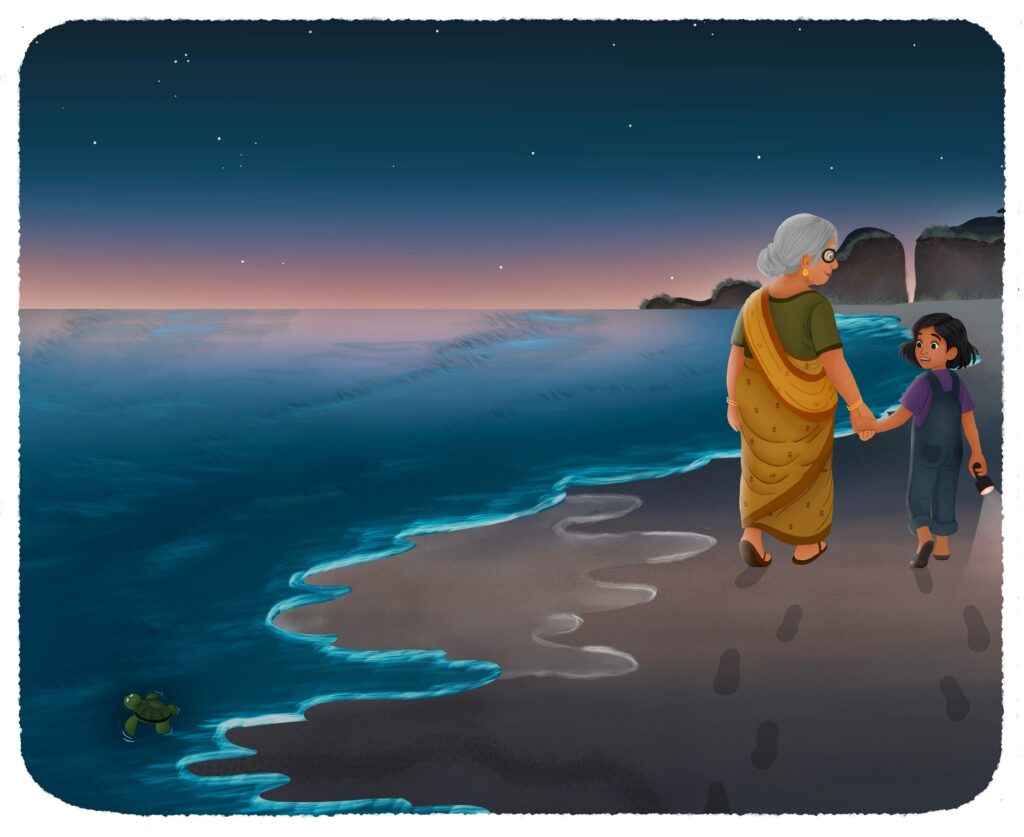
Chilu beamed and held her Aaji’s hand as they headed back, beneath the shimmering stars guiding them home.
Author’s note:
Olive ridley turtles are one of the smallest sea turtles in the world. In India, they come ashore in large numbers every year to nest on specific beaches along the east and west coasts, including Orissa, Tamil Nadu, Goa, and Karnataka.
But their journey isn’t easy.
Light pollution, plastic waste, beach construction, and curious crowds can all confuse or endanger them, especially the tiny hatchlings that rely on the moon and stars to guide them to the sea.
In places like Tonka (based on real villages in coastal Karnataka), forest guards and local communities work together to protect nests, monitor hatchlings, shield lights, and keep the beaches safe during nesting season.
Just like Chilu, you can help too—by learning, sharing, and caring.