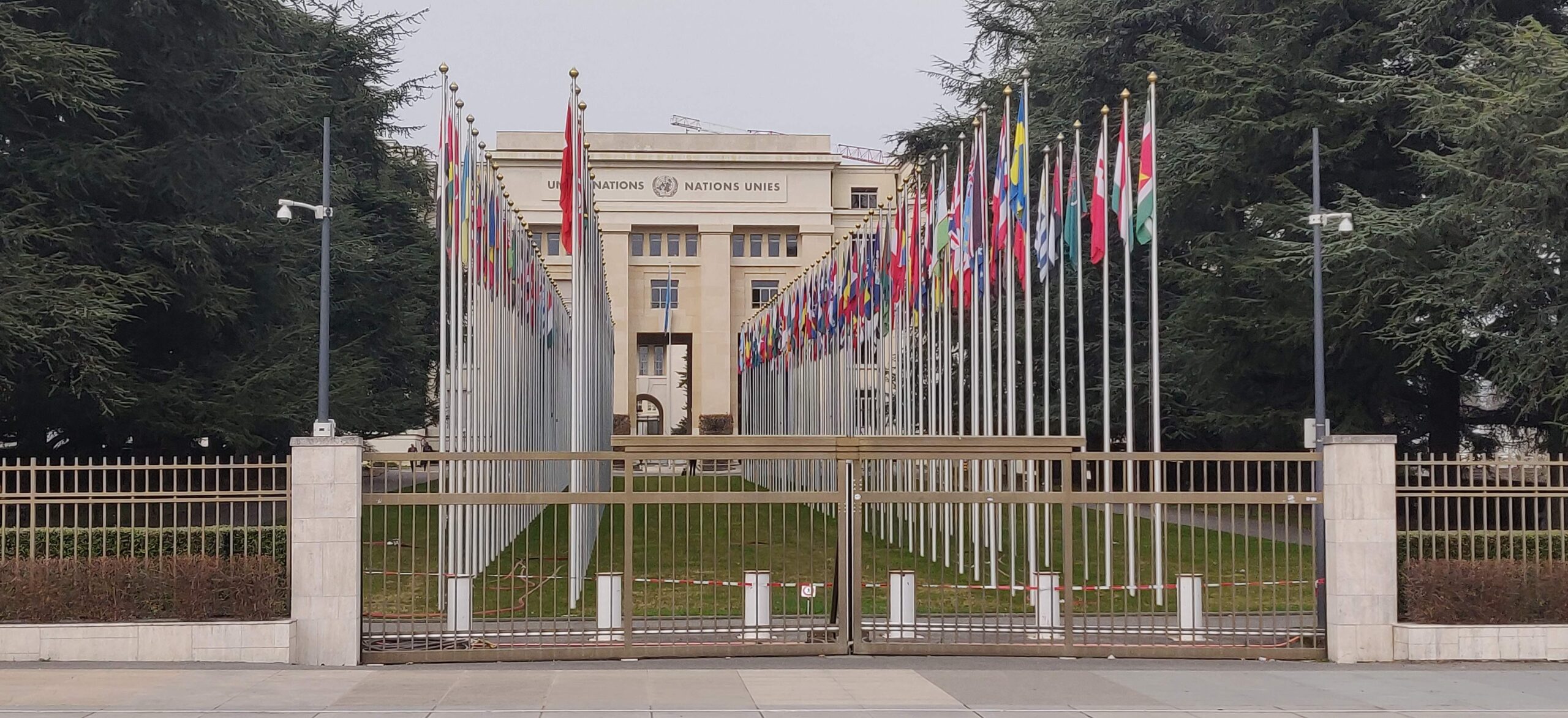
Feature image: The Palais des Nations in Geneva, Switzerland, home to major international environmental negotiations and multilateral institutions
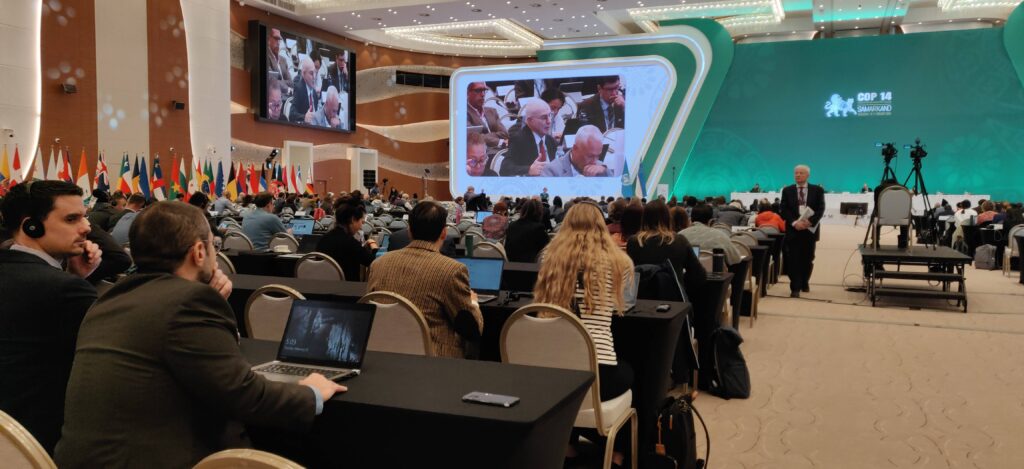
It is coffee break time at a meeting of the Convention on Biological Diversity. Around the conference hall, small groups of delegates gather with steaming cups, their conversations flowing in a patchwork of languages.
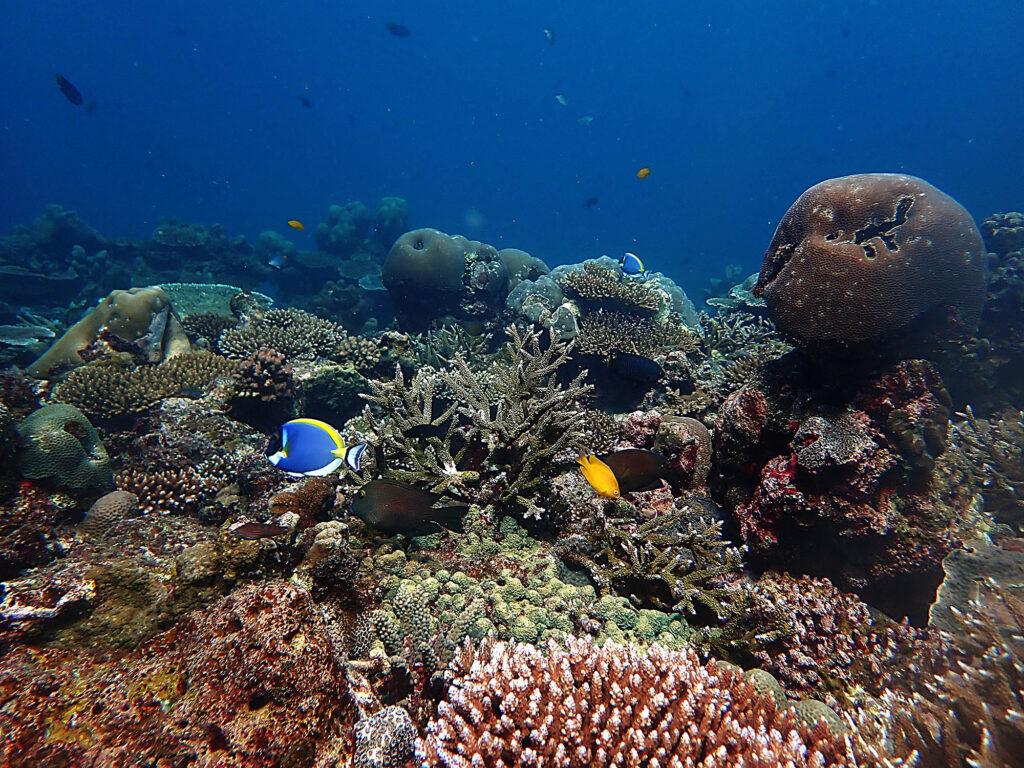
A negotiator from Brazil shares with a colleague from Mozambique updates on new forest restoration targets. Across the room, scientists from Malaysia and Indonesia compare notes on coral reef monitoring in the Coral Triangle. Near the counter, representatives from France and Morocco discuss how to strengthen the next Global Review of Progress towards the Kunming-Montreal Global Biodiversity Framework (GBF).
They are all here to serve a shared purpose—protecting life on Earth—yet their exchanges are shaped, and sometimes limited, by the languages they speak. Some turn to interpretation headsets, others to hesitant English, others still to gestures and patience.
What connects these people is not only their commitment to biodiversity but the fragile thread of language that allows their cooperation to exist at all.
Language barrier
In an international conservation meeting, the air hums with translation headsets, documents in multiple versions, and delegates waiting for their turn to speak. Yet beneath this choreography of diplomacy lies a quieter imbalance, one not of ideas but of languages.
Conservation is a global effort, but it is carried out through a remarkably narrow linguistic lens. The world’s major environmental treaties such as the Convention on Biological Diversity (CBD) or the Convention for Migratory Species (CMS) largely operate in just three to six languages: English, French, Spanish, and, less consistently, Arabic, Chinese, and Russian. These languages were chosen for historical and political reasons, not ecological ones. As a result, the nations that hold the most biodiversity often find themselves outside the linguistic boundaries of global conservation.
This mismatch matters. GBF, adopted in 2022, calls on all nations to live “in harmony with nature” by 2050. Research has long shown that language is more than a communication tool; it is a gatekeeper of participation and power. In global biodiversity meetings, English often becomes the default, especially in the smaller groups such as the “friends of the chair” or contact groups. Friends of the chair is a very small group of chair-selected countries that have divergent views on specific clause(s) of one decision and come together with the aim of reaching a compromise. Contact groups are groups of countries that will actually negotiate language, line by line, of the decision in question. These are the groups where key compromises are actually achieved. Delegates who are not fluent may struggle to intervene, and their perspectives may be diluted or delayed by interpretation limits.
In our article titled ‘Languages of life: A global perspective on linguistic priorities for biodiversity conservation’ published in Conservation Letters, we explored whether the languages currently used by major international biodiversity agreements reflect where biodiversity is actually found. We noted that even when interpretation services exist, they are “typically restricted to English, French, or Spanish”, excluding many of the most spoken languages worldwide.
This linguistic inequality trickles down the policy chain. National agencies receive technical documents in unfamiliar languages. Field practitioners and local conservationists, those mostly responsible for turning global commitments into action, often work from secondhand summaries or partial translations. Over time, this creates a gap not just in understanding but in representation: whose science informs policy, whose priorities shape conservation goals, whose voices are heard at the table.
Beyond practicality, language barriers expose deeper questions of justice. For example, in conservation, this means the communities most intertwined with nature often have the least say in global decisions about it. We argue, linguistic accessibility is “central, not peripheral, to the success of multilateral environmental governance”. The loss of biodiversity, then, is not only ecological. It is also linguistic, a quiet erosion of understanding that undermines cooperation at every scale, from United Nations negotiations to a ranger’s notebook in the field.
Mapping the languages of life
To understand how language shapes global conservation, we articulated a surprisingly simple question: in which languages does the world’s biodiversity “live” in? We searched for data to identify where the highest levels of biodiversity, by taxonomic group, were located and which languages are spoken in those locations.
We began with one of the most comprehensive databases in conservation science, the IUCN Red List. We compiled the maps of the distribution of more than 33,000 species of mammals, birds, reptiles, amphibians, and corals. These groups were chosen because they are comprehensively accessed in the IUCN Red List—which means that we have global maps of the distribution for virtually all species. Then, we overlayed a map of species richness of each of the groups with a map of languages spoken in different countries based on the work of Negret et al., 2022. For every country, we noted both the official language used for governance and the most spoken language used by its people.
By combining these two layers of information, we could see how species distributions overlap with linguistic boundaries. In other words, for each species, we asked: In what language is this species most likely to be “spoken about” by the people and policies that govern its range?
The results were revealing. When official languages were considered, Spanish and English emerged as the two dominant languages of biodiversity, each covering about a quarter of all species distributions. They were followed by Portuguese, French, and Malay, which together accounted for another quarter. But when the researchers looked instead at the most spoken languages, the picture changed considerably. English and French lost ground, while Malay gained prominence, especially in the marine-rich regions of Southeast Asia.
This shift highlights a simple truth: some of the languages where the highest biodiversity of some groups exists are not represented in many cases in the international policy arena. For example, coral species are concentrated in the ‘Coral Triangle’, spanning Malaysia, Indonesia, the Philippines, Timor-Leste, and Papua New Guinea. Yet few global conservation documents are ever translated into Malay or Bahasa Indonesia, the very languages spoken by the communities who manage these reefs.
Even Portuguese, which ranked above French in the study, is invisible in multilateral biodiversity fora. It is the official language of nine countries across South America, Africa, Europe, and Asia, including Brazil, Mozambique, and East Timor, regions that together hold vast portions of the planet’s biodiversity.
The pattern is clear. The biodiversity of the world is represented by a multilingual community of countries, but the international policies meant to protect it are most often not. The study’s figures show that two non-UN official languages, Portuguese and Malay, are among the most relevant for global biodiversity, yet they remain largely ignored by Multilateral Environmental Agreements (MEAs).
This mismatch does more than complicate communication. It limits whose knowledge, science, and priorities inform conservation policy. As we put it, the languages of biodiversity conservation have evolved for political convenience, not ecological necessity. And that, we believe, needs to change.
Words shape the world
If biodiversity conservation depends on cooperation, then language is the first bridge that must be built. Our findings make clear that language barriers are not a side note in conservation; they are a structural fault line running through it. The choice of official languages in multilateral agreements, such as English, French, and Spanish, reflected post-war diplomacy and the workings of the United Nations. But biodiversity does not follow the same map as politics. Some of the richest ecosystems on Earth are governed in languages that rarely appear in international conservation dialogues.
When major policy documents and technical manuals remain untranslated, the result is exclusion in slow motion. National agencies that receive these documents may lack the capacity to translate or interpret them accurately. Local conservation officers and field teams, who are responsible for turning broad policy goals into on-the-ground action, are often left with secondhand summaries or unofficial translations. This weakens implementation, but it also shapes whose knowledge counts as legitimate.
In practice, this means that international decisions about coral reefs in Indonesia or forest restoration in Mozambique are often informed by materials written in languages foreign to those who manage them. Even the most dedicated practitioners cannot apply what they cannot fully understand. As our study points out, “countries with representatives that do not fully dominate the English language are excluded from effectively participating in the decision-making process”, and the same pattern repeats at national and local scales.
The issue goes deeper than efficiency. It is about justice and power. The dominance of certain languages in conservation determines which scientific studies are cited, which communities are consulted, and which forms of knowledge are seen as credible. A growing body of research has shown that much of the world’s biodiversity science is written in non-English languages, yet remains overlooked in global assessments. When translation lags behind, local insights and Indigenous knowledge risk being silenced.
Language thus becomes both a mirror and a barrier. It reflects old hierarchies while quietly shaping new ones. Policies written for everyone but comprehended by few cannot foster true collaboration. The study reminds us that inclusivity in conservation is not achieved only through funding or representation, but also through the words we choose and the languages we use to speak for nature.
The future must be multilingual
If the world’s biodiversity is represented by voices speaking in many languages, then conservation must learn to listen in many as well. We argue that solving the language gap is not just about adding more words to a document, but about rethinking how global conservation communicates with the people who live closest to nature.
We propose a practical solution: a four-tier system for prioritising translation in MEAs and global policy forums. The first tier includes the lingua francas of global diplomacy, such as English, French and Spanish, which allow countries to communicate across borders. The second tier is made up of the official United Nations languages, including Arabic, Chinese, Russian, which already have established systems for translation and interpretation.
But the real shift happens in the third tier. Here we suggest what we call ‘biodiversity-priority languages’—those spoken in countries that hold a large share of the planet’s species and ecosystems. Portuguese and Malay, for example, are used across vast regions rich in tropical forests, coral reefs, and endemic wildlife. Yet these languages are almost absent from major biodiversity conventions. Translating technical guidance, reports, and training materials into these languages could make a direct difference for conservation officers and researchers who depend on them every day.
The fourth tier focuses on local and Indigenous languages, which play an irreplaceable role in the implementation of conservation policies. These are the languages in which people discuss fishing practices, forest use, and sacred landscapes. They carry generations of ecological knowledge that often remain invisible to formal policy frameworks. Including them, even through small steps such as community-led translation or local naming in educational materials, strengthens both equity and effectiveness.
We also recognise that language inclusion must be feasible. We do not call for every document to be translated into every language, but for a smarter, more strategic approach. We suggest partnerships, where various actors call for coordination in the translation and review of policy documents. This would correspond to the ‘whole of society approach’, as the Global Biodiversity Framework of the Convention on Biological Diversity calls for. Voluntary funding or regional networks could support this process, ensuring that the languages most relevant to biodiversity get the attention they deserve.
Technology could help too. Machine translation tools are becoming more accessible, but they cannot fully replace human understanding, especially for complex technical, scientific, or legal concepts. The study recommends hybrid systems that combine artificial intelligence with expert review to maintain accuracy while reducing costs. Another idea is to escalate crowd-sourced translation, where local professionals and conservation students contribute to translating materials relevant to their regions, either by raising awareness about the relevance of translation and/or finding some sort of incentives for wider engagement. This not only improves context and quality but also builds local capacity and ownership.
Behind these technical suggestions lies a powerful message: conservation cannot be truly global if it speaks only a handful of languages. The biodiversity crisis demands cooperation from every level of society, from international diplomats to local field teams. And cooperation depends on comprehension. As we write in our paper: “An international conservation arena that truly embraces inclusivity must make greater efforts to acknowledge the rich linguistic diversity of humanity.”
Language inclusion, then, is not an administrative exercise. It is an act of respect, a recognition that the protection of life on Earth begins with the ability to understand one another.
Further Reading:
Negret, P. J., S. C. Atkinson, B. K. Woodworth, M. Corella Tor, J. R. Allan, R. A. Fuller and T. Amano. 2022. Language barriers in global bird conservation. PLOS ONE 17(4): e0267151. https://doi.org/10.1371/journal.pone.0267151.
Veríssimo, D., C. Hazin, R. Rocha and M. P. Dias. 2025. Languages of life: A global perspective on linguistic priorities for biodiversity conservation. Conservation Letters 18(5): e13139. https://doi.org/10.1111/conl.13139.