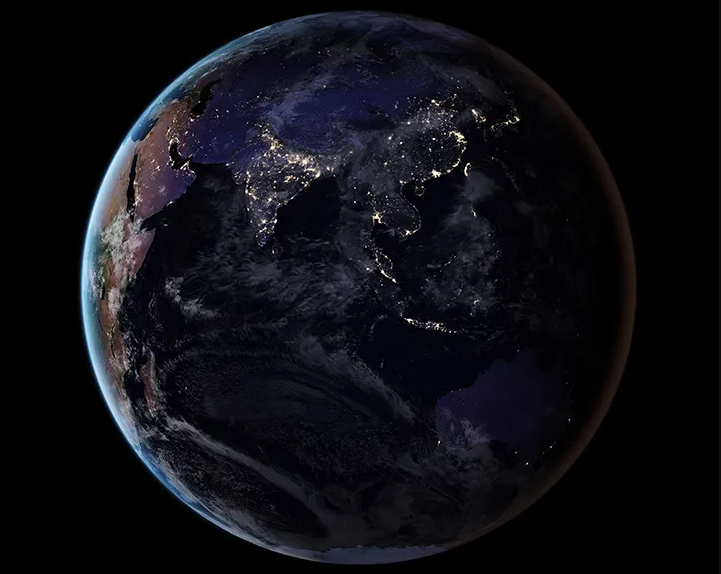
Feature image: Earth at night, where urban light sources illuminate what would have otherwise been a completely dark hemisphere (Source: NASA Earth Observatory)
From space, Earth looks like a glowing marble split in two. One side faces the sun, while the other side is dark. Yet this whole half that should be dark is illuminated with webs of city light—a triumph of humans conquering the night. It glitters like a living body, every city a beating heart, every lit street an artery carrying the pulse of urban life that never sleeps.
Today, artificial light at night (ALAN) is one of the fastest growing pollutants on Earth. Unlike smog or plastics, its effects are not immediately visible, yet they can profoundly reshape ecosystems. As artificial lighting spreads, it increasingly blankets habitats that evolved under natural darkness.
Biological clocks
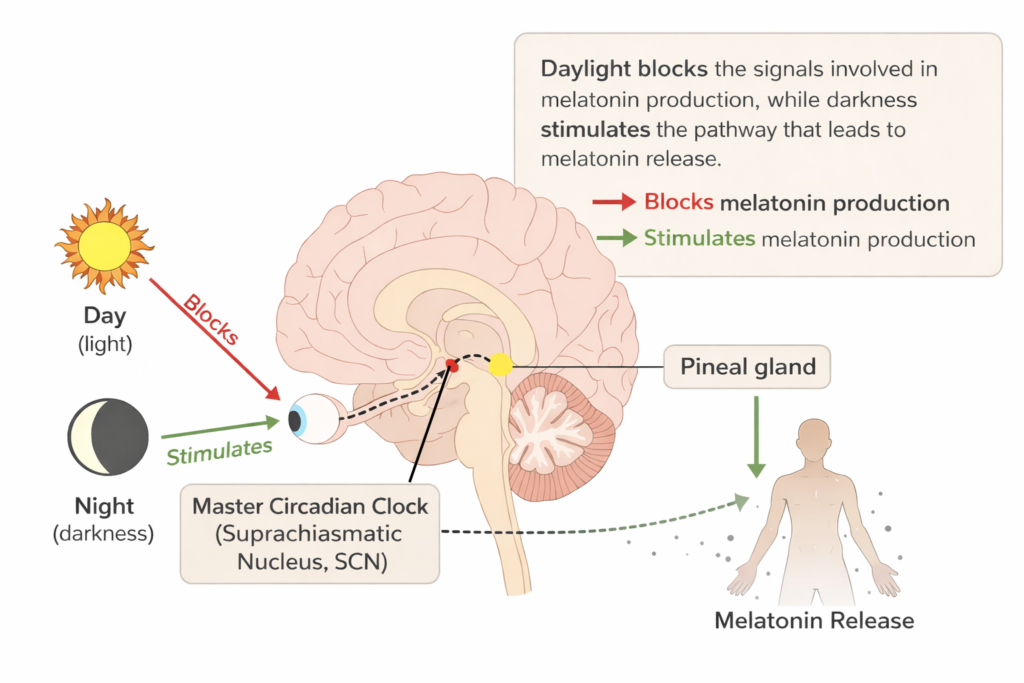
In humans and many other organisms, internal biological clocks regulate daily cycles of sleep, metabolism, and hormone release. This circadian rhythm allows organisms to align bodily functions such as sleep, behaviour, energy usage and metabolism, with day-night cycles. In humans, light detected by our retina travels to the suprachiasmatic nucleus (SCN)—a specific part of the brain that is also known as the body’s ‘master circadian clock’.
The SCN functions by regulating the production of melatonin, a hormone that serves as the body’s sleep-signal. Production is inhibited by light but flows freely in the dark. Artificial light interferes with these signals, confusing the biological clocks that organisms rely on to coordinate behaviour and physiology. Even in fungi and protists, which do not have typical ‘clock genes’, other systems help keep their biological timing working. Biological clocks have been repeatedly favoured throughout evolution, suggesting that they help organisms survive across a wide range of environments and conditions.
Each species carries its own internal clock, and together they form the living body of Earth, regulated by a shared, planet-wide cycle of day and night. When this rhythm is disrupted, the balance begins to break down. Feeding becomes irregular, reproduction falls out of sync, immunity weakens, and the system moves toward disorder.
Life out of sync
Humans are not immune to the consequences of artificial light. Our modern environment has effectively severed the link between sunset and sleep; the same artificial glow that keeps our cities lit also disrupts our internal rhythms. Artificial lighting suppresses melatonin production—the hormone that regulates our sleep cycle. One clinical study found that when melatonin onset was consistently delayed, concentration was lower, and the duration was shorter in individuals exposed to normal room lighting prior to sleep as compared to those exposed to dim light. Habitual exposure to lighting around bedtime hours, therefore, shortens the body’s internal ‘nighttime’, thereby hurting sleep quality and disturbing the body’s natural sleep-wake cycle.
The effects are deeper because melatonin also plays a role in other physiological processes. Scientific studies have observed a link between people exposed to light at night and cancer risk—melatonin has been identified as a cancer-protective, and increased ALAN exposure reduces its production, potentially raising the risk of cancer, particularly in night shift workers.
The body’s response to day-night cycles is fundamental to how we regulate hormones, and changes in circadian rhythms can have pervasive, unpredictable effects. Our species has tricked its own clock, often finding ourselves knowing we should sleep even when our bodies disagree.
Effects on wildlife
Like humans, wildlife is forced to contend with the disruptive effects of artificial light. ALAN disturbs biological rhythms—from migration to navigation to mating—undermining ecosystems that depend on natural darkness.
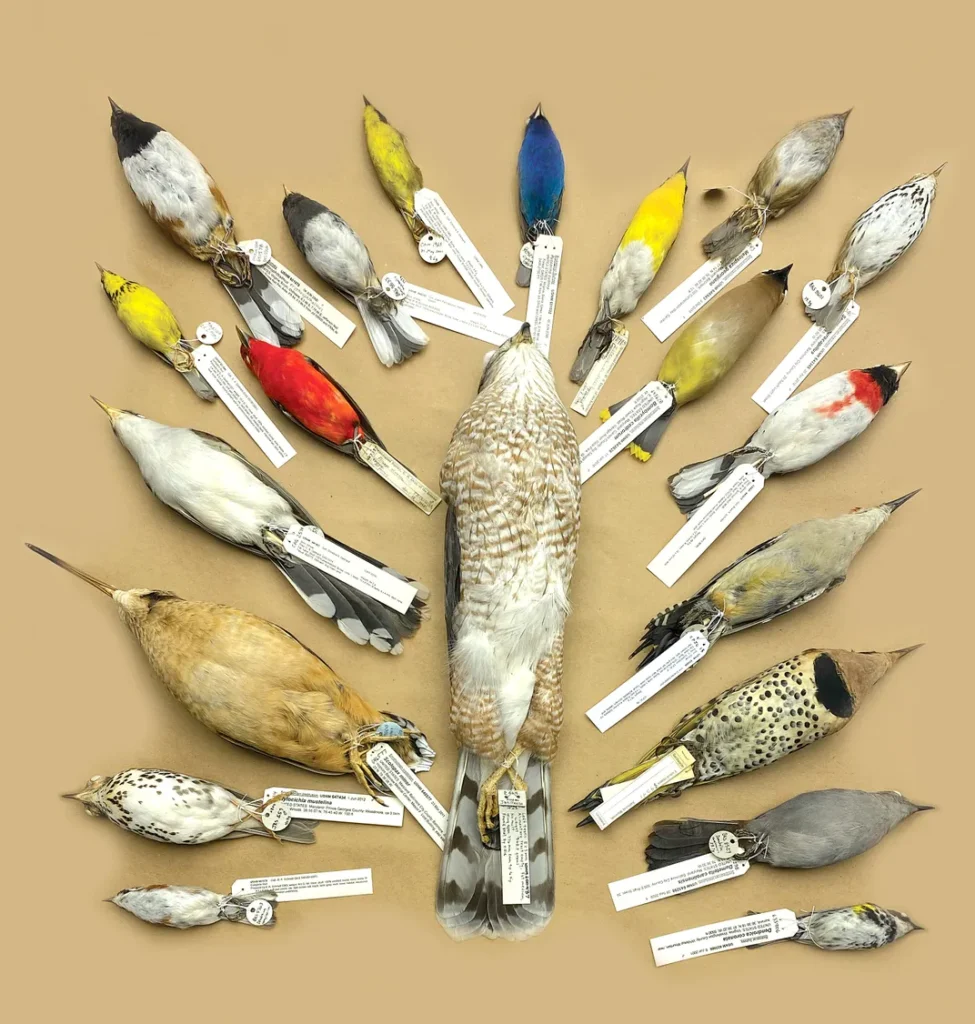
For birds that migrate at night, the consequences are particularly acute. A review of 26,000 avian studies found that artificial light from cities and even satellites disrupt birds’ stellar compass, which guides migration. At a more acute level, birds aggregate around and collide with artificially lit objects, increasing mortality. These migratory systems evolved under natural light from the stars and the moon. Artificial light alters these cues, creating a new barrier. Drawn to artificial light, their stopover behaviour and migratory path change, increasing the energy costs and reducing success. The scale of this disruption is staggering. The Smithsonian National Museum of Natural History estimates that 300 million to 1 billion migratory birds die each year in the US from collisions with lit buildings, largely due to nocturnal disorientation.
ALAN also disrupts frog mating behaviour. A study in central Texas compared male mating calls under artificial light and natural night conditions—artificial light significantly reduced both the number and intensity of calls, consistent across species and environmental conditions, suggesting artificial light alone drove this decline. For nocturnal frogs, a single nearby streetlight can reduce reproductive success, and even small population declines can tip toward collapse.
Yet not all responses are purely negative, as some species show early signs of adaptation. Studies of the common swift, a diurnal bird, have found that individuals exposed to high-intensity artificial light remain active throughout the night, exploiting novel prey such as nocturnal moths. But while this extended activity may improve foraging success, it may also carry costs for reproduction and overall fitness. Bats show a different kind of opportunism. A study on little brown bats found foraging tripled under UV light near cave entrances, with activity nearly nine times higher at the light source. These bats exploit insects’ attraction to artificial light, turning a threat into a tool.
Urban moths, meanwhile, have been found to be significantly less attracted to light than rural ones. Because ALAN draws moths into predation and exhaustion, it acts as a selection pressure against light attraction, producing measurable adaptation over time. Thus, artificial light acts as a selective pressure, reshaping ecological interactions much like habitat loss or climate change.
When plants lose track of time
Plants also tell time through light, making them vulnerable to shifts introduced by artificial illumination. They measure day length—a process called photoperiodism—to decide when to flower, grow, or shed leaves. In a study examining the effects of city light levels on seasonal natural phenomena, or phenology, in trees and shrubs, plants were exposed to uniform daytime lighting but different levels of nighttime lighting to mimic urban light pollution. All species showed accelerated bud and leaf expansion, altered sugar production, and delayed autumn dormancy—essentially, spring came earlier and autumn came later.
This changed calendar brings many potential consequences, such as exposing leaves and flowers to late frost damage, decoupling flowering with pollinator activity, and compromising effective energy storage and use. This exacerbates the microclimates of cities, as life within the city becomes temporally disconnected with life beyond. The decoupling of flowering with pollinator arrival is a particularly concerning issue.
A recent study found that ALAN affects daytime pollination events. In meadows exposed to streetlamp light at night, 19 percent of plant species received significantly fewer daytime pollinator visits. This could be due to disrupted floral circadian rhythms changing scent emission or nectar timing, or changes in pollinator circadian rhythms shifting when they forage. Reduced pollination yield is a major threat to ecosystem health, as lower production in plants lessens the available resources for all higher trophic levels, from herbivores to apex predators.
What’s next?
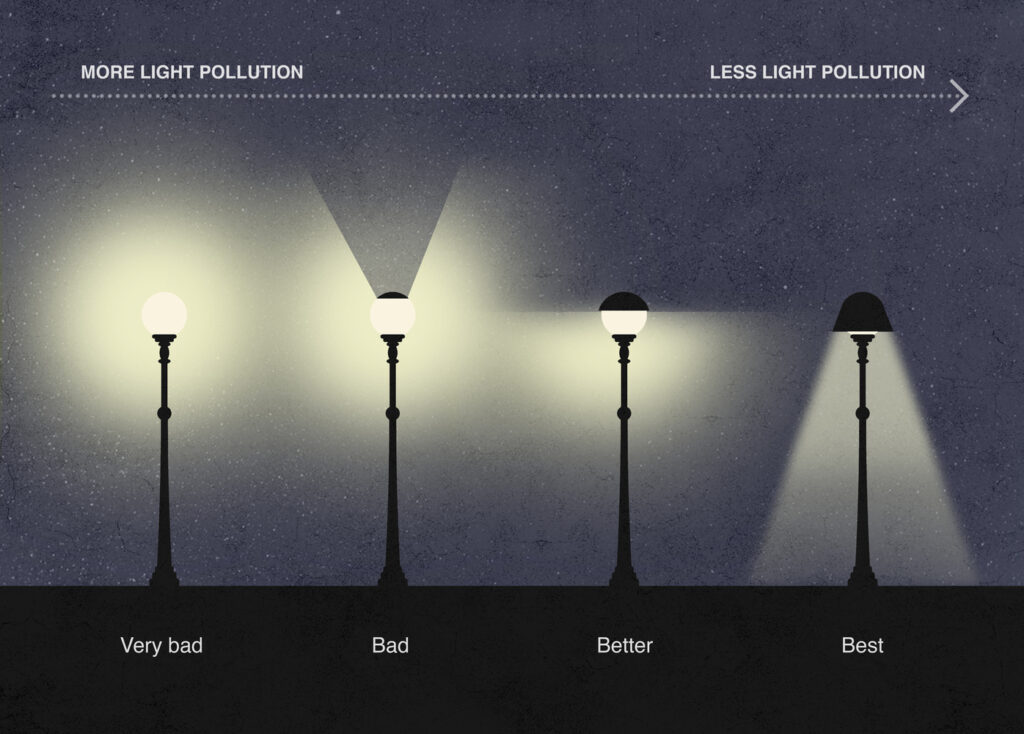
As awareness of artificial light’s ecological costs grows, scientists, engineers, and policymakers are increasingly developing solutions to restore natural nightscapes. Using amber or filtered LEDs reduces the ecological impact by removing the blue light waves that do the most harm to circadian systems. Physically shielding lights to point them directly downward also limits the amount of light pollution beyond the intended area. These small, one-time changes during installation can go a long way to mitigate the negative impacts of artificial lighting, while fully maintaining functionality.
At the policy level, the International Dark Sky Places Programme is working to expand its existing network of over 200 Dark Sky Places—a certification programme that commits to the protection of natural darkness across designated land through responsible lighting, community policy, and long-term conservation efforts.
These policy changes rely on a shift in thinking. Often, arguments are built around tourism: preserving the view of a star-filled night sky. But this is not about going backwards technologically. It’s about letting a tired planet sleep. Artificial light at night is both a symbol and a symptom of our success as a species. It signifies progress and human ingenuity, but its overuse has transformed it into a far-reaching pollutant that disrupts the rhythms that life has depended on for billions of years. Like many other human byproducts, artificial light fundamentally changes the cycles of life on this planet.
Its effects extend beyond human health to wildlife and ecosystems, unravelling the intricate network that sustains our planet. Through technological innovation, considered policy, and collective awareness, we can minimise the harm we cause to the animals and plants we share this world with—and by protecting the night, support a healthier future for all.
Further Reading:
Adams, C. A., E. Fernández-Juricic, E. M. Bayne and C. C. St. Clair. 2021. Effects of artificial light on bird movement and distribution: a systematic map. Environmental Evidence 10: 37. https://doi.org/10.1186/s13750-021-00246-8.
Giavi, S., C. Fontaine and E. Knop 2021. Impact of artificial light at night on diurnal plant-pollinator interactions. Nature Communications 12: 1690. https://doi.org/10.1038/s41467-021-22011-8.
Gooley, J. J., K. Chamberlain, K. A. Smith, S. B. S. Khalsa, S. M. W. Rajaratnam, E. Van Reen, J. M. Zeitzer et al. 2011. Exposure to room light before bedtime suppresses melatonin onset and shortens melatonin duration in humans. Journal of Clinical Endocrinology & Metabolism 96(3): E463-72. https://doi.org/10.1210/jc.2010-2098.