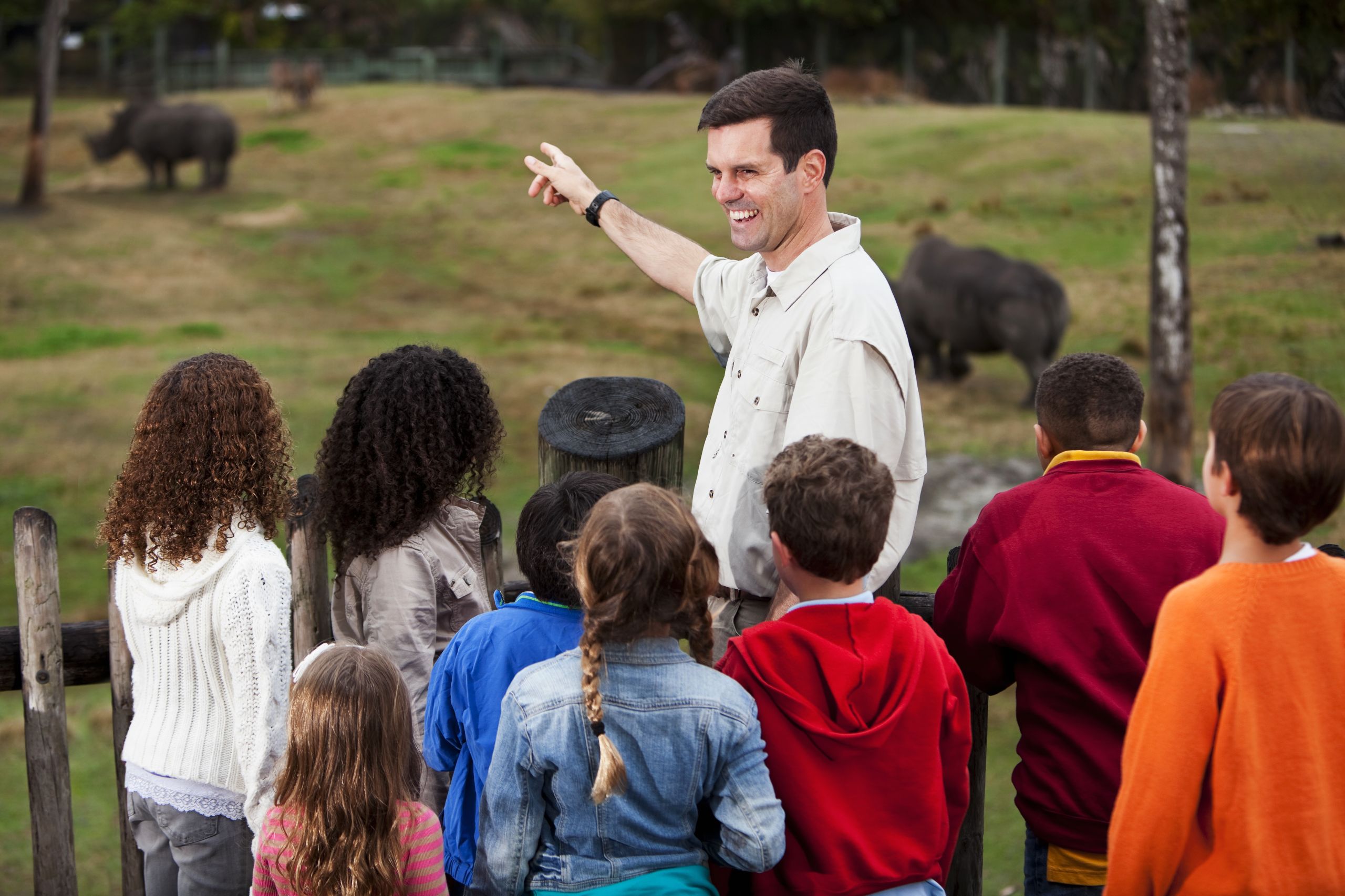
Feature image: Zoos can help shape the meanings visitors attach to the natural world and their relationship with it (Photo credit: kali9 via iStock)
A walk through almost every zoo is framed as an educational experience. Species names line the paths. Maps trace shrinking population ranges. Conservation threats are neatly summarised, sometimes paired with a request to help save an animal or habitat. Yet despite this abundance of information, many conservation challenges remain stubbornly unresolved. If information alone were enough to change behaviour, the outcomes might look very different.
Debates about the role of modern zoos continue, particularly around ethics, animal welfare, and whether such institutions should exist at all. While these discussions are important, they often overlook a related question. If zoos are to justify their place in conservation and education, how effectively do they influence the way people think and act?
This disconnect points to an important reality. People do not act solely on what they know. Behaviour is shaped by interpretation, meaning how individuals make sense of information in relation to their values, identities, and everyday lives. Zoos, aquariums, and other nature-focused institutions are uniquely positioned to influence this process. They do not simply present facts about wildlife. They shape the meanings visitors attach to the natural world and their place within it.
Cultivating care
Many of us carry early zoo memories that remain centred in our mind. My own include being hoisted onto my father’s shoulders at the Bronx Zoo, watching giraffes move with quiet purpose or penguins cutting through water with ease. Later in life, school visits by zoo ambassadors featuring live animals reinforced that fascination. These moments were not lessons in taxonomy or ecology. They were experiences that made animals feel real, present, and worthy of care.
Such encounters reveal something fundamental about conservation learning. People rarely develop lasting concern for nature through information alone. Care grows through experiences that allow individuals to interpret meaning by connecting what they observe to who they believe themselves to be. Zoos offer repeated, place-based encounters with wildlife that quietly shape environmental identity over time, often long before visitors consciously consider conservation action.
Exhibit signage plays a pivotal role in this meaning-making. Traditionally, signs focus on delivering information such as where an animal lives, what it eats, and how threatened it is. While this knowledge matters, it rarely prompts visitors to reconsider their own behaviour. Interpretation, by contrast, reframes information as a story with personal relevance. It encourages visitors to ask not only what they are looking at, but how they are connected to it.
When signage links animal narratives to everyday choices, such as palm oil and tiger forests or plastic use and ocean health, conservation stops being an abstract problem. It becomes a system in which visitors already participate. This shift is critical. Behaviour change is more likely when people see conservation actions as expressions of their values, rather than as instructions imposed by institutions.
Design choices strongly influence this interpretive process. The layout of an exhibit, the imagery used, the tone of the message, and even what is left unsaid all shape how visitors engage. Tools such as QR codes can extend learning beyond the exhibit space, but their impact depends on how they are framed. Poorly integrated, they become caches of excess information. Thoughtfully designed, they invite curiosity and action, allowing visitors to explore conservation on their own terms.
Interpretation also acknowledges that visitors are not a uniform audience. People arrive with different experiences, cultural backgrounds, and motivations. This diversity makes one-directional messaging insufficient. Increasingly, zoos are experimenting with participatory approaches that design exhibits and programmes with communities rather than for them. In these contexts, visitors are treated as collaborators in meaning-making, not passive recipients of information.
Community-centred initiatives illustrate the power of this approach. Programmes that invite families to identify local environmental concerns and develop solutions together shift the role of the institution. Zoo staff become facilitators rather than instructors, supporting dialogue and reflection instead of prescribing behaviour. When people feel their perspectives matter, conservation messages are more likely to resonate and endure.
Reimagining exhibits as interpretive experiences requires embracing complexity. Conservation issues are rarely simple, and effective interpretation does not rely on tidy solutions or moral commands. Instead, it creates space for uncertainty, trade-offs, and personal responsibility. This respects the intelligence of audiences and recognises that lasting change often begins with reflection rather than instruction.
The true significance of zoos lies not only in their ability to inform, but in their capacity to shape how people understand their relationship with the natural world. Debates surrounding the future of zoos are unlikely to disappear, nor should they. However, if these institutions are to remain relevant with modern conservation, their value may depend less on the information they provide and more on the meanings they help visitors construct.
When exhibits and signage prioritise interpretation over information alone, they transform moments of curiosity into moments of connection. In those moments, conservation shifts from something visitors learn about to something they begin to live with and, eventually, act upon.
Further Reading
Clayton, S. D., and G. Myers. 2009. Conservation psychology: Understanding and promoting human care for nature. Oxford and New York: Wiley-Blackwell.
Cranston, K. A., W. Y. Wong, S. Knowlton, C. Bennett and S. Rivadeneira. 2022. Five psychological principles of codesigning conservation with (not for) communities. Zoo Biology 41(5): 409–417.
Kelly, A., and J. C. Skibins. 2020. Inspiring wildlife conservation behaviours through innovations in zoo exhibit design. Visitor Studies 24(1): 79–99.