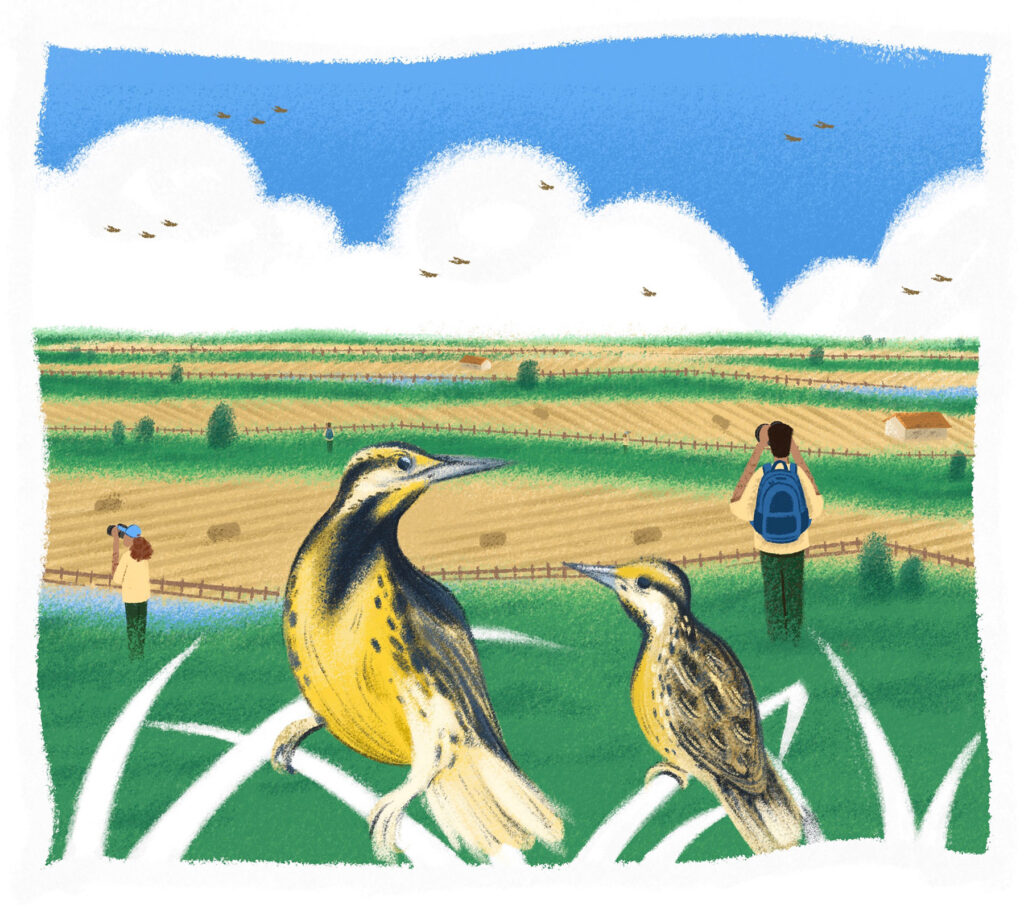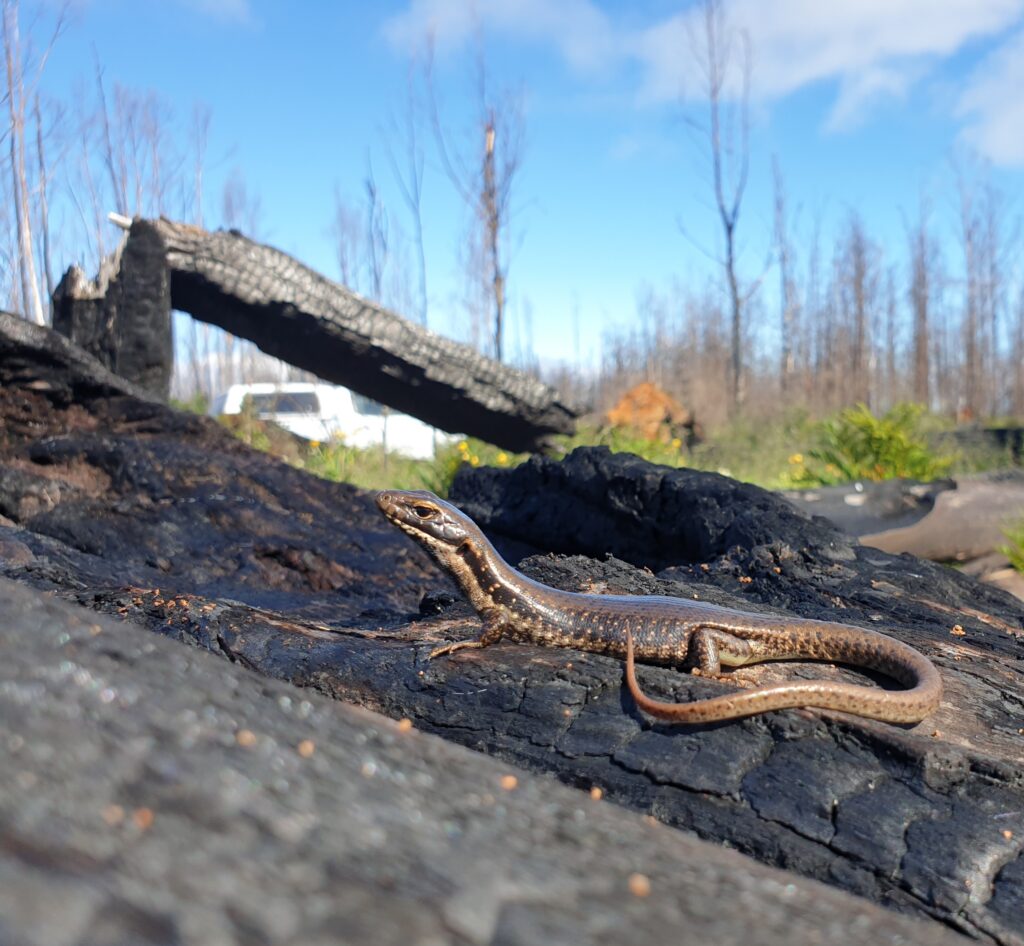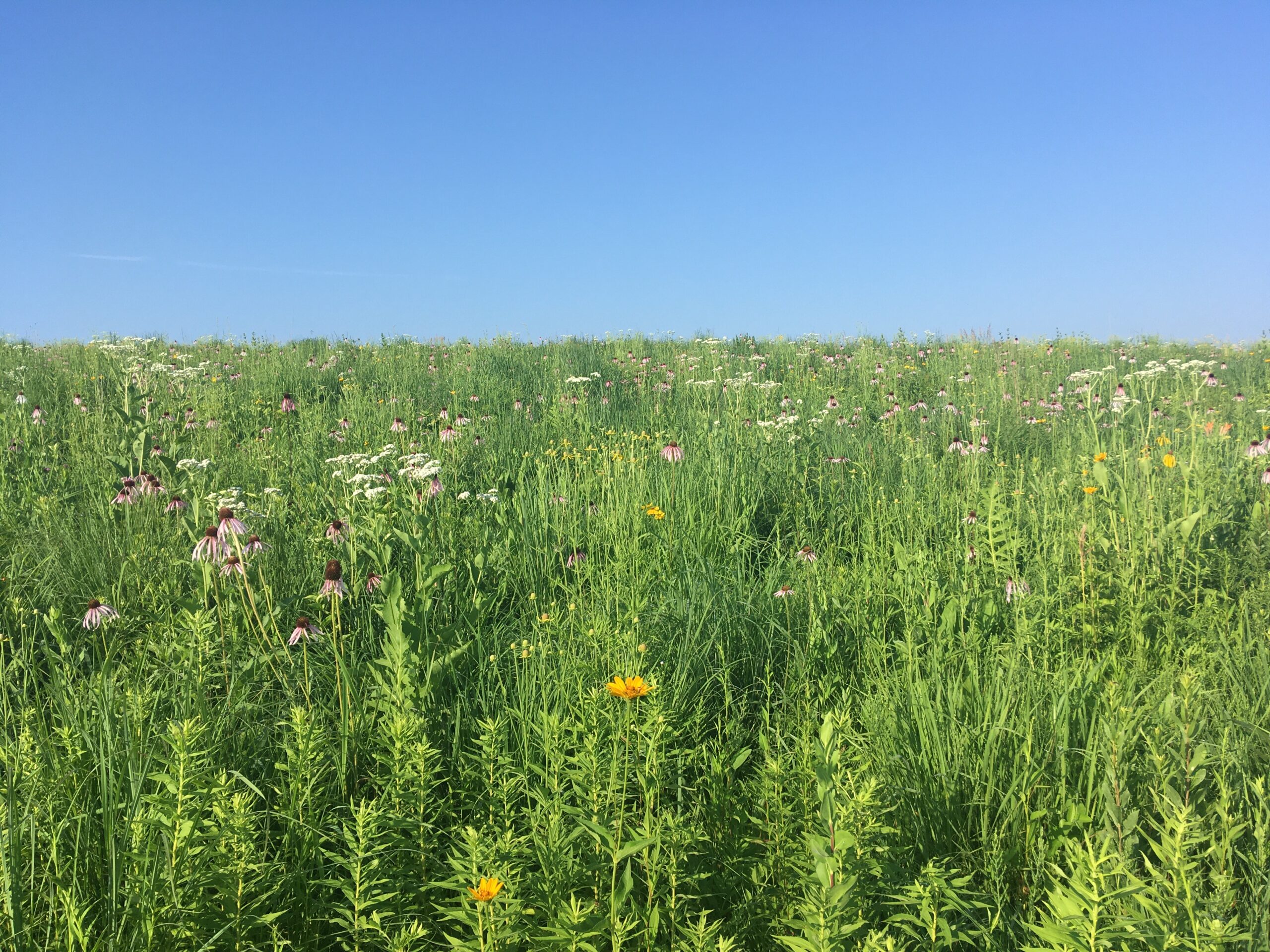
We often pay little attention to grassland environments—perhaps thinking of them simply as ‘weedy fields’ or agricultural spaces. When we worry about climate change, we tend to think of habitats stereotypically portrayed as ‘wilderness’ in popular media, such as forests and mountains. However, grasslands cover over a third of all land, provide vitally important ecosystem services, and support vibrant biodiversity.
Grasslands are home to the majority of insect pollinators, and provide habitat for many unique grassland bird and plant species. They also protect soils from erosion, and sequester an underappreciated share of the world’s carbon stock. This is because grassland plants evolved to grow in places where water is scarce, and consequently, these plants invest heavily in extensive and hidden root systems that eventually break down into rich organic matter. As a result, grasslands produce many of the world’s most fertile agricultural soils and provide livestock forage, supporting much of the meat and dairy production globally.
Climate change threatens grasslands
Despite their value, grasslands have received little attention from researchers trying to understand how to best manage natural resources under climate change. This neglect is troubling because climate change vulnerability and conversion to agriculture makes grasslands among the most endangered ecosystems. With adequate water, grasslands are boom and bust environments capable of immense productivity during a short growing season. However, they are vulnerable to severe drought because they occur in regions where rainfall is too scarce and irregular to support trees.
Further, grasslands tend to occur at lower elevations and lack the shade of forest canopies to moderate extreme temperatures. High temperatures and more frequent and severe drought, punctuated by extreme precipitation events, may affect the structure and function of grasslands in many ways. For example, drought may kill vegetation and reduce livestock forage capacity as well as floral resources for pollinators. Likewise, higher temperatures can negatively impact grassland wildlife causing the nests of birds to fail, for example. Combined changes in precipitation and temperature may also affect nutrient cycling and carbon sequestration in grassland soils, and exacerbate invasive plant threats.
Mitigation strategies
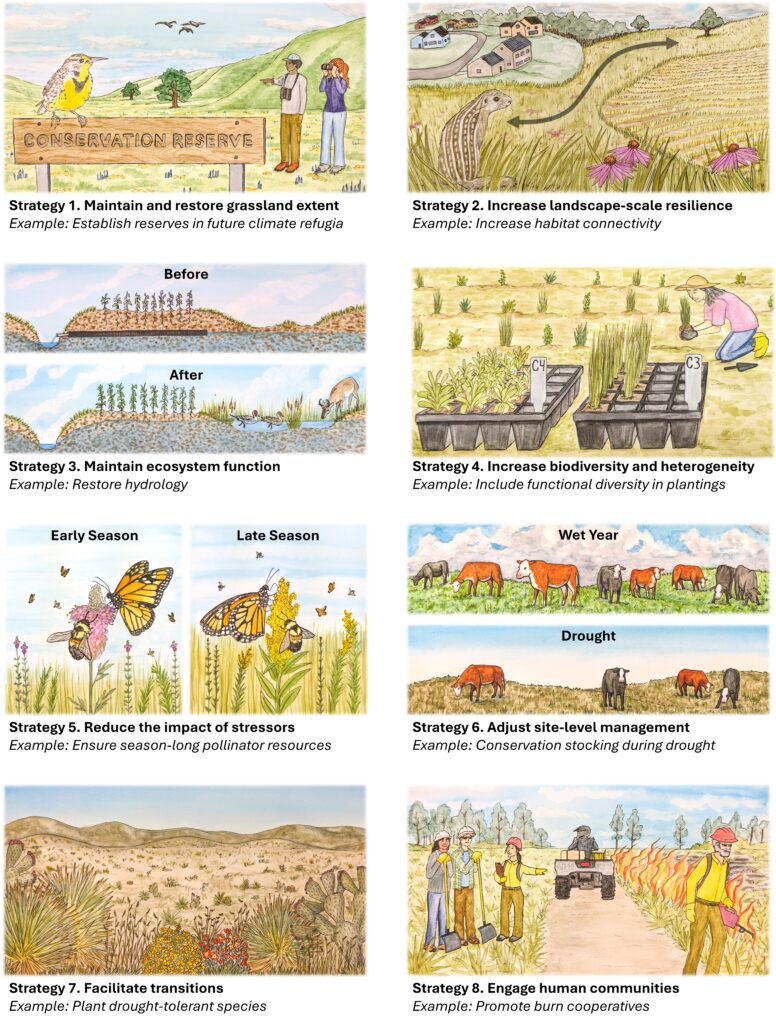
To address the challenges facing grasslands under climate change, our recent study developed a ‘Climate Adaptation Menu’ for grasslands. An adaptation menu is a scientifically vetted list of strategies with specific practices meant to provide natural resource professionals a diversity of options to mitigate climate change in grassland ecosystems. The menu was developed by systematically reviewing existing scientific recommendations and soliciting input from management professionals. We identified eight broad strategies with many specific actions associated with each.
Many of these strategies can be enacted across entire regions while others reflect practices that can be implemented at individual grassland sites. For example, strategic conservation investments in topographically complex areas could help bolster grassland resilience to extreme temperatures. Locally, changes in grassland management could also be implemented, such as shifting the timing of essential prescribed burns as springs become hotter and drier.
Ultimately, climate adaptation is the science of adjusting to a new climate reality. It is important to recognise that our grasslands and the managers tasked with their conservation will need support to maintain the many services that grasslands provide. The Grassland Adaptation Menu is intended to serve as a starting point for climate adaptation and provide much needed guidance for our grasslands in a changing world.
Further Reading
Bernath-Plaisted, J. S., S. D. Handler, M. Ahlering, L. A. Brandt, S. B. Maresh Nelson, N. D. Niemuth, T. Ontl et al. 2025. A climate adaptation menu for North American grasslands. Conservation Science and Practice: e70017. https://doi.org/10.1111/csp2.70017.