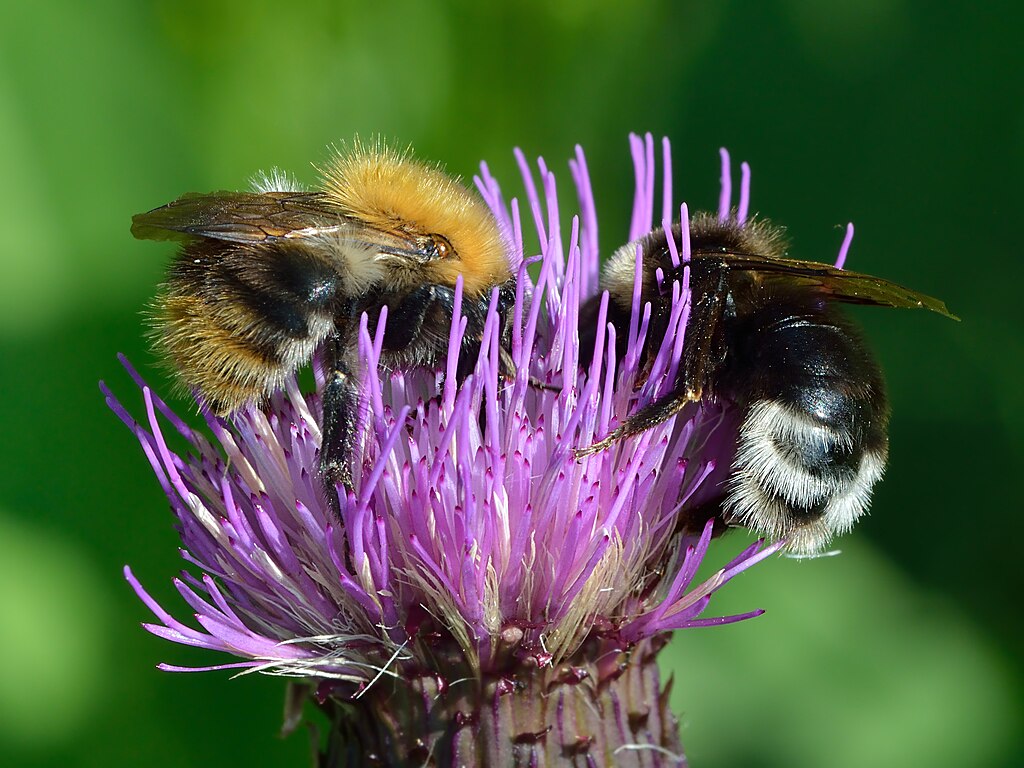
Feature image: The populations of bees and other pollinators are declining in city landscapes (Photo credit: Ivar Leidus via Wikimedia Commons)
Insects are key players in the reproductive lives of plants. By carrying pollen from one plant to another—a process known as pollination—insects contribute towards the reproduction of 35 percent of crops and 60 to 90 percent of flowering plants. But despite their central role in pollination, the number and diversity of major pollinating insect groups worldwide has dropped over the years, raising concerns about their vulnerability—especially in human-modified landscapes such as cities.
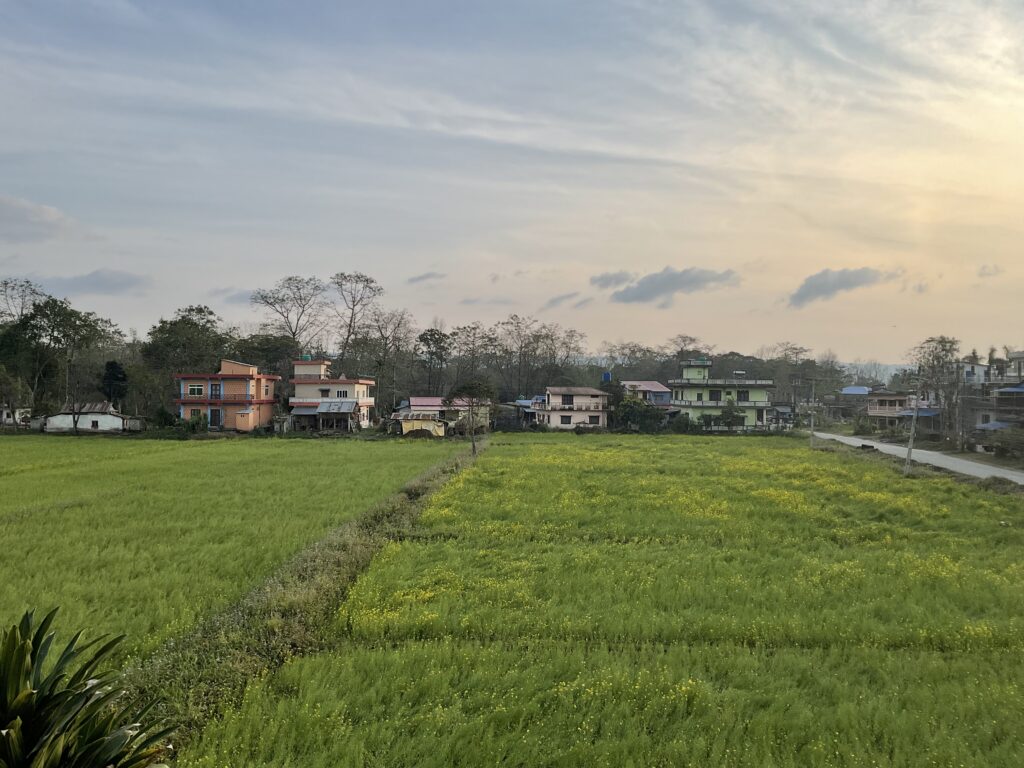
Urbanisation, which is associated with habitat fragmentation, disturbance, and loss, is a well-known driver of insect population declines. While cities do pose many challenges to insects, each city is unique. They can vary greatly in the proportion of impermeable surfaces—such as buildings, roads, and parking lots—and green areas, thus offering different levels of ecological habitat quality to pollinators.
In a recent study, researchers from the University of Sheffield and the University of Helsinki examined how pollinators that are active during the day (diurnal) and at night (nocturnal) respond to increasing levels of urbanisation. The team focused on members of three orders of flying insects: hoverflies (Diptera), bees (Hymenoptera), and nocturnal moths (Lepidoptera). These pollinators play complementary roles in the pollination of urban plants. However, little is known about the effects of urbanisation on lesser studied insects such as flies and nocturnal moths.
The researchers sampled the pollinators in urban horticultural sites (allotments) across three UK cities that differed in size and level of urbanisation. Some of the allotments were located closer to the city centre (more urbanised areas), while others were closer to the city borders (less urbanised areas). The team collected the pollinators using a combination of different trapping methods and measured how urbanisation affected their species richness (total number of insect species) and abundance (total number of insects).
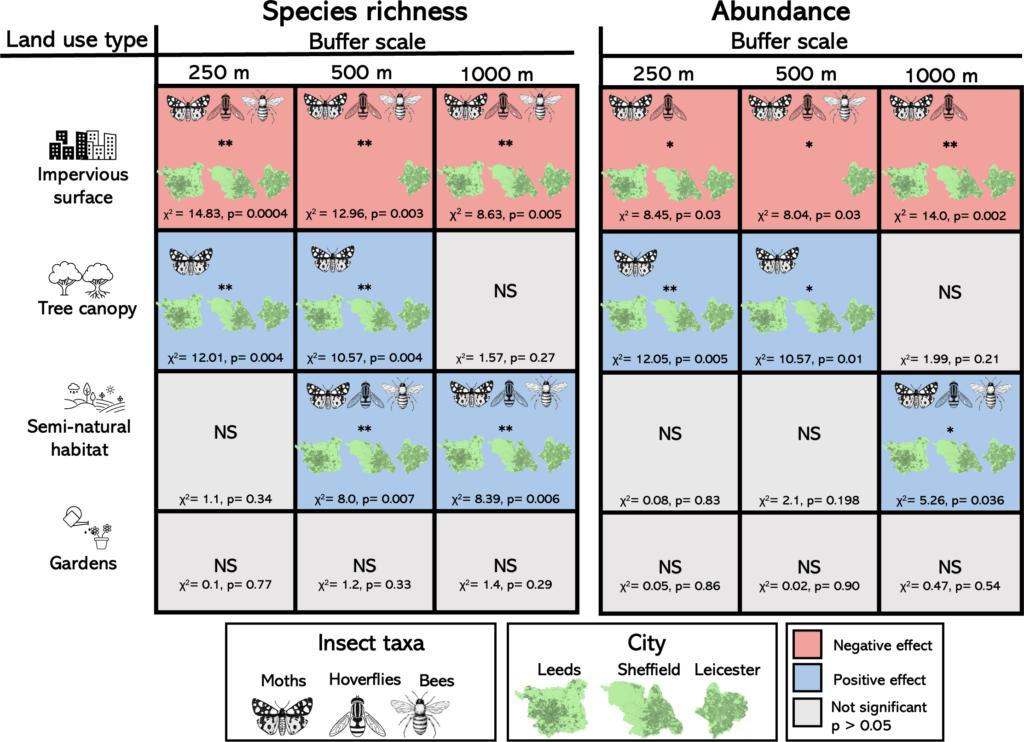
Urban landscapes were associated with a reduction of up to 43 percent in species richness. A closer analysis revealed that for every 10 percent increase in impermeable surfaces, there was a reduction of up to 7.5 percent in species diversity for all three insect groups. These findings, the authors of the study say, reveal how an increase in impervious surfaces—and consequently a reduction in semi-natural habitats and tree coverage—contributes to the decline of insect diversity in urban areas. The findings also reinforce the importance of preserving or even expanding natural elements within urban areas to protect pollinators.
Urbanisation did not affect the abundance of all insect groups equally. Hoverflies and moths were more susceptible to urbanisation than bees, suggesting that these often overlooked pollinators may be more sensitive to human-modified landscapes.
Though these results paint a gloomy picture for urban pollinators, not all hope is lost. The researchers found that certain green space features support these pollinating insects. For instance, an increase in tree cover was linked to a greater abundance and diversity of moths. In contrast, semi-natural habitats—such as scrubs and grasslands—benefited all pollinators by likely offering essential resources, including food, nesting, and pupation sites. Unexpectedly, domestic gardens, which are commonly found in cities, did not bolster the abundance or diversity of pollinators; the authors speculate that this may be due to variations in how these private, green spaces are maintained.
By examining how different aspects of urbanisation pose both general and group-specific threats to pollinators, the study reinforces the need for conservation approaches that consider these nuances to better protect urban insects and the ecological service they provide.
Further Reading
Ellis, E. E., S. A. Campbell and J. L. Edmondson. 2025. Drivers of nocturnal and diurnal pollinating insect declines in urban landscapes. Proceedings Biological Sciences: 292(2052): 20250102. https://doi.org/10.1098/rspb.2025.0102.
Wagner, D. L., E. M. Grames, M. L. Forister, M. R. Berenbaum and D. Stopak. 2021. Insect decline in the Anthropocene: death by a thousand cuts. Proceedings of the National Academy of Sciences of the United States of America 118(2): e2023989118. https://doi.org/10.1073/pnas.2023989118.