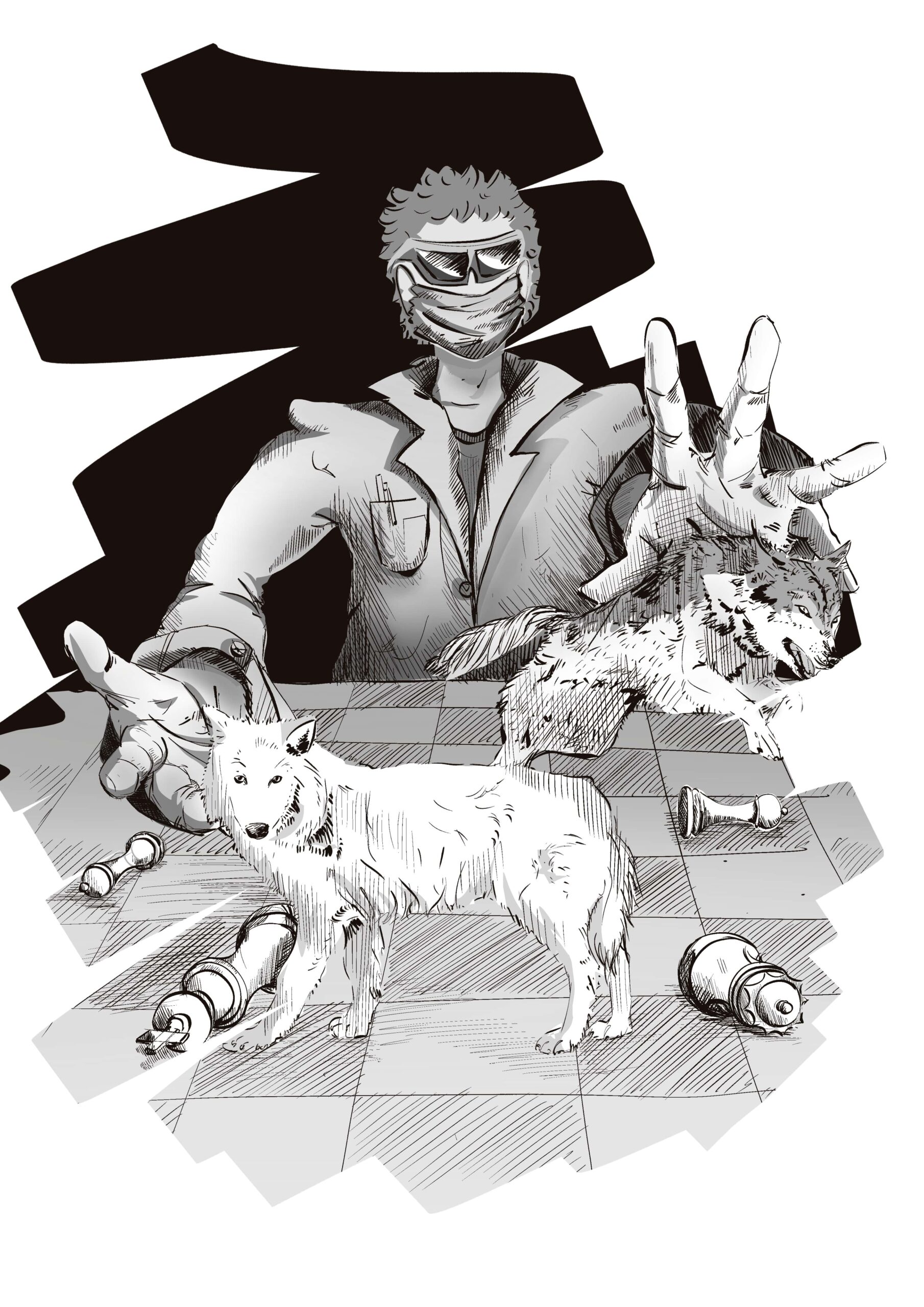
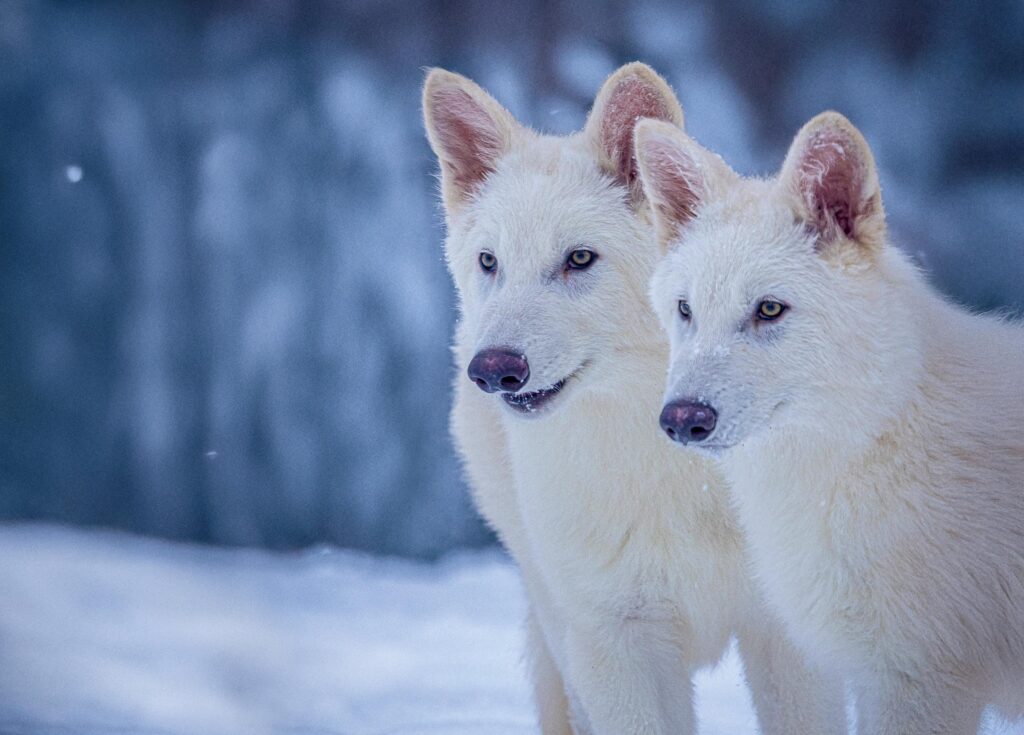
When Colossal Bioscience announced that the dire wolf was back from extinction in April 2025, they faced a barrage of criticism. Sceptics highlighted practical reasons that the project isn’t conservation, including the huge void between the birth of three puppies and a thriving population in the wild.
But what if that void could be crossed? If Colossal’s dire wolf lived free as part of a flourishing ecosystem, would that be conservation? This question may be hypothetical, but it is of huge importance. Unless we decide what conservation is, we can’t develop effective strategies.
Extreme examples such as de-extinction force us to confront our values, and test whether our intuitions stand up to scrutiny. The arguments about whether the dire wolf is conservation may already have run their course—the puppies are widely agreed to be a distraction that offers false hope. But the debate still offers a unique opportunity to address vital underlying dilemmas.
Here are seven questions that are brought into focus by dire wolf de-extinction.
1. Is conservation about a return to the past?
By resurrecting a lost species, de-extinction is perhaps the ultimate attempt to recreate a past form of nature. However, it highlights the futility of any attempts to turn back time. Ecosystems have changed beyond recognition, and introducing one extra species won’t return them to a past state. After all, nobody is going to bring back extinct bacteria and nematodes that shaped prehistoric ecosystems alongside the dire wolf.
We also have the philosophical problem that any past baseline is arbitrary—when do we choose? Change is the one constant in nature, and there’s no morally significant moment in the past when nature was in a ‘correct’ state.
2. Should conservation recreate nature that is unaffected by humans?
It’s tempting to suggest that nature should be returned to a past baseline defined by an absence of human influence. This reflects a Western-centric worldview, seeing humans and nature as separate. But humans evolved as part of nature, meaning it’s not somehow ‘unnatural’ for us to influence other organisms.
There is also a practical objection, as once again we’re confronted with the futility of this objective. What could be more ironic than using cutting-edge genetic technologies to undo changes made by humans? By definition, conservation by people can’t recreate a form of nature untouched by humans.
3. What is important, genetics or characteristics?
It isn’t yet possible to create an animal that is genetically identical to a long-extinct species. The ‘dire wolf’ puppies are actually grey wolves with a few genetic changes, so some sceptics question whether this really is de-extinction. Colossal Biosciences disagrees. Speaking to the BBC, their Chief Scientific Officer Dr Beth Shapiro stated that this is indeed de-extinction because the puppies have characteristics of the extinct dire wolf.
This raises the fascinating question of what’s valuable about an organism—are its genetics important, or just its characteristics? If it performs a particular role in an ecosystem, does its evolutionary history matter?
Perhaps the problem is simply the name. Even if we don’t define these puppies as dire wolves, they could still be valuable. If their descendants play a unique role in future ecosystems, maybe it doesn’t matter what we call them or how many genes they share with an extinct species. Unless we know what we want from conservation, we can’t pass judgements on whether the wolf puppies are ‘dire’ enough.
4. Should conservation promote human wellbeing?
Our society is founded on a belief that humans have moral worth—that’s why we have strict laws around how people can be treated. However, this has seldom featured in debates about the dire wolf. It’s an oversight.
For anyone who sees human wellbeing as a key motivator for conservation, there will be fascinating discussions around how people could thrive as part of ecosystems shaped by dire wolves. What world are we creating for our descendants?
Given the resistance that predator (re)introductions face, the human implications are important even for conservationists who are motivated by protecting nature itself (and I argue that claims about nature having value in its own right are on philosophically shaky ground).
5. Does conservation have responsibility for animal welfare?
Most people extend some moral consideration to other sentient animals (at least to the ones they like). However, conservation has a surprisingly complex relationship with animal welfare—there can be tensions between protecting species and protecting individuals.
Often, conservationists ignore questions of animal welfare, and easily accept animal suffering as necessary ‘collateral damage’. However, the dire wolf story offers a valuable opportunity to address this. What responsibility would we have for the welfare of dire wolves we release into the wild? If we are (re)creating a predator, do we have moral responsibility for the suffering and death of its prey?
6. Should conservation prevent loss or create something new?
Species conservation has focused on protecting the species that survive—until now there has been no option for bringing back what’s already lost. Sadly, the result has been only to slow further extinctions. But what if we looked instead to create something new? ‘De-extinction’ could create new species that resemble those we have lost, perhaps allowing alternative forms of nature to thrive.
This outlook of creation already forms part of ecosystem conservation. We no longer simply prevent further habitat loss; we create new ecosystems. In the case of rewilding, these ecosystems can be entirely novel.
As rewilding shows, a move from protection to creation can generate exciting new possibilities. New forms of nature can be resilient in a changing climate, meaning we can go beyond simply slowing the rate of loss. But it also comes with risks, as de-extinction demonstrates. Attention and resources dedicated to what’s new can detract from what we already have, perhaps paving the way for further extinctions.
7. Should economic growth be an important motivator for conservation?
If conservation is about economic gain, then the dire wolf is a winner. With funders including Paris Hilton, Colossal Bioscience’s valuation is now sitting at over $10 billion. That’s a humbling thought as US conservation budgets are slashed.
Further Reading
Molhuizen, T., K. Beumer and I. Dorresteijn. 2025. Who to revive? Explaining charismatic species bias in the selection of de-extinction candidate species. Environment and Planning 8(2): 642–59. https://doi.org/10.1177/25148486241310698.
Nesbit, R. 2022. Tickets for the Ark: From wasps to whales – how do we choose what to save? London: Profile Books.
Odenbaugh, J. 2023. Philosophy and ethics of de-extinction. Cambridge Prisms: Extinction 1: e7. https://doi.org/10.1017/ext.2023.4.