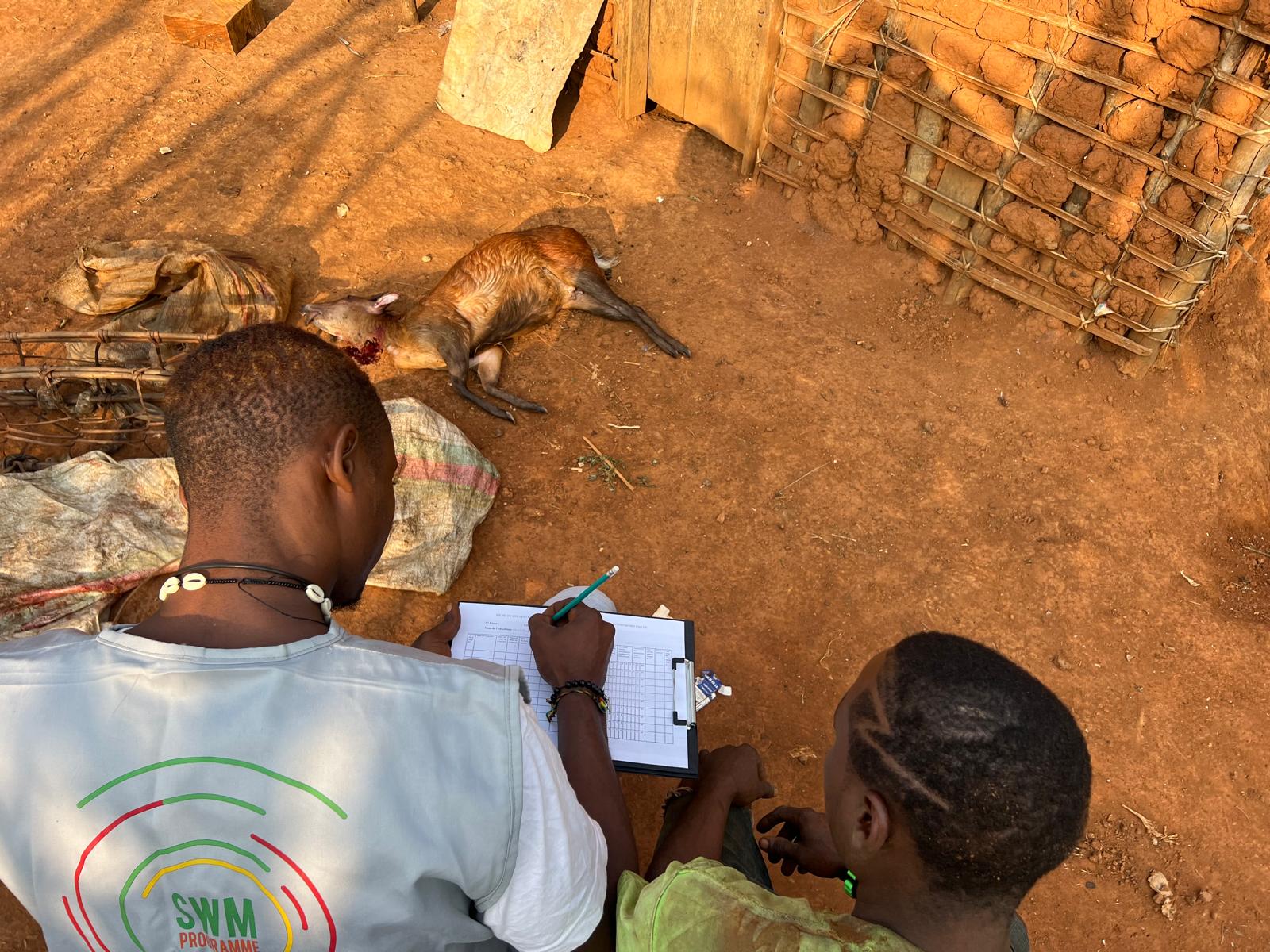
Feature image: Village reporter taking down information on animals hunted in a village in southern Cameroon (Photo credit: Stephan M. Funk)
At dawn in southeastern Cameroon, two hunters leave their villages and step into the same forest. One is Baka—forest-dwelling people whose mobility, cosmology, and subsistence practices have long been intertwined with the rhythms of the rainforest. The other is Bantu—primarily agrarian communities whose presence in the region has expanded over the past centuries, alongside shifting cultivation, trade networks, and, more recently, road development and market integration.
The forest does not recognise ethnic boundaries. And neither do wildlife populations.
Over the past year, we worked across 21 settlements in southeastern Cameroon: 20 rural communities (10 Baka and 10 Bantu-majority villages) and the small town of Mintom, the main commercial and administrative centre. These settlements lie southeast of the Dja Faunal Reserve, in forests increasingly accessible due to logging roads, timber concessions, and expanding agriculture. Local livelihoods combine hunting, fishing, farming—primarily cassava, plantain, and cocoa—and trade in forest products.
During the course of our study, respondents identified as Baka, Bantu, or Other. The Bantu included groups such as Fang, Bulu, Ntoumou, Bamoun, Bassa, Maka-Est, Eton, Zimé-Est, and Ewondo, all of which belong to the Makaa-Njem Bantu-speaking groups.
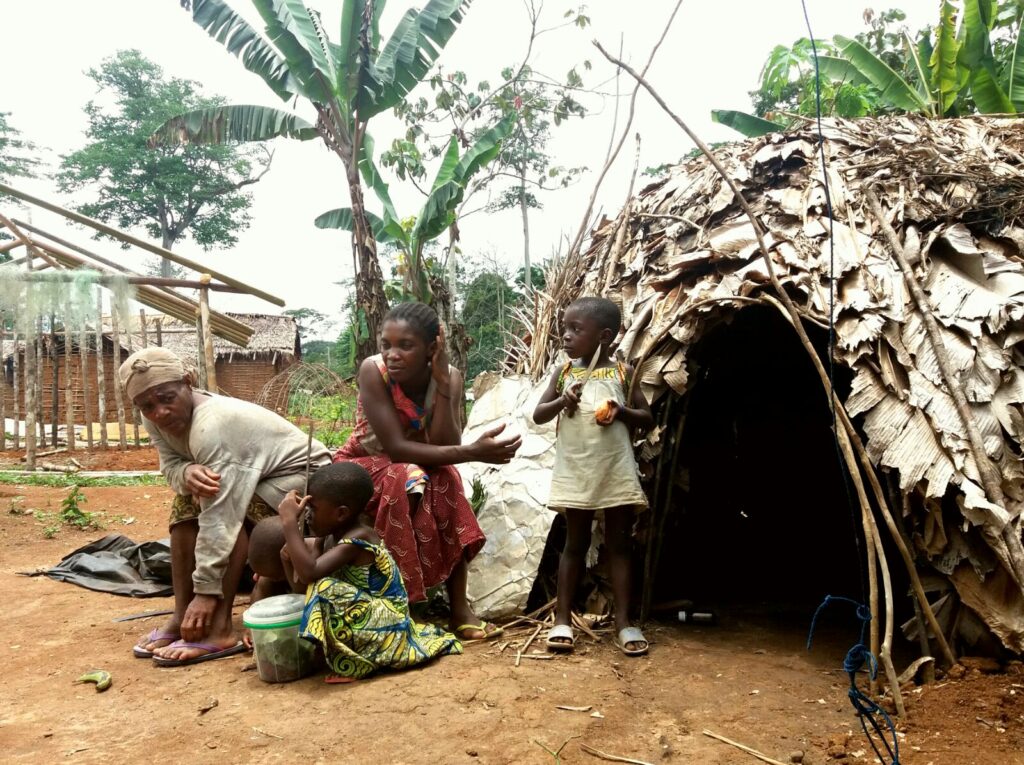
The Baka, although now largely settled along main roads, maintain strong subsistence and cultural ties to forest ecosystems through hunting and gathering traditions. Neighbouring Bantu-speaking groups are generally more sedentary and agriculture-based, and more integrated into markets and state institutions. Relations between the Baka and Bantu communities are historically rooted in exchange systems in which the Baka provide forest products, especially wild meat, in return for cultivated foods and manufactured goods. These exchanges are often embedded in patron-client dynamics that shape access to resources, markets, and decision-making, reinforcing historical inequality and influencing participation in the wild meat value chain.
Through community-based monitoring, hunters recorded 9,833 hunting trips and harvests of 68 animal species, mostly mammals, birds, reptiles, and some amphibians. What emerges is not simply a story of two groups hunting differently, but of two historically distinct societies increasingly drawn into the same ecological and economic system.
If sustainable hunting is to become a reality here, collaboration between Indigenous Peoples and local communities is not optional. It is fundamental.
A shared but unequal history
The relationship between the Baka and Bantu communities reflects long-standing systems of exchange, labour, and patronage. Baka groups have often provided forest products, labour, and hunting expertise, while Bantu communities have mediated access to markets, land, and political authority.
Colonial and post-colonial governance systems reinforced these asymmetries. Land tenure, administrative recognition, and access to services have tended to favour sedentary farming populations, while mobile forest peoples have remained politically marginalised. Conservation policies, including the establishment of protected areas such as the Dja Biosphere Reserve, have further reshaped access to land and wildlife, often restricting Indigenous mobility while leaving broader structural drivers of exploitation untouched.
These histories shape not only who hunts, but also who defines the rules and whose knowledge counts.
Converging practices in a changing economy
The Baka are often described as forest specialists, with hunting deeply embedded in identity and knowledge systems. Whereas many Bantu households identify primarily as farmers, with hunting serving as a complement to agriculture and an additional source of income.
These distinctions exist, but they are narrowing. Baka hunters in our data invested more time per trip and targeted larger-bodied prey, while Bantu hunters undertook shorter trips and more frequently harvested smaller animals. Yet both groups achieved success rates above 94 percent, meaning almost every trip resulted in at least one animal captured. Hunting is not occasional; it is a reliable livelihood.
Most hunters in both groups followed generalist strategies, targeting a wide range of species. However, economic inequality within groups was pronounced, with a minority of hunters generating a disproportionate share of income.
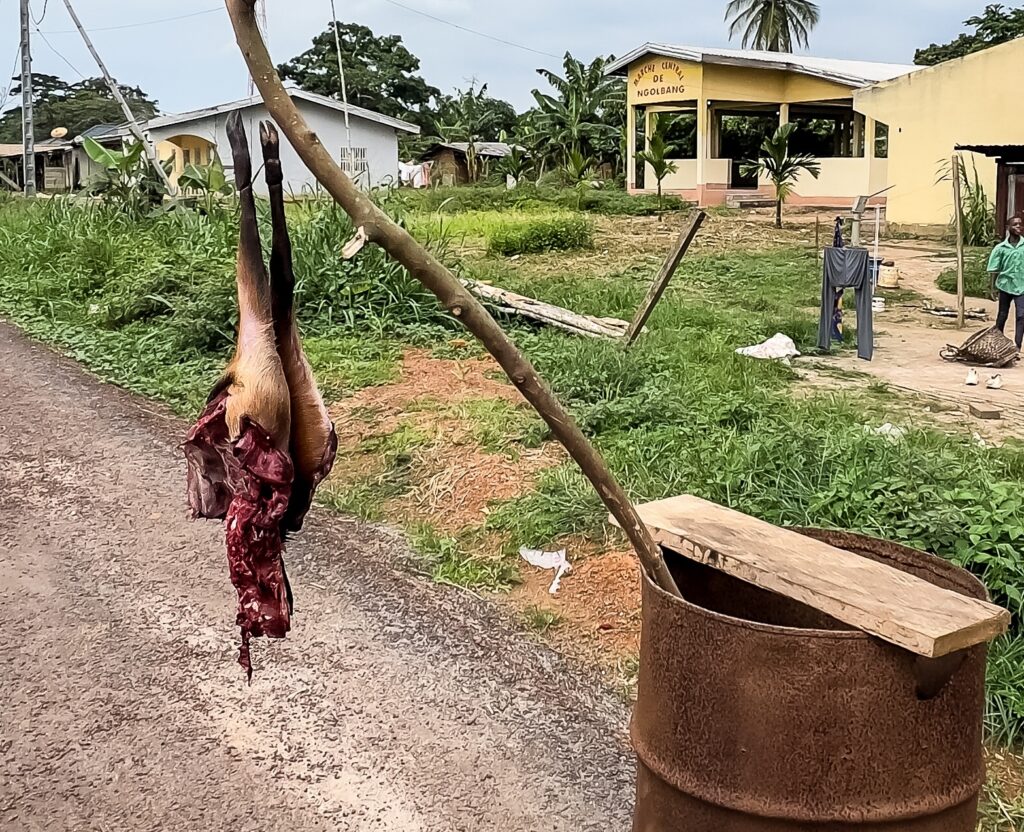
Market integration, roads, and urban demand have transformed hunting into part of a broader rural economy. Variation in returns is better explained by access, effort, and proximity to markets than by ethnicity alone. What appears cultural is increasingly shaped by shared constraints.
Moreover, hunting is embedded in farming cycles, cash needs, food security, and social obligations. For Bantu households, it complements agriculture, providing protein and income between harvests. For the Baka, sedentarisation and reduced forest access have altered mobility, making hunting both more constrained and more economically necessary.
The wild meat trade links both groups to regional markets. Motorcycles transport carcasses to roadside towns; traders connect villages to urban demand. Hunting decisions are shaped as much by price and opportunity as by tradition.
Shared landscapes, shared pressure
Mapping 181 georeferenced hunting sites across roughly 2,500 km² revealed clear spatial patterns. Hunting intensity declines with distance from villages; larger animals are captured farther away, while smaller species dominate near roads.
Baka and Bantu villages lie along the same road networks, and their hunting areas frequently overlap. Wildlife populations are therefore shared populations. From the perspective of a blue duiker (Philantomba monticola), which accounted for nearly a quarter of all captures, hunter identity is irrelevant—the cumulative pressure matters.
This creates a depletion gradient: resilient species dominate near settlements, while larger species persist only in remote areas. Sustainability becomes a collective challenge.
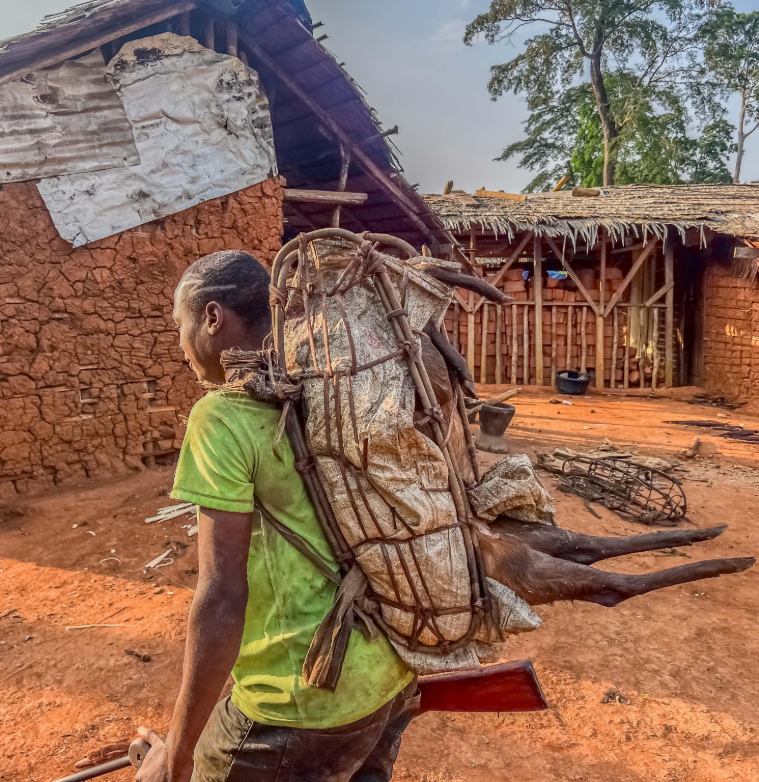
Hunting pressure also varies seasonally. Around 38 percent of species show strong seasonal concentration, and 16 percent are hunted during peak breeding periods. Harvesting species during their reproductive periods reduces population growth. When multiple communities share the same landscape, these effects compound. Even if one village moderates its effort, neighbouring villages may not. Wildlife does not respect social boundaries.
Sustainable hunting cannot be achieved village by village. It must be coordinated across landscapes.
Tensions beneath the surface
Collaboration is not straightforward. Baka communities often have weaker land rights and political representation, while neighbouring Bantu communities are generally more integrated into formal governance and markets. When wildlife declines, responsibility can easily be attributed along ethnic lines.
Our findings tell a different story. Both groups are highly successful hunters, depend on many of the same wildlife species and exhibit considerable variation within their own communities. The evidence suggests that the principal drivers of unsustainable hunting are not ethnicity but broader structural factors, including inequality, market integration and gaps in governance. Recognising this creates opportunities for shared responsibility rather than mutual blame.
The participatory approach not only generated detailed ecological data but also strengthened local ownership of wildlife management. It identified several species requiring urgent conservation attention, including forest elephants, gorillas, chimpanzees, giant pangolins, large duikers and leopards. These species are essential to healthy forests, dispersing seeds, regulating wildlife populations and maintaining the ecological processes that underpin forest regeneration and resilience.
Building on this shared evidence, neighbouring communities could work together through joint zoning of overlapping hunting areas, seasonal agreements to reduce hunting during key breeding periods, transparent sharing of results and explicit recognition of Baka ecological knowledge as a valuable management asset. For such collaboration to succeed, however, it must also address underlying power imbalances by recognising Indigenous rights and ensuring equitable participation in decision-making.
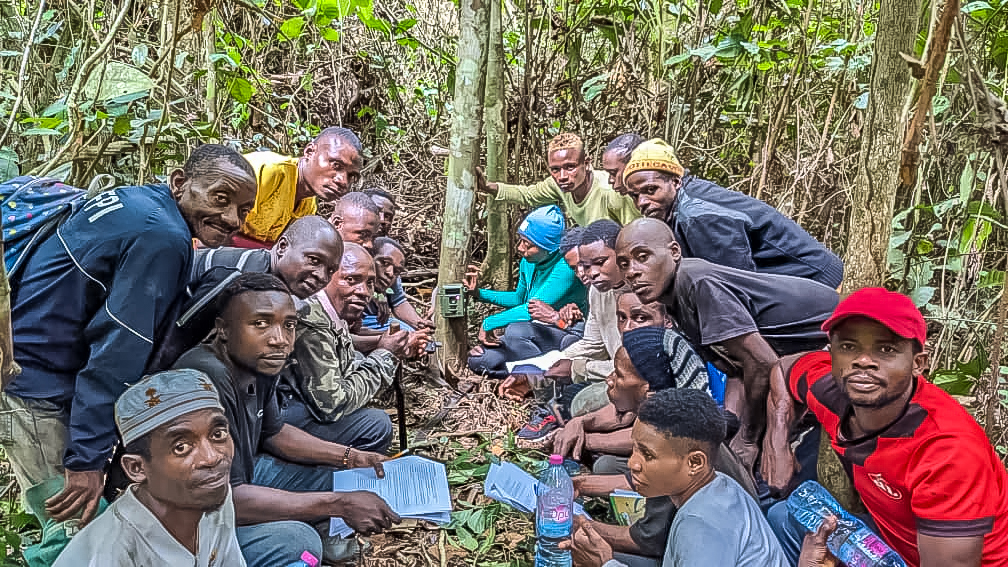
Training community hunters to monitor wildlife using camera traps and participatory field methods (Photo credit: Stephan M. Funk)
Beyond simplistic narratives
Similar dynamics occur globally: Indigenous territories bordering colonist settlements in the Amazon, upland hunter-gatherers sharing forests with farmers in Southeast Asia, and mixed land-use systems across Africa. Conservation often treats communities as isolated units, but ecological systems are shared. Where wildlife is shared, governance must be collective.
Romanticising Indigenous hunting or blaming farming communities oversimplifies reality. High success rates and concentrated exploitation suggest systems operating near ecological limits. Some resilience remains, but warning signs are clear.
Sustainability is not about stopping hunting. It is about aligning use with ecological processes in contexts shaped by inequality and change. That alignment must be negotiated among those who share the forest.
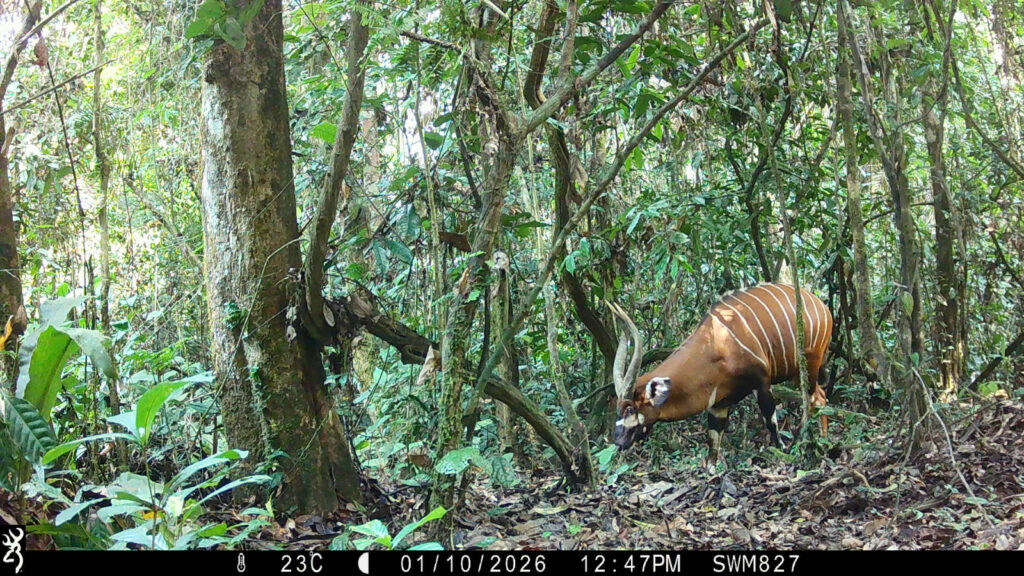
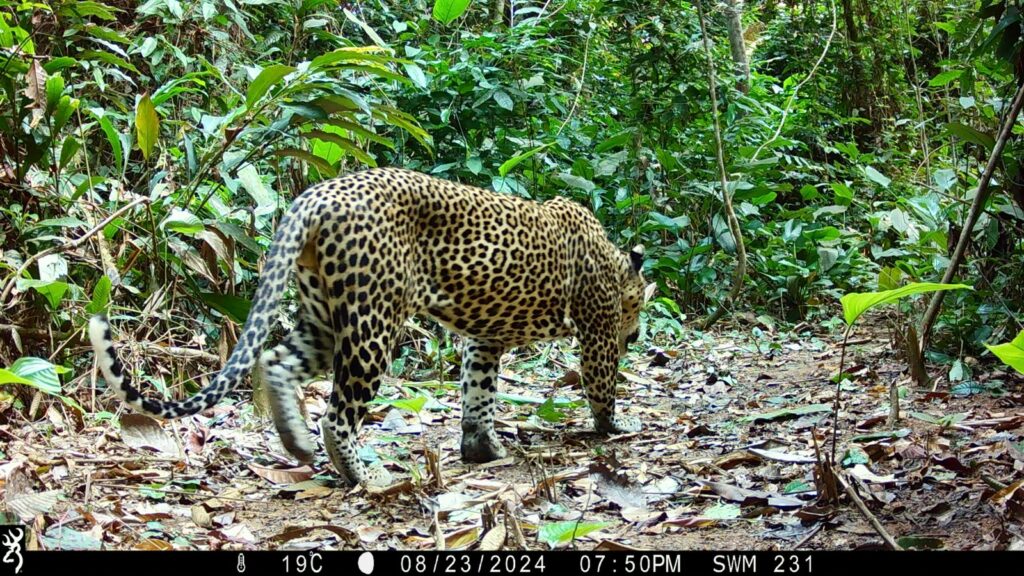
A bongo (Tragelaphus eurycerus) captured on a community camera trap in the forests of southern Cameroon (Photo credit: SWM-Cameroon)
In one village meeting, a Baka elder remarked that animals “walk where they wish”. Wildlife moves across invisible lines; governance often does not. Sustainable hunting in southeastern Cameroon depends on recognising this reality. It requires collaboration across communities, confronting inequality, and building agreements beyond village boundaries.
Forests without fences demand governance without walls.
Further Reading
Ávila Martin, E., S. M. Funk, G. R. Brull, R. Okale, S. Aboulou, A. Ickowitz, F. Lacerda et al. 2024. Food consumption and nutritional status of sedentarised Baka Pygmies in Southern Cameroon: Wild foods are less important for those who farm. Ecology and Society 29(2): 2. https://doi.org/10.5751/ES-14901-290202.
Cain, B., J. E. Fa, R. Amin, J. Morrison, E. A. Martin, S. M. Funk, M. Jones et al. 2025. Subsistence hunting impacts wildlife assemblages and functional ecology in tropical forests. Nature Scientific Reports 15: 3091.https://doi.org/10.1038/s41598-025-87162-w.
Fa, J. E., S. M. Funk and R. Nasi. 2022. Hunting of Wildlife in the Tropics and Subtropics. Cambridge University Press.
Fonteyn, D., A. Fayolle, J. E. Fa, H. Vanthomme, P. Vigneron, C. Vermeulen, R. Malignat et al. 2024. Hunting indicators for community-led wildlife management in tropical Africa. npj Biodiversity 3. https://doi.org/10.1038/s44185-024-00048-4.