“An owl is an owl is an owl.”
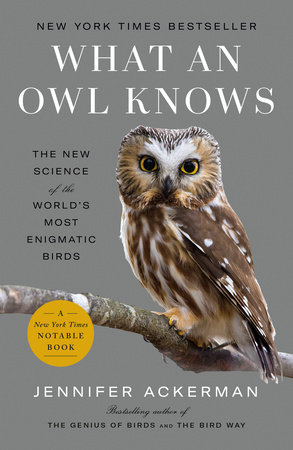
“Not so,” declares author Jennifer Ackerman in What an Owl Knows—a wonderful tribute to the science of this order of birds (Strigiformes).
Birds on the whole are not associated with intelligence, with terms such as ‘bird-brained’ being part of our vocabulary. Owls, even less so apparently, since past conventional experiments of intelligence have not seen owls emerge victorious. This, despite the fact that historically and culturally, owls have been associated with wisdom (the genus Athene deriving its name from the little owl accompanying Athena, the Greek goddess of wisdom). This book and its research are anchored on a theme of rethinking owl intelligence and behaviour.
“Not all owls are nocturnal. Not all fly quietly. Not all have asymmetrical ears. Not all mate for life. Not all roost in forest trees.” Ackerman sets out to help us unlearn every generalisation about owls, with research on various species—from barn owls to great grey owls, and snowy owls to Blakiston’s fish owls—spanning countries.
Eat, ‘prey’, love
Of the nine chapters, perhaps the most captivating are those on the science of hunting, migration, and courtship behaviour of different species. While the first two can at times feel overwhelming due to the density of scientific information presented, the latter is interspersed with humour through a touch of anthropomorphising. The book itself is peppered with owl puns, and so of course a chapter on owl vocalisations is titled ‘Who Gives a Hoot?’
Owl ears, described as “the Ferraris of sound sensitivity” compensate for limited colour vision. This hearing, when combined with highly developed night vision, helps these predators of the night sky to hunt their prey in the dark. While these are the sensory inputs, research has shown that the processing involves advanced mathematics. The author explains this in a detailed manner accessible to lay readers.
Successful courtship in owls often requires proof of hunting skills and “wooing with food”. This chapter contains humorous anecdotes—including a description by the scandalised ornithologist Edward Howe Forbush about the courtship of barred owls. He described it as “grotesque love-making” that was “ludicrous in the extreme”, noting that they uttered “the most weird and uncouth sounds imaginable”.
One aspect of courtship highlights male bias in wildlife research. Great grey owls court with food, wherein the male does not swallow a hunted vole but carries it to the female. The female’s chirping response was termed a ‘food begging call’ in the seventies. This changed when a female biologist pointed out that the bigger female, herself an expert hunter, need not beg for food, and it is now called a ‘food demand call’.
This simple change of words carries the weight of dismantling decades of researcher bias, nudging us to rethink our assumptions about not just the species, but the practice of science itself. This is reminiscent of Bitch by Lucy Cooke—another great book on the female of the species that systematically debunks many of the myths associated with sex and evolution.
The science of migration
As a layperson fascinated by owls, the fact that some species migrate was news to me. The chapter ‘To Stay or to Go?’ explains research on migration across three species: long-eared, northern saw-whet and snowy owls. The chapter details the teams and work behind Project Owlnet and Project SNOWstorm. Both of these initiatives aim to understand the timing and drivers of owl migration.
It was only in the early 1900s that fishermen crossing Lake Huron spotted northern saw-whets and discerned that they could be migrating in large numbers. Ongoing research still hasn’t conclusively established their patterns of migration. It is a similar situation with snowy owls—while research suggests that their migration depends on the lemming population, some scientists have recorded snowy owls moving further north in winters, with others spending more time out at sea. This is yet another example of owls belying assumptions.
Cultural perceptions
The penultimate chapter is dedicated to owls in the human imagination. It traces a line from the presence of owl imagery in history, dating back to the Chauvet Cave paintings in France which are approximately 30,000 years old, to the Harry Potter franchise. This modern pop culture phenomenon has driven a global surge in the illegal pet trade of snowy owls. The chapter is anchored by the Owls in Myth and Culture Project by David Johnson, a global survey to understand human attitudes towards owls.
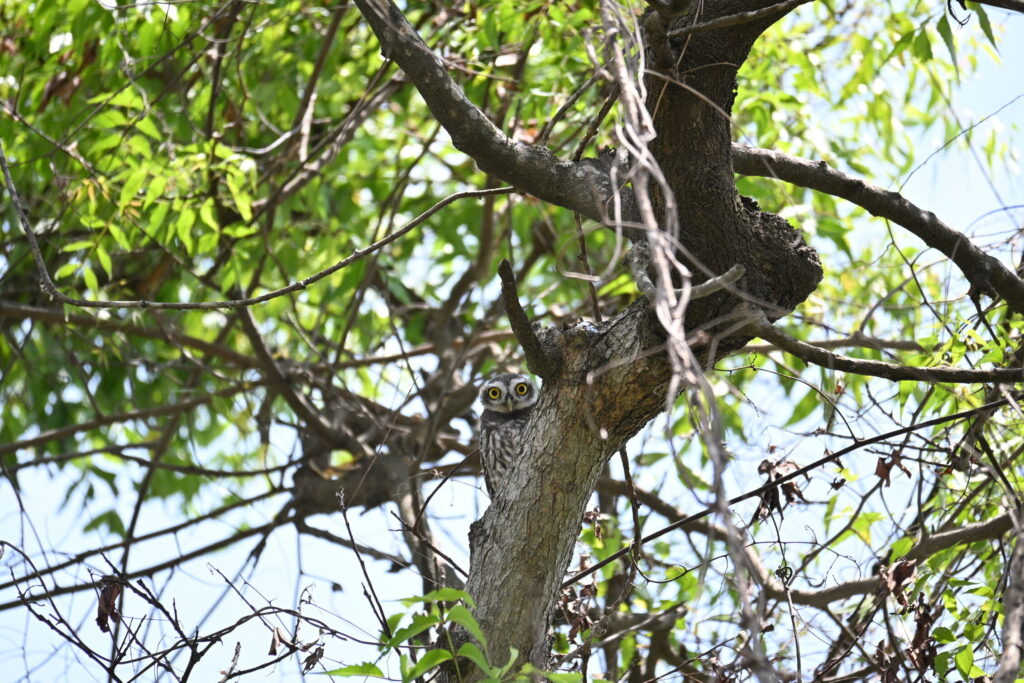
The attitudes range from god-like reverence to absolutely malevolent spirits, raising the question of where India falls in this spectrum. The Indian subcontinent is one of the hotspots for owl diversity in the world, home to over 30 species. In the 1880 Manual for the Nilgiris District by H. B. Grigg, most birds are mentioned only in passing in the checklists, but owls are given special attention—though, unfortunately, not in a positive light.
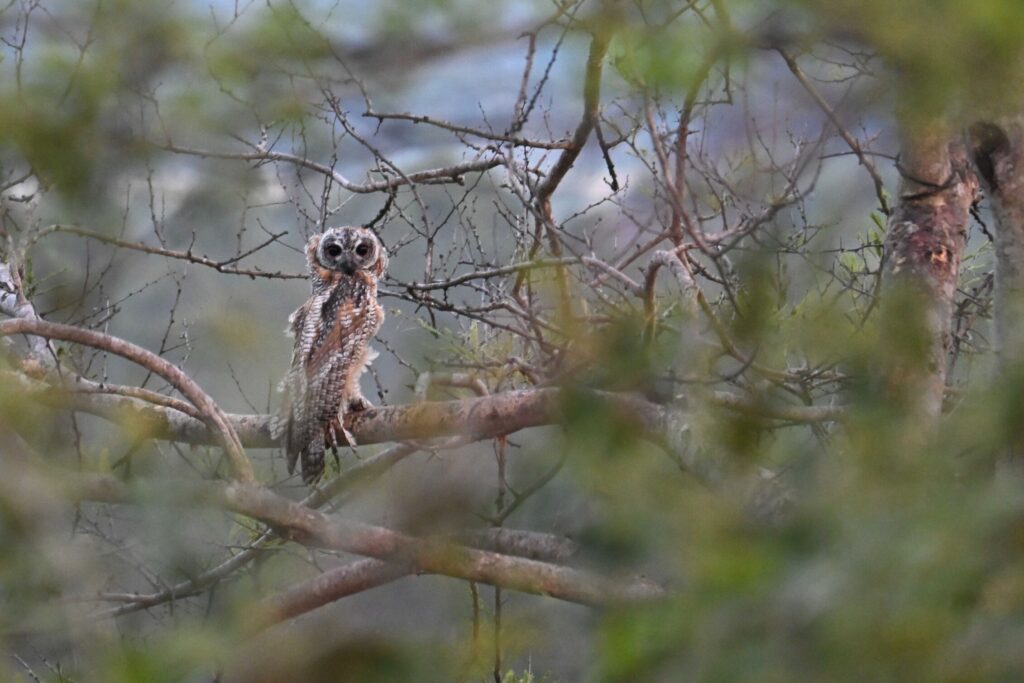
The manual repeatedly stresses that “most owls are more or less disliked by natives except the little spotted owlet, and it even is no favourite.” Grigg specifically singles out the brown wood owl, noting it is “regarded by natives, both in India and Ceylon, with superstitious dread” because its “dismal yell is no doubt the reason for its being regarded with such fear”.
Fast-forwarding to the present, What an Owl Knows makes a brief mention of the superstition in India that killing an owl during Diwali brings good fortune. According to a 2022 study by WWF-TRAFFIC, at least 16 species in India are threatened by the illegal wildlife trade for black magic rituals and sacrifices.
During informal discussions with people across Tamil Nadu, I came across another unfortunate belief and practice that persists—that of sacrificing and burying a barn owl under the main entrance of a newly constructed home. The belief is that the owl will trap prosperity inside and prevent evil from entering. The prevalence of these superstitions shows that India faces an uphill battle in fighting the misconceptions about these enigmatic creatures.
Behind the knowledge
While the book is a celebration of all things owl, it is also a spotlight on several people around the world dedicating their lives to conserving owl species. One of these inspiring and heartwarming stories is about Marjon Savelsberg, a former classical musician who is now a renowned expert in Eurasian eagle owl vocalisations. Savelsberg, initially on a career path completely unrelated to owls, had to give up on a professional music career due to a major health setback. Signing up as a webcam observer with the great horned owl vocalisation project would then alter her life trajectory.
“As a musician, I used to like sitting on the train reading sheet music and hearing the violins and other instruments in my head,” Savelsberg notes. “Now I can do that with spectrograms, with the vocalisations of birds, robins, whippoorwills, owls.”
This ensemble cast of characters, from biologists to doctors to musicians, have varied life stories. Interestingly, almost all of them refer to the decision to spend their lives working on owls as something that was bestowed on them—“the owls chose us”. Reading the narratives of these conservation efforts forms a good counternarrative thread to the chapters that speak of the habitat loss and wildlife crime threats.
This brings us to a question that the book starts with and then circles back to at various points. To all of us in love with owls—why owls? Ackerman answers this question through the book—it’s the unpredictability, idiosyncrasies, distinctive personalities, all of these sending us on a journey of unlearning. It is now up to each reader to answer this question for themselves: is it the science? The myths and beliefs? The depth of the unknown with these birds? Or a combination of them all?
Further Reading
Ahmed, A. 2010. Imperilled custodians of the night: A study of the illegal trade, trapping and utilisation of owls in India. TRAFFIC India
Johnson, D. H. 2020. Owls in Myth and Culture—A Global Perspective. https://www.youtube.com/live/8V8LRJS_OK8.