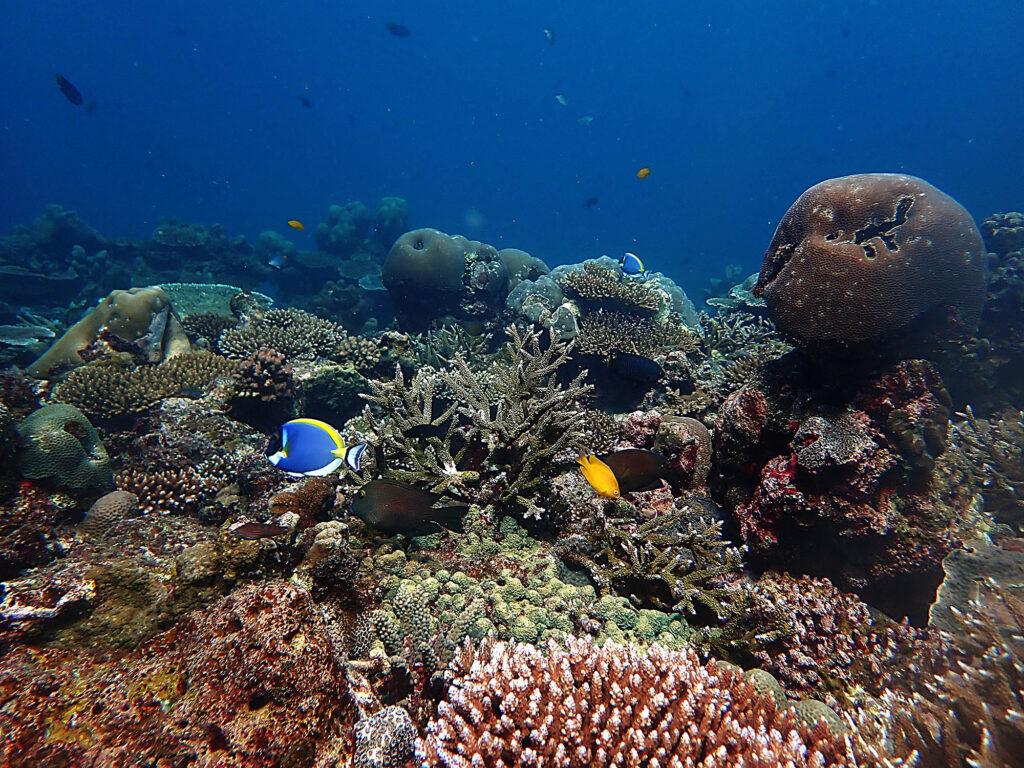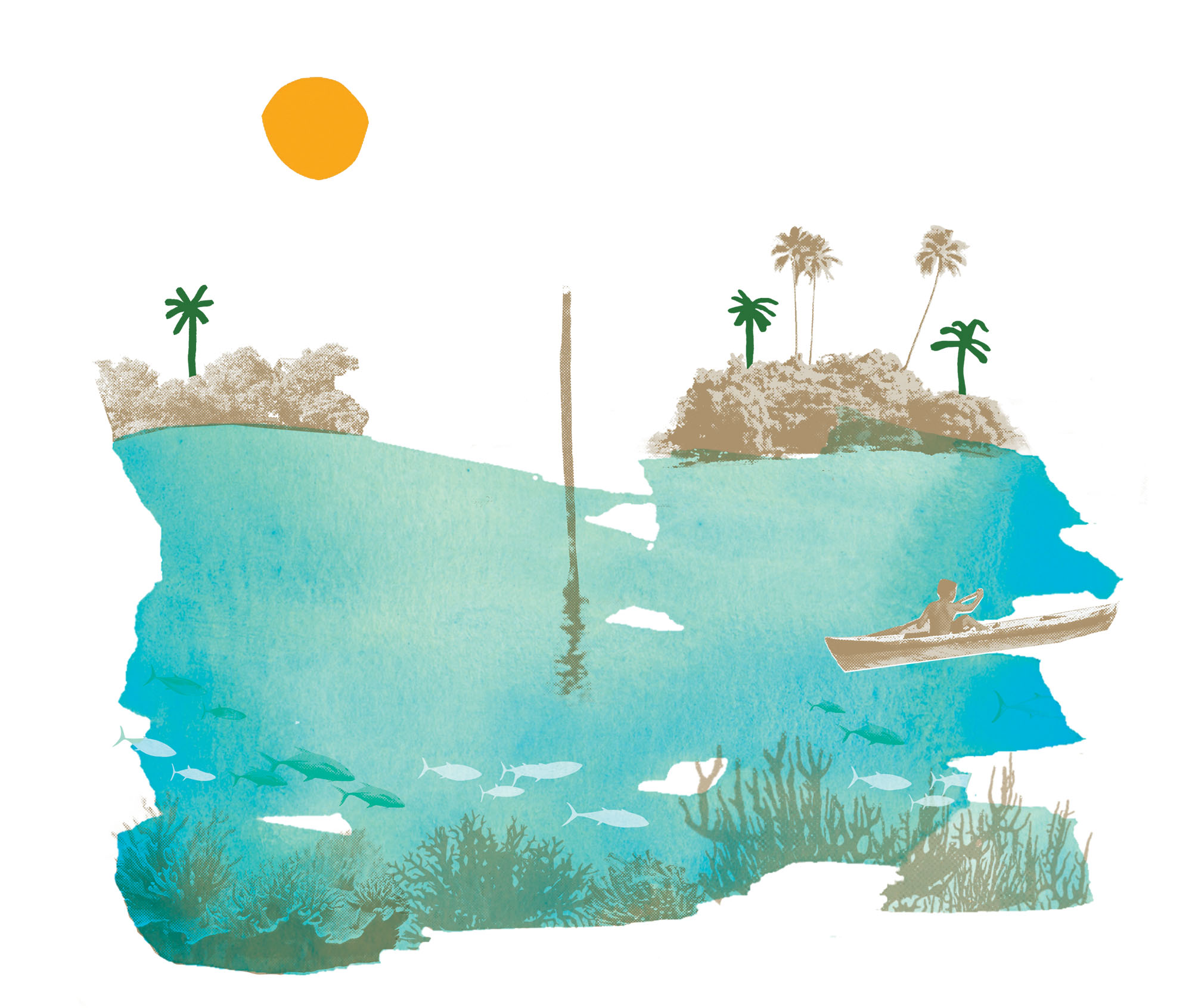
Since time immemorial, Pacific Islanders have managed their coastal fisheries by proclaiming a tabu—a ban on fishing in a specific area. A stick on the reef or in the mangroves would signal that fishing was prohibited. Nobody would dare to break such a tabu, afraid of the ancestors and spirits that guarded the area. When the time was right, the tabu was lifted and people could harvest fish, shells, and crabs again.
In an influential article published in 2002, marine ecologist Bob Johannes described how coastal communities throughout the southwest Pacific, faced with growing resource scarcity, were reinstating such tabus. Fishers were once again actively protecting the marine resources on which they depend for food and income. In Vanuatu, villages temporarily closed their fishery to allow for the recovery of trochus shells. In Fiji, communities banned the use of gillnets, and in the Cook Islands, the chiefs prohibited the hunting of undersized turtles. For Bob Johannes this “renaissance of community-based marine resource management” was a gamechanger: an Indigenous environmental movement that was reversing the rapid loss of biodiversity and cultural heritage in the region.
Since then scientists, conservationists, and policymakers see community-based resource management as a solution to address the intertwined problems of rural poverty and biodiversity loss in the Pacific—an effective and low-cost alternative to fisheries development projects and marine protected areas. The Solomon Islands government, for example, identified community-based resource management as the national strategy to protect marine ecosystems and sustain food security, and passed legislation to formalise so-called ‘community fisheries management plans’. This is based on the pragmatic recognition that the reefs and mangroves in the archipelago are communally owned and that the government has limited capacity to provide public services in remote areas.
International conservation organisations such as WWF, The Nature Conservancy (TNC), Conservation International (CI), IUCN, and Wildlife Conservation Society (WCS) support fishing communities to draft such plans, thereby creating so-called ‘locally-managed marine areas’ (LMMAs). This has led to notable success stories, such as the declaration of the Arnavon Community Marine Park on Isabel and the protection of Tetepare Island in Western Province.
It is, however, becoming increasingly clear that these grassroots conservation efforts remain relatively small in size. It is estimated that over the past 25 years perhaps 200 villages in the Solomon Islands have worked with international conservation NGOs to protect approximately 1,000 km2 of coral reefs, seagrass meadows, and mangroves. That seems an impressive figure, but is in fact a fraction of the more than 3,000 coastal villages and the 30,000 km2 inshore fishing area in the archipelago, and is still far removed from the global target to protect 30 percent of the ocean by 2030. Perhaps even more problematic is that the few villages that are managing their marine resources struggle to sustain these efforts over time. Many community fisheries management plans are abandoned when the external financial support ends.
In a recent article in the journal Conservation Science & Practice, we describe how international conservation NGOs are trying to initiate and scale community-based resource management in the Solomon Islands. But our research shows that these well-intended marine conservation projects actually undermine Indigenous fisheries management, and fail to address the main threats to marine biodiversity.
Cosmetic participation
Over the past 20 years, international conservation NGOs have implemented numerous community-based resource management projects in the Solomon Islands, funded by international donors such as USAID, the European Union, and the Asian Development Bank. In theory, these organisations facilitate a participatory process that empowers communities to manage their coastal fisheries. But in practice, these marine conservation projects are mainly driven by the NGOs, with little meaningful engagement of fishers. This illusory form of participation becomes painfully clear in efforts to ‘educate’ people on the importance of marine biodiversity. In most cases this consists of a top-down flow of information full of technocratic and legalistic jargon, far removed from the daily lives, experiences, and knowledge of fishers.
A typical project begins with the organisation of a series of workshops in the village, in which people analyse their problems and collectively draft a community fisheries management plan. In most cases these plans focus on the creation of a no-take zone where fishing is prohibited—in effect a small marine protected area. NGOs then invest in so-called ‘alternative livelihoods’. These income-generating activities are meant to alleviate poverty and replace environmentally damaging activities with more sustainable ones. For example, TNC promoted seaweed farming and ecotourism homesteads to reduce hunting pressure on turtles. And WWF donated sewing machines to women in villages that created a marine protected area to compensate for restrictions on fishing.
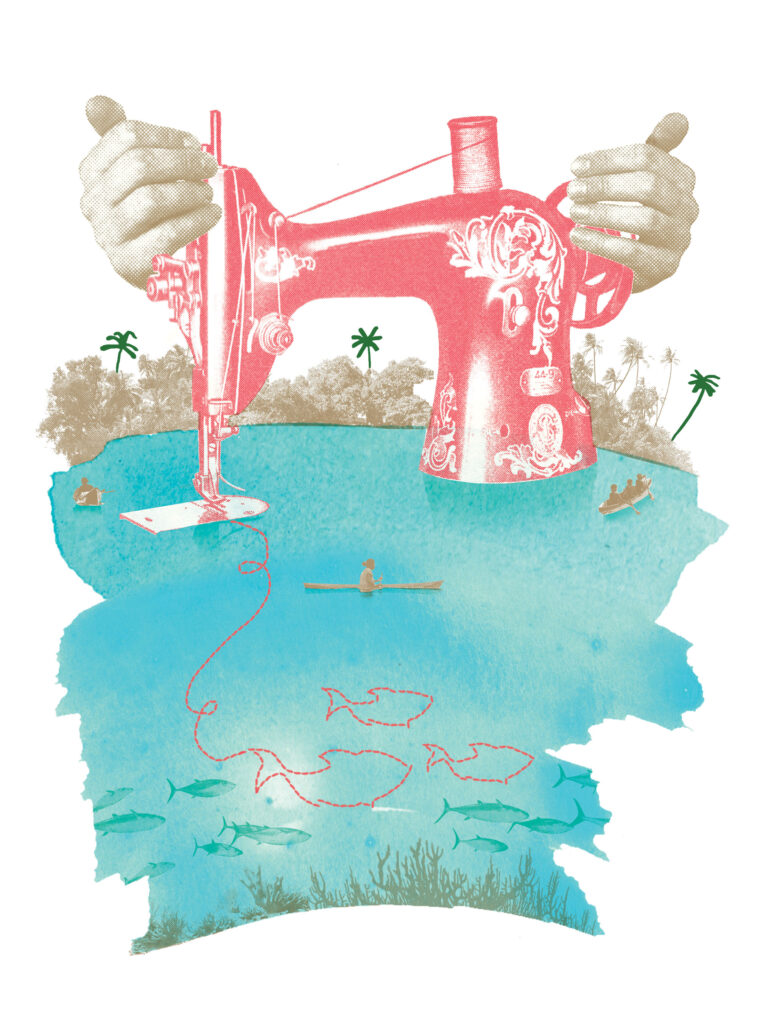
However, there are few examples of alternative livelihood projects that have led to lasting conservation and development outcomes. Our research shows that these well-meaning interventions often lead to unrealistic expectations, opportunistic rentseeking and frictions in communities, which inhibit collective action.
Community-based resource management projects also often employ community rangers to patrol the newly created LMMA. But in most villages this is not viable without external financial support. Similarly, much time and money is invested by NGOs to set up community-based monitoring programmes. But the ecological data collected by such programmes is in most cases not very useful for fisheries management, or merely confirms what the fishers already know. Unsurprisingly, monitoring is discontinued when outside funding stops.
Travel, staff, and administration costs also make these projects very expensive. We estimate that the creation of an LMMA costs at least USD 300,000—not quite the “locally funded shoestring operation” that Bob Johannes had in mind 25 years ago. International conservation NGOs justify the high costs by claiming that their projects will stimulate other communities to follow the example: the so-called ‘village-by-village approach’. But such pilot projects inhibit collective action, as neighbouring villages often conclude that they cannot manage their fisheries without outside financial and technical support.
We are not the first to highlight these shortcomings. Several academic papers have raised concerns about the long-term sustainability and replicability at scale of these community-based resource management projects, but international conservation organisations continue to invest in setting up new LMMAs.
External threats
The biggest problem with the community-based resource management projects is that they tend to ignore the main threats to marine biodiversity and rural livelihoods in the Solomon Islands: the detrimental social and environmental impacts caused by extractive industries.
Sedimentation, pollution, and destruction caused by foreign-owned logging and mining companies threaten coastal ecosystems and subsistence fisheries throughout the archipelago. Dodgy businesses bribe government officials and village leaders to gain access to customary-owned land and sea. They then pillage natural resources, violate lease agreements and legislation with impunity, and cause massive environmental destruction. This leads to mistrust, social problems, and violence in communities. Cultural values that form the foundation of community-based resource management, such as cooperation, environmental stewardship and respect for the chiefs, are crowded out.
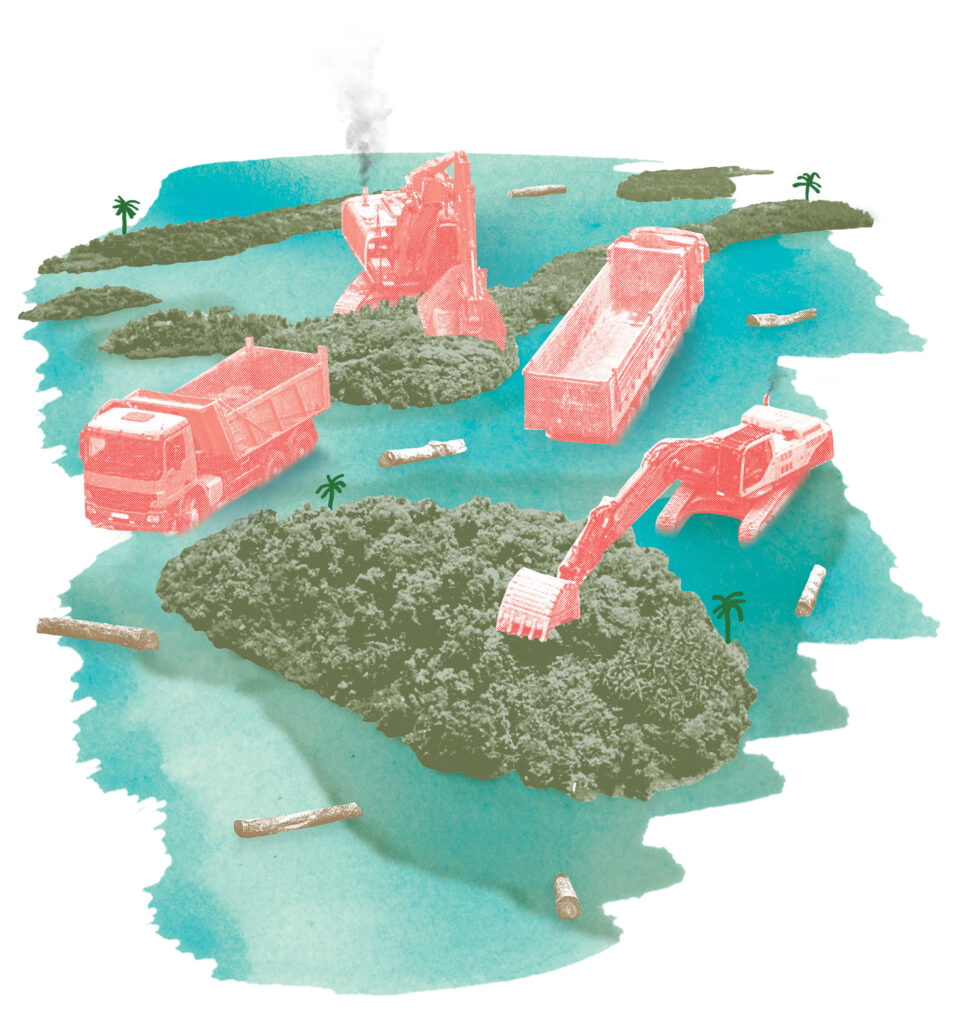
However, international conservation organisations remain largely silent about this state-sanctioned resource plunder. The harvest of sea cucumbers is a good example. The export of this valuable commodity is controlled by a few well-connected businessmen, who make a handsome profit. LMMAs cannot address this threat, as high prices for dried sea cucumbers—called bêche-de-mer—simply override traditions, values, and social relations. As a result sea cucumbers are overfished throughout the archipelago and the Solomon Islands government is losing millions of dollars in tax revenues. But instead of using their influence, expertise, and resources to regulate the sea cucumber trade, WWF, TNC, IUCN, WCS and CI ignore the issue completely, and continue to work in a few, isolated villages.
The reserve to speak out against such injustices is not innocent: it undermines the efforts of local civil society organisations to strengthen customary land rights, improve public services, and fight corruption in the government. Local civil society organisations like the Solomon Islands Development Trust and Voice Blong Mere Solomon have proved to be indispensable in designing locally-led development projects, mediating conflict, and holding the government accountable. But the sad reality is that over the past 25 years, funding for local civil society groups has dwindled as international conservation NGOs capture the lion’s share of conservation funding.
Rethinking community engagement
In our article, we call on international conservation NGOs to rethink how to support and scale up community-based resource management in the Solomon Islands. In our view, these organisations need to stop focusing on creating new LMMAs, and focus instead on strengthening the capacity of the government to deliver basic public services in remote rural areas.
At first this advice not to work with communities in order to strengthen collective action at the grassroots level might seem counterintuitive. But without a functioning civil service, community-based resource management is simply impossible. Communities cannot—as Bob Johannes already recognised 25 years ago—address external threats to coastal fisheries such as commercial fishing, oil spills, or sedimentation. He therefore urged NGOs to strengthen extension services, regulate export markets, and tackle corruption. In other words: to do those things that communities cannot do themselves.
Thus, instead of investing significant resources in alternative livelihood projects and community-based monitoring programmes in a few villages, international conservation organisations should address the threats posed by extractive industries to marine biodiversity and food security. This could, for example, be done by providing operational budgets to provincial governments to enforce environmental legislation, developing legal support systems for coastal communities, or supporting the anti-corruption campaigns of local civil society groups. These are not easy tasks, and the results will be less photogenic than the donation of sewing machines or the deployment of a Fish Aggregating Device. But in the long-term, building the regulatory capacity of the government will benefit many more people and create the necessary conditions for communities to protect their marine resources.
Bob Johannes envisioned a future where fishers in the southwest Pacific were once again actively managing their coastal fisheries. For him this was a pragmatic matter: these Indigenous tabus turned out to be far more effective than foreign aid-funded projects. Sadly, his advice has been ignored. Despite all the participatory rhetoric, marine conservation in the Solomons Islands continues to be driven by the agenda and targets of international conservation organisations and their donors.
It is clear that this top-down strategy is failing. LMMAs now cover less than 3 percent of the country’s coastal waters. To really revitalise Indigenous fisheries management, we need to do things radically different. The contours of a new approach are beginning to take shape as a new generation of projects that specifically aim to scale community-based resource management are currently being implemented in the Solomon Islands. But one thing is clear: it all starts with a fisher placing a stick on the reef.
Further Reading
Johannes, R. E. 2002. The renaissance of community-based marine resource management in Oceania. Annual Review of Ecology and Systematics 33(1): 317–340.
SPC. 2023. Fish smart rules. Tips and tools for community-based fisheries management practitioners to revive fishing grounds. Nouméa: Pacific Community.
van der Ploeg, J., M. Sukulu, H. Govan and H. Eriksson. 2024. Scaling-up community-based resource management in Solomon Islands. Conservation Science & Practice 6(12): e13264. https://doi.org/10.1111/csp2.13264.