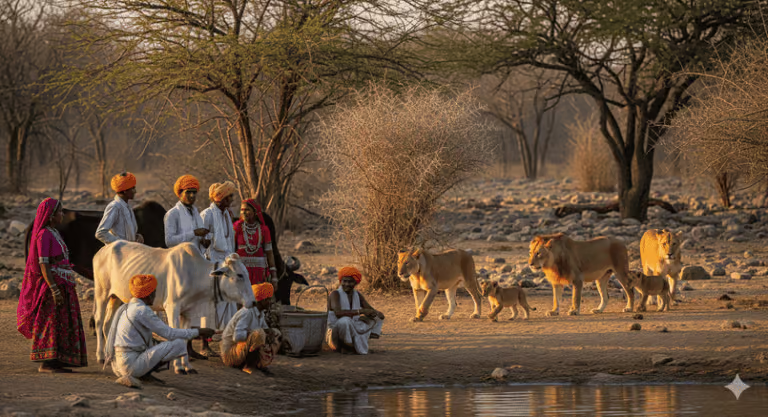
Feature image: The Maldharis, a pastoral community, live inside the Gir Wildlife Sanctuary in Gujarat, India, in clusters of thatched huts called ‘neses’ (Courtesy: www.5sensestours.com)
The Maldhari community’s relationship with the Asiatic lion shows that conservation works best when humans and nature work together. However, this partnership is currently threatened by exclusionary policies.
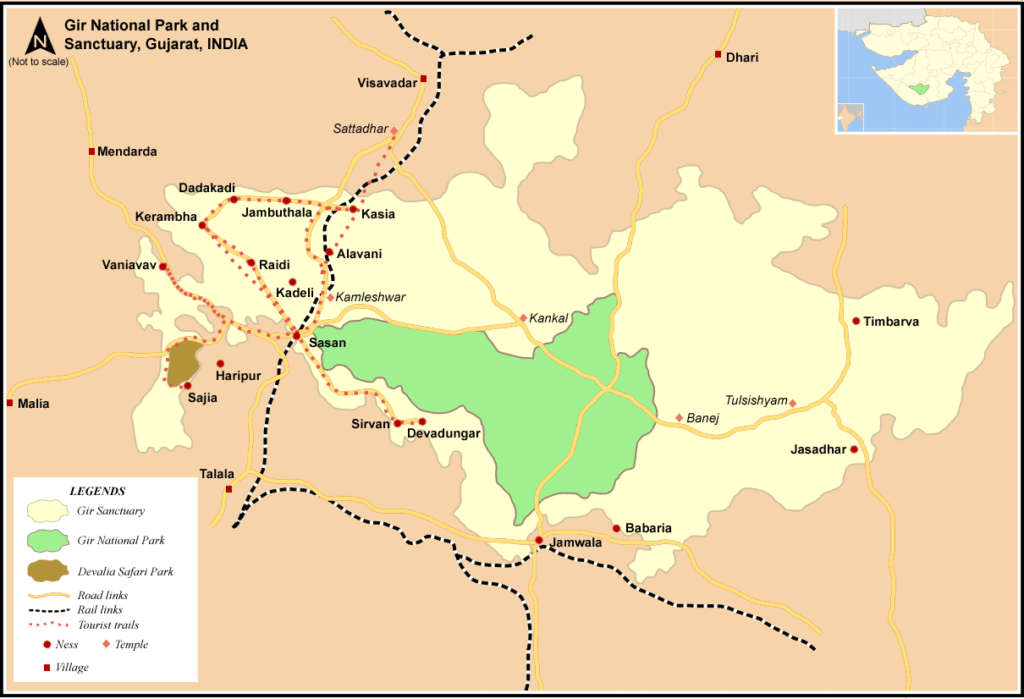
Gir National Park and Wildlife Sanctuary in Gujarat, India, is the last natural stronghold of the majestic Asiatic lion. While Gir remains the centre of lion conservation, only about half of the estimated lion population currently lives within the Gir Protected Area, with the remaining spread across nearby protected areas and human-dominated landscapes in coastal Saurashtra. The success story of this apex predator, whose population has now grown to about 891 individuals, is celebrated globally.
What makes Gir truly unique is that it is home to a settled human population—the Maldhari community—whose traditional pastoral lifestyle has long shaped the region’s ecology. By grazing livestock in the forest, maintaining open scrub habitats, and practising a cultural tolerance towards lions despite occasional livestock losses, the Maldharis have contributed to an environment in which lions and humans have coexisted for generations.
The Wild Life (Protection) Act, 1972, states that national parks should be completely free of human presence. The much smaller Gir National Park (258 km2) is surrounded by the much larger Gir Wildlife Sanctuary (1,153 km2). Within the Gir Wildlife Sanctuary, the Maldharis live with their livestock. For generations, they have been traditional dairymen, residing in small settlements in the forest called ‘nesses’. They raise local livestock, especially the Jafrabadi buffalo and Gir cattle, and make their living by selling dairy products.
Shared survival
The relationship between the Maldharis and the Asiatic lions is not just one of tolerance; it represents a complex model of shared survival. This special coexistence has been a key factor in the lion’s recovery from near-extinction.
Research indicates that the Maldhari’s livestock plays a significant role in the lion’s diet, providing a steady food source. In return, the Maldharis gain financially from free grazing within the forest and, importantly, a reliable compensation system when lions kill their cattle. This arrangement greatly reduces the risk of retaliatory killings that threaten carnivores globally, creating what experts describe as a ‘win-win situation’. The Maldharis’ traditional respect for big cats, along with the economic security from compensation, fosters a strong cultural framework that promotes peaceful coexistence.
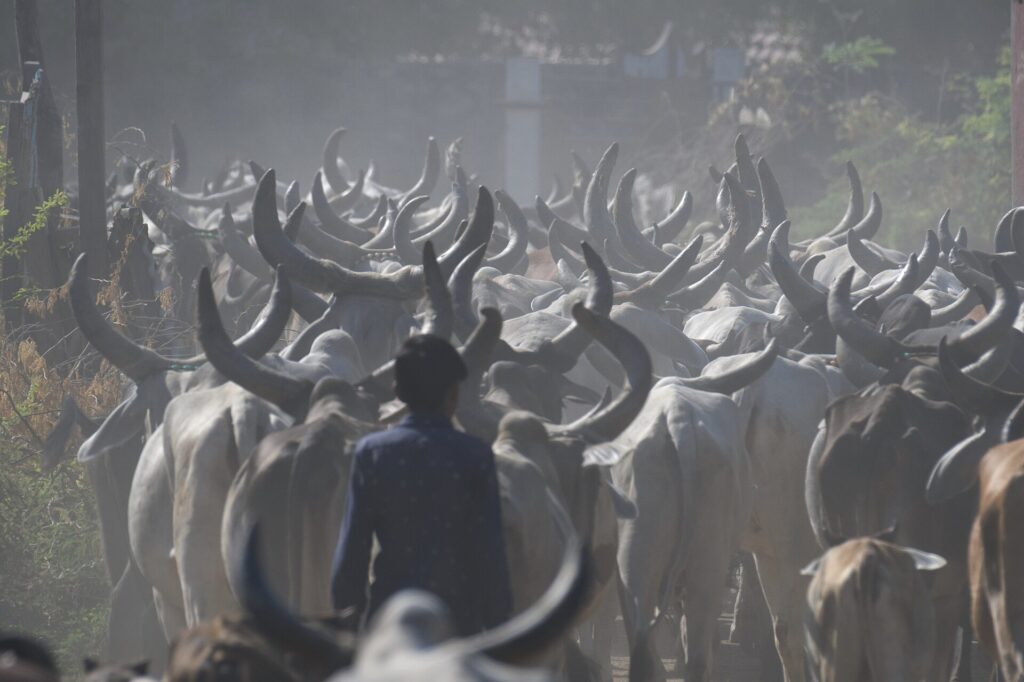
This success story reflects the reality that coexistence between people and wildlife is deeply embedded across India’s landscapes. Hundreds of thousands of forest-dwelling and pastoral families across the country live alongside large and potentially dangerous animals, including elephants, leopards, tigers, and lions. However, despite these lived models of coexistence, official conservation policy in many protected areas continues to favour relocation and exclusion over community participation.
The challenge of exclusion
Despite this proven track record of coexistence, the future of the Maldharis in the park remains uncertain due to the continuation of conservation policies that prioritise creating human-free protected spaces. The centrally-funded Project Lion, launched in 2020, includes a plan to create a 1,000-km2 “inviolate space” within the Gir Conservation Areas.
Inviolate space refers to an area completely devoid of human activity or resource use. To reach this goal, the proposal suggests the “incentivised voluntary relocation” of 2,500 Maldhari families over the next decade, offering 20 lakh Indian rupees (USD 20,900) per family as compensation.
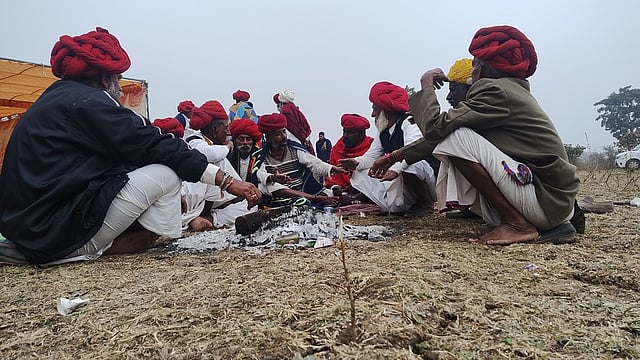
However, this top-down approach overlooks both ecological and social realities. About 50 percent of the current lion population already thrives in human-influenced areas outside the core park, showing that they can and do coexist with humans. Furthermore, Maldharis living in the forest earn up to 75 percent more due to their free access to grazing and resources.
History provides a clear warning. Previous relocation efforts during the Gir lion conservation project from 1972–78 were mostly ineffective. Many resettled families encountered significant socio-economic challenges, losing their community ties, dignity, and financial stability. Some families even returned to the forest, having suffered what researchers call ‘multi-dimensional marginality’. Carrying out a mass displacement plan today risks repeating these mistakes and threatens the conservation success it aims to uphold.
Securing the stewards
India’s success in protecting the Asiatic lion is unmatched. It shows that conservation can, and often should, involve human participation. The Maldharis are not obstacles; they are vital ecological partners.
Instead of pursuing the outdated idea of isolated inviolate spaces, policymakers should recognise and strengthen the traditional rights, dignity, and livelihoods of the Maldhari community. This can be done through the effective implementation of the Forest Rights Act 2006, which legally recognises the rights of forest-dwelling communities over land and resources. By strengthening this unique and proven bond of coexistence, India can reinforce a more inclusive approach to ecological conservation, demonstrating that long-term success comes through cooperation instead of isolation.
The future of the Asiatic lion depends on the security of its keepers.