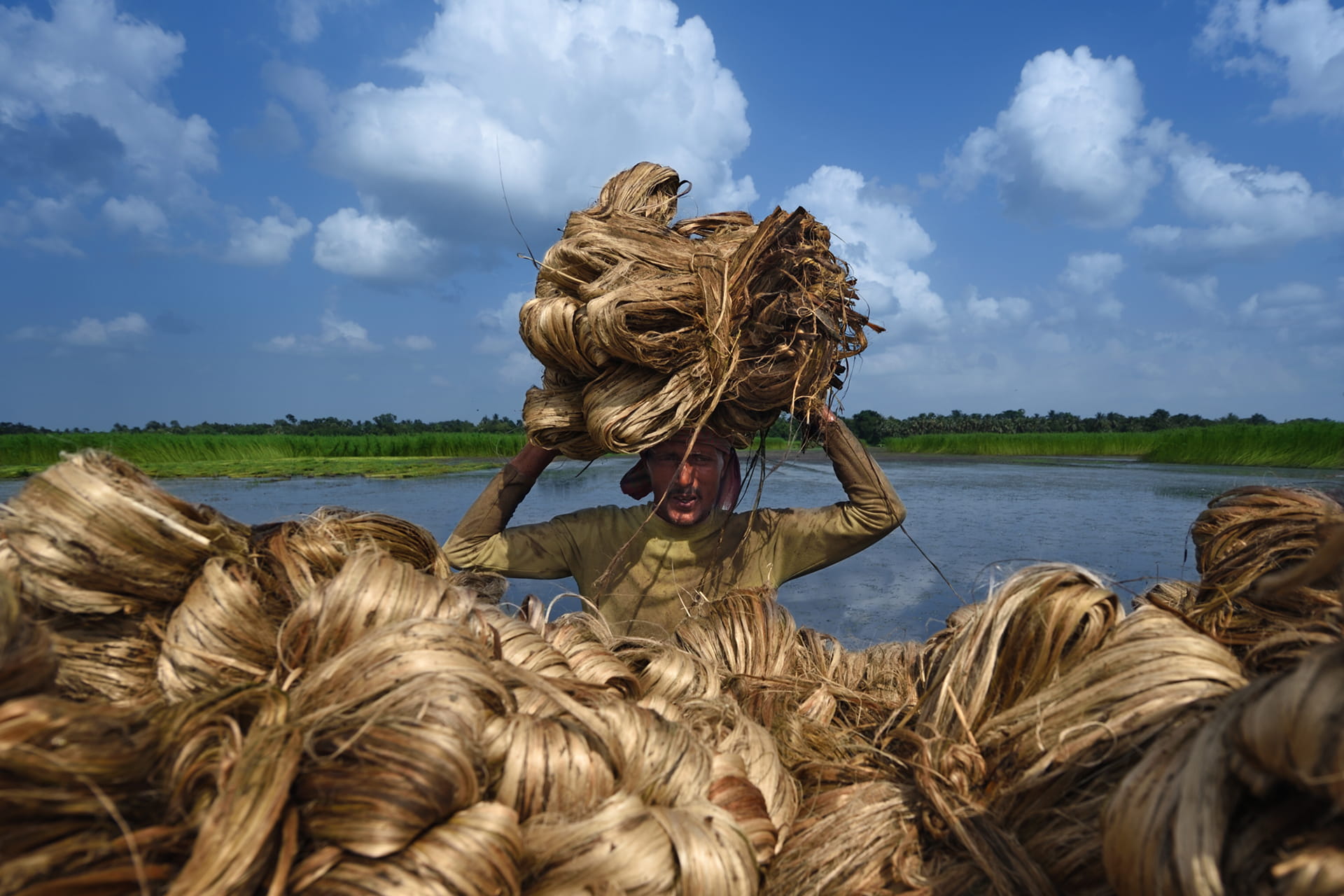
Feature image: Golden threads of Bengal
Given the scale of the problem of plastic waste and pollution, jute offers a biodegradable, sustainable alternative material, which can also help mitigate the carbon emissions associated with plastic production.
The cultivation of jute has a positive impact on soil health, by preventing erosion and enhancing soil fertility. Further, it helps reduce carbon dioxide levels in the atmosphere. One hectare of jute plantation can absorb up to 15 tons of carbon dioxide and in return release 11 tons of oxygen during a season of about 100 days.
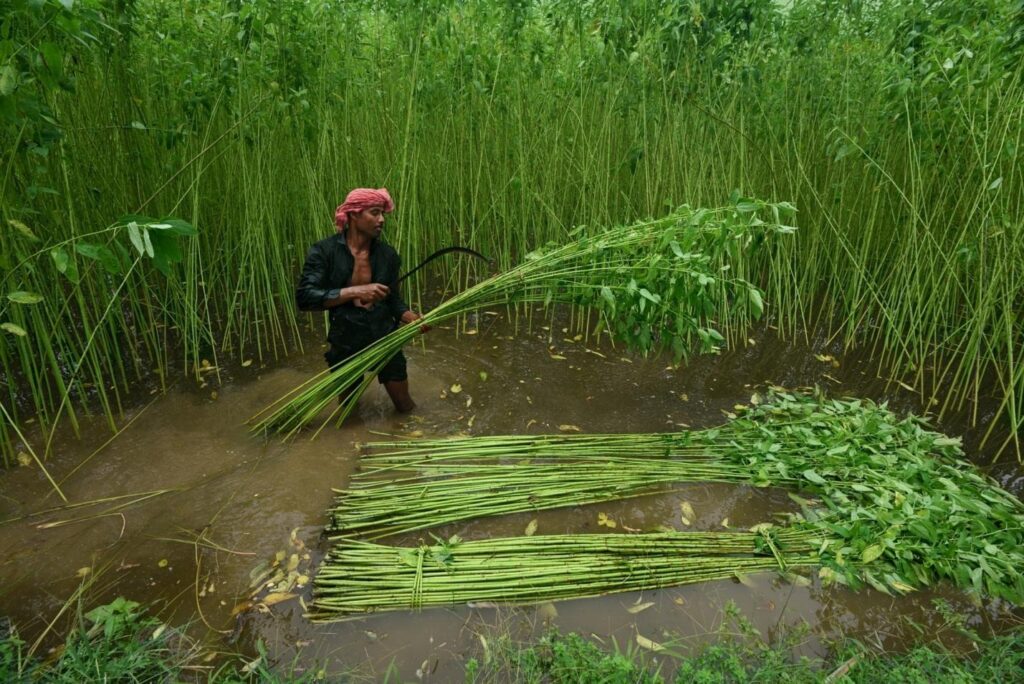
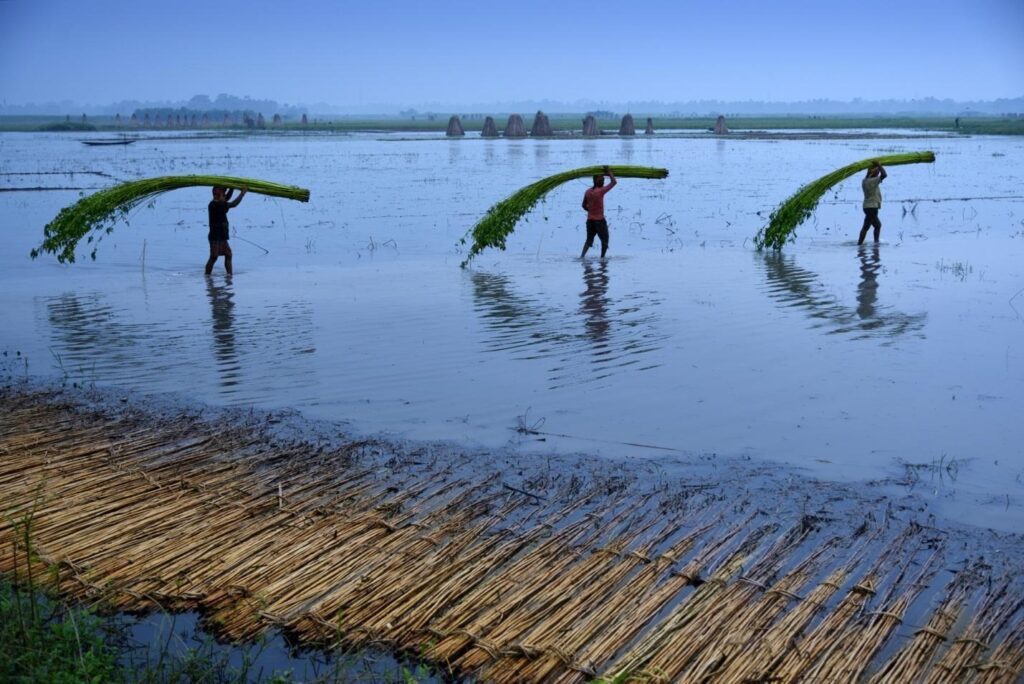
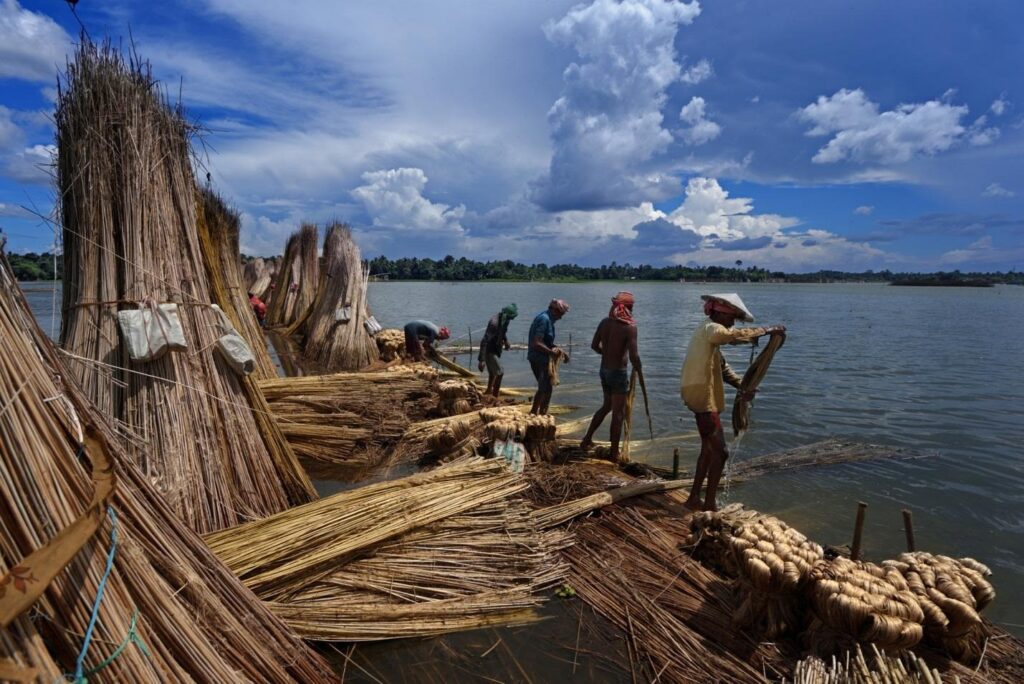
Jute is often referred to as the ‘golden fibre’ due to its colour and by being an eco-friendly alternative to synthetic materials. In recent years, there has been a renewed global interest in jute as a material, used in textiles, packaging, construction, and even in the automotive sector.
The jute industry is one of the prominent industries in India. From cultivation and harvesting to processing, manufacturing, and exporting, the industry creates jobs at various stages of the value chain. It provides direct employment to 370,000 workers in the country and supports the livelihoods of around 4 million farm families, as well as factory workers, artisans, traders, and other associated personnel.
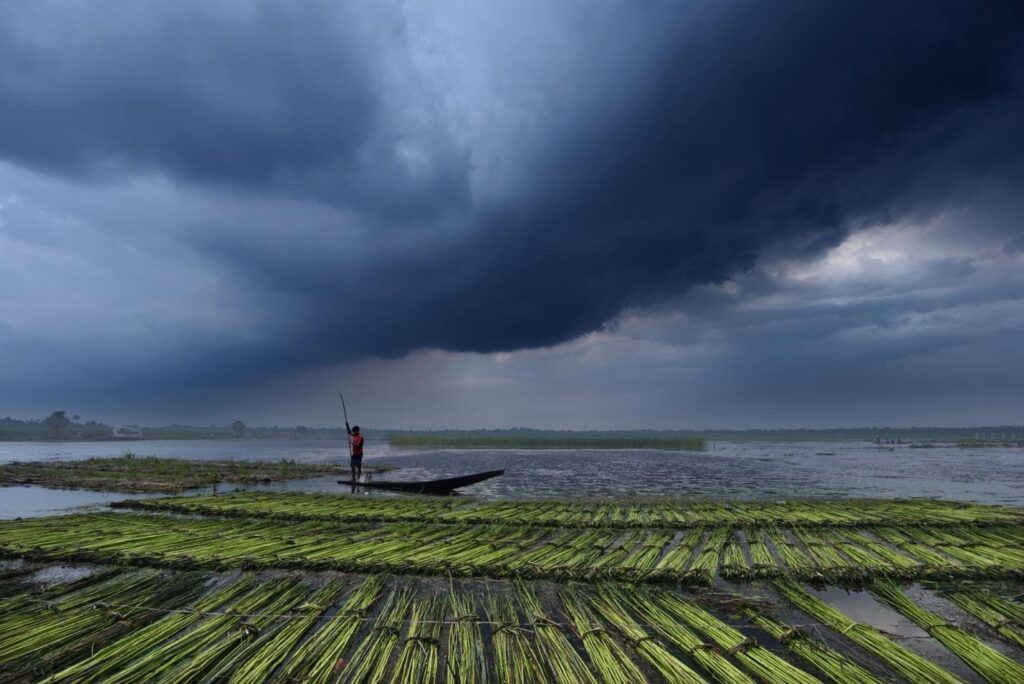
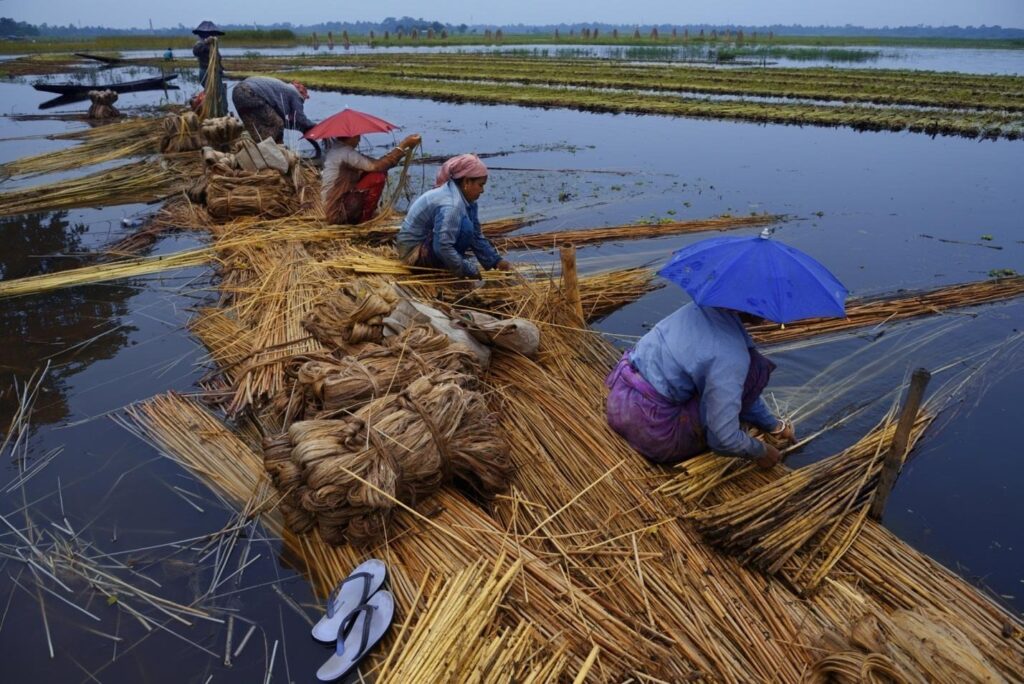
I began this photo documentation project of the various stages of jute cultivation in 2019. It follows the life cycle of jute—from sowing and nurturing to harvesting—captured across different seasons and timelines. The photographs are rooted in the diverse jute fields of West Bengal, India where water, soil, and human labour shape this sustainable fibre.
This photo story aims to create awareness among the general public about the urgent need to ban plastic and adopt sustainable alternatives such as jute. Embracing jute can significantly reduce environmental damage and help build a greener, healthier world for future generations.