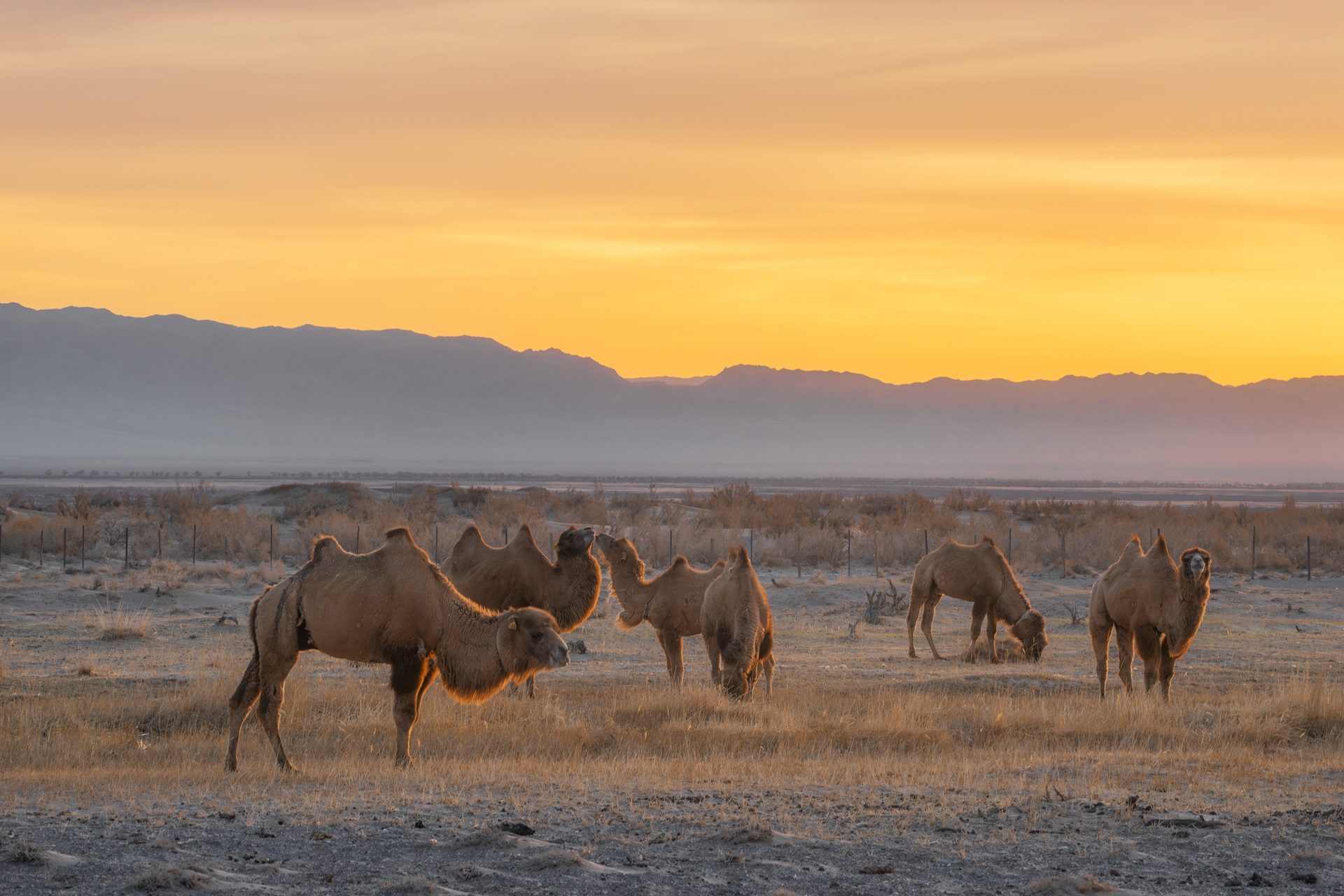
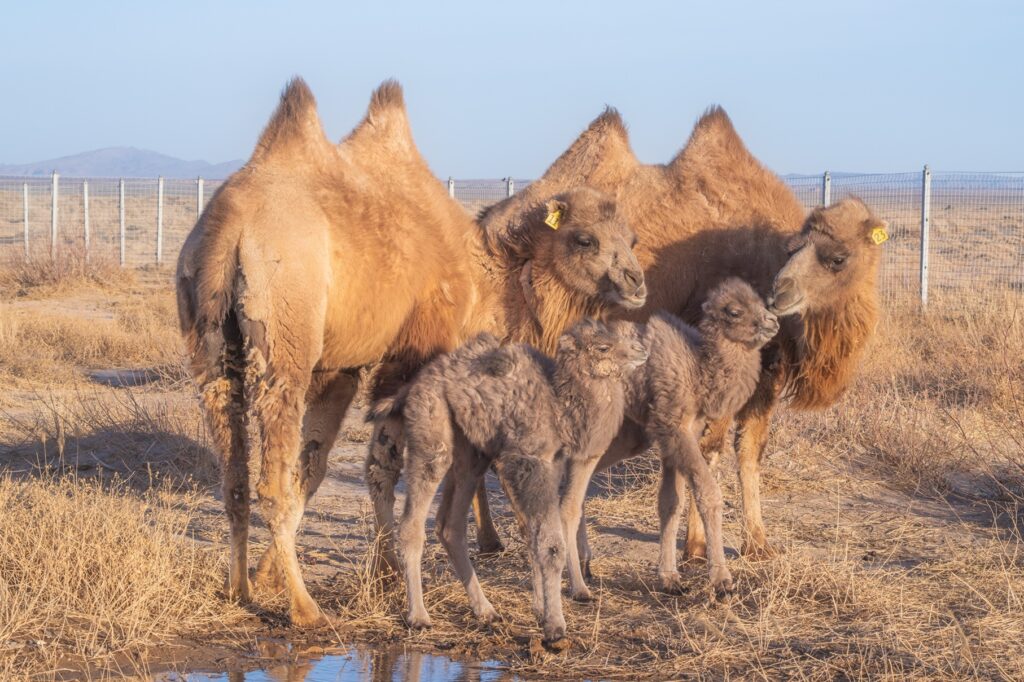
Featured image: Wild camels at the breeding centre in Zakhyn Us, established in 2003 and located in Mongolia’s Gobi Desert
Many people around the world have seen a camel, either the domestic Bactrian or dromedary camel. Very few, however, have ever seen a true wild camel. Today, endangered wild camels survive only in the remote Gobi Desert of Mongolia and China. With approximately 1,000–1,800 individuals remaining in the wild and none kept in zoos anywhere in the world, it is among the rarest large mammals on Earth.
Because of their extreme rarity and isolated habitat, only a tiny fraction of humanity has ever encountered one in person. A reasonable estimate may be that only a few thousand people worldwide have ever seen a wild camel. By comparison, millions of people have seen giant pandas in zoos across the globe. To witness a wild camel is not simply to see wildlife—it is to encounter one of the last surviving relics of an ancient world.
For many years, people believed that the wild camel was merely the “wild” version of domesticated Bactrian camels that escaped during the Silk Road era. However, genetic research conducted in 2008 confirmed that wild camels are genetically distinct from Bactrian camels, having diverged from them approximately 700,000 years ago. This discovery fundamentally transformed scientific understanding of the species. Rather than representing feral domestic animals, wild camels are now recognised as their own unique evolutionary lineage.
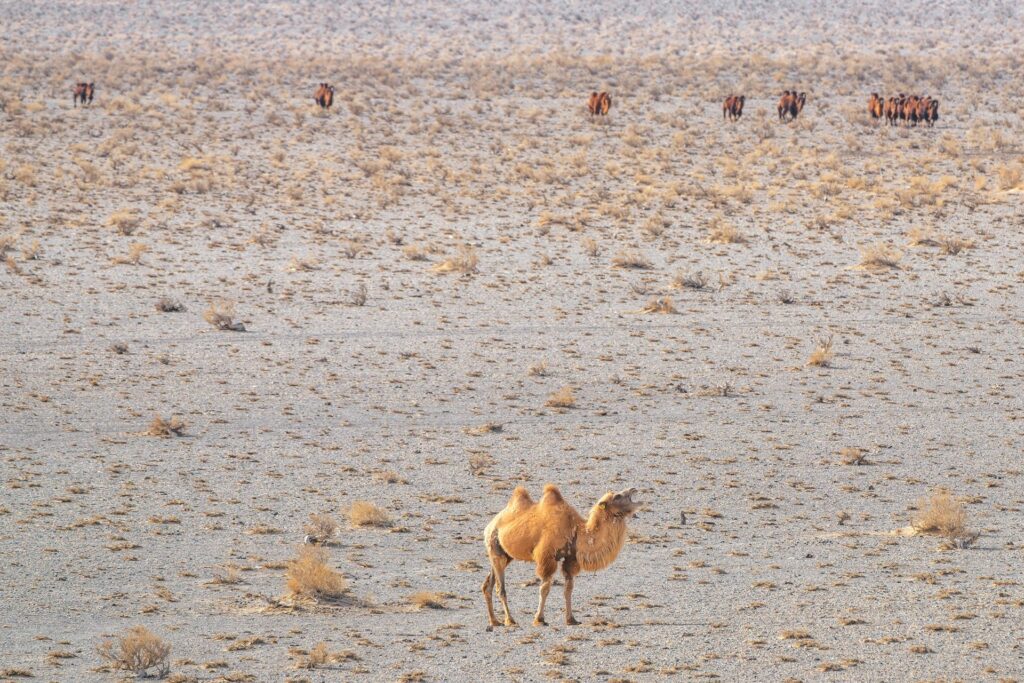
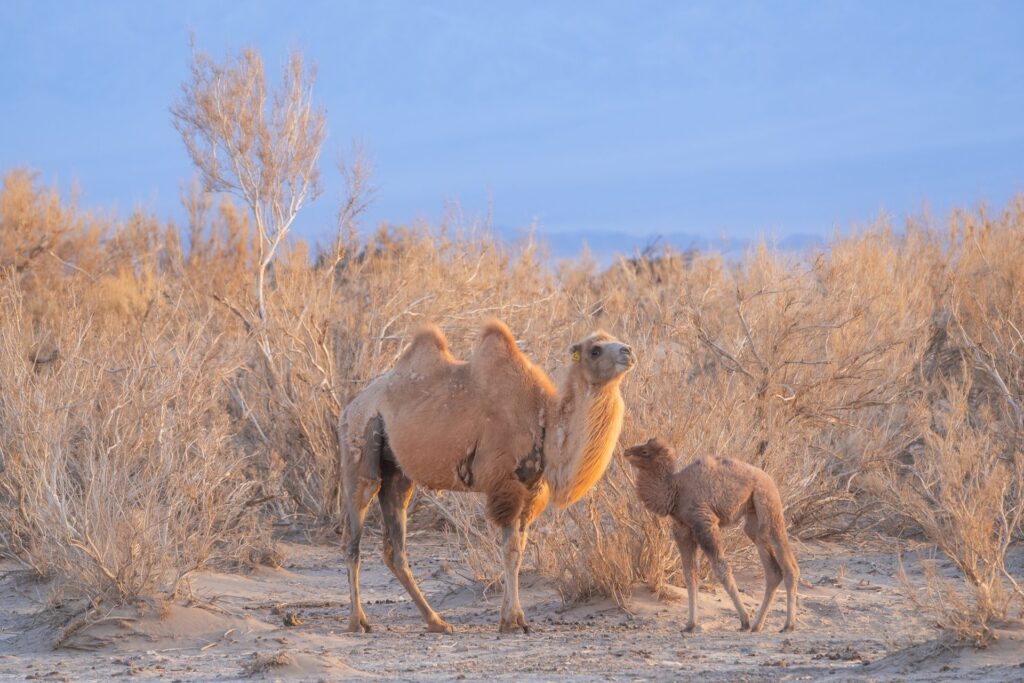
There are also several physical differences between wild and domestic Bactrian camels. Wild camels generally have smaller and more pointed humps, a flatter and narrower head, a leaner body, longer legs, and less body hair, reflecting their adaptation to the harsh desert environment. Over countless generations, wild camels evolved remarkable adaptations that allow them to survive where few large mammals can. They are capable of drinking highly saline water that would be harmful to most animals. Their physiology enables them to endure extraordinary dehydration and extreme temperature fluctuations, from summer heat exceeding 45°C to winter temperatures dropping below -30°C.
Lifeline in the desert
About 30 years ago, British explorer John Hare and environmental lawyer Kathryn Rae established the Wild Camel Protection Foundation UK with a simple but urgent mission: to prevent the species from disappearing from Earth forever. Unlike many other endangered species, there are no wild camels maintained in zoos around the world. If they vanish from the wild, the species could disappear entirely.
The story of Przewalski’s horse offers a powerful contrast. When the species was declared extinct in the wild in 1969, hundreds still survived in zoos and breeding programmes worldwide. Those captive populations later enabled successful reintroduction efforts back into Mongolia and Kazakhstan. Wild camels do not have that safety net.
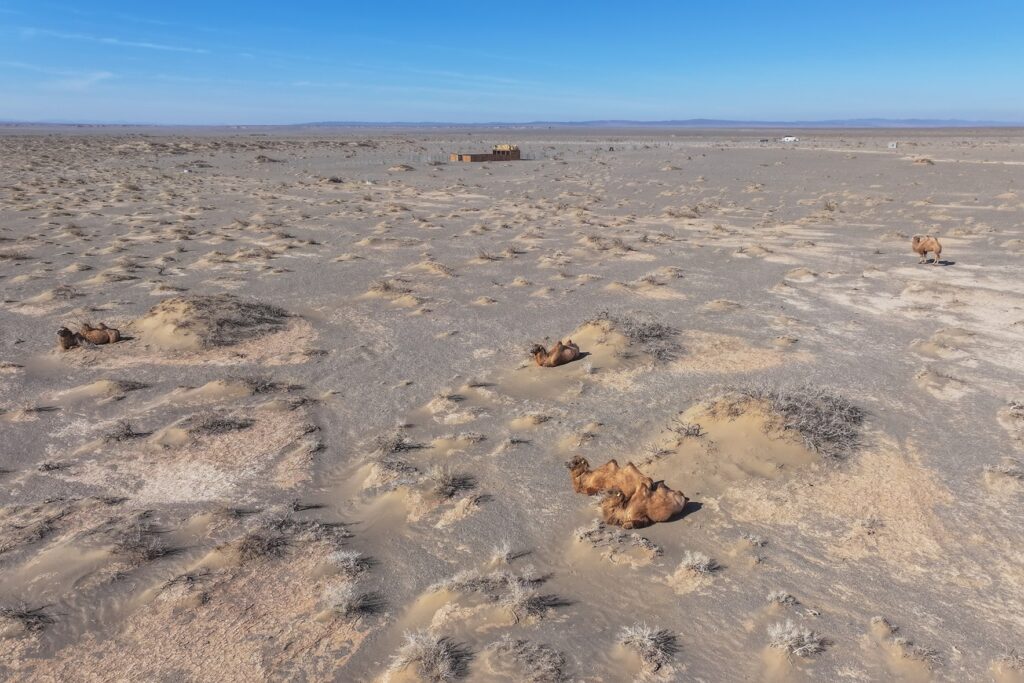
Recognising this vulnerability, the establishment of conservation breeding centres became increasingly urgent in the early 2000s. Today, two wild Camel Breeding and Research Centres in the Gobi Desert of Mongolia—one in Zakhyn Us and another one in Toli Bulag—serve as critical conservation lifelines. Together, these facilities maintain approximately 40 wild camels under managed conservation care, representing the only captive population of wild camels in the world. Recovery remains slow, as the species has a gestation period of approximately 13 months, and adult females generally give birth only once every two years.
Fragile future
The Gobi Desert itself is often misunderstood. Many imagine it as a lifeless wasteland of endless sand dunes. In reality, the Gobi is a diverse and fragile ecosystem composed of gravel plains, rugged mountains, dry riverbeds, salt flats, and sparse grasslands. It supports a remarkable range of wildlife specially adapted to desert survival, while beneath its surface lie extensive mineral resources.
Today, the wild camel faces mounting threats. Climate change is altering rainfall patterns and accelerating desertification. Over 77 percent of Mongolia’s land is affected by desertification and land degradation. Water sources are becoming increasingly scarce. Expanding livestock grazing places additional pressure on fragile habitats. Mining activities, both legal and illegal, fragment migration routes and disturb critical areas. Meanwhile, hybridisation with domestic Bactrian camels threatens the genetic integrity of the species itself. These challenges represent the direct and growing threats facing the species today and into the foreseeable future.
Whether wild camels continue to roam the Gobi Desert for generations to come may ultimately depend not on their ability to survive the desert, but on our willingness to protect one of the planet’s most extraordinary and overlooked species.
Further Reading
Dulamtseren, E., A. Yadamsuren and R. Reading. 2012. The conservation status and management of wild camels in Mongolia. Conference: Camels in Asia and North Africa. Interdisciplinary Perspectives on Their Past and Present Significance.
Mallon, D., A. Jemmett, Y. Xue, S. Whitemore and A. Yadamsuren. 2025. Camelus ferus. The IUCN Red List of Threatened Species 2025: e.T63543A50197851. https://dx.doi.org/10.2305/IUCN.UK.2025-2.RLTS.T63543A50197851.en. Accessed on May 13, 2026.
Yadamsuren, A., O. Daria and S. Liu. 2019. The seasonal distribution of wild camels (Camelus ferus) in relation to changes of the environmental conditions in Mongolia. Open Journal of Ecology 9(8). https://doi.org/10.4236/oje.2019.98021.