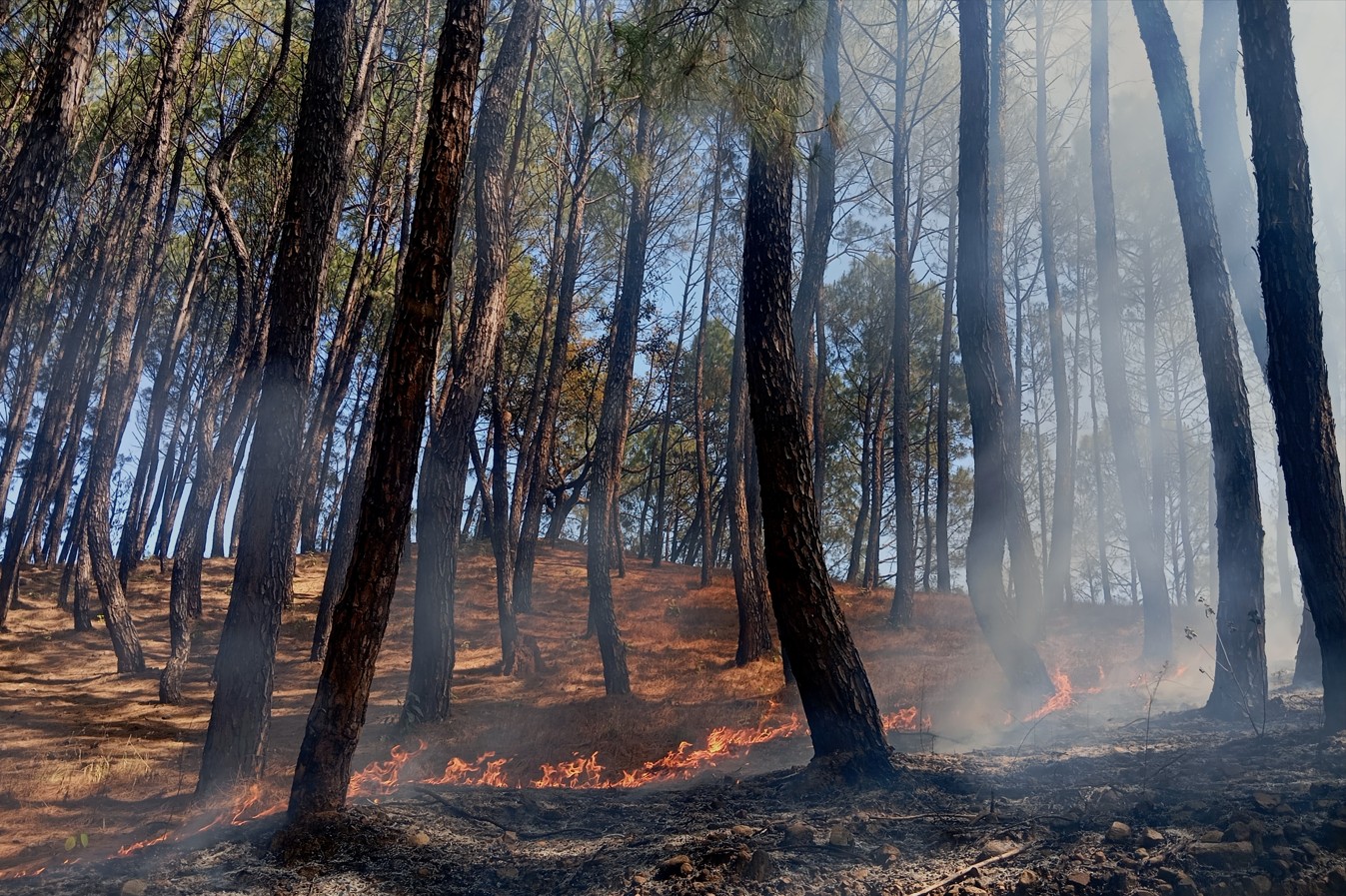
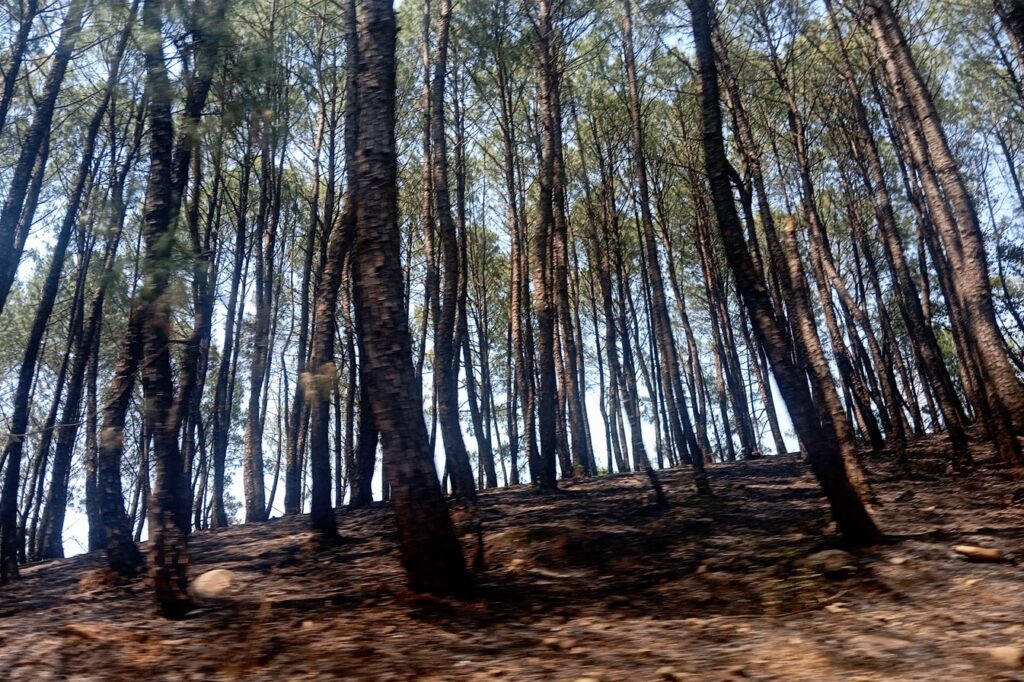
Featured image: Fire that broke out in a pine plantation in the Mandi district of Himachal Pradesh. You can see the dry litter and open canopy that makes the pine plantation highly suspectable to fire.
Imagine standing at a height of 3000m on the foothills of a snow-covered mountain. Strong chilly winds are gushing past you, and you see clouds moving at a faster pace than they are supposed to. A closer look and you realise that it’s not clouds, but the smoke that is rising from a fire amidst lush green forests below the treeline. Yes, an oak and rhododendron forest is burning—not a scene one would expect to see when surrounded by snow-capped peaks.
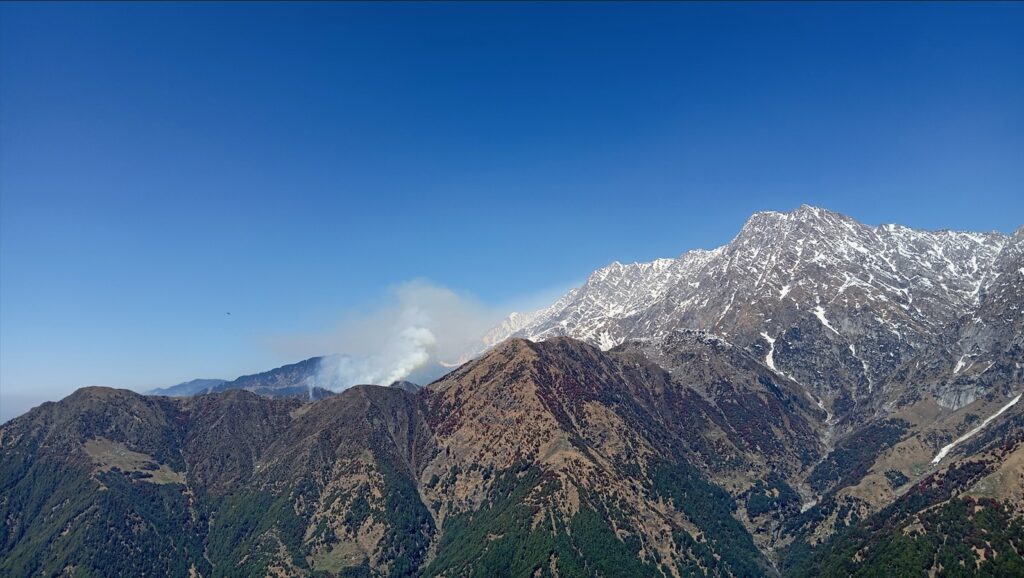
Himachal Pradesh means ‘snowy slopes or land of snowy mountains’ and yet contrary to the name, forest fires are very common in this Indian state during the summer months. The fire season usually starts in mid-April and extends until the onset of the monsoon. The state has both broadleaf and needle-leaf trees, but the majority of the fires occur in the mid-elevation regions which are dominated by pine forests. Globally, pine plantations (especially Pinus roxburghii or chir pine in India, Pinus radiata in New Zealand, and Pinus ponderosa in North America) have long been susceptible to frequent fires due to their resin-rich, highly flammable leaf litter and open canopies that allow sunlight and wind to dry the forest floor.
One of the main reasons for fire in pine plantations is the accumulation of dry needles, which creates a continuous fuel bed. Combined with anthropogenic ignition sources—such as deliberate burning for grass regeneration, discarded cigarette butts and beedis (thin, hand-rolled cigarettes made with tendu leaves)—and factors such as strong winds and the interconnectedness of the plantations, a fire once started goes on its merry way, unhindered.
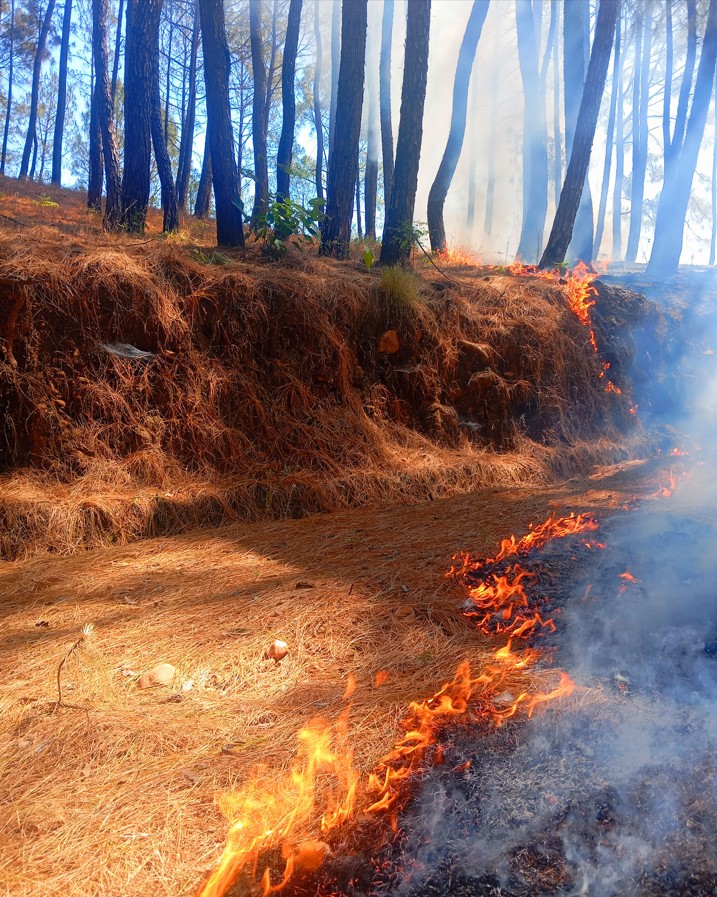
Once, I witnessed a fire that accidentally broke out in a pine plantation in the Mandi district of Himachal Pradesh. There was a road running through the middle of the plantation that was made slippery by dry pine needles, which was extremely dangerous for motorbikes. A person cleaning the road made a small fire line and set fire to pine needles on the road to clear it faster. Unfortunately, dry grass nearby caught fire and in less than 30 seconds it got out of control and swept through the plantation—an example of an unintended action resulting in a major fire.
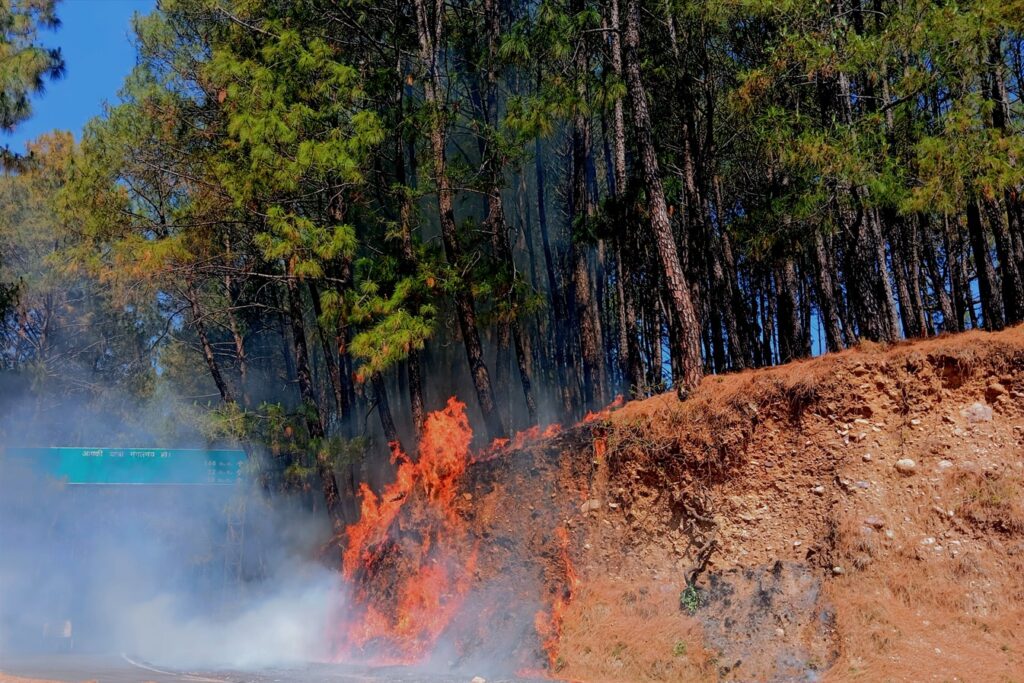
A majority of the fires in pine plantations in Himachal are surface fires, meaning that litter, grass and low shrubs get burned, while mature trees remain unaffected. These surface fires can become crown fires in exceptionally windy and dry conditions. However, such instances are rare.
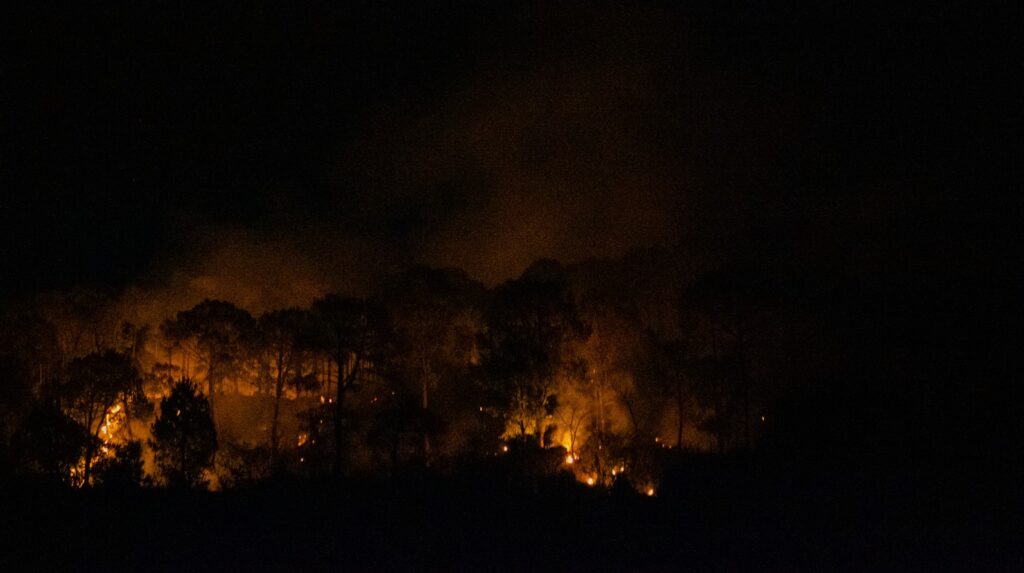
The terrain also plays its part as the slopes make extinguishing fires risky and difficult. Most of the plantations are also in areas inaccessible to fire engines, which means the fire can go on for days and nights until it runs out of fuel.
Fires in broadleaf forests are less frequent due to the moist litter and humidity. And these forests adjacent to the needle-leaf plantations or forests act as buffer zones which help in controlling the spread of fire.
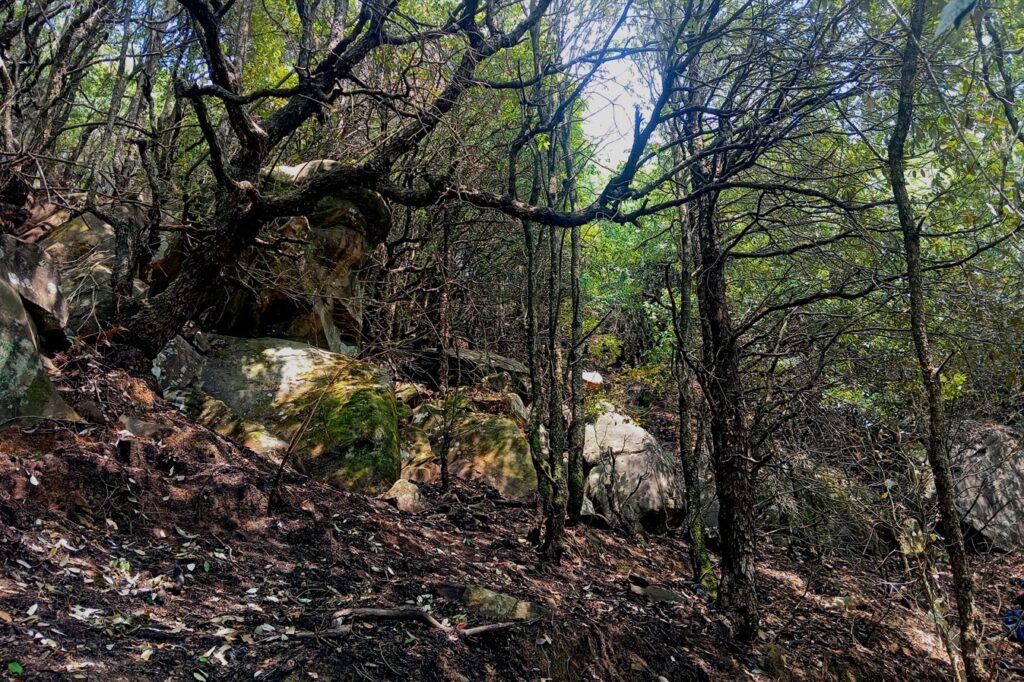
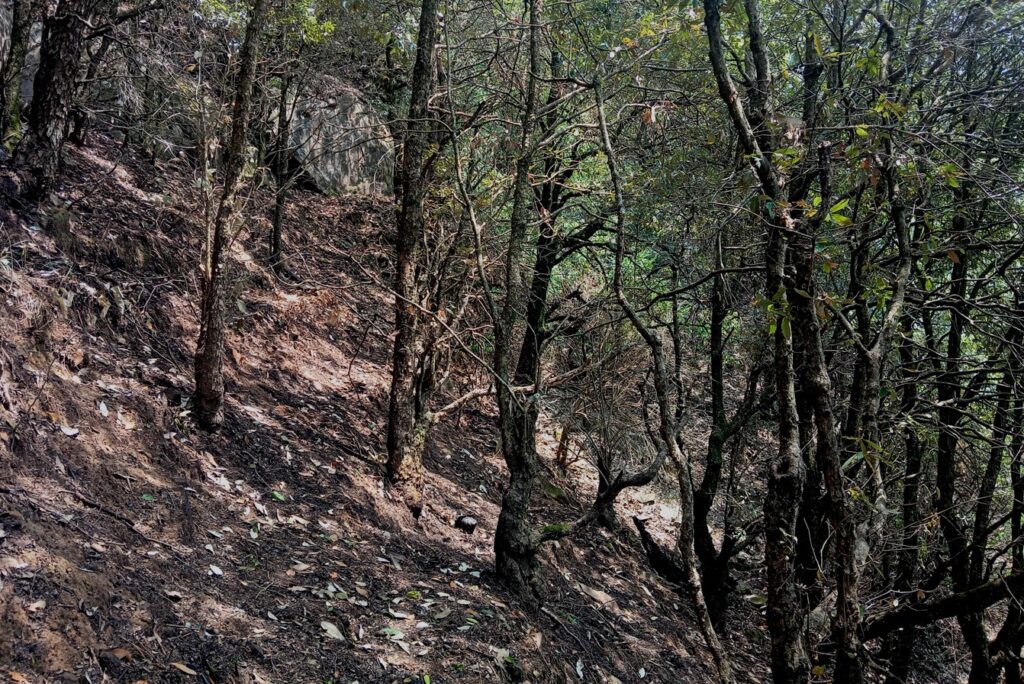
However, prolonged dryness can cause fire in the woody debris of these broadleaf forests. According to locals, these fires are much deadlier than the needle-leaf fires as they release more heat.
The main reason for fires in Himachal is the historical mistake of planting pine in once-open areas without consulting the local people. This reduced the grazing area for cattle, so people burn these plantations for the grass that sprouts after the fire.
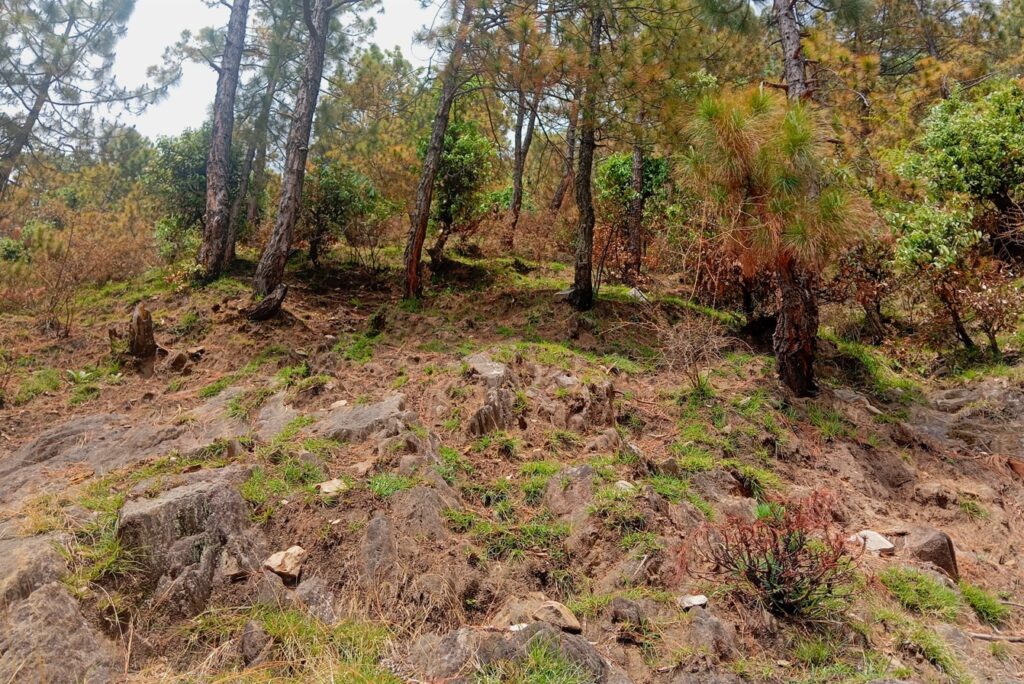
An immediate step to control these fires is to hire people as fire watchers during the fire season. The forest department currently does so to ensure that people do not intentionally burn the plantations and fires are put out at the earliest. However, the long-term solution will be to slowly replace the pine with trees that are native and beneficial to the local communities and at the same time provide fodder to cattle so that they are less dependent on the grass from plantations.
Acknowledgement: This photo story was written during the fieldwork that I carried out as part of a collaborative project between Ashoka University and Swedish Agricultural University in order to investigate the forest dynamics and ecosystem services in the mid-Himalaya’s of Himachal Pradesh. I would like to thank all my teammates whose help and support made it possible for me to write this article.
Further Reading
Sharma, M. and Ankita. The Hindu BusinessLine. 2025. How to control pine-forest fires in Himachal Pradesh. https://www.thehindubusinessline.com/opinion/how-to-control-pine-forest-fires-in-himachal-pradesh/article70089400.ece. Accessed on July 20, 2026.
The Times of India. 2024. Massive fire in Himachal: 5 reasons why forest fires happens. https://timesofindia.indiatimes.com/etimes/trending/massive-fire-in-himachal-5-reasons-why-forest-fires-happens/articleshow/115882985.cms. Accessed on July 20, 2026.
Sood, R. The Tribune. 2025. Soaring mercury sparks forest fires in lower hills of Himachal Pradesh. https://www.tribuneindia.com/news/himachal/soaring-mercury-sparks-forest-fires-in-lower-hills-of-himachal-pradesh/. Accessed on July 20, 2026.