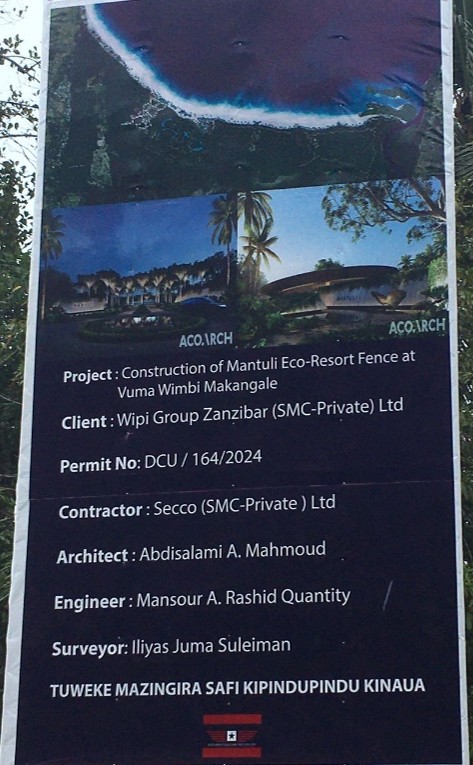
Featured image: The sign announcing the construction of a fence for the Mantuli EcoResort at Vumawimbi. Photo credit: Monique Borgerhoff Mulder
It all began in June 2024. A huge metal sign appeared overnight by the roadside, advertising the impending construction of a luxury 7-star eco resort next to Vumawimbi beach. There had been rumours of a large land sale in the area, but the villagers on this northwestern peninsula of Pemba—the northern island of Tanzania’s Zanzibar archipelago—still had no real idea what was going on. They pushed their bikes on small paths through the forest down to the sea to fish, collect firewood, and visit their ancestors’ graves, expecting that the investors would soon disappear—like they so often do in these risky frontier zones of tourism investment.
While the southern island of the archipelago, Unguja (commonly referred to as Zanzibar), is a massively developed global tourist honeypot, Pemba is quiet with (until now) only a few small hotels. As tourism saturates the Western Indian Ocean, all is about to change. Remote beaches and islets face development, raising troubling questions about what we mean by ‘ecotourism’, and perhaps more importantly, how to measure its footprint, from cradle to grave.
As a team of researchers specialising in biology, anthropology, economics, natural resource governance and conservation, we scanned the sign carefully. The map indicated that approximately 17 percent of the Ngezi-Vumawimbi Nature Forest Reserve (NVNFR) was to be cordoned off by the investor, effectively as a privatised ‘eco resort’. There was no evidence of the legally required degazettement process for any land that has been set aside for conservation. Closer scrutiny of the architect’s website documented on the sign indicated a massive development, with over 130 structures likely to be villas, swimming pools, and spas; possibly tropical paradise residences for digital nomads in search of sea, sun, and serenity.
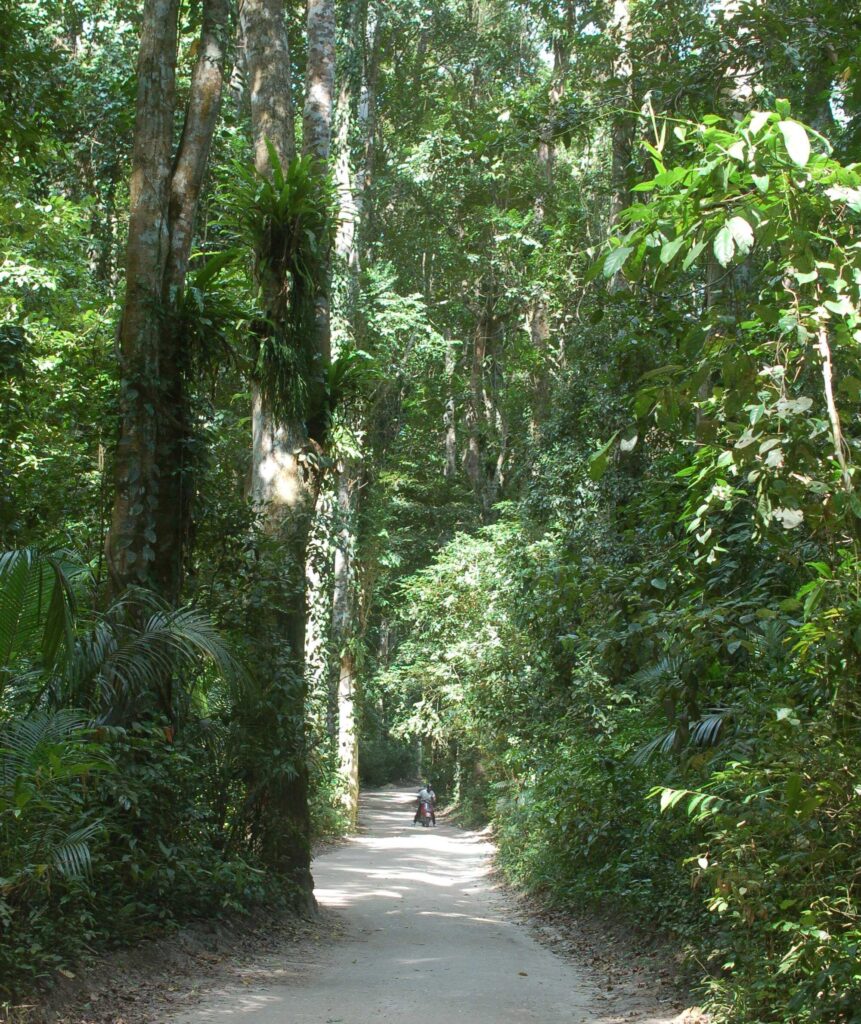
Investigations with our colleagues in the Department of Forestry and other government contacts suggested that Pembans of all ranks were entirely confused by the development. Subsequent general promotional events on Pemba held later in the year revealed only that the Zanzibar Investment Promotion Authority (ZIPA) had granted permission for East Africa’s first ‘7-star hotel’. No specific investor has been identified, but it is clear to all that approval most likely comes from “the very top”
Ecotourism threatens biodiversity
On the ground, conservation scientists got to work. The NVNFR consists of 550 hectares of moist forest and 220 hectares of giant heath vegetation, together with coastal evergreen thicket, dry coastal forest, mangroves, and wetlands. It is widely recognised for its unparalleled diversity compared to other East African forests. The reserve is the jewel in the crown of Pemba’s biodiversity. High levels of endemism reflect its status as a Western Indian Ocean island, in sharp contrast to Unguja, Mafia, and Lamu, which were physically connected to mainland Africa until recent years. European botanists working with the Italian NGO Oikos and government specialists rapidly upped their rate of discovery, identifying eight plant species new to science, sadly in exactly the area due for development. They also located a unique forest type dominated by a teak species (Intsia bijuga), not known anywhere else in East Africa. Again, this 3×1 km2 stand dominated by I. bijuga lies precisely in the area designated for development, located right behind prime beachfront sites. Of the 350 plant species recorded, 20 percent had never previously been reported in Pemba, and at least nine are categorised as Threatened or Near Threatened on the IUCN Red List.
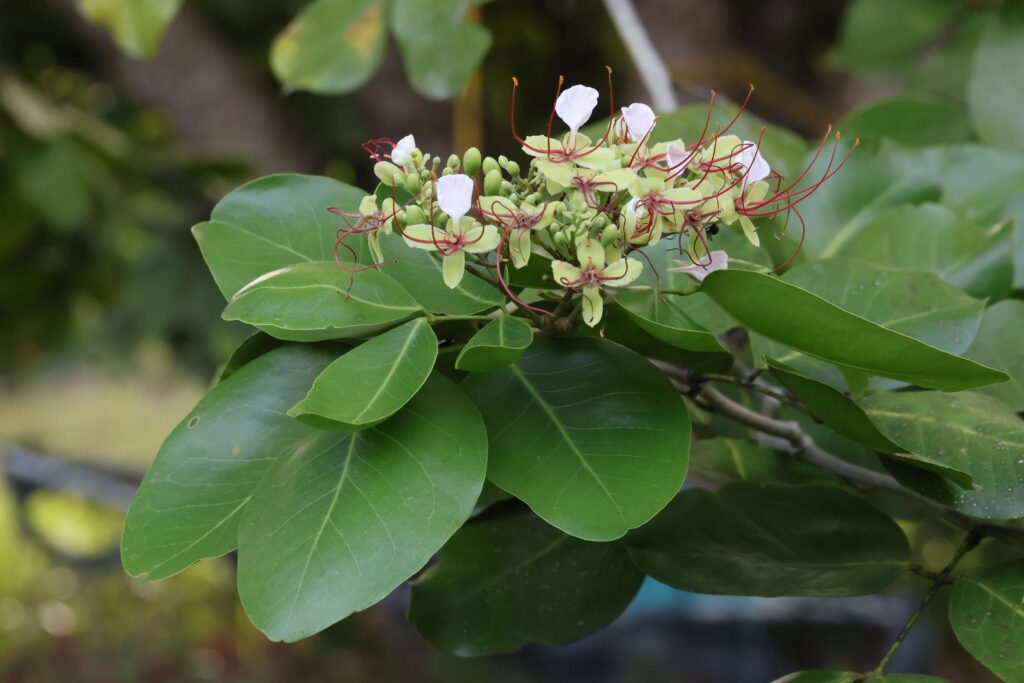
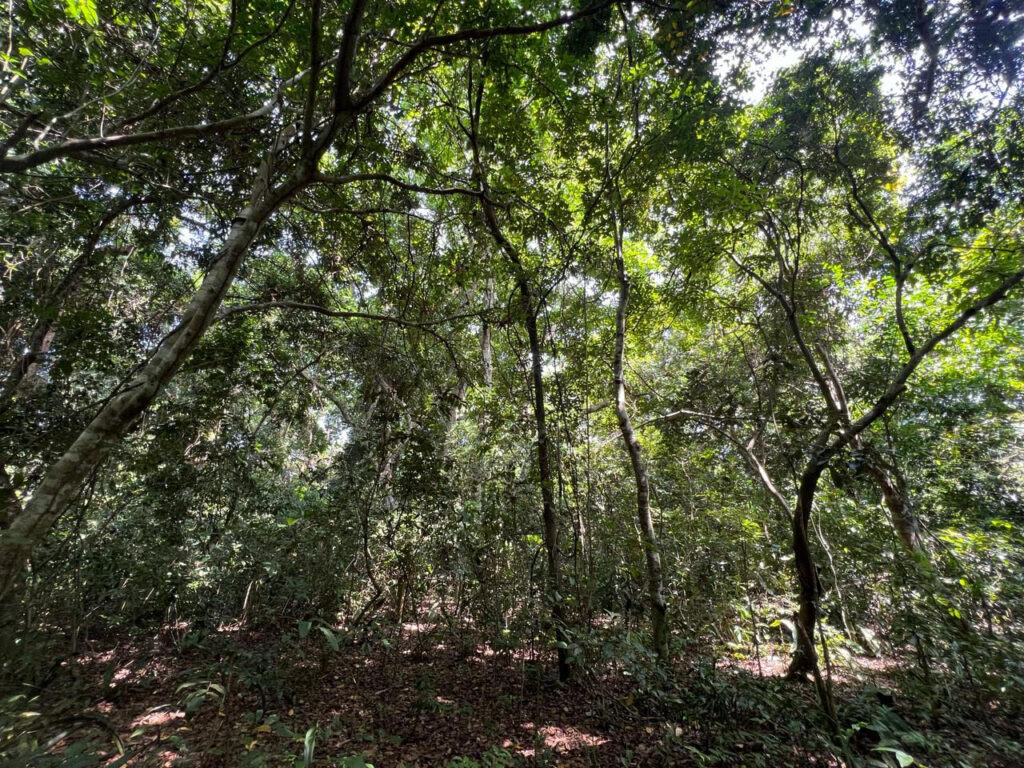
Furthermore, all of Pemba’s many endemic plants, birds, mammals, amphibians, and invertebrates are found in the Ngezi reserve. Scientists also recorded signs of the heavily poached blue duiker (Philantomba monticola) in this area. Construction at the resort site, as depicted on the sign and the architect’s website, together with the extensive infrastructural development needed, would mean levelling the vegetation, destroying this biodiversity hotspot, and immediate local extinctions. As the science progresses, the depth of the ecological footprint becomes increasingly obvious.
Community response
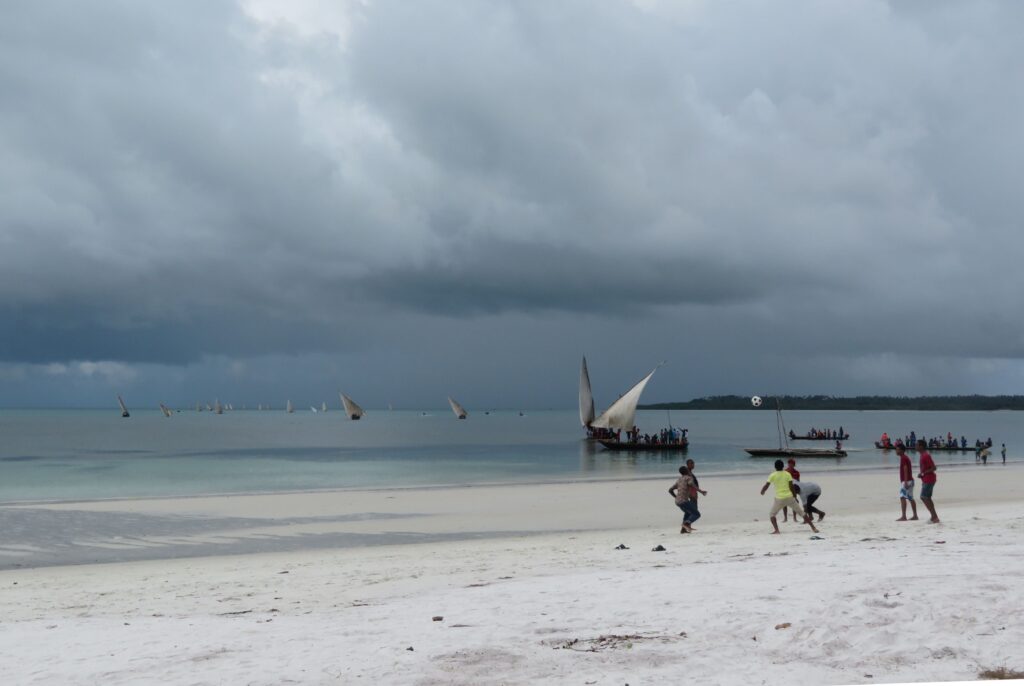
Social scientists also swung into action. Most rural Pembans communities are forest-dependent, relying on forest products for over 30 percent of their livelihoods. Vumawimbi beach also attracts Pemban crowds at weekends, and for every state and religious holiday, to relax on the sand, barbecue, play football, and explore the forest. And the adjacent forest harbours sacred sites and ancestral graves. The Ngezi Vumawimbi Heritage Organisation, a local organisation focused on protecting the communities’ cultural and biological heritage, recently published a research survey on the impact of tourism on local communities. They asked the villagers about the six existing tourist ventures in the area (a mix of hotels, diving operators, and small lodges). The survey revealed deep concern over lost access to productive resource areas, such as fishing grounds, beaches, and forests; inappropriate behavior of managers and guests (including racism and bullying); cultural erosion (scanty clothing and alcohol usage); and the lack of formal community consultation.
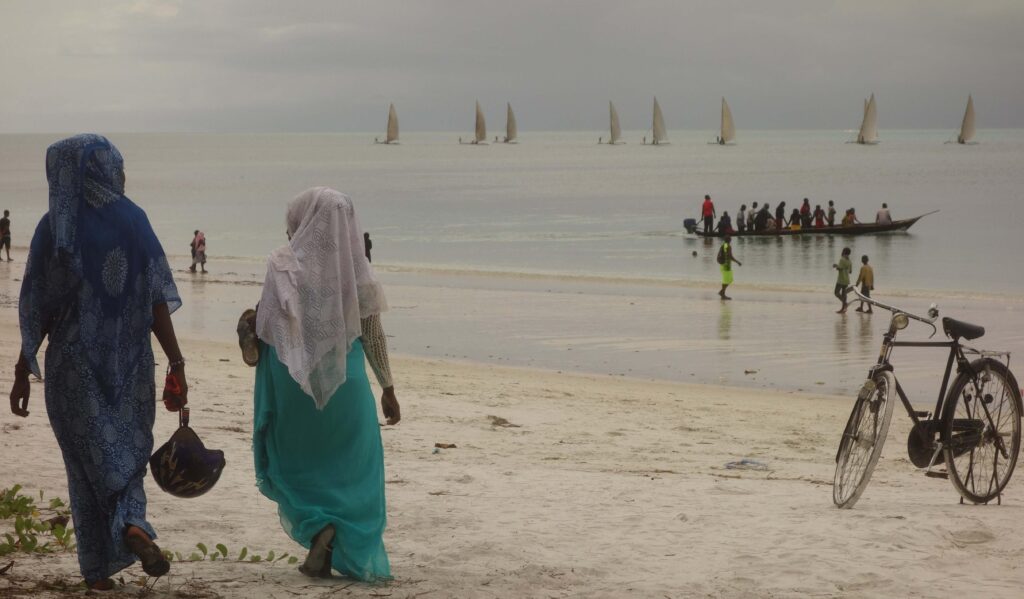
Although the study showed that employment opportunities and hotel development projects were seen as benefits, community members understood that most jobs in the future would go to outsiders. Contemplating the impending changes to their Makangale peninsula, and the totally transformed Unguja island to the south, villagers increasingly recognise that tourism creates both winners and losers. The fates of each vary over time, as the distinct footprints of tourism are revealed. Resort developers make initially risky and expensive investments, but with the arrival of their first tourists they can increasingly enjoy their profits. Locals, on the other hand, lose access to their forests and boat landings, endure potentially unwelcome threats to their cultural values, and face inflated food prices and coastal pollution, as has happened on Unguja.
Current situation
Two years after the posting of the sign, the situation is more confusing than ever. There is now a two-metre wall sealing off much of the site designated for development. In fact, the wall encircles a much larger area than depicted on the sign, directly adjacent to the villages. A contracted operator with a fleet of lorries and excavators works intermittently. Curiously, some of the information on the architect’s website has been taken down, and no formal gazettement or Environmental Impact Assessment—as required by Zanzibari law—has been obtained.
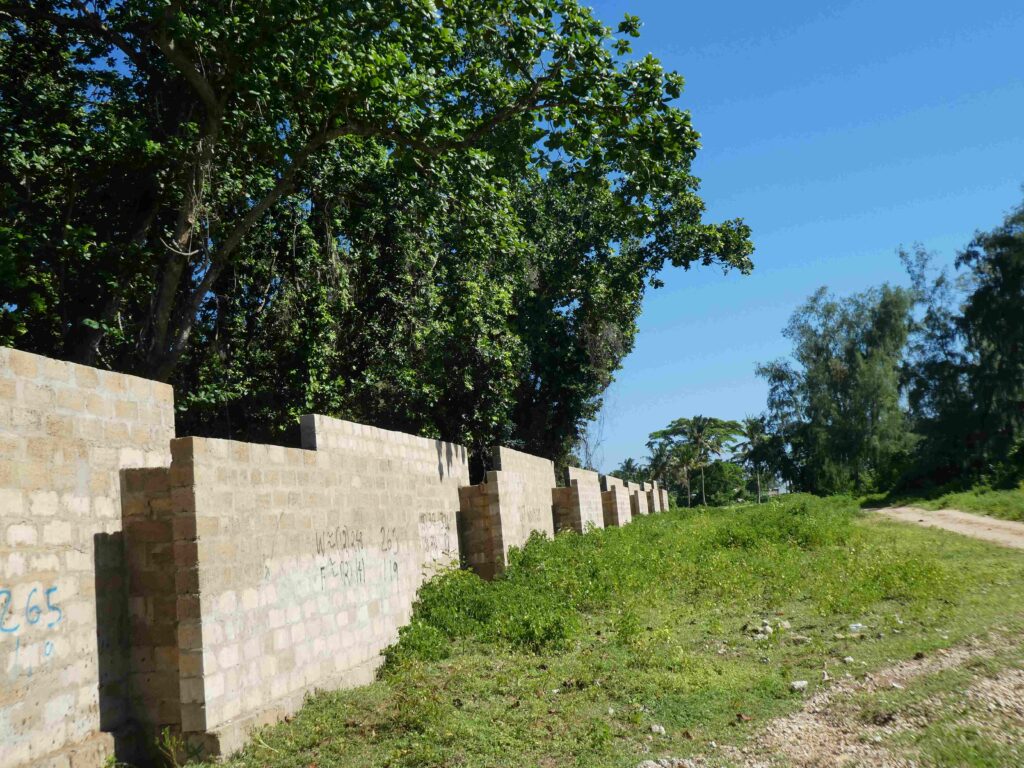
Numerous articles have appeared in the local and regional press, highlighting costs to the community, biodiversity, and to Pemba’s future as a tourist destination. They show that tourism in Pemba is at a crossroads and careful decisions need to be made to balance the interests of investors and elites with the local economic, social, and ecological impacts. There have been scuffles with contractors at the gates into the forest, especially when forestry officials or villagers need access. A local member of parliament has challenged the lack of transparency in parliament, and a lawyer has exposed the illegality of some of the documentation. Other members of parliament have expressed concern after visiting the site, and a recent visit from the Minister of Land has pointed to the fact that the wall does not even follow the originally approved boundary. Meanwhile, the Department of Forestry, working with local NGOs, is formulating a plan for better protection of the whole forest reserve. But on the ground, there is still complete confusion, and the destruction of Ngezi reserve feels imminent because the development itself, other than the wall, has not yet been challenged.
Life cycle analyses of ecotourism ventures
So what can conservation scientists do? They can record potential losses, relocate some species to safe nurseries, campaign, seek the ear of decision-makers, and help coordinate local responses. But is there something else?
We can alert the public to the lure of ecotourism. We—the authors of this piece—are not the first to dissect the pros and cons of ecotourism. But in watching this debacle unfurl, we realised how important it is to think of resort development from a life cycle perspective. You may stay in an eco-rated hotel where the towels are not washed daily, the fish is locally sourced, and where you can go birdwatching in the nearby forest. But have you ever stopped to think about what was there before the resort? And who seriously measures these long-term costs and benefits? Based on our review of the literature on ecotourism across the Western Indian Ocean, on eco-certification processes, on the political ecology of tourism, and on anthropogenic impacts on animal behaviour and ecology, we propose a simple picture of what worries us.
The figure below depicts the environmental, social, and economic costs and benefits to the investor and local community. It considers different periods: first, hotel planning and land clearance, then the construction phase, and, finally, the operational period, accumulating costs and benefits over time. Typically, local communities may gain some economic benefits in the early stages, but once opportunities for extensive manual labour are finished, trained English-speaking outsiders are brought in for higher-paying management and service positions. The social costs to the community only escalate over time, as a result of lost access to natural resources, cultural disruption, inflation, and inequality. Notably, environmental costs in terms of habitat destruction and biodiversity loss are substantial in the early phases of clearing and construction, even though later costs like pollution can potentially be reduced with good operating policies. Meanwhile the investor’s bank account flourishes as the tourist revenue materialises.
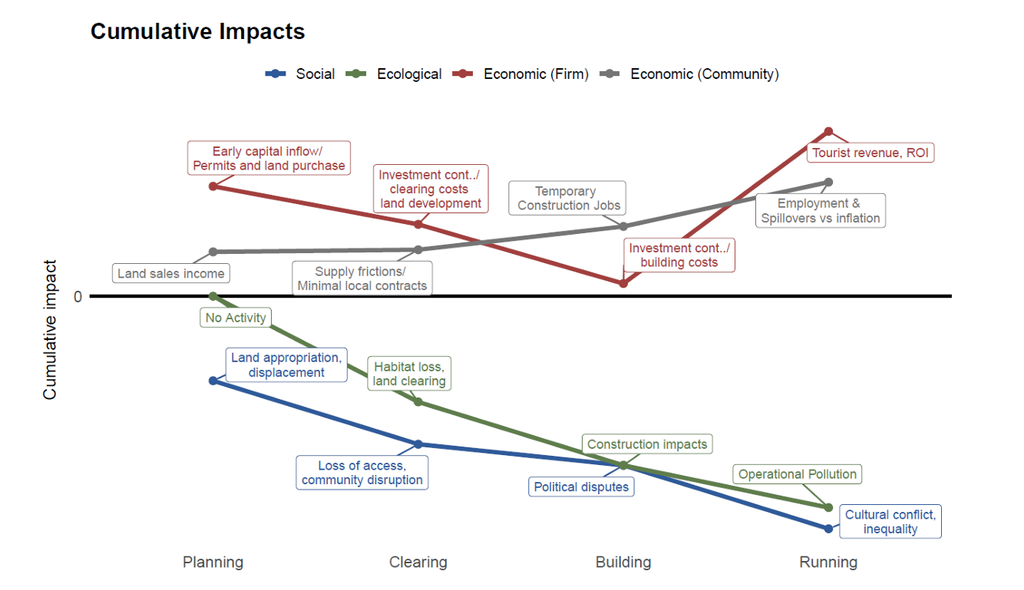
This cumulative impact of ecotourism is constructed largely on the basis of qualitative studies and perspectives. But versions of it should lie at the core of any certification and approval process and be front and centre in the tourism industry. Right now, they are not. As conservation scientists, we must start to measure these costs and benefits in order to provide reasonable guides for where and when ecotourism is a legitimate strategy to protect biodiversity and improve livelihoods. As consumers of ecotourism, we should all be better informed. Do we really want to contribute to an enterprise with such a deep and enduring footprint? Are there other ways to spend our holidays?
Further Reading
Caro, T., J. Andrews and M. Borgerhoff Mulder. 2026. A life-cycle framework reveals hidden costs of ecotourism. Biological Conservation 319:111871. https://doi.org/10.1016/j.biocon.2026.111871.
Jaffar, J. A., A. S. Ngwali, K. K. Ali, H. J. Hamad, S. J. Issa, A. M. Juma, M. S. Khamis et al. 2026. A community asks itself: do we want tourism? Frontiers in Sustainable Tourism 5: 1813379. https://doi.org/10.3389/frsut.2026.1813379.
Orsenigo, S., A. L. Bianchi, M. Menegon, J. V. Lyakurwa, S. Ceppi and G. Baldesi. 2026. New assessment reveals extraordinary plant diversity at risk in Ngezi–Vumawimbi Forest Reserve, Pemba Island, Zanzibar, Tanzania. Oryx. https://doi.org/10.1017/s0030605326102774.