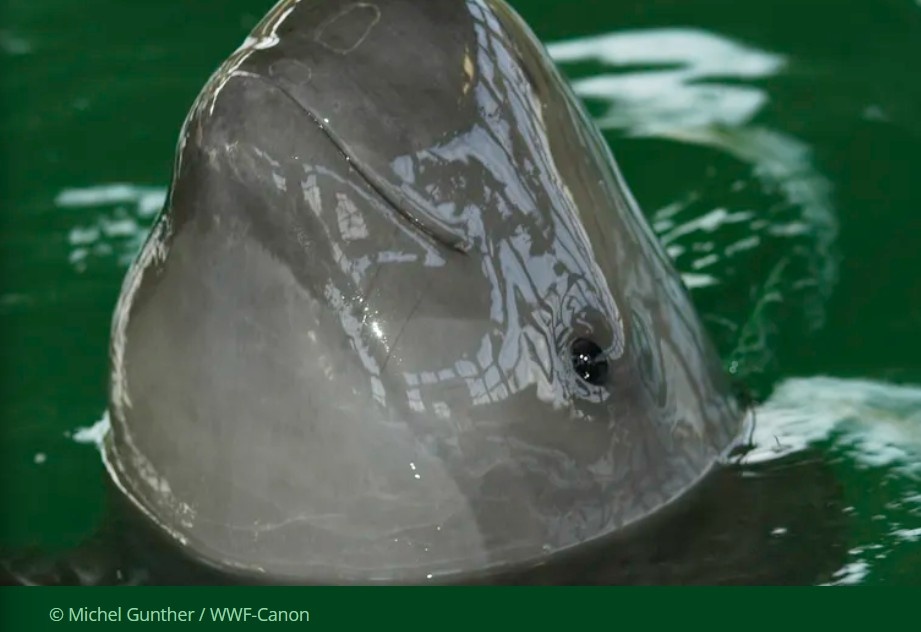
Feature image: A Yangtze finless porpoise, a type of small cetacean, categorised as Critically Endangered on the IUCN Red List (Photo credit: Michael Gunther for WWF)
Charismatic, economically valuable, and ecologically important, marine mammals are one of the most well-studied groups of animals on the planet. Despite this, research and public interest in these animals have not protected them from the same threats and declines witnessed in other, less renowned and studied animals.
This is particularly true of small cetaceans, which includes dolphins and porpoises. Small cetaceans did not experience the historical overharvesting faced by the great whales and other marine mammals, and are not the subjects of current commercial harvest, such as those threatening sharks, rays, and other large marine vertebrates. Why then are some species of small cetaceans facing extinction?
Assessing global threats
A 2024 study by Temple, Langner, and Berumen at the Thuwal Red Sea Research Centre in Saudi Arabia tried to answer this question by systematically examining records for small cetaceans worldwide. Their objectives were to assess both historical and current extinction risk, and the effectiveness of conservation efforts. They systematically reviewed scientific publications from 1991 to 2023 and accessed data from the IUCN Red List, which is the most widely used method for assessing the extinction risk of a species. For each small cetacean species, they recorded threats described in IUCN records and compared these to the frequency of threats described in the scientific literature.
Their findings were alarming. Nearly a quarter of all small cetacean species are currently threatened with extinction, and their Red List status has shown no improvement over the last three decades. Though the population decline of threatened cetacean species has been slow, it has remained consistent.
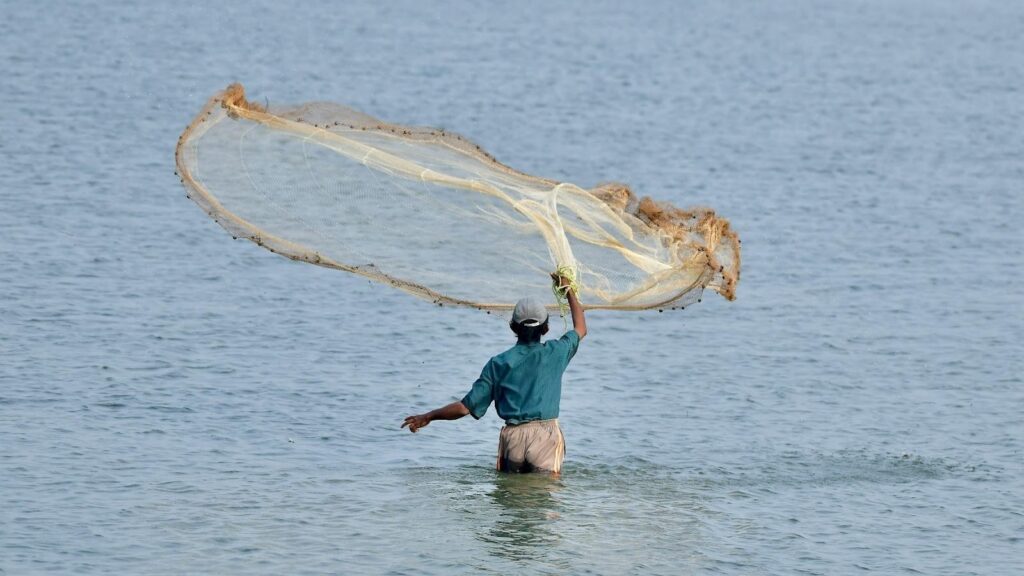
The greatest threat arises from entanglement in nets and other gears of small-scale fisheries. Dolphins and porpoises are especially vulnerable, as many inhabit coastal waters where such fisheries operate. This is particularly the case in low and middle-income countries where fishing is prevalent, as it remains a vital source of food and income. Habitat-choice further compounds the risks to cetaceans.
The feeding and breeding grounds of small cetaceans are under constant threat due to coastal development, urbanisation, effluent discharge, and marine debris. In industrialised regions, cetacean species are further affected by pollution and habitat degradation, due to alterations to the marine ecosystems associated with coastal development. The study also shows that cetacean species inhabiting shallow and coastal habitats are especially at risk, since they are exposed to a higher rate of human activity.
Evaluating conservation efforts
Global research and conservation priorities have not kept pace with these threats to small cetaceans. Bycatch in fisheries and habitat loss—the most serious threats—have been less studied than factors like noise pollution and oil extraction. Conservation policy has been general, and most conservation programmes fail to target the specific risks faced by small cetaceans.
However, not all of the study’s findings were alarming. The Bycatch Mitigation Initiative of the Food and Agriculture Organisation of the United Nations (FAO) has developed practical solutions to reduce the accidental capture of marine animals in fishing gear. Similarly, the IUCN has developed the Integrated Conservation Planning for Cetaceans framework to help countries strategise for the long-term survival of whale and dolphin species. Still, in light of the scale of the problem, these efforts are insufficient. Management strategies need to be more localised and targeted, and researchers must shift their focus towards threats that need urgent handling and the human activities driving them.
The authors argue that conserving small cetaceans holds symbolic weight. These species may not be the largest in the ocean, but their conservation is a test of our ability to respond effectively to biodiversity loss. If the global community cannot manage threats to dolphins and porpoises—species that are relatively well-studied and beloved—then it does not bode well for lesser known species or more complex cases. Furthermore, success in conserving small cetaceans could also provide momentum for broader marine conservation strategies.
Further Reading
Temple, A. J., U. Langner and M. L. Berumen. 2024. Management and research efforts are failing dolphins, porpoises, and other toothed whales. Scientific Reports 14: 7077. https://doi.org/10.1038/s41598-024-57811-7.
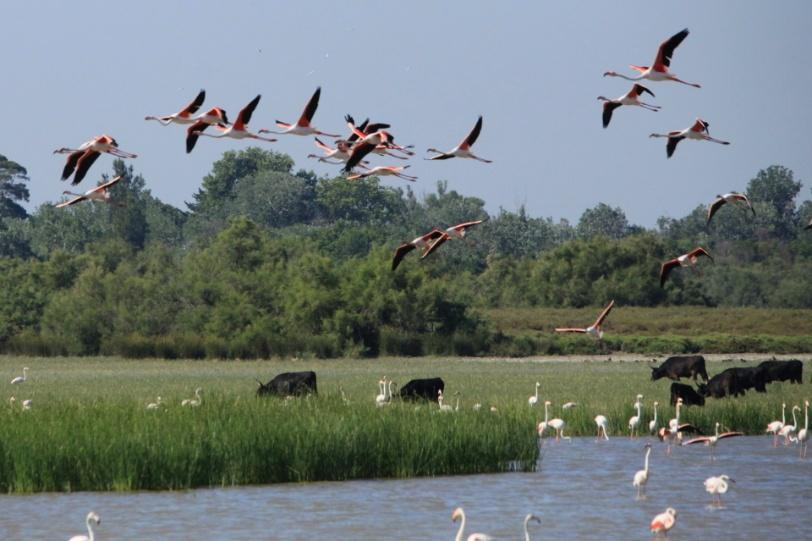
Feature image: Cattle grazing in a protected area in Camargue, France (Photo credit: J. Jalbert-Tour du Valat)
Protected areas are an important tool for biodiversity conservation. The largest network of protected areas in the world is the EU’s Natura 2000 network, covering 26 percent of Europe’s land and 12 percent of its seas. Despite this impressive coverage, the state of European nature remains far from healthy. Why is that?
Across the Natura 2000 network, human activities are not necessarily excluded from protected areas. Conservation objectives can align with economic ones, as with, for instance, food production. Sometimes this can work well, while in other cases it may prevent effective conservation.
In our study, we wanted to investigate the biggest threats to biodiversity in Natura 2000 areas and how management actions can address them. To answer these questions, we turned to the managers of protected areas. We asked hundreds of them across Europe about the threats to biodiversity inside the Natura 2000 areas they manage, what actions they take to mitigate these threats, and how they acquire funding.
The results were clear: the presence of intensive agricultural activities was by far the main concern for protected area managers. Intensive agriculture is a process characterised by large monocultures and the use of chemical products like fertilisers and pesticides. These were often highlighted as difficult threats to address. And despite these practices being harmful for many species and habitats, they still take place within protected areas and their surroundings.
Does this mean that protected area managers are fully against agriculture? Not necessarily. In fact, many of the management actions reported to benefit biodiversity consisted of low intensity mowing and grazing. These agricultural practices are used to maintain open habitats, such as grasslands. Grasslands are incredibly biodiversity-rich, but are becoming rarer across Europe, due to the rise of intensive agriculture and the loss of traditional farming activities, such as extensive mowing and grazing. Thus, the use of domesticated livestock species and reintroductions of wild ones to restore open habitats and their associated species has also been implemented in many rewilding initiatives.
Resolving the conflict between agriculture and biodiversity conservation involves economic considerations. In the study, we found that the management of Natura 2000 areas relies on public funding, both national and European. However, intensive agriculture taking place inside Natura 2000 areas is also subsidised by public money from the Common Agricultural Policy (CAP), which mostly focuses on optimising food production for European food security and international trading.
In 2020, the EU launched the Green Deal, which included some proposals that attempted to make agriculture more climate and biodiversity-friendly. However, the Green Deal was met with resistance by part of the farming community, and some of its proposals—including an attempt to reduce the use of pesticides—were cancelled or diluted. A further possible setback to protected areas’ effectiveness came in 2025 with a proposal to cancel LIFE+, the only European fund completely focused on biodiversity conservation inside the Natura 2000 network.
Our results show that if the EU is to meet its conservation goals, farming inside protected areas and their surroundings needs to be regulated accordingly. Instead of loosening up environmental regulations, one option would be for the EU to provide adequate subsidies for farmers that prioritise biodiversity conservation over intensive food production. Ultimately, preserving nature is a win-win situation for everyone, as agriculture itself depends on healthy ecosystems.
Further Reading
Zavattoni, G., E. Gaget, T. Hallman, I. Kačergytė, T. Pärt, D. Pavón-Jordán, T. Sattler et al. 2025. Threats to and management of Natura 2000 protected areas relative to agricultural practices. Conservation Biology 40(2): e70172. https://doi.org/10.1111/cobi.70172.
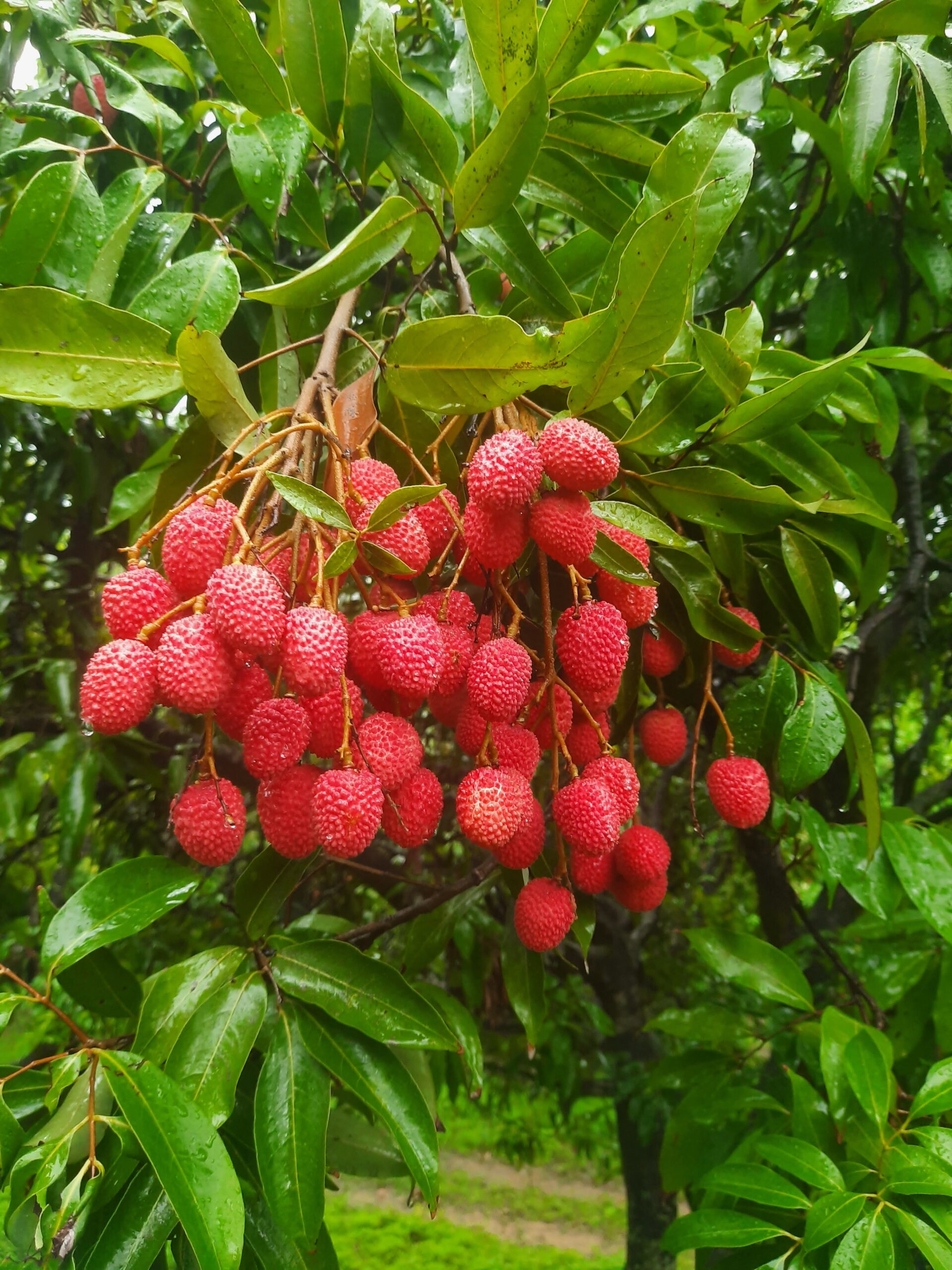
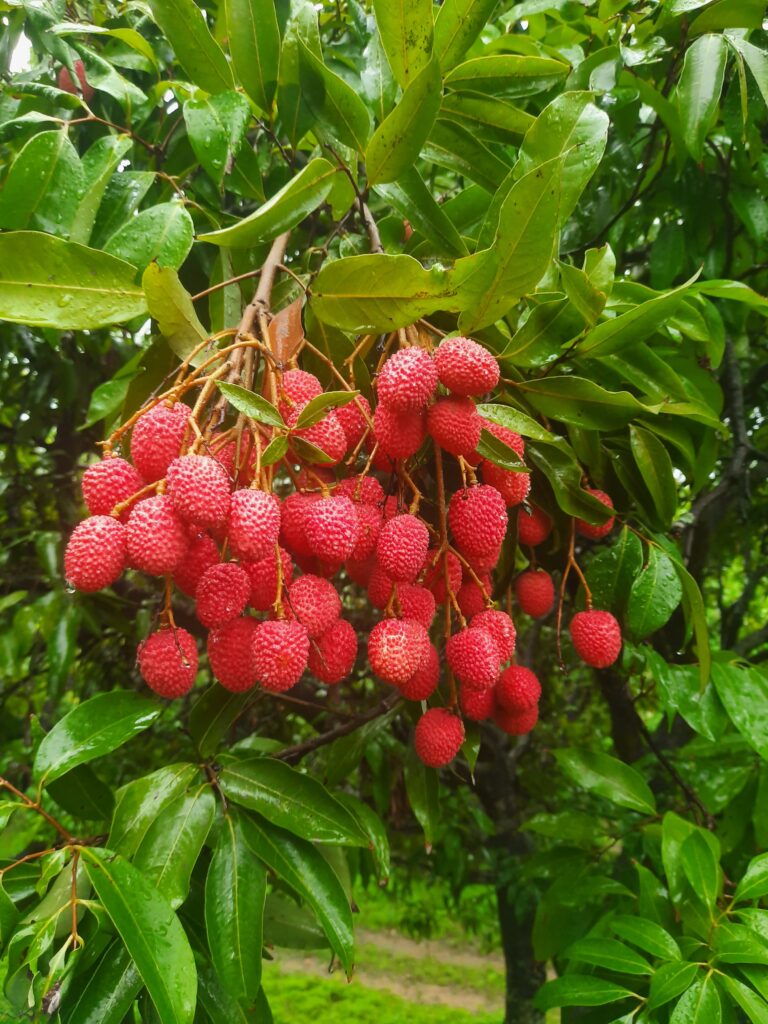
Feature image: A bunch of litchis (Photo credit: Pratyush Gupta)
On the last day of school before the summer break, Latika spotted a cart full of litchis. She got very excited as this meant that the litchi season had officially begun! Litchis are her favourite fruit, so much so that everyone at home lovingly calls her ‘Luchi’. Unlike her classmates, who are embarrassed by their pet names, Luchi loves her name. If she had her way, everyone would eat litchis for breakfast, lunch, and dinner—every day!
The only thing Luchi doesn’t like about litchis is that they aren’t available throughout the year. And once her father brings them home, they wilt so quickly! That’s why Luchi makes the most of every litchi she eats. After peeling each fruit carefully, she hands it to her father to inspect for any lurking worms. Only after her father approves does Luchi bite into the juicy sphere. Her elder brother, Dhruv, often teases her by claiming that the litchi seeds are, in fact, cockroaches in hibernation. Luchi knows this isn’t true, but she still doesn’t want to take any chances and tosses the seeds immediately after relishing the flesh.
As Luchi entered her home, still dreaming of biting into the juicy fruit, she was surprised to see four big suitcases lined up near the door. Her father was home early from work, and everyone was frantically trying to pack last-minute items for a trip.
Sensing that something was bothering her, Luchi’s dad asked her, “Is everything okay, Luchi?” Luchi replied wryly, “Are we going somewhere? I wanted to taste the litchis before going, Baba. Maybe we won’t find them by the time we’re back.” Her father, with a twinkle in his eyes, said, “Oh, yes, we’re going to someplace very special. Sorry, Luchi, we’ll see about the litchis when we return. Or if you’re lucky, you might get to taste them sooner.”
Tired and slightly disappointed, Luchi got into the car and slept her way through most of the journey. When they reached their destination—a small homestay on the outskirts of Dehradun, the capital of the hilly Indian state of Uttarakhand—it was dark, and Luchi couldn’t see a thing. All she could make out were the silhouettes of many trees in front of their cottage.
That night, Luchi was awakened by a loud sound. She heard people shouting and making scary noises. From the corner of her eye, she saw a bright light flash across her window. Scared, she pulled the blanket over her head, curled up closer to her father, and slept.
Perfect surprise
Luchi woke up late the next morning and found her father standing eagerly near her bed. “Wake up, Luchi! There’s something you need to see!” Slowly rubbing her eyes, Luchi went to the window as her father pointed outside. At first, she didn’t notice anything but the green trees. Then she saw it! Bundles of little red balls hanging from those trees. Luchi was staring at a litchi orchard!
Luchi was so enamoured with the thought of visiting the orchard that she was willing to skip getting ready and eating breakfast. Alas, she was forced to take a bath, brush her teeth, and eat breakfast before doing anything else. At the breakfast table, Dhruv announced that he wanted to visit the zoo. Miffed, Luchi didn’t say anything to her brother, but quietly asked her father, “Can we please go to the orchard, Baba?”
And so, Luchi’s father went to the orchard with her, while everyone else went to the zoo. They both reached the old, rusty orchard gate next to their homestay and spotted an old man with white hair and a long beard. Her father asked the man if they could get some litchis. The old man, without a word, swung open the gate, and Luchi—holding her father’s hand tightly—entered the land of litchis.
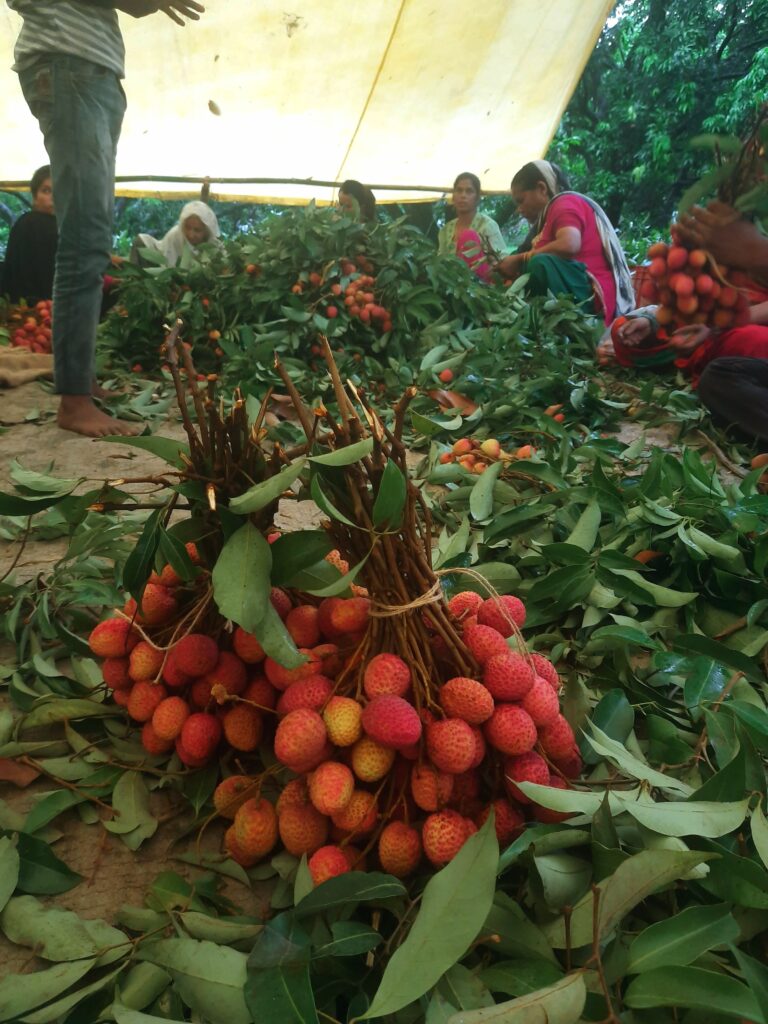
Inside, there were rows and rows of litchi-laden trees. Everywhere Luchi looked, she saw them hanging from the trees, like precious red gems. Beneath a ragged tarpaulin, a dozen or so people were sitting and sorting fresh litchis, tying them into neat bunches. Luchi was so enchanted by the orchard that she didn’t notice the old man had followed and was standing close to them.
Beneath a ragged tarpaulin, a dozen or so people were sitting and sorting fresh litchis, tying them into neat bunches with threads (Photo credit: Pratyush Gupta)
With a thundering voice, he said, “Well, what are you waiting for? Pick them up and weigh them.”
Luchi, though slightly taken aback by the old man’s presence, couldn’t contain herself. There she was, handpicking freshly plucked litchis! She kept getting distracted by their sweet fragrance, and yet, Luchi and her father gathered nearly three kilograms of litchis, paid the old man, and returned to the homestay. In her room, she peeled and bit into the biggest litchi from the bag. Her eyes widened. It was the sweetest and juiciest litchi she had ever tasted! She gorged on endless litchis before falling asleep, while happily gazing at the orchard from the window.
That night, Luchi heard the noises and saw the flashing lights again. And just like the previous night, she shut her eyes tightly, and went back to sleep.
Changing climate
The next morning, her family was getting ready to visit Mussoorie, a nearby hill station. Luchi went to her father and asked, “Baba, can I please stay? I don’t want to go to Mussoorie, I’ll meet you in the evening when you’re back.” “But what will you do all day alone here?” her father asked. “I could spend the day at the litchi orchard,” she replied quickly.
Despite protests from everyone, Luchi’s father agreed. He accompanied her to the orchard, and they met the same old man. Luchi’s father requested him to look after Luchi and promised her that he would return before evening.
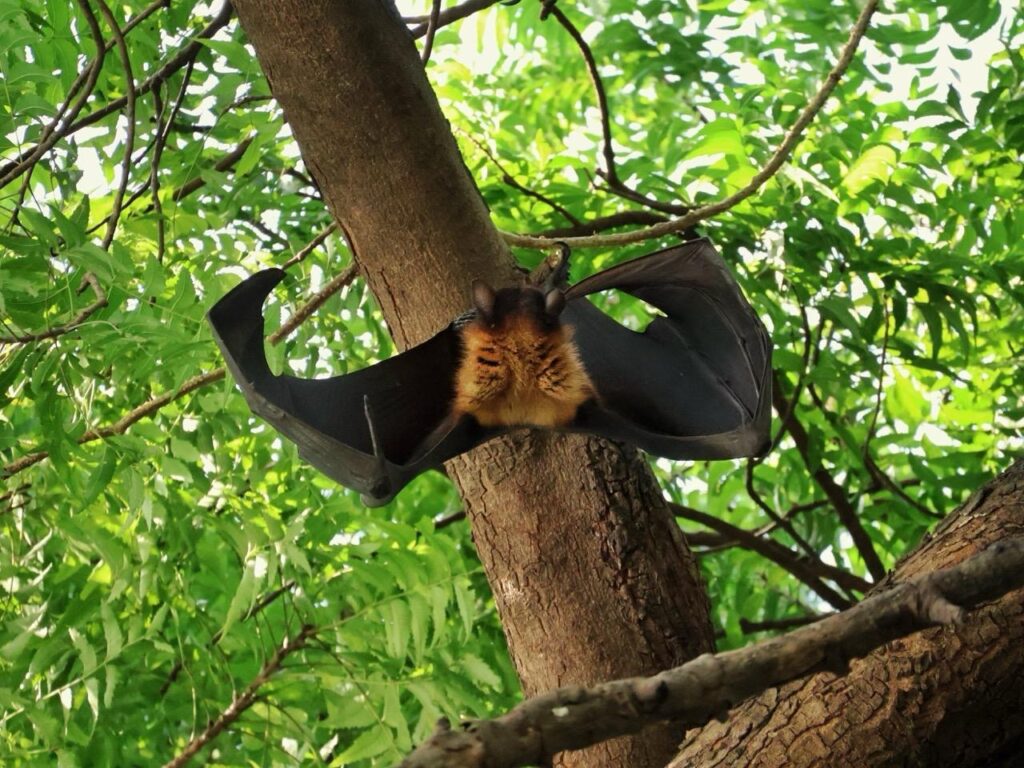
As her father disappeared at the end of the lane, Luchi wondered how old the trees in the orchard would be, when the old man cleared his throat. After a few moments of silence, she timidly asked him, “Who are the people that keep shouting at night, sir?” The old man took a deep breath and replied, “The bats love the litchis as much as you do, and every night they eat away at our beloved fruit. So, at night, we chase them away by flashing torches and making loud noises.” Luchi was amazed as she realised how precious these fruits were and how many people had to work hard for her to enjoy her favourite fruit.
“When do you know the litchis are ready? When are they at their sweetest and juiciest?” The old man explained that the litchis start ripening toward the end of summer, and that one intense spell of rain makes them sweeter, redder, and bigger. That’s when the harvesting begins. In a deeper voice, he added, “But the valley’s climate is changing. We can’t predict it anymore, and the time and intensity of rainfall keep fluctuating. It’s now harder to cultivate ripe, red, and juicy litchis.”
Luchi was concerned that in the future she might not be able to enjoy litchis anymore. The old man, as if reading her mind, said, “Don’t worry, litchis have been around for thousands of years. Nature will adapt; it’s humans who need to prepare for the future.” Before she could stop herself, she blurted, “Thousands of years?” “Yes, it is said that litchi was cultivated as far back as 2000 BC. Litchis are native to China and were used in traditional medicine. No wonder they were so popular among the Chinese emperors,” the man said with a chuckle. Luchi imagined all the bitter medicines she was forced to take when she was sick, and how happily she would replace them with litchis if she could.
Luchi listened to stories of the litchi from the old man all day. She lost count of how many she ate while listening to him. It was almost dark when Luchi heard her father’s voice in the distance. As she grabbed her bag of handpicked litchis and stood up to leave, she turned around and said, “Thank you, sir. It’s because of your efforts that I get to enjoy litchis every year. Do you think I can grow them in my home too?”
“Sure, you can. If you’re willing to care for and nurture the tree, that is,” he replied. Luchi walked back to the hotel with a spring in her step, telling her father everything she had learned about litchis.
That night, Luchi heard the same noises and opened her window to join in the calls to shoo away the bats. No matter how many times her parents asked her to go back to sleep, she simply wouldn’t listen. She couldn’t wait to get back to Delhi and plant a big litchi seed—safely tucked in her pocket—in one of her favourite pots. Half asleep, Luchi decided she would share the litchis from her tree with bats, monkeys, sparrows, and all sorts of creatures. Smiling and dreaming of eating fresh litchis, Luchi fell asleep.
Editor’s note: A version of this photo essay was originally published in Planted and can be found at this link.
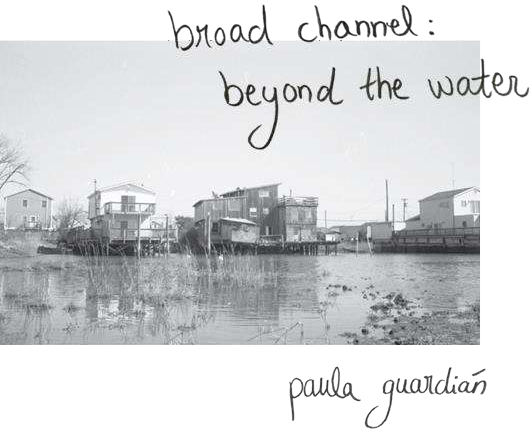
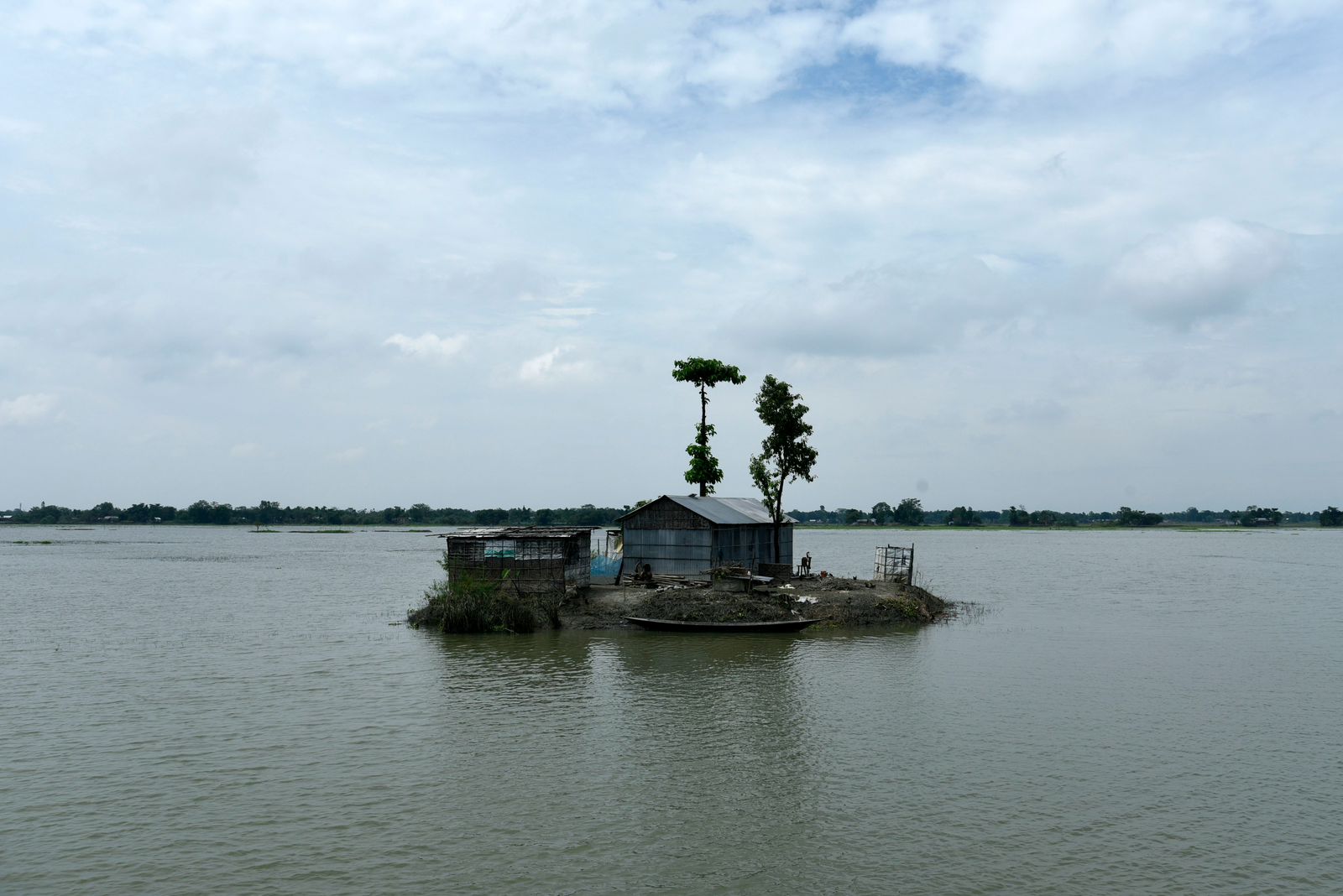
On the island of Broad Channel, New York, all stories begin with the water: boats sit parked on the streets like cars, calendars follow the moon to track the tides, and children sometimes paddle to school by kayak. In this ongoing documentary project—set in a town barely 20 blocks long and four blocks wide—I trace how a deep-rooted seaside community lives at the edge of climate change.
According to current projections, more than 95 percent of Broad Channel’s properties will face severe flooding within the next 30 years. Much of the island will disappear. This project seeks not only to document how residents coexist with the water, but also to build a living archive of a vanishing way of life: houses, docks, flood lines, objects, and gestures that may soon be gone.
Broad Channel is the only inhabited island in Jamaica Bay, New York City. Just a few subway stops from Manhattan, it feels like another world: a tight-knit community of roughly 3,000 residents, many of whom trace their roots back five generations or more.
From the late 19th century, residents have shaped the island in constant conversation with the bay: dredging channels, building boardwalks, elevating homes, and creating docks carved through marshland. Photographs in local archives show streets under water in the 1800s.
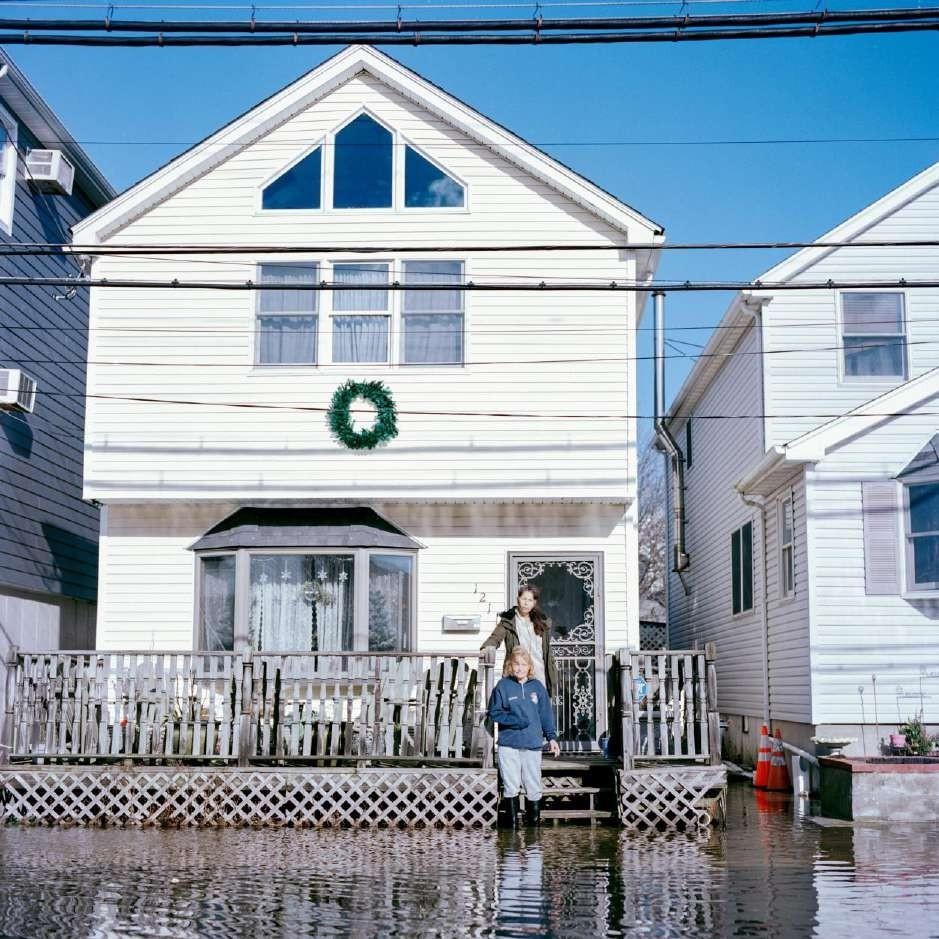
Janine in front of her neighbour Lisa’s house on East 6th Road during one of the major floods of 2024
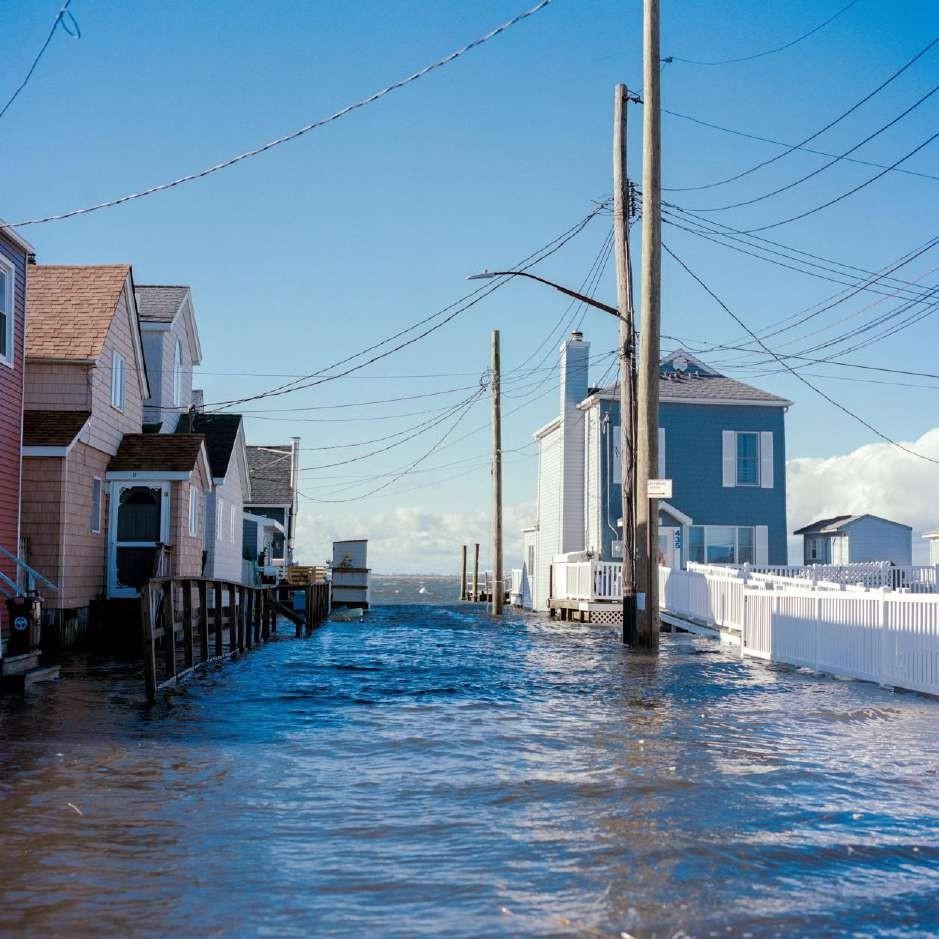
In 2012, Hurricane Sandy made this reality unmistakable: water surged into homes with 8–10 feet of force. The island lost electricity, heat, and access to the city. Residents relied on one another—organising rescues, sharing generators, opening homes. Karen, a longtime resident, recalls trading eggs for propane, exchanging whatever small resources were available just to stay warm and fed. In the absence of infrastructure, mutual care became the island’s strongest defence.
Cross Bay Blvd at W 5th Road during one of the major floods of 2024, when the water rose high enough to submerge the streets and the stilts beneath the houses
After the storm, the city undertook ambitious infrastructure projects: streets were raised, new storm sewers installed, and bulkheads reconstructed to drain water more effectively and protect residential areas from tidal surges. Ecological restoration efforts, such as marsh elevation and vegetation planting, sought simultaneously to reinforce natural buffers that once mitigated storm impacts.
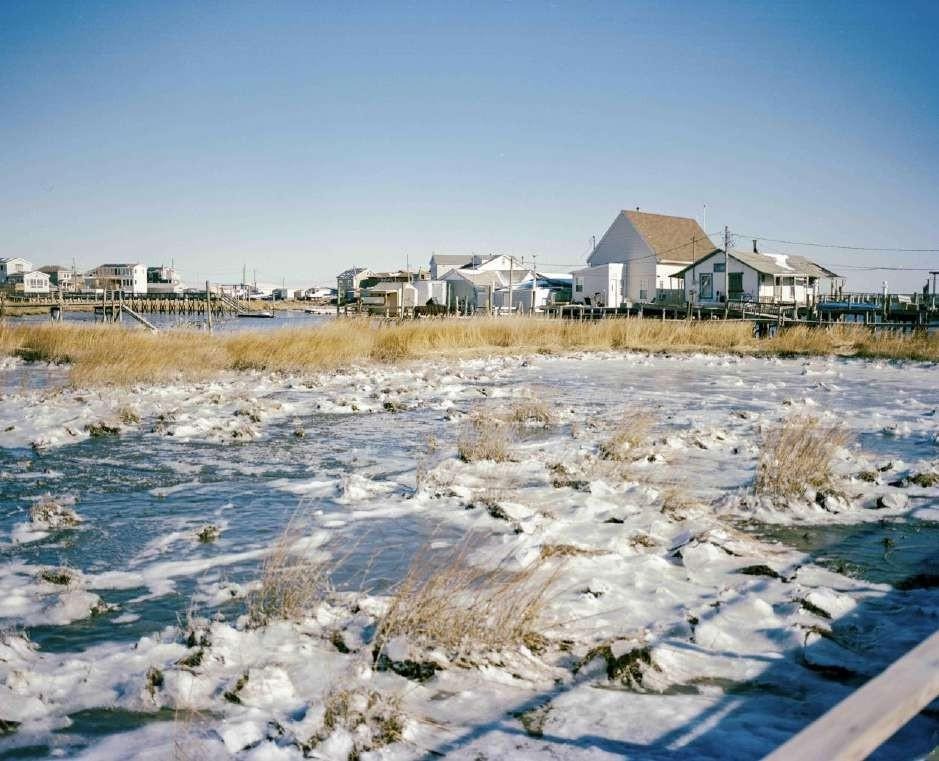
Yet despite these interventions, the tension remains palpable: winters no longer bring ice thick enough to skate on the main canal, a tradition once documented in old photographs and remembered by elders. Climate change is felt not only through floods, but also through absences—traditions that can no longer be passed on.
This project also looks closely at how childhood unfolds within these collective architectures, and how young people learn to map themselves against a place that is both enduring and deeply held. It asks what is transmitted across generations, and how memory and care persist at the edge of change. The island teaches its own form of resilience: welcoming the water, learning from it, and living in its rhythm.
Three firefighters, including Lenny on the right, at the local Fire Department
Firefighter Lenny once told me, “Here, we learn about water long before we learn about fire.” The island’s heartbeat is its community: residents often work as civil servants, emergency workers, or in other public roles, reflecting a culture of care, responsibility, and connection that binds everyone together.
Two churches sitting on the same narrow street in a place where most things are temporary, rebuilt, or slowly slipping toward the water; their presence feels almost defiant. The symbols of this church in the photograph are one of those anchors. St. Virgilius is modest, worn by decades of storms and salt, but it remains one of the few communal spaces where people gather with a sense of continuity.
One of the main traditions of the children, maintained across generations, is collecting old crystal bottles they find in the marshes of the bay, accessible only by kayak. These bottles, often over 100 years old and originally from local pharmacies, remain one of the best-kept secrets of the families, with specific routes to collect them known only to them.
Some residents continue to elevate and adapt; others prepare to leave. City-led infrastructure reduces some impacts, and ecological restoration strengthens natural defenses, but neither can stop sea level rise or eliminate the bay’s pressure on the island.
Broad Channel does not offer a clear resolution about the future. It offers lived experience of negotiating uncertainty, of choosing to remain and remember in a place that is deeply held.
Mike shows me how he tracks the tides on the calendars. For residents, understanding the rhythms of water is essential: even small changes in rainfall or tide can flood streets and homes
Broad Channel’s main canal freezes in winter, a rare stillness that once allowed children to ice-skate and fish
Despite decades of challenges, from floods to city proposals to repurpose the land, the people of Broad Channel have endured. The water is not just a border, it is a legacy, rooted in history, memory, and the care of each generation. Here, every wave that reaches the doorstep carries a memory and a promise: that life will persist.
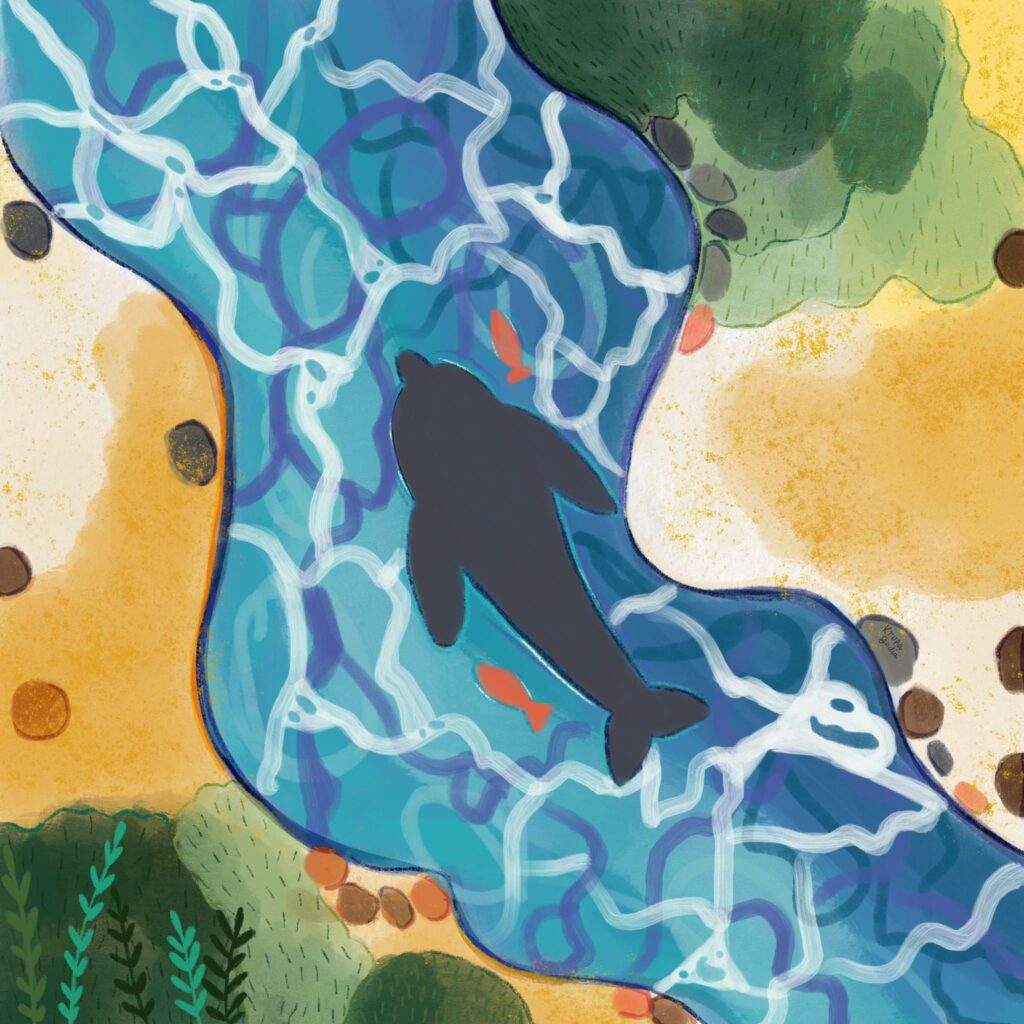
They call me Susu. I am a river dolphin living in the Ganga (or Ganges) River in India. Born blind, I use sound to navigate and feel through instinct. The river speaks to me in ripples and vibrations.
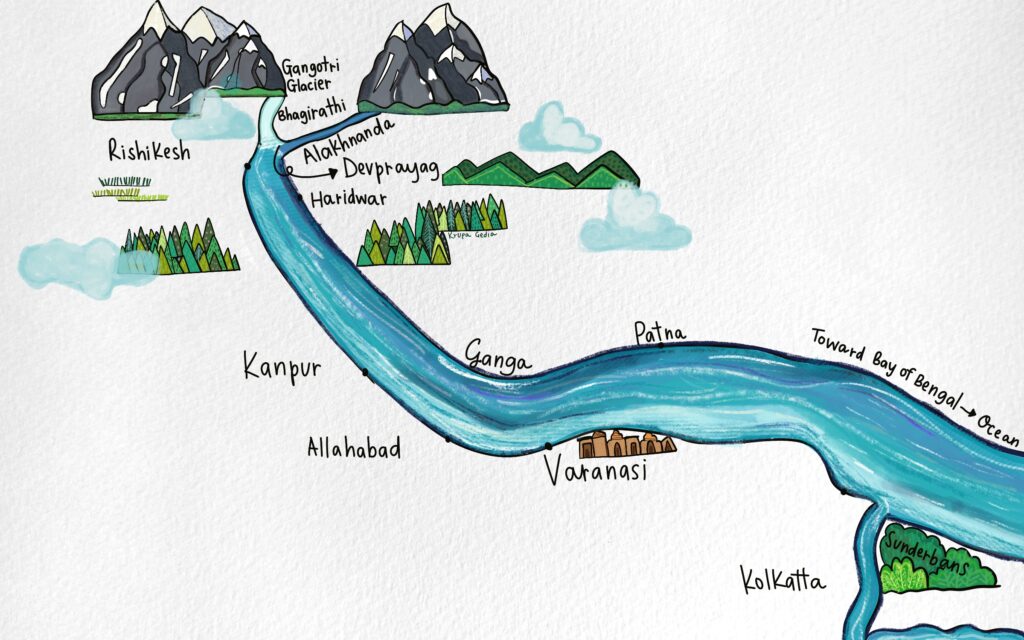
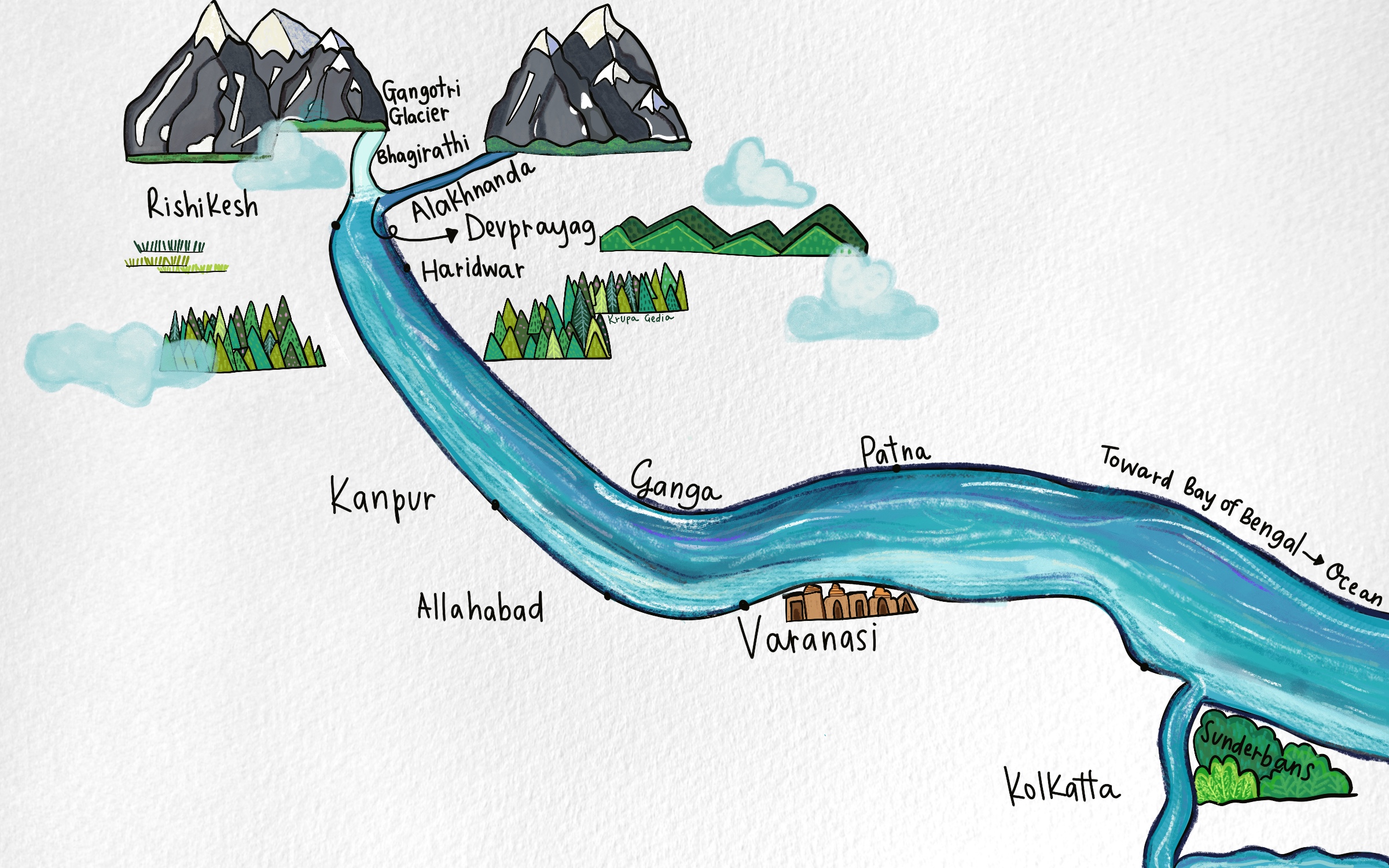
High in the Himalayas, where the Bhagirathi rushes from the Gangotri glacier, the Ganga is born. She meets the Alaknanda at Devprayag, and together, they become the mighty river that has flowed for thousands of years.
Even before the sun rises, I sense footsteps above. Pilgrims enter the river in Rishikesh and Haridwar. They offer flowers and prayers. Their chants drift across the water like soft wind. They believe the Ganga washes away their darkness. I dwell here each passing day—I think she cleanses more than just the spirit.
Midday: Life along the banks
By noon, the water grows warm. The river widens as she flows through Uttar Pradesh, turning flat and deep. This is where I live—near Patna—among muddy swirls and hidden fish.
I rise to breathe. On the banks, women wash clothes. Children splash in the shallows. A man wades in to release ashes. A fisherman rows past, trailing a net I must avoid.
Around me, life moves in quiet rhythms. Rohu and golden mahseer dart through reeds. Herons and storks stand still as statues. Buffaloes wallow at the edges, flicking their tails. Ducks and geese wade along. A pied kingfisher hovers overhead for a quick meal.
Above the waterline, people see the Ganga as sacred. Underwater, she is home.
Afternoon: Old companions
In the deeper stretches, I pass old friends. A gharial lounges on a sandbank, his long snout resting like a twig. He hunts fish like I do, but rarely speaks. He nearly disappeared once, but Forest Department officials and conservationists managed to bring his kind back. Now we meet again—old reptiles and older mammals—sharing the same water.
There are fewer of us now. Once, thousands of dolphins swam these waters. But now, the river feels different. Dams slow her flow. Chemicals dull her song.
But I am still here. So are the otters, turtles, fish, snails, and egrets. We wait and listen. We adapt.
Evening: Ganga glows
As dusk falls, the banks glow with oil lamps. In Varanasi, families perform the evening rituals, their hands moving in circles of light. Bells ring as incense and camphor rise into the air.
People say the Ganga carries the prayers of millions. I’ve heard many silent prayers—whispers of surrender, innocent joy, and muffled cries.
I rise for one last breath before night settles in. The stars shimmer on the surface. Above, humans celebrate the river’s grace. Below, we simply live in it.
Night: The river sleeps
By night, Ganga splits and spreads. Her arms carve into the world’s largest delta—the Sundarbans. Here, salt meets freshwater, and mangroves guard the land like thick green mazes.
The tiger walks these forests. I’ve heard him drink. Above the water, he is the tiger of the land. Below the surface, I am called the Tiger of the Ganga.
I have never been to the sea. Though some of my kind swim further downstream, I prefer the quieter waters upstream. But I know the delta is important. It protects the coast from storms and provides a home for countless creatures. It is the Ganga’s final gift.
I do not know what tomorrow will bring. But I know the Ganga has fed, sheltered, and cradled civilisations—above and below her waters. She has changed, but she endures.
People take a dip in her to cleanse their hearts and minds. Her crystal flow in the mountains is revered just as much as her silted stream in the cities.
As long as she flows, I will swim in her wake—listening, feeling, and remembering. For in the end, she is the mother in whose lap we all peacefully rest.
World Wide Fund for Nature. 2007. Swimming blindly down the Ganges. https://wwf.panda.org/wwf_news/?19110/Swimming-blindly-down-the-Ganges. Accessed on June 5, 2025.
Four-year-old Nuna sleepily waddled to her grandma Malina after dinner. “Qajaasaaq*, sing to me,” she said, as she settled between her grandmother’s legs, covered in the fur of her parka, ready to nod off. “As you wish, my pipaluk*,” crooned Malina, “Today, I will sing you your favourite lullaby.” And she began:
“Wherever else the Arctic fox may roam, It no longer calls Greenland its home, For driven by hunger, lust, and greed, The outsiders killed this noble breed, The pride of the tundra, The symbol of hope, Has lost its life, Has lost its home.”
By the time Malina finished her song, Nuna was fast asleep, dreaming of a time when Arctic foxes roamed free.
Six years later
It was amazing how swathes of white could be so entrancing. Ten-year-old Nuna pondered on this as she walked out of her cosy house after a hearty dinner of bannock—a traditional bread—and caribou stew. Outside in the snowy expanse of her beloved Greenland, she sat down, took out her sketchbook from her parka pocket, and proceeded to sketch a nearby tree.
Nuna had been immersed in art since the day she saw her grandma’s work. After her death, Nuna had opened up her drawings and looked at the last one her grandma had made: a sketch of the Arctic fox. Malina had been the only living Greenlander who still remembered the fox. And remembering her beloved grandmother, Nuna sniffled as she sketched.
All of a sudden, a pair of black eyes and a nose appeared right in front of her. Even as Nuna sat up in shock, her hands had started sketching the animal. Stroke by stroke, Nuna drew each strand of fur, each feature, until she had the likeness of an Arctic fox cub, just a few months old and white as snow. “Qanik,” whispered Nuna, “Snowflake.” But he was gone; a snowflake in the white.
Nuna walked back home in a daze. Had she just seen the Arctic fox that was long thought to be extinct? How could she have? A lullaby her Grandma used to sing came back to her.
“The pride of the tundra, The symbol of hope, Has lost its life, Has lost its home.”
She lulled herself to sleep with it, dreaming once more of the Arctic fox, no more a symbol of loss, but now a symbol of hope.
All grown up
A 20-year-old Nuna watched the setting sun paint the sky and snow a warm pink, from the same old porch of her house in Greenland. Ten years ago, she had seen one of the sole remaining Arctic foxes. Now, she could see multiple dens with tiny black noses peeking out.
Since seeing that lone fox, Nuna had founded multiple organisations and raised funds to conserve the previously believed-to-be extinct Arctic fox, poured her blood and sweat into her work, and now here she was. Living in a Greenland filled with the downy white fox; a place her grandmother knew. And all thanks to the one Arctic fox who changed her life.
Nuna gasped as an old fox emerged from the woods. She would have recognised him anywhere. “Qanik,” Nuna whispered again after all these years, “Snowflake”. But he disappeared once more; a snowflake in the white.
Are Arctic foxes in danger?
Arctic foxes aren’t currently threatened with extinction. But my vision of a future with no Snowflakes may very well be a possibility, considering the rate at which species are declining globally.
The saiga antelope, which lives in the cold steppes of Central Asia—a habitat similar to the Arctic tundra—is classified as Critically Endangered on the IUCN Red List. This is due to several factors, including poaching and climate change. The polar bear—also an inhabitant of the Arctic—is classified as Vulnerable for the same reasons.
While Arctic foxes are classified as Least Concern globally, regional populations are declining due to competition from the red fox, poaching, and fur trapping. With the continued decline in population and lack of conservation action, a Greenland without its Arctic foxes may not be so far off.
* Qajaasaaq and pipaluk are Inuit terms of endearment
Further Reading:
Larm, M., K. Norén and A. Angerbjörn. 2021. Temporal activity shift in arctic foxes (Vulpes lagopus) in response to human disturbance. Global Ecology and Conservation 27: e01602. https://doi.org/10.1016/j.gecco.2021.e01602.
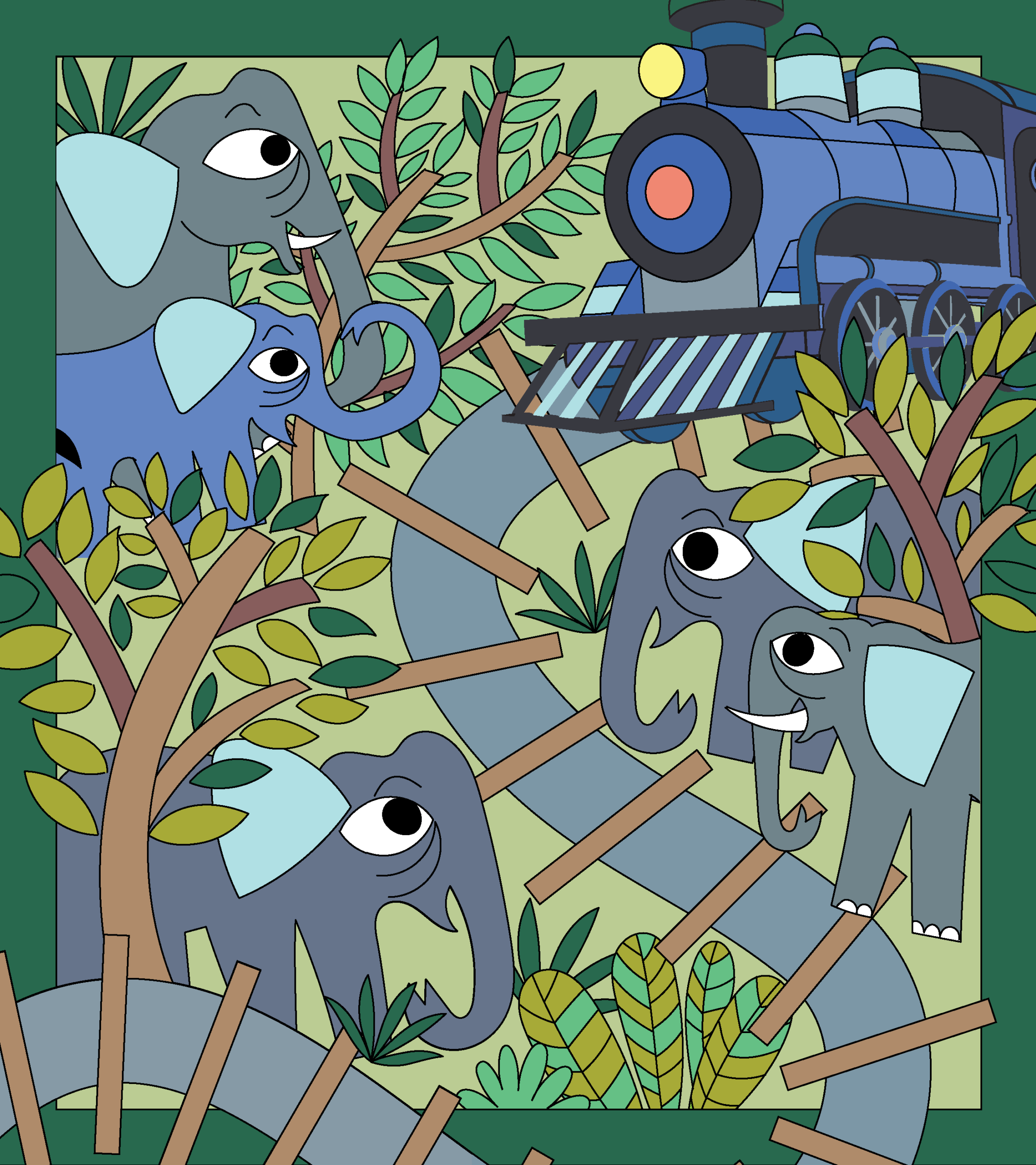
In India, railway tracks often pass through forests that are also elephant corridors. As rail networks expand, the risk to wildlife increases, especially to elephants.
Between 2019–20 and 2023–24, 81 wild elephants were killed after being hit by trains, according to official data presented in parliament. Looking back further, from 1987 to 2023, hundreds of elephants have lost their lives in train strikes.
States such as Assam and West Bengal are major hotspots, where railway lines cut through key elephant habitats. In a tragic accident in 2025, in Assam’s Hojai district, seven elephants were killed when a high-speed train struck a herd at night—when visibility is low and many trains operate.
These numbers reveal more than isolated incidents. They reflect a growing conflict between expanding infrastructure and shrinking wildlife corridors.
As trains move faster and forests grow smaller, the question remains: can development and the movement of wildlife ever share the same track safely?
On a bright sunny evening, while I was relaxing on one of Goa’s many beaches, the sight of a white-bellied sea eagle through my binoculars made me feel good. However, something was troubling me.
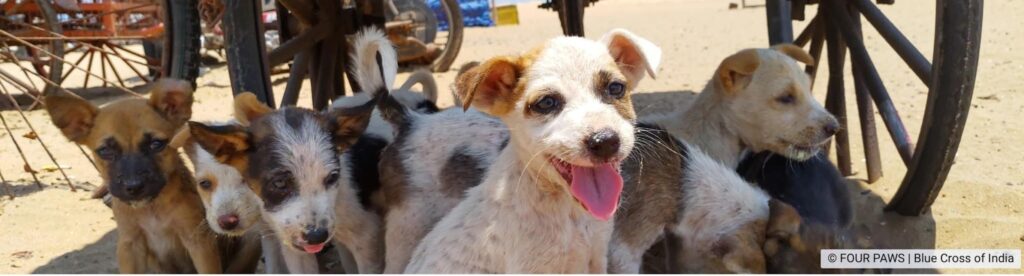
Dogs! Not just any dogs but those annoying little ones who hang around everywhere in India—at beaches, famous monuments, beautiful parks, and tourist spots. In fact, there are some 62 million stray dogs, menacing the country, and this terrified me! But I also wondered whether these strays were unknown strangers or friendly but abandoned companions.
While I pondered, a pack of barking dogs were drooling at the sight of yummy snacks served by the local shack at the seashore. This took me back to the time when I used to have nightmares—spooky dreams where stray dogs chased me down a rocky cliff.
An ever-present problem
It has been four years and my fear of stray dogs still remains. The other day at my coaching class, I worried about a whole pack of strays I could see scavenging on the cricket pitch. At least I was able to laugh when a friend made a joke about them being fielders.
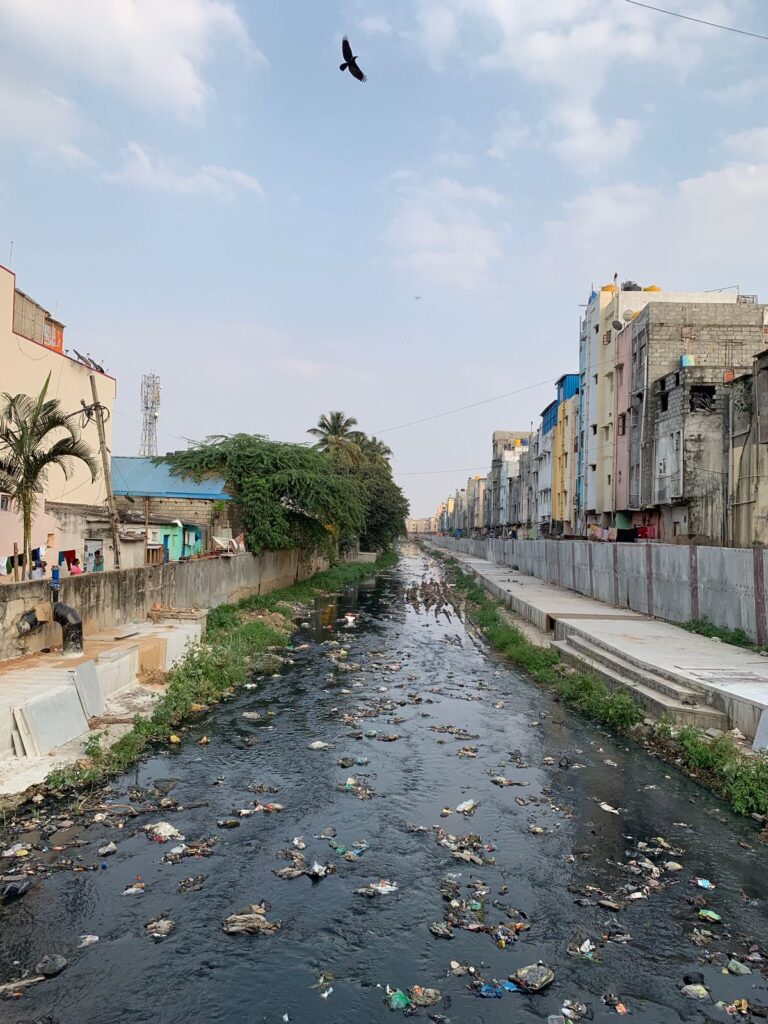
However, the situation with stray dogs isn’t very funny. Dozens make a home in the garbage-filled streets of Bengaluru, India. I have often seen people buying exotic breeds of dogs like labradors and chihuahuas who might provide immense joy. Unfortunately, stray dogs, unlike these pets, struggle for a single drop of water to drink.
This reminded me of the book Gopi’s Day Out by Sudha Murty. Gopi, a dog adopted by a kind and loving family, was lost one day. As he wanders through the streets, he notices the true life of stray dogs. On the way, he befriends a bone-thin dog who struggles to find morsels of food every day. Together, they journey out into the world of strays. Similarly, Woof by Aparna Karthikeyan is a real-life story about a stray dog named Shingmo and her daily life while growing up at the beach.
I truly feel that stories like these reflect and remind us about how much pain stray dogs feel. I have seen too many aggressive packs of starving dogs or news articles about car accidents where dogs have been killed. Although I once thought of them as troublesome creatures, I feel sad and pitiful seeing them struggle now.
Life-changing project
My perspective about stray dogs changed while working on a school project titled ‘Caring for stray dogs’. My friends and I researched about the problems caused by stray dogs globally, the reasons for their increasing population and the different initiatives we can take to raise awareness about them. As we completed our project, we found that humans abandon their pets for many reasons. These include financial constraints, lack of awareness, evacuation difficulties during natural disasters, health issues, and inadequate time to care for pets.
During our research we learnt about a disease called rabies that is caused by unvaccinated stray dog bites. We discovered that 97 percent of all rabies cases in India involved stray dogs (the others were related to stray cats and wild animals such as jackals and mongooses).
As part of the project, I surveyed my classmates from Grade 4 and recorded a total of 19 responses. The data revealed that 26.3 percent of the students took care or fed stray dogs very often. Also, 52.6 percent of the participants were not aware of organisations that care for stray dogs. This project and especially our survey results made me reflect on what practical steps I could take to address the stray dog problem.
Charlie Animal Rescue Centre (CARE) provides one solution. I visited CARE to interview a manager and meet a few rescued dogs—Mowgli, Captain and Skye, who melted my heart. The motive behind the organisation came from ‘Charlie’ who was a three-legged Indian dog who excelled in the field of canine therapy. This organisation vaccinates and uses sterilisers to prevent diseases like rabies. They provide varied services such as adoption, ambulance rescue, and trauma care for street animals.
Moving forward
My mindset about stray dogs has now gradually changed. I am no longer covered in goosebumps whenever I catch sight of them. Instead, I am confident when I encounter any stray because I see them as abandoned animals that have no home. I hope that sharing my journey helps others think twice about stray dogs, raises awareness about rabies through organisations like CARE, and the different actions we can take to help these animals. I urge people to care for animals like they would for themselves. Let us all take an oath to do our best in protecting stray dogs.
Kitten catastrophe
In the society where I live, a striped yellow cat gave birth to a dozen cute little kittens. As they grew up a bunch of girls kept feeding them milk and other cat treats. They never knew what dangers they were risking. They could have gotten scratched or bitten by the kittens, which could result in the transmission of rabies. The mother cat also looked pretty overfed to me. This happened for quite a while. The mischievous kittens kept venturing out in the neighbourhood and soon everyone had a kitten trailing behind them.
One sunny morning a naughty little kitten accidentally got stuck inside the engine of a car. When I heard this, I felt terrified. Finally, after a lot of time and effort spent rescuing it, the kitten was safe and sound. The lesson I learnt is that it helps to have a little awareness about the animal and its needs before we start taking care of it.
Further Reading
Karthikeyan, A. 2023. Woof! Adventures by the sea. Chennai: Red Panda, an imprint of Westland Publications.
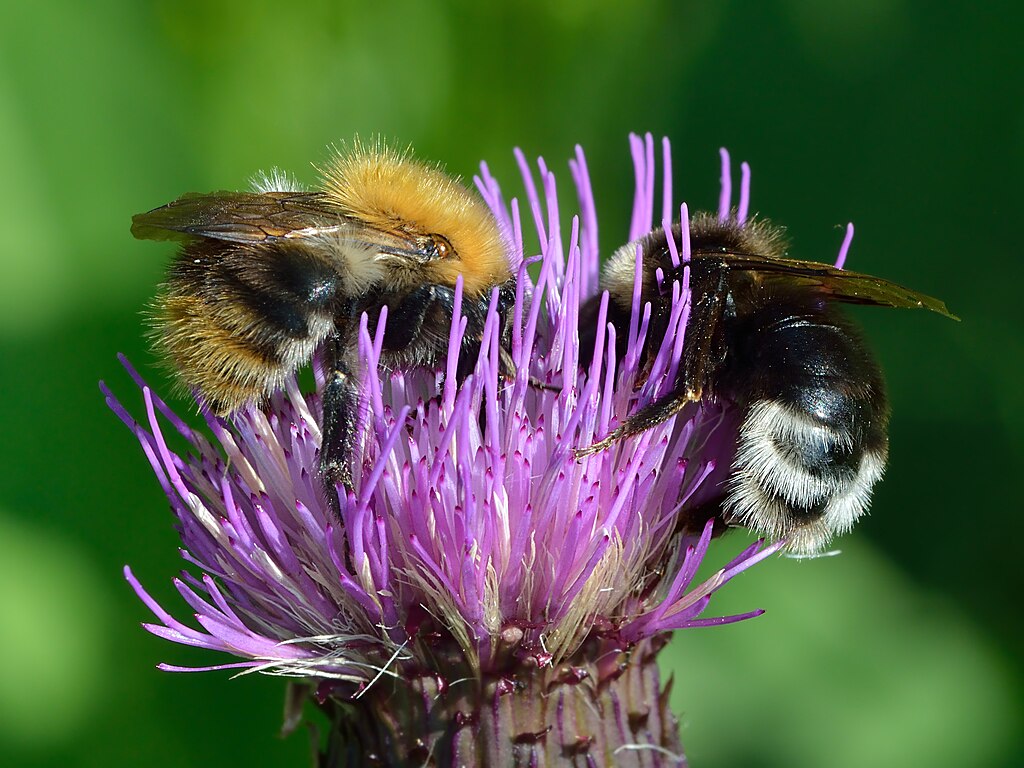
Feature image: The populations of bees and other pollinators are declining in city landscapes (Photo credit: Ivar Leidus via Wikimedia Commons)
Insects are key players in the reproductive lives of plants. By carrying pollen from one plant to another—a process known as pollination—insects contribute towards the reproduction of 35 percent of crops and 60 to 90 percent of flowering plants. But despite their central role in pollination, the number and diversity of major pollinating insect groups worldwide has dropped over the years, raising concerns about their vulnerability—especially in human-modified landscapes such as cities.
Urbanisation, which is associated with habitat fragmentation, disturbance, and loss, is a well-known driver of insect population declines. While cities do pose many challenges to insects, each city is unique. They can vary greatly in the proportion of impermeable surfaces—such as buildings, roads, and parking lots—and green areas, thus offering different levels of ecological habitat quality to pollinators.
In a recent study, researchers from the University of Sheffield and the University of Helsinki examined how pollinators that are active during the day (diurnal) and at night (nocturnal) respond to increasing levels of urbanisation. The team focused on members of three orders of flying insects: hoverflies (Diptera), bees (Hymenoptera), and nocturnal moths (Lepidoptera). These pollinators play complementary roles in the pollination of urban plants. However, little is known about the effects of urbanisation on lesser studied insects such as flies and nocturnal moths.
The researchers sampled the pollinators in urban horticultural sites (allotments) across three UK cities that differed in size and level of urbanisation. Some of the allotments were located closer to the city centre (more urbanised areas), while others were closer to the city borders (less urbanised areas). The team collected the pollinators using a combination of different trapping methods and measured how urbanisation affected their species richness (total number of insect species) and abundance (total number of insects).
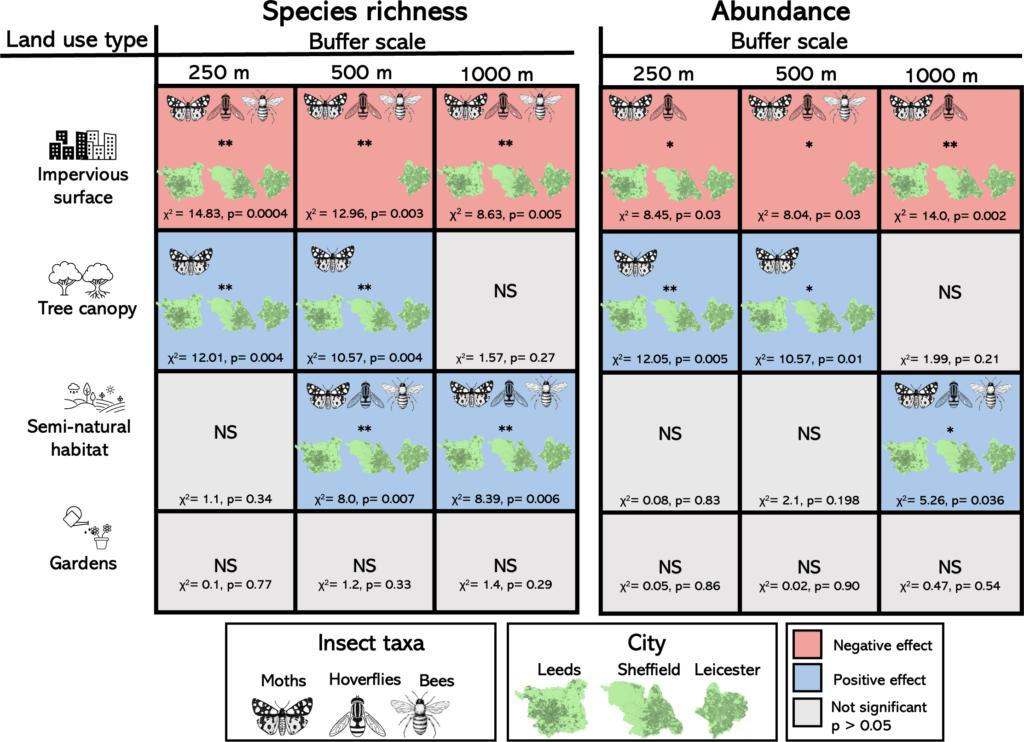
Different features of a city landscape have positive and negative effects on pollinators’ populations (Source: Ellis et al., 2025)
Urban landscapes were associated with a reduction of up to 43 percent in species richness. A closer analysis revealed that for every 10 percent increase in impermeable surfaces, there was a reduction of up to 7.5 percent in species diversity for all three insect groups. These findings, the authors of the study say, reveal how an increase in impervious surfaces—and consequently a reduction in semi-natural habitats and tree coverage—contributes to the decline of insect diversity in urban areas. The findings also reinforce the importance of preserving or even expanding natural elements within urban areas to protect pollinators.
Urbanisation did not affect the abundance of all insect groups equally. Hoverflies and moths were more susceptible to urbanisation than bees, suggesting that these often overlooked pollinators may be more sensitive to human-modified landscapes.
Though these results paint a gloomy picture for urban pollinators, not all hope is lost. The researchers found that certain green space features support these pollinating insects. For instance, an increase in tree cover was linked to a greater abundance and diversity of moths. In contrast, semi-natural habitats—such as scrubs and grasslands—benefited all pollinators by likely offering essential resources, including food, nesting, and pupation sites. Unexpectedly, domestic gardens, which are commonly found in cities, did not bolster the abundance or diversity of pollinators; the authors speculate that this may be due to variations in how these private, green spaces are maintained.
By examining how different aspects of urbanisation pose both general and group-specific threats to pollinators, the study reinforces the need for conservation approaches that consider these nuances to better protect urban insects and the ecological service they provide.
Further Reading
Ellis, E. E., S. A. Campbell and J. L. Edmondson. 2025. Drivers of nocturnal and diurnal pollinating insect declines in urban landscapes. Proceedings Biological Sciences: 292(2052): 20250102. https://doi.org/10.1098/rspb.2025.0102.
Wagner, D. L., E. M. Grames, M. L. Forister, M. R. Berenbaum and D. Stopak. 2021. Insect decline in the Anthropocene: death by a thousand cuts. Proceedings of the National Academy of Sciences of the United States of America 118(2): e2023989118. https://doi.org/10.1073/pnas.2023989118.
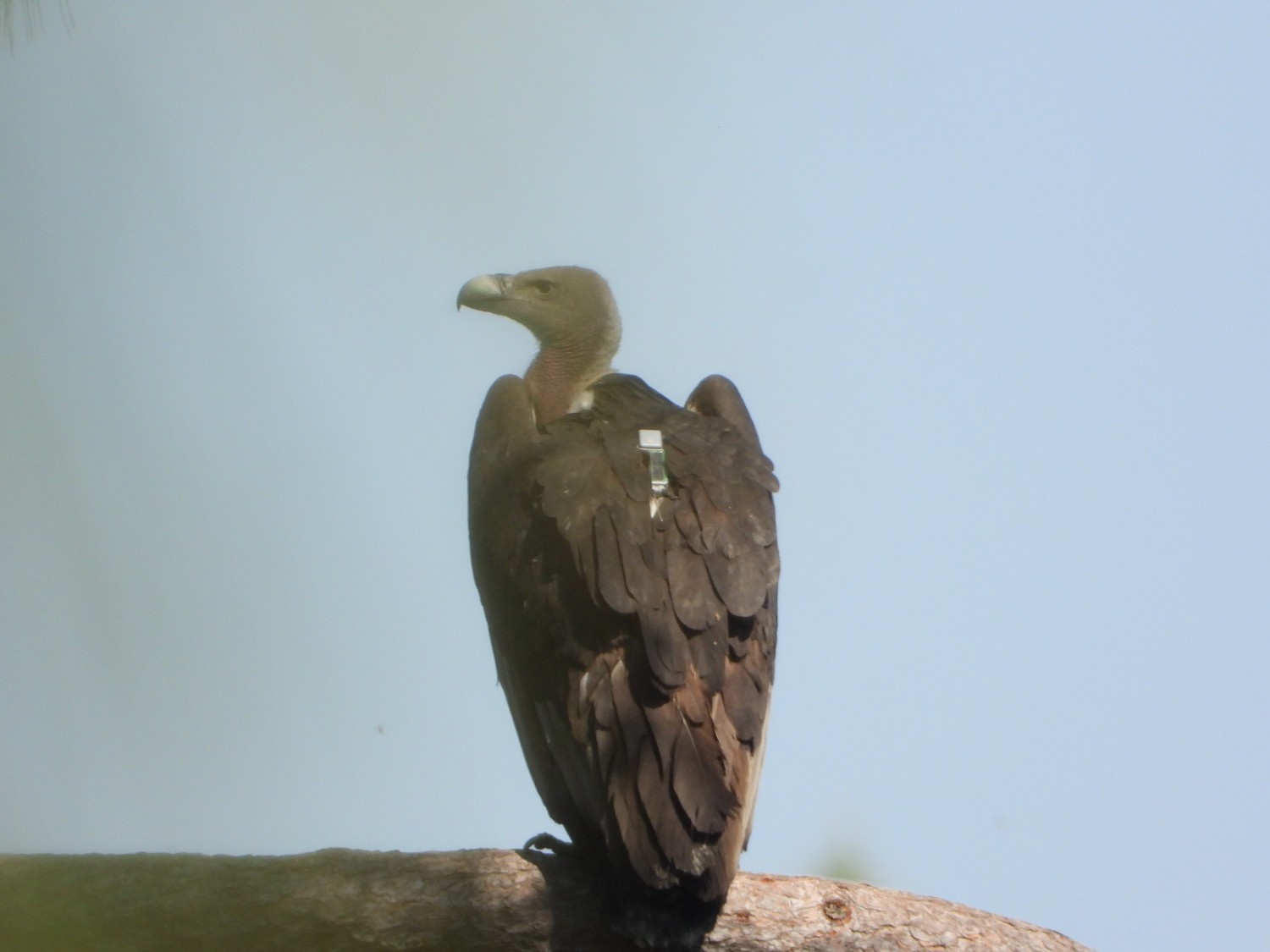
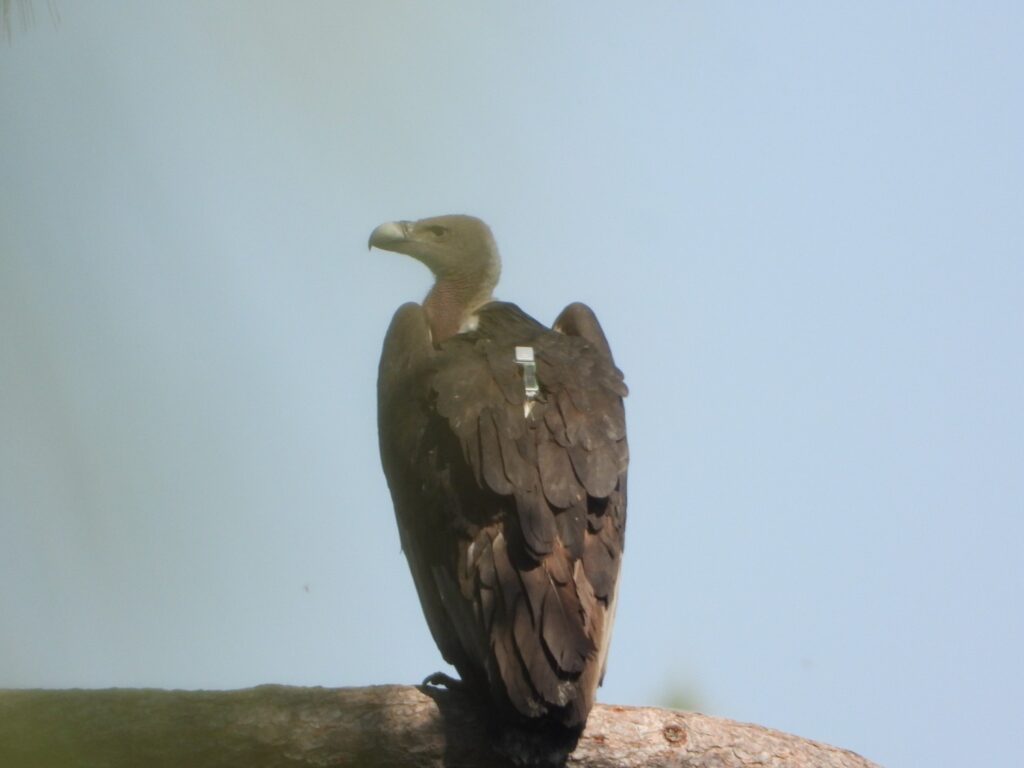
Feature image: Satellite-tagged adult white-rumped vulturenear a nesting site in Himachal Pradesh, India. Photo credits: Malyasri Bhattacharya
The word ‘scavenger’ often carries the weight of misunderstood creatures that feed on the dead. In many traditions, such beings are tied to death, decay, and bad omens. At first glance, scavengers may not inspire awe or admiration. But perhaps it’s time we looked at them through a fresh lens.
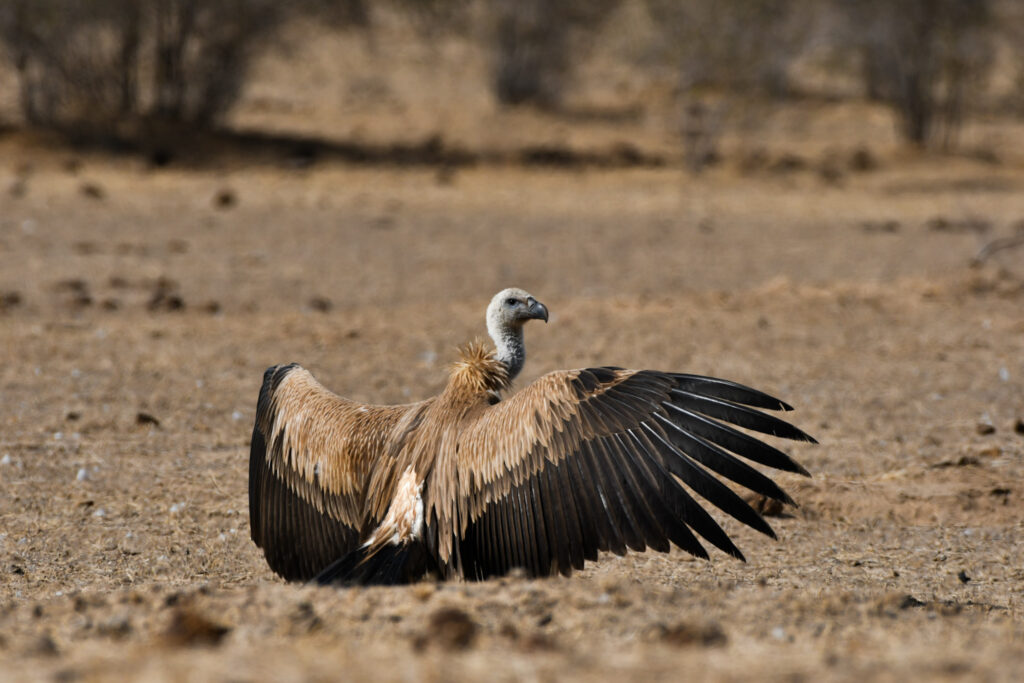
Picture a vast sky, where a majestic bird with powerful wings glides silently in slow spirals. Is it a scene of desolation that comes to mind, a grim dumping ground below, littered with carcasses? Or do you see the quiet grandeur of the white-rumped vulture (Gyps bengalensis), a striking Old World raptor, its broad wings catching the light, and its white rump gleaming against the sky?
With piercing eyes fringed by delicate lashes and a long and slender neck, it cuts an unforgettable figure. These vultures are more than symbols of death; they are nature’s tireless clean-up crew, keeping ecosystems healthy and disease-free as they rise high on thermals, scanning the land below with quiet dignity.
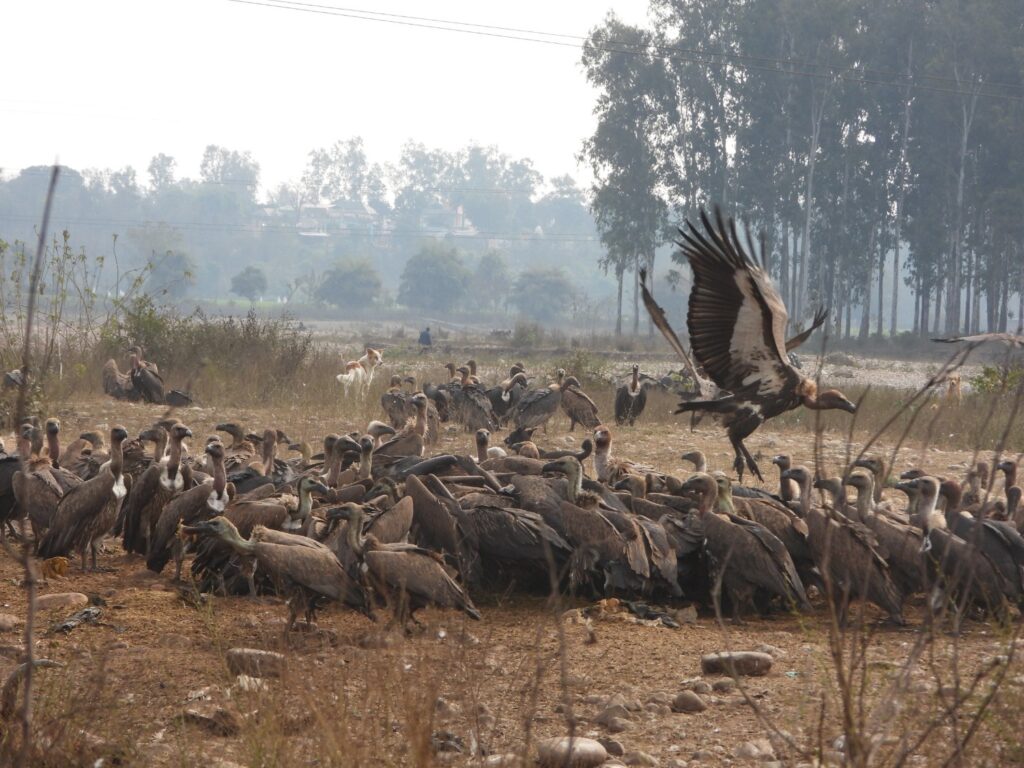
White-rumped vultures at a community-managed carcass dumping site in Kangra district, Himachal Pradesh. Photo credits: Malyasri Bhattacharya
On the edge
Once a familiar sight soaring across Indian skies, vultures have now become rare and alarmingly absent. Between 1992 and 2000, vulture populations in India declined by over 99.9% for white-rumped vulture (Gyps bengalensis) and 97% for Indian (Gyps indicus) and slender-billed vultures (Gyps tenuirostris)—a devastating decline for one of nature’s most vital scavengers. The culprit? A common non-steroidal anti-inflammatory drug (NSAID) called diclofenac, used to treat sick cattle. It turned out to be fatally toxic to vultures feeding on treated carcasses.
After the link was discovered through extensive research, diclofenac was banned for veterinary use in 2006. But the danger didn’t end there. Other drugs from the same family—aceclofenac, ketoprofen, and most recently, nimesulide—were also found to be harmful. Bans on these drugs followed, including nimesulide in 2024. On the other hand, meloxicam and tolfenamic acid have been scientifically tested and confirmed as safe for vultures.
But, despite these regulatory steps, vulture populations have not yet recovered. In fact, according to recent trends reported on eBird, numbers for the Critically Endangered white-rumped vulture continue to decline by 4 percent every year. The issue isn’t just the presence of toxic drugs, but the lack of proper enforcement and awareness at local levels.
Surveys conducted across 13 Indian states highlight the fragile state of vulture populations—only 106 white-rumped vultures were recorded across 152 transects. While the dangers posed by NSAIDs are well established, information on other critical threats, such as habitat loss due to deforestation and power line collisions, remains limited and underexplored.
The vultures of Himachal
“They’re almost extinct now; you hardly ever see them anymore. But back in the day, when we were on our way to school, they were everywhere. Sometimes they’d spread their massive wings right in the middle of the road, blocking our way. We used to get scared and run away,” said a farmer from Kangra district in Himachal Pradesh. Nestled in the Western Himalayas, this Indian state is known for its breathtaking landscapes, snow-capped peaks, and a rich diversity of wildlife. The Kangra district is not only the spiritual home of His Holiness the Dalai Lama, but also a symbol of peace, resilience, and harmony between nature and culture. Yet, amid the buzz of popular hill stations and hiking trails, there’s one story that almost no one hears about: the story of vultures.
Recent research has revealed that Himachal hosts one of the largest populations of the Critically Endangered white-rumped vulture in the country (Bhattacharya et al., 2024). And yet, these majestic birds are hardly noticed. Since 2019, I’ve been carrying out my PhD study on the species in the state. Over the past few years, I’ve surveyed nearly the entire Kangra district, studying the vulture’s nesting habits, movement patterns, and the threats the species faces.
One unforgettable moment was in September 2021, when I, along with my field associate Manoj Kumar and a forest guard, managed to capture and fit a GPS-GSM tag on a wild white-rumped vulture for the first time, with the support of the Wildlife Institute of India and the Himachal Pradesh Forest Department. We had waited for days, and it was only after a rainy afternoon that our chance finally arrived.
Even though I had prior experience with bird telemetry, having worked on hornbills in Arunachal Pradesh, this was something entirely different. The sheer size of the vulture, the weight of its presence, and the sharp but unforgettable smell that lingered after the capture left a lasting impression. I remember feeling nervous; it’s not every day you hold a Critically Endangered species in your hands. But the bird wasn’t aggressive. It was calm but frightened, more than anything else. We completed the tagging process in under 20 minutes and released it safely.
That moment changed something in me. It wasn’t just about studying a species anymore. It became about understanding the whole ecosystem: the forests the birds nest in, the people who live nearby, and how communities could be involved in protecting these vital scavengers before they disappear completely.
Unlikely allies
One of the major threats to vultures is how they are perceived by people, often with fear, disgust, or complete indifference. But in the remote corners of Himachal, I found an unlikely group of allies in my conservation journey: the local communities traditionally tasked with the disposal of cattle carcasses.
These communities, often pushed to the margins of society due to their work with dead animals, hold a wealth of knowledge about vultures that rarely finds its way into mainstream conservation discussions. For generations, they have played a critical ecological role, providing food sources for vultures by dumping carcasses in open areas. Their understanding of vultures is both intimate and invaluable.
Yet, their struggles are immense. Many face social exclusion, and their work is seen as ‘impure’, despite being vital for both public health and ecological balance. Even today, they often must fight just to keep a piece of land where they can leave animal remains for vultures to feed on. It’s a battle for dignity, tradition, and survival.
Some from these communities have shifted to other livelihoods, such as working in tourist hotels in Dharamsala, seeking stability and respect. But the transition hasn’t been easy, especially for their children, who continue to face discrimination in schools and society. Even today, the age-old practice of carcass disposal in the landscape goes on, deeply embedded in the cultural and ecological fabric of the region. As part of our vulture conservation work, we are now planning to integrate the traditional knowledge and lived experiences of these communities.
Ground realities
Coming from Kolkata, West Bengal, one of the first questions I’m often asked is, “Why would a girl travel so far just to work on vultures?” A bird that most people barely even notice, let alone care about.
Sometimes in the villages of Himachal, people don’t immediately understand my dialect of Hindi. My field associate, Manoj, often needs to step in and patiently explain: “Ay ji ithu illain pr kam karna ayo, pichley kuch sala tey illain ik dum ghat hoyi gayiain, pr sadey kangrey ch Ina illain di tadaad aley v khari hai” This girl has come to study vultures in your area. Over the years, the number of vultures has declined drastically across the world, but here in Kangra you can still see them.
Degrees and work experience don’t matter much out here. What counts is how well you connect with people, how deeply you understand their lives, their beliefs, and how your work can include their voices and perspectives.
My fieldwork is physically demanding. It often involves long hours of walking through forests, surveying vulture nesting sites or tracking satellite-tagged vultures at feeding grounds. Some days are spent speaking with local communities who have traditionally managed cattle carcass disposal. Despite being marginalised for their work, they hold incredible local knowledge that has greatly enriched my research.
Through our surveys, we documented 36 community-managed feeding sites, and three official “vulture restaurants” established by the Himachal Pradesh Forest Department. What’s been most heartening is how some of the local community members have embraced the vultures, sending us mobile phone pictures of rare species like the cinereous vulture (Aegypius monachus) or red-headed vulture (Sarcogyps calvus), which are rarely found in the landscape, visiting their dumping sites. In local Kangri or Pahadi, they call them ill. Their interest often comes with a simple hope: “If only there was a permanent income source,” they say, “we’d gladly continue this practice and help save the vultures.”
But working in these open carcass-dumping areas hasn’t been easy. There’s often suspicion that I’m there to shut the system down. In staunch dominant-caste communities, the death of a cow is seen as the end of its sanctity, and skinning a dead cow is considered culturally ‘impure’. Sometimes, villagers won’t even let us into their homes, fearing we’ve come from places they deem as ‘unclean’, or they even ask us to discontinue the entire open carcass disposal system, considering it a foul-smelling and unhealthy site.
Addressing these deep-rooted, casteist prejudices isn’t simple. But what keeps me going are the conversations with older community members who still remember how carcass disposal used to be, how things have changed over time, and how, maybe, things can change again for the better.
The vultures may not be glamorous. But they matter. And the people who live closest to them matter just as much. Together, their stories have taught me more than any textbook ever could.
Toxic NSAIDs
Through covert pharmacy surveys conducted across multiple panchayat (village council) divisions in the region, we found that 95 percent of the pharmacies stocked only meloxicam, a vulture-safe drug—an encouraging sign for vulture conservation. Himachal, being largely rural, has livestock owners who primarily rely on government veterinary doctors, often requesting home visits or taking their animals to government facilities. In most cases, these doctors do not prescribe toxic drugs, as such medications are already banned. This is a positive outcome, as no potentially harmful NSAIDs were detected in the region, indicating its strong potential to be declared a Vulture Safe Zone.
However, in many rural areas, both doctors and pharmacy owners remain unaware of bans on other harmful drugs, such as aceclofenac, ketoprofen, and nimesulide. Continuous outreach to veterinarians and farmers about safe veterinary practices is essential to ensure that these bans are well understood and consistently enforced. Bridging the gap between farmers and veterinarians on the use of toxic veterinary drugs is key to safe veterinary practices.
Other threats
Why does Kangra have so many vulture nests? One key reason is that the district still harbours extensive tracts of chir pine (Pinus roxburghii) forests, some of the most continuous tracts in the region. Although these forests fall under Territorial Forest Divisions rather than protected areas, they have still provided crucial nesting sites for vultures over the years.
However, widespread road development has fragmented many patches, reducing the availability of undisturbed habitat. From my PhD research, I’ve found that white-rumped vultures show a clear preference for old-growth chir pine trees, particularly those with a larger girth at breast height (GBH) and surrounded by dense shrub cover, an indicator of reduced human disturbance.
Unfortunately, these very forests are under threat. Forest fires, often during the dry season, and resin tapping activities weaken these vital nesting areas. Despite this, vultures continue to return each year for the breeding season from October to March. But vultures are slow to breed, with white-rumped vultures laying just one egg per year. And this makes their survival precarious.
Changing landscape
Alarmingly, open carcass disposal sites are rapidly disappearing. With changing practices, people now often choose to bury dead cattle rather than hand them over to traditional carcass handlers. Urbanisation and village development have also left little to no open and dedicated spaces for natural carcass decomposition, further reducing vital feeding grounds for vultures.
There is still hope ahead. Safeguarding vultures in Himachal will demand more than simply protecting traditional feeding grounds and the last remaining forest patches. It requires a change in mindset, dispelling the long-standing notion of vultures as bad omens and fostering recognition of their vital role in the ecosystem. This must go hand in hand with sustained efforts to protect nesting habitats, raise awareness about vulture-safe carcass disposal, and ensure the exclusive use of safe veterinary drugs.
This is not the work of one group alone. It will take a coordinated effort between local communities, the broader Pahadi society, forest managers, veterinarians, and conservation organisations. Targeted awareness campaigns, school outreach, veterinary training, and community-led nest and habitat protection can help. If these efforts align, there remains real hope for the survival of vultures in Himachal.
As His Holiness the 14th Dalai Lama once said, “It is our collective and individual responsibility to protect and nurture the global environment.”
Acknowledgements This research was supported by the Wildlife Institute of India, The Habitats Trust, and the EDGE of Existence Programme, ZSL.
Further Reading Bhattacharya, M. and G. Talukdar. 2024. Nest site selection and threats to nesting colonies of white-rumped Vulture (Gyps bengalensis) in Himachal Pradesh. Forest Ecology and Management 573: 122335.
Frank, E. and A. Sudarshan. 2024. The social costs of keystone species collapse: Evidence from the decline of vultures in India. American Economic Review 114(10): 3007–3040.
Prakash, V., H. Bajpai, S.S. Chakraborty, M.S. Mahadev, J.W. Mallord, N. Prakash, S. P. Ranade et al. 2024. Recent trends in populations of Critically Endangered Gyps vultures in India. Bird Conservation International 34: e1.
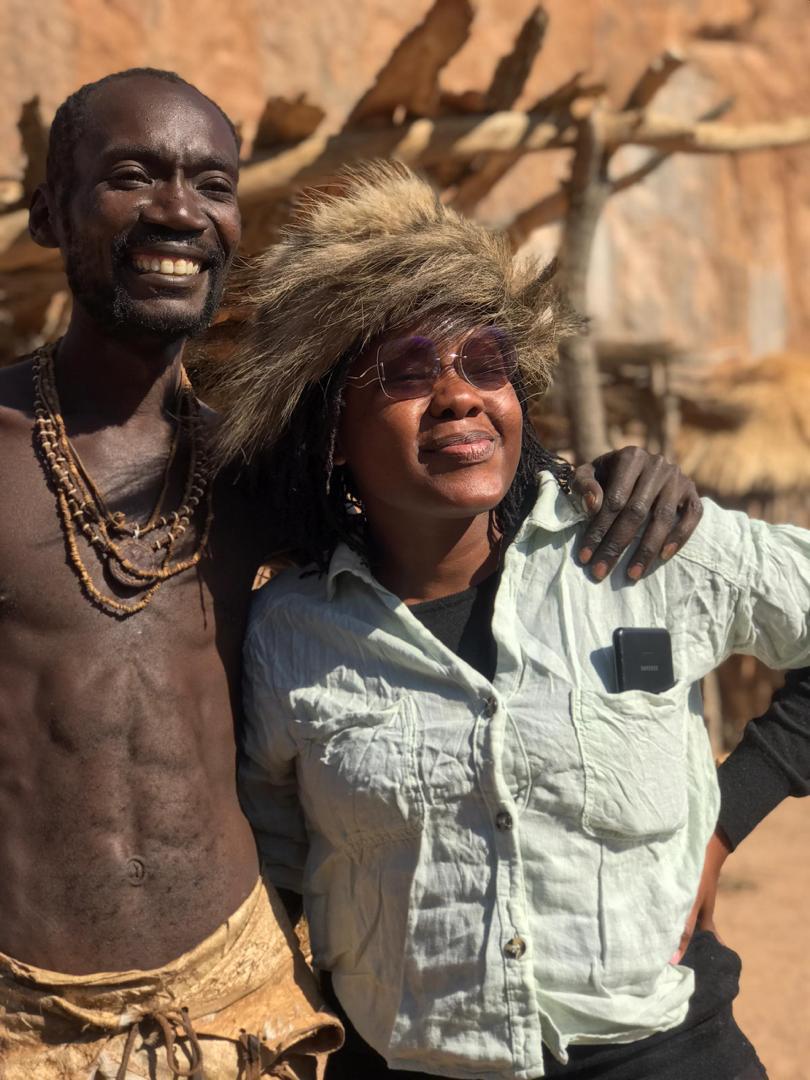
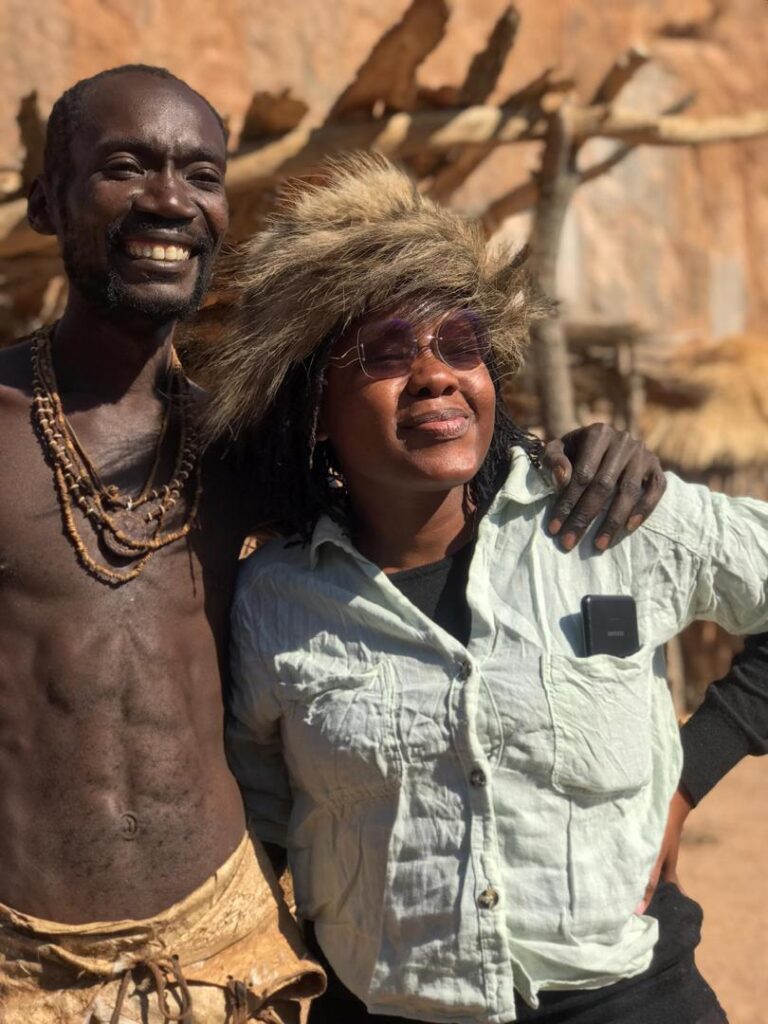
Feature image: The author in Damaraland, Namibia, interacting with the people of the land, and learning from them and their ways of knowing
In the wide, arid scenery of South West Africa, the ancient stones, paintings, and petrified wood hold millennia-old stories. Yet, they are not just relics of the past—they serve as tangible metaphors for the complexities of modern conservation debates. My PhD fieldwork helps bring together not just the physical world but also the digital world of wildlife conservation discourse.
Standing timeless in Namibia’s desert landscape, the first ‘thing’ to explore from my fieldwork is the Twyfelfontein engravings and the Bushmen paintings located nearby, both etched into the rocks of Damaraland. Though ancient and seemingly silent, they capture moments of human interaction with the environment that are still relevant today. They tell stories of a time long before—yet ironically so similar to—today’s conservation debates; stories of survival, respect for wildlife, and the balance between humans and nature—a balance that has been disrupted by modern, Western-based conservation models.
These markings, mute as they may seem, speak volumes about the human connection to the land and its creatures. They are not just art forms but expressions of relationships between humans and non-humans. The rocks themselves seem to participate in this relationship, though they are often treated as mute. The stone, despite being non-living, has a kind of agency. It draws humans to it, commands reverence, and tells a story that isn’t verbal but visual and felt. The Western-based conservation model, however, often reduces this relationship to scientific categorisations, sidelining the Indigenous knowledge systems that recognise the stone’s deeper meanings.
The other ‘thing’ is the petrified wood. Particularly unique to the Damaraland region, it embodies both endurance and silence. Yet, it too is a repository of knowledge, waiting for us to decipher its story. On the surface, this stone-like material is scientifically classified as fossilised remnants of ancient forests. Standing silent and unchanged in the desert, it is another symbol of disruption. It speaks of time and transformation, having once been living, breathing trees, now turned to stone by the slow, almost invisible hand of time.
Yet, this description seems to fall short. The petrified wood isn’t just an inert object; it holds layers of meaning, history, and relationships with the land and the people. It embodies a kind of muteness, a silence that mirrors the erasure of Indigenous voices and histories within conservation narratives; a muteness often imposed on rural communities in Namibia, whose livelihoods are deeply tied to the land and the wildlife. Just as the petrified wood is reduced to an object of scientific curiosity, the voices of these communities are often sidelined in policy debates.
In many ways, this petrified wood exists as a ‘thing’ but also as something beyond that—it holds an abstract veil of connection to the past. The Western conservation model, while focused on wildlife preservation, sometimes overlooks the intricate relationships that Indigenous people have with the environment—relationships that are as enduring and complex as the fossilised forest itself.
When the stone speaks
In my fieldwork, I not only engage with these physical elements but also with the digital realm, where conversations about wildlife conservation unfold. Social media platforms serve as the modern-day ‘rocks’ upon which stakeholders carve out their positions, often in ways that abstract and distance the reality on the ground. Like the rock engravings, these digital debates capture a moment in time, yet they too can feel silent—devoid of the deeper, lived experiences of the communities impacted by conservation policies.
The challenge lies in interpreting both these ancient and digital inscriptions, understanding what is being said, and what remains unsaid. Both the stones of Damaraland and the social media conversations hold power, not in their noise, but in their silence. They remind us that conservation is not just about protecting wildlife, but also about recognising the stories that are etched into the land and the voices, both human and non-human, that remain unheard.
Social media, as part of my fieldwork, echoes this tension between the living and non-living, the voiced and the silenced. In online spaces, conversations between wildlife stakeholders often treat the landscape and the wildlife as ‘things’ to be managed, commodified, and controlled. Policy debates on platforms like Twitter (now X) or Facebook tend to decontextualise these natural elements, transforming them into abstract numbers or conservation targets. This reflects a simulacrum—an imitation of reality—where what is discussed online may not align with the complex, lived experiences of the rural communities affected by these policies. The Western framework creates an intimacy with the idea of conservation but ignores the intimate relationships between rural people and their environment.
The violence done to these things—whether it’s through Western conservation efforts or the forced belonging imposed on local communities through policy—begins with naming. In naming the petrified wood, the rocks, and the wildlife, we risk objectifying them, freezing their identity in the lens of Western science. This mirrors the violence done to people when names, identities, and histories are imposed on them without consent. The lines between what is a ‘thing’ and what is living are thin, and the violence begins when we start treating living relationships as things to be categorised, controlled, or owned.
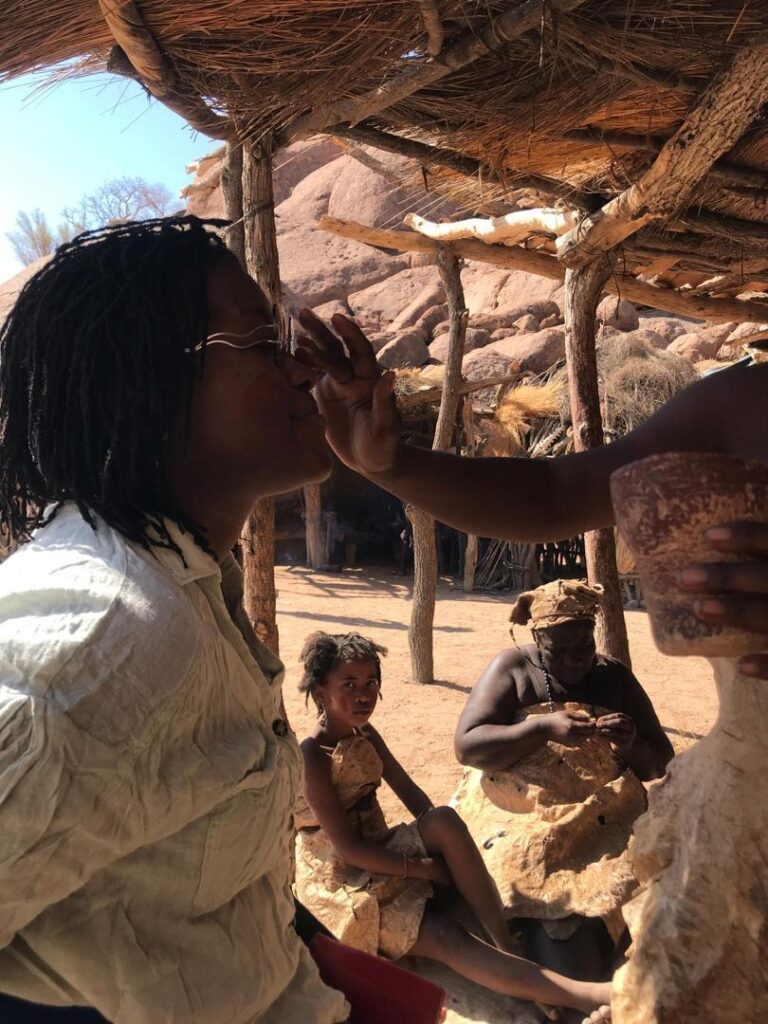
The author during their PhD fieldwork in Damaraland
In the context of social media, research methods themselves become “fingerfied”—frozen into a single dimension of analysis. The act of capturing and interpreting online conversations can feel like reducing a living, fluid interaction into something static—a thing. Yet, the conversations around wildlife conservation are not neutral. They are shaped by cultural realities, power dynamics, and the legacies of colonialism, much like the petrified wood that remains as a silent witness to time.
Reclaiming African history—especially in the context of wildlife and land conservation—requires us to listen to the stones, to the silence of the more-than-human world, and to understand the relationships they hold with the people. The petrified wood, in its stillness, has agency. It shapes the way humans perceive and interact with the land, just as social media shapes the real-world consequences of policy. The violence of simplification—whether of a stone or a social relationship—reveals the tension between the objectified and the living, the thing and the human, both in Namibia’s desert and in the digital field of social media.
Ultimately, things matter because of the feelings they evoke and the relationships they shape, whether they are ancient fossils or modern digital avatars. Understanding the force of things helps us recognise their agency, and in turn, question our own biases in how we relate to them—both in writing and in the world. The petrified wood, though seemingly mute, holds power in its silence. It speaks to the history of the land, the violence of colonialism, and the need to return to Indigenous ways of knowing that understand the world as a complex web of relationships between humans and the more-than-human and metaphysical world.
One thus wonders, did they silence us? Or did we silence ourselves?
Further Reading
Foyet, M. 2025. Using digital and rights-based approaches to understand institutional linkages between social media, wildlife activism and the new conservation movement in southern Africa: Views from non-state rural actors. Doctoral dissertation, University of Florida.
Feature image: Camera trap image of a brown bear captured during systematic monitoring in the central Italian Alps (Photo credit: MUSE–Science Museum, Trento, Italy)
Can large carnivore reintroductions succeed in the long term even within human-dominated landscapes? A recent study, published in Biological Conservation,on the reintroduced brown bear population of the Central Alps gives us a complex answer.
Centuries ago, brown bears were widespread in the forests of the Alps, but began declining in the 18th century due to deforestation, agriculture, and direct human persecution. When the reintroduction programme was launched in the late 1990s, the species was deemed functionally extinct in the Alps, with only a couple of bears estimated to remain. Through the EU-funded Life project Ursus, between 1999 and 2002, 10 bears from Slovenia—a genetically similar population—were translocated to the Adamello Brenta Nature Park in the Italian Dolomites, where bear presence was still documented.
Since then, bears have been carefully monitored through the collection of hair and faeces, in order to obtain the genetic identity of as many individuals as possible. Armed with more than 20 years of data, our research team, comprising ecologists, geneticists, and wildlife managers, could estimate trends in this bear population. Using statistical models, we focused on population density, spatial expansion, and responses to artificial barriers, such as highways, roads, and urban areas.
We found that brown bears increased in number and density, reaching 90–120 individuals in 2023, with higher densities in steeper areas and closer to the reintroduction site. While males were found to be more prone to dispersal, females tended to remain close to their natal area. The higher propensity of males to disperse, even over very long distances, resulted also in a lower survival probability compared to females. Dispersal is indeed a dangerous phase in bear life, compounded by the higher risk of being poached or falling victim to vehicular collisions. Despite their low propensity to move away from their natal area, females’ range steadily increased, nearly quadrupling over the past two decades.
Human-bear coexistence
These findings confirm the success of the reintroduction programme in bringing bears back to the heart of Europe, yet they also highlight human-related threats to its future persistence. The population remains small and vulnerable to inbreeding and is completely isolated from its closest population in the Dinaric Alps. A major, heavily urbanised valley lacks effective wildlife corridors and constitutes an almost insurmountable artificial barrier for bears. No female has ever crossed this barrier to settle in the east, nor has any bear been documented to move from Slovenia to the central Alps. More than half of the bears found dead during the study period died due to human-related causes, such as vehicle collisions, poaching, accidents during captures, and legal removal.
In addition, new threats are emerging as human-bear conflicts intensify. In 2023, a fatal attack on a mountain runner by a female bear with yearlings sparked a heated debate over bear management, the meaning of coexistence, and the compromises that come with the reintroduction of large carnivores in a human-dominated area. Periodic surveys conducted among local communities clearly highlight a shift in social perceptions over time, with decreasing tolerance towards bears. Fear for personal safety and overestimated perceptions of bear numbers were recorded even where bears are absent or only sporadically present.
Therefore, human-bear conflicts, both real and perceived, currently pose a major challenge for the bear population in the central Alps, putting conservation and social priorities at odds. Addressing conservation challenges and, at the same time, ensuring safety for the local communities living within bear range will be crucial to foster long-term coexistence. Hopefully, this study will help re-centre the public debate around scientific knowledge, favouring evidence-based management and improved connectivity measures.
Further Reading
Salvatori, M., N. Bragalanti, A. Corradini, L. Pedrotti, L. Corlatti, V. La Morgia, V. Gervasi et al. 2026. Reintroducing a large carnivore in a human dominated landscape: Dynamics of an isolated brown bear population over two decades post-reintroduction. Biological Conservation 313: 111598. https://doi.org/10.1016/j.biocon.2025.111598.
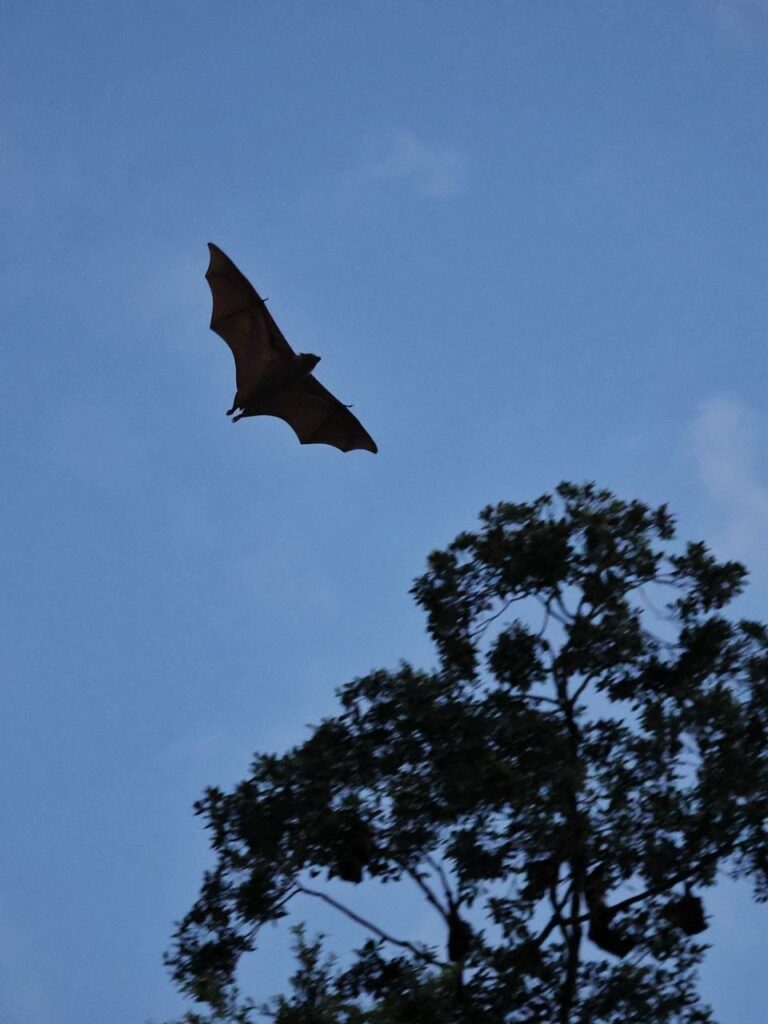
One day, I was going on a trip in a car. While travelling, I saw a lion-tailed macaque sitting on the roadside, eating some nuts. I admired his silver-white beard and went near the monkey. He stared at me and quickly ran into the forest. I followed the monkey’s trail, and after some time, I found him rolling on the ground.
“What happened to you?” I asked.
“I have a stomach ache,” replied the monkey in pain.
I quickly checked and found a piece of Lay’s chips packet.
“Did you eat this?” I asked the monkey.
“A boy like you came in a car and threw this. It looked colorful and I have never tasted anything like that,” he replied.
“Nooo… It’s plastic! It’s harmful to you! You should not eat that.”
“Oh! I didn’t know that. I saw a friend of mine eating this the other day. Now, I understand why he was also rolling in pain.”
“It’s poison. A mistaken feast. Go and tell your family and friends, and I will also tell my friends and family not to throw plastic on the road. They should put it in dustbins or not use plastic at all!”
We should not pollute the world with plastic. Only then will the world be a better place to live for everyone.
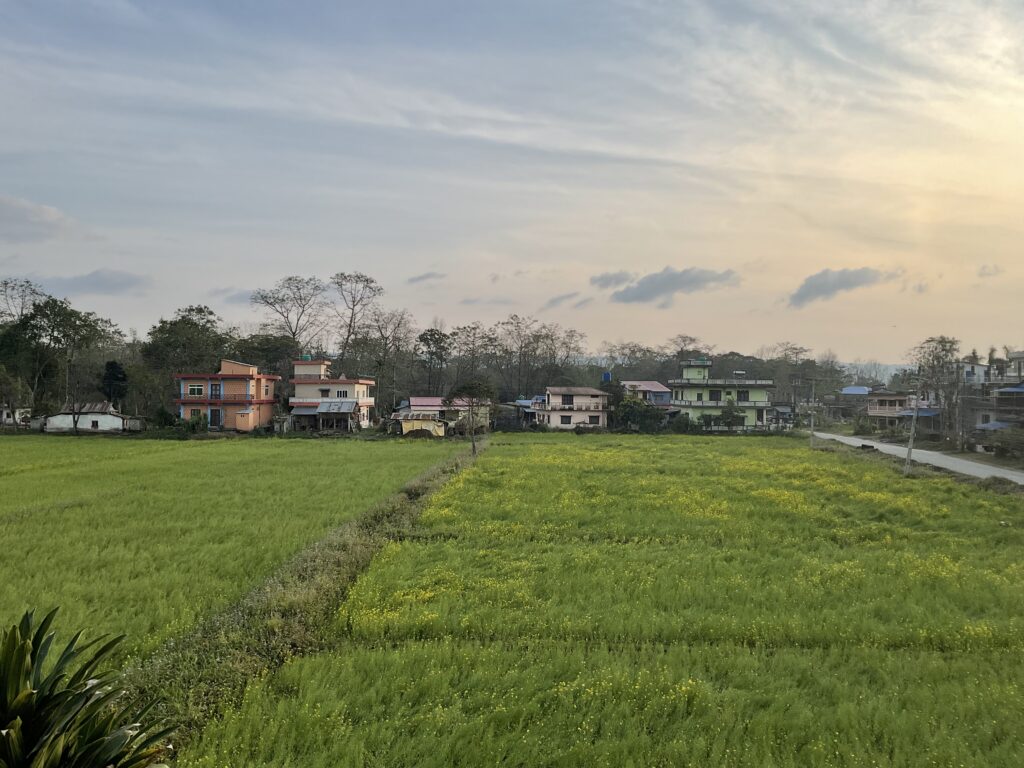
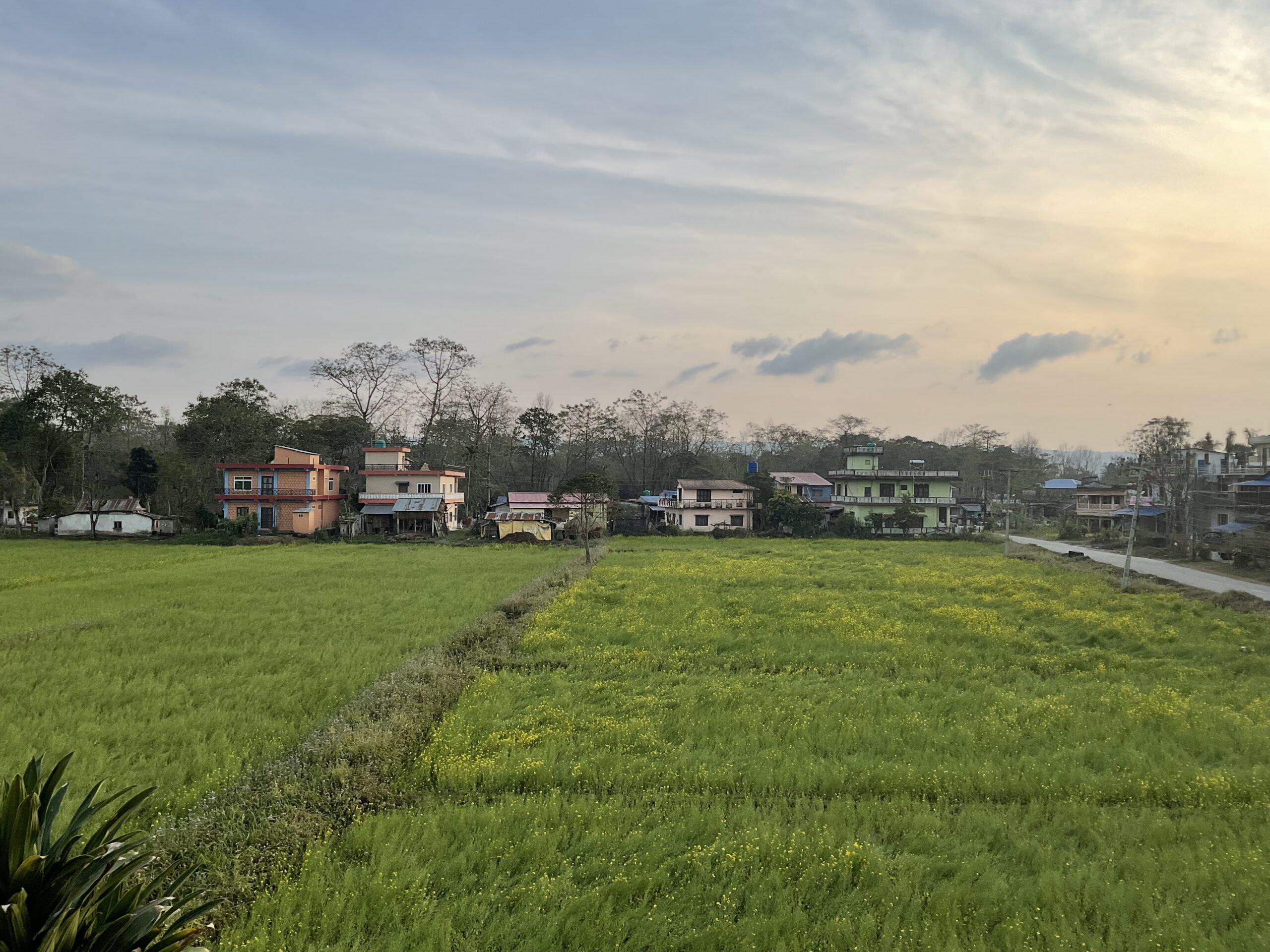
Feature image: Mustard fields and human settlements in the Mrigakunja buffer zone of Chitwan National Park
Globally, wildlife is becoming increasingly habituated to human-dominated landscapes. But what about the humans living in these shared habitats? Do they have preferences that could enhance their ability to cope with dangerous wildlife in their backyards?
In the buffer zone of Nepal’s oldest national park, families wake up every morning not knowing if elephants have trampled their crops overnight or if a leopard has killed their livestock. Despite bearing the costs of living alongside large, charismatic animals, these communities show a remarkable willingness to embrace change, if current coexistence strategies match their actual needs and preferences.
Chitwan National Park is home to the world’s second-largest population of greater one-horned rhinoceros. It also harbours globally threatened terrestrial and aquatic wildlife that includes tigers, elephants, gharials, and Ganges river dolphins. Most of Chitwan’s human residents are farmers who primarily grow subsistence crops and rear livestock. Species such as elephants and rhinoceros are attracted to these crops, while tigers and leopards prey on livestock—with both causing direct economic losses that affect farmers’ wellbeing.
The park’s buffer zone is divided into four administrative sectors: Kasara, Sauraha, Madi, and Amaltari. Although local and international tourists flock to Chitwan to see iconic wildlife, tourism income has been concentrated in Sauraha, leaving communities in the other sectors with restricted economic opportunities to diversify their income sources.
Through collaborative efforts between the park, local communities, and the Nepalese army, wildlife populations are making a remarkable comeback. So Chitwan represents both a conservation success story and a human-wildlife conflict hotspot. The buffer zone, which was created in 1996 to make forest products available to local communities and provide additional wildlife habitat, has experienced increased conflict. Enhancing the communities’ capacity to coexist with wildlife could benefit both groups in the long term.
Listening to local voices
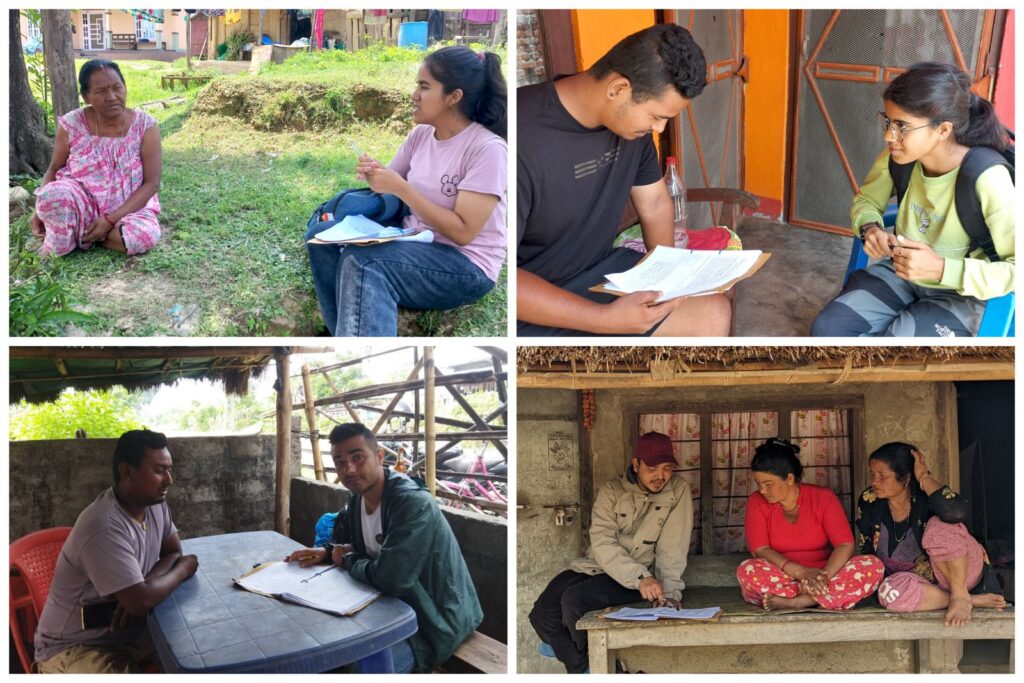
In our study, we presented residents living across all sectors of the buffer zone with different scenarios and asked them to choose between various strategies designed to enhance their ability to coexist with wildlife. Communities overwhelmingly favoured grassroots-level awareness programmes, reflecting their desire to learn about wildlife behaviour and acquire skills to mitigate conflicts. They also preferred sustainable economic opportunities, demonstrating that additional income to compensate wildlife-related losses is paramount to sustaining their livelihoods.
Household surveys were carried out across all four sectors in the buffer zone of Chitwan National Park.
More importantly, they chose to combine traditional knowledge with scientific approaches rather than abandon ancestral wisdom for modern technology. Chitwan is home to numerous Indigenous communities such as Tharu, Bote, Darai, and Majhi peoples, who inhabited the area before the park’s establishment. Combining their local ecological knowledge with modern scientific approaches could significantly enhance adaptability. Additionally, these communities favoured rapid response teams, trained to deal with incidents of human-wildlife conflict. This would be valuable across all four sectors, which experience high rates of conflict.
Beyond one-size-fits-all
Our research revealed noteworthy differences in preferred coexistence strategies between social groups. Indigenous communities had substantially stronger preferences compared to other residents, reflecting their urgent need for more equitable coexistence strategies. Similarly, more educated respondents strongly preferred change, suggesting their desire for co-adaption.
Our research highlights that coexistence strategies cannot follow a one-size-fits-all approach, but must be context-specific and adapted to address diverse community needs. This will generate co-benefits for different communities sharing space and resources with wildlife.
As shared landscapes expand globally, understanding and implementing community preferences that are culturally relevant becomes essential. The residents of Chitwan’s buffer zone demonstrate that successful coexistence requires more than managing conflict, it demands building local adaptive capacity for people and wildlife to thrive together in shared spaces.
Further Reading:
Ferdin, A.E.J., A. Pathak., M. Kamaludin., B. R. Lamichhane., S. K Shah., U. C. Aryal and N. Baskaran. 2025. Understanding residents’ preferences for adaptive capacity in human-wildlife coexistence: a case study from Nepal’s biodiversity hotspot. European Journal of Wildlife Research 71: 91. https://doi.org/10.1007/s10344-025-01963-y. (The open access version of the paper can be accessed here: https://rdcu.be/ezNLQ)
What do we visualise when we think of cities? Noisy, dusty spaces made up of concrete and glass, where life moves at a breakneck pace? And what do we imagine when we think of nature-filled spaces? A trek to the mountains, or a trip to a wildlife sanctuary?
Yet, our cities are teeming with a quiet, industrious world of nature that we often overlook. Ask any urban biologist, and they will show you the thriving ecosystem that persists in the cracks of pavements to the canopies of roadside trees.
What we need is the curiosity to gaze, and the compassion to understand.
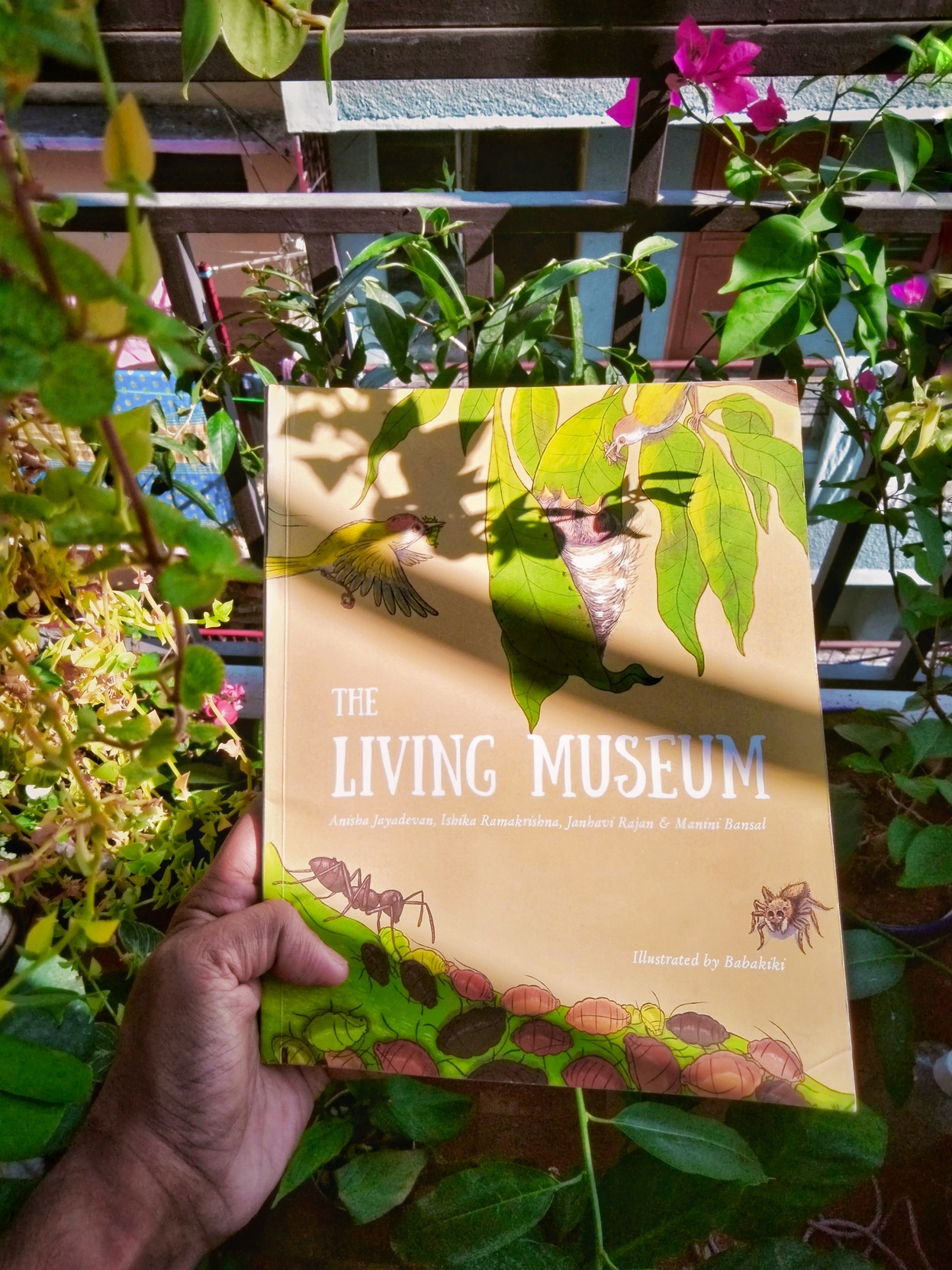
The Living Museum, an illustrated guide to urban biodiversity in India, breaks the myth that our city is barren and devoid of nature. Created by the collective Café Oikos (Anisha Jayadevan, Ishika Ramakrishna, Jahnavi Rajan, Shishir Rao, and Manini Bansal) and brought to life through the vibrant illustrations of Studio Babakiki (Fahad Faizal and Sunaina Coelho), the book acts as a guide to the living natural world that surrounds us.
Nature in our backyards
The leader of this journey into urban wilderness is an unlikely curator: a jumping spider. While we often overlook it as a nuisance, this ‘hairy hunter’ is a bridge between the domestic realms of our homes and the complex ecosystems that lie right beside it. The choice of protagonist builds on the central theme of the book: conservation is not limited to the megafauna of larger ecosystems, but begins with the architects of smaller ones in our own homes.
Like a traditional museum, the book takes the reader into ‘halls’. However, these galleries are anything but static; they are diverse and dynamic, ranging from indoor spaces to gardens to roadsides. Leafing through the pages, the reader is transformed from passive resident to active observer—exactly as the book intends.
One of the book’s greatest strengths lies in its ability to translate complex biological behaviours into engaging stories. Readers are drawn to the high-stakes survival mechanisms of their not-so-familiar neighbours.
We learn about the masterful deceptions of the common Mormon butterfly, which drapes distasteful costumes to ward off predators. And the toxic chemical warfare of the plain tiger caterpillar, which utilises the giant milkweed as a biological shield.
The authors also give us a peek into the avian world. We learn about the spectacular breeding displays of black kites and the seasonal transformations of cattle egrets, which sport orange feathers to signal their readiness for a mate.
The book reminds us that our cities are part of the natural world, not separate from it. It gives us ways we can aid the adaptation of species we coexist with in urban spaces.
Beyond aesthetics
While The Living Museum is undeniably beautiful, it does not shy away from the harder science of urban ecology. The aesthetics of a tree-lined street is also backed by functional value. As research by ATREE shows, tree canopies create a temperature difference of up to 5°C compared to bare stretches of the same street, while also acting as sinks for airborne pollution.
The book subtly weaves these nuggets of knowledge into its pages. It reminds us that urban biodiversity is not just a luxury, but a life-support system. It also addresses the internal clocks of city-dwelling species, and how climate change is beginning to destabilise the delicate seasonal cycles of flowering and fruiting.
Art for conservation
The pages of The Living Museum are brought to life with vivid imagery. The illustrations by Fahad Faizal and Sunaina Coelho are sweeping and exuberant. The colourful artwork complements the prose in capturing movement and the flurry of activity.
In a world full of digital fatigue, the tactile and visual appeal of the book serves as an entry point to citizen science. The visual vignettes feed our curiosity, offering ways to connect with our surroundings through sight, sound, smell, and touch. From the sound of a bird call to the smell of a rain-soaked garden and the texture of bark, each element is a conduit of experiential learning that goes beyond facts and lays bare a world of urban ecology and citizen science.
In doing so, the book addresses the ‘extinction of experience’—the loss of direct contact with nature among urban dwellers.
Call to action
Ultimately, The Living Museum moves beyond observation toward agency. It poses a question: How can we, as citizens, contribute to the conservation of this living system?
As co-author Anisha Jayadevan suggests, the first step is simply fostering curiosity. By asking where a bird builds its nest or which month a tree fruits, we begin to draw patterns. These patterns become the foundation of citizen science, enabling ordinary residents to contribute to the data needed to protect urban ecosystems.
The book ends with a ray of inspiration and hope for urban communities to come together to conserve the rich biodiversity of these living ecosystems that surround us.
mon père est né là où la rivière se courbe comme un bras fatigué après avoir porté notre royaume toute la journée. ma grand-mère lavait les feuilles de bananier dans ses mains murmurantes, et les choux, et la canne à sucre, et tout ce que nous baignions dans le courant, pour ne pas marcher jusqu’à l’autre rivière avant que le feu de cuisine ne puisse respirer. ma mère est aussi née là où la rivière se courbe comme un bras fatigué après avoir porté notre royaume sous la chaleur du jour.
mon oncle lavait les arachides dans ses courants agités chaque fois que nous devions les cuire sur place, quand la faim nous surprenait en pleine récolte, les mains plongées dans la générosité du sol. je coupais l’eau dans mes mains, trop paresseuse pour aller chercher les verres en aluminium dans le sac en raphia. boire à mes paumes était meilleur ; le courant glissant sur mes lèvres comme une douce discussion entre nous. dans ce courant, nous étions liés, deux forces se rencontrant et se reconnaissant. mes cousins apprenaient à nager avant d’apprendre à écrire ; et quand nous pleurions enfants, la rivière répondait toujours la première. en 2050, les gens appellent cet endroit un « puits de carbone », un « stabilisateur global », un « écosystème stratégique ». mais pour moi, c’est simplement la maison ; pleine de rires qui sentent le mbounga , de tambours qui s’élèvent de l’obscurité comme des lucioles chaudes, d’arbres plus hauts que tous les mensonges dits sur nous. le monde compte son carbone ; nous comptons nos bénédictions. et bien que les cartes ne le disent plus, nous appartenons toujours à cet endroit.
Feature image: Underwater Ocean corridor. Photo credit: Damocean via iStock
The work of economists Daron Acemoglu and James Robinson has never been more relevant. In their landmark book The Narrow Corridor (2019), they argue that social progress is possible only within a delicate, contested space where the power of the state and the power of society are held in a productive balance.
Criticisms aside, the metaphor is potent. On one side of this corridor lies the “Absent Leviathan”: a state too weak to provide basic services or enforce rules. On the other lies the “Despotic Leviathan”: a state so powerful it crushes society and serves only a narrow elite. Liberty, progress, and prosperity, they contend, exist only in the middle, where an organised society can hold the state accountable, creating what they call a “Shackled Leviathan”—one that is strong and able to fulfill critical functions, but bound to serve the common good.
For those of us in marine resource governance, this framework is a powerful diagnostic tool. The reason is simple: many of the world’s fisheries are managed by institutions that fall far outside this corridor.
In practice, fisheries management institutions often embody the Absent Leviathan: chronically under-resourced agencies unable to perform fundamental governance functions such as science, regulatory development, or enforcement. In many other cases, these institutions operate as arms of the Despotic Leviathan—captured by powerful elites who impose extractive economic regimes benefitting a narrow minority at the expense of the resource. The root of both failures is the same: the absence of a strong, capable state that is simultaneously held in check by a strong, mobilised society.
But can this grand theory of political economy help us both understand and design concrete advances towards more sustainable and equitable oceans? Two recent reforms in South America suggest the answer is yes.
Graphic representing the two case studies reported within the Narrow Corridor framing (Source: Acemoglu and Robinson, 2019)
How Chilean fishers reclaimed their rights
The story of Chile’s Fisheries Fractioning Law (2025) is a textbook case of society mobilising to correct a captured state. The conflict was institutionalised in 2013 with the Longueira Law, a regulation born from a crisis of legitimacy. Proven cases of corruption led to unfair allocation of rights: nearly 78 percent of the nation’s fisheries wealth were handed to the industrial fishing sector. For more than a decade, Chile shouldered this injustice: a Despotic Leviathan where the state’s power was wielded to serve a narrow elite, leaving the artisanal sector fragmented and marginalised.
The turning point required decisive action from the state, but this could only happen with strong societal backing. In a pivotal 2024 meeting (for an inside perspective, check Martínez, 2025), artisanal leaders diagnosed the root of their political weakness: their own disunity. From this insight, the National Alliance for the Defense of Chilean Artisanal Fishing was born, uniting multiple federations into a single political force.
By engaging in a safe space for open dialogue, the Alliance forged a unified front—one capable of bold action. Their agenda was clear: first, an immediate and equitable reallocation of quotas; second, the establishment of a long-term platform to secure access to basic social rights. Armed with a shared purpose, they systematically engaged the political process. In the framing of Acemoglu and Robinson, a newly mobilised society began to shackle a state that had long served elite interests. The results are a testament to their success.
The new Fisheries Fractioning Law, enacted in June 2025, represents a material reallocation of power. The artisanal sector’s share of national quotas has soared from 22.2 percent to a landmark 49.5 percent. This was not a gift; it was a political achievement, as well as a vivid reminder that the corridor is not a static place, but a space that is won when society organises to pull the Leviathan towards serving the common good.
Building a state for Peru’s squid fishers
The challenge in Peru’s giant squid, or pota, fishery was not the same. Here, the country’s largest artisanal fishery operated in a dangerous power vacuum. It was governed by an obsolete 2011 regulation (for further details, see Rojas 2025) designed to manage activities—such as the operation of an industrial fleet—that had since disappeared. This was a classic Absent Leviathan: a state whose weakness left a vital resource—and their users—legally unrecognised and vulnerable to capture by industry elites and alien interests.
The solution, therefore, needed to be more foundational. It began with patient institution-building to bridge historical tensions between groups with disparate interests. Before a unified voice could emerge, the actors themselves had to be organised. Through a focused process of catalysis, these disparate groups of fishers and processors came together to form coherent, national bodies—principally the artisanal fishers’ association SONAPESCAL (Sociedad Nacional de Pesca Artesanal) and the processors’ association CAPECAL (Cámara Peruana del Calamar Gigante).
Once these institutions were in place, the two groups—demonstrating remarkable vision—forged a strategic alliance. The breakthrough came at a precise historical moment—when, for the first time, incentives truly aligned. For processors, the motivation had long been the need to address a cascade of uncertainties threatening their long-term viability: an unknown stock status, an ineffective management regime, and an unstable legal landscape. For artisanal producers, however, it was only with the recent completion of fleet formalisation—and the security of licenses for more than 90 percent of the fishing vessels, a process SONAPESCAL critically supported (see Fiestas, 2025)—that the incentive to act truly emerged. Suddenly, this overwhelming majority of fishers and processors shared an urgent reason to work collectively, overcoming historic distrust and inertia.
The Squid Management Regulation enacted in 2025 is the direct outcome of this pivotal marriage of incentive and agency. Over 90 percent of the coalition’s policy proposal was adopted, formally declaring the fishery exclusively artisanal and establishing a modern governance scheme to secure the health of the stock. The Peruvian case offers a profound insight: sometimes the corridor is reached not by shackling a despot, but by empowering a society to call a capable state into being, ensuring it arrives already bound to serve the public good.
Two paths into the corridor, one critical lesson
Viewed together, these recent advances in Chile and Peru are two sides of the same coin. They represent two distinct struggles to forge power into the narrow corridor. In Chile, a powerful society rose up to constrain a captured state, pulling it back towards the middle. In Peru, a newly organised society effectively built a state where one was absent, giving away resistance to regulation, enabling the state to fulfill its role and pushing it forward into the corridor from a place of weakness.
These are not just local stories; they are illustrations of universal principles. They show that securing the fair and sustainable use of ocean resources is not primarily a technical problem to be solved. It is, first and foremost, a governance challenge—one that requires moving beyond simplistic, top-down fixes to engage with the complex, messy, and essential work of building and balancing power.
The ocean is a fundamental public good, and it can only be defended by state institutions that are both capable and accountable. As these cases show, forging such a state is the real work. Whether it means shackling a Leviathan that serves the few or building one to serve the many, the goal is the same: shaping governance institutions that can truly protect our shared planet.
The future of the ocean lies in that narrow, contested, and vital corridor.
Further Reading:
Acemoglu, D. and J.A. Robinson. 2019. The Narrow Corridor: States, Societies, and the Fate of Liberty. Penguin Random House.
Fiestas Flores, J. M., M.E. Rosas Houghton, J.L. Jacinto Galán, S.H. Juárez Ruiz, J. Querevalú Puescas, E.G. Vega Pardo, C.W. Yenque Carrasco et al. 2025. La Pesca Artesanal Peruana y la OROP-PS. Un Camino Colectivo por Nuestros Derechos. https://doi.org/10.5281/zenodo.16741473.
Feature image: House surrounded by water in Barpeta, Assam (Photo credit: Vincenzo Cassano/ Unsplash)
As climate change alters our landscapes, it’s becoming increasingly difficult to ignore the emotional toll on our communities. Across India, average temperatures have risen by 0.7°C between 1901 and 2018, rainfall is up by over 75 percent since the 1950s, and groundwater is being rapidly depleted. The Internal Displacement Monitoring Centre estimates that in 2024, floods, storms, and other climate-related disasters forced 5.4 million people to relocate within India. The impact of such loss goes beyond material or ecological damage, giving rise to a sense of psychological disorientation called solastalgia.
During my field visits to migrant communities on the fringes of Bangalore, I witnessed the human face of this invisible trauma. One encounter stayed with me—a young girl, her voice soft but steady, said: “Back home, the farmlands I ran in began to die from the heat. That made me sad. But I don’t like this place either—it’s not home.”
She and her family hailed from northern Karnataka, where heatwaves and water scarcity have destroyed farmlands. Here in the city, they live in makeshift huts, surrounded by concrete and dust, disconnected from the soil that once sustained them. Their story, like many others, reflects not only the struggle against climate change but also the grief over the fading way of life.
The term solastalgia was coined by the Australian philosopher Glenn Albrecht in 2003 to describe a sense of distress people feel when their home environment is altered beyond recognition. Unlike nostalgia—which is the longing to return to a place that no longer exists—solastalgia is the longing for a home that is still there but has been rendered unrecognisable. It is about a particular type of loss that comes not from moving away but from watching the slow decline of one’s world. Although it’s being increasingly discussed within academic circles, it’s not receiving its due in Indian policy and public discourse.
Solastalgia in the Indian context
A 2021 study by researchers from the Central University of South Bihar and the University of Allahabad surveyed 34 villagers in Gaya and Jehanabad, in the southern part of the state. They reported frequent heatwaves, erratic rainfall, delayed monsoons, dried-up water sources, and the disappearance of birds and trees, disrupting agricultural calendars—the seasonal patterns that guide planting and harvesting, as well as community practices. Participants described deep “worries and uncertainties” as they were forced to abandon traditional cropping, eroding their sense of self worth and belonging.
In Hingalganj—a vulnerable deltaic area of the Indian Sundarbans, part of the world’s largest contiguous mangrove forest—a 2022 study by Action Aid Association and the Professional Institute for Development and Socio-Environmental Management found that frequent cyclones, rising salinity, and repeated displacement have caused visible psychological distress among residents. The report revealed growing anxiety over food insecurity, erosion, embankment failures, and the loss of agricultural livelihoods. These stressors have contributed to mounting psychological pressure, particularly among women, who now bear the triple burden of earning an income, caring for children and elders, and managing disrupted households.
Alarmingly, the report also reveals cases of emotional trauma that have escalated into self-harm. Residents spoke of recurring emotional pain linked to the sudden deaths of loved ones, crop failures, and economic instability. For many, the trauma following Cyclone Aila in 2009 marked a breaking point, pushing them into cycles of hopelessness, indebtedness, and in some cases, suicidal ideation. While medical infrastructure in the area is limited, anecdotal evidence gathered during field interviews suggests a rise in untreated anxiety, insomnia, and psychosomatic conditions. The study called for urgent mental health interventions, integrated with climate resilience programmes, to support affected communities.
In the Nilgiris region of the Western Ghats—including Sathyamangalam, Masinagudi, and Wayanad—elephant corridors are being developed to mitigate the rising human-elephant conflict, which has been exacerbated by climate change, as forests dry and animals stray into villages. These corridors have displaced over 12,000 people, including hundreds of tribal families from communities like the Irula, Kurumba, and Mullu Kurumba. During my field visit to the Sathyamangalam Tiger Reserve, a Forest Officer explained that “no amount of monetary support could ever truly compensate for the loss of their land”. For many, this loss is not merely physical but also psychological, severing ties to home, heritage, and identity.
Meanwhile, a looming crisis is unfolding in the Nicobar Islands, where plans to build an airport, port, and townships on Great Nicobar threaten to uproot the isolated Indigenous Shompen and Nicobarese tribes, who have had little outside contact. Though yet to occur, experts and human rights advocates warn of catastrophic consequences: destruction of mangroves, disruption of turtle nesting beaches, and a rise in solastalgia.
Migrant housing along a waste-filled canal in Bengaluru (Photo credit: Kalkivai Aneesha)
Across the world
Studies from the Pacific show that when isolated communities are uprooted or their environments eroded, solastalgia can appear long before relocation can take place, as fear, distress, and anticipatory grief. Research from the James Cook University of Queensland on Erub Island in the Torres Strait found that residents already expressed sadness, worry, and a loss of belonging as coastlines disappeared. A more recent collaborative study led by the UNSW Sydney (School of Psychology) in Australia and New Zealand described this as ‘anticipatory solastalgia’—the psychological distress people feel in the present while anticipating environmental decline. Breaking such intimate bonds with land is often tantamount to destroying identity.
International research increasingly recognises the significant psychological impacts associated with solastalgia. In Australia—where the term was first coined—several studies, particularly involving farmers and Aboriginal communities, have shown a strong correlation between environmental change and mental distress. A national scoping review of 18 such studies confirmed widespread experiences of anxiety, depression, and a deep sense of loss tied to environmental degradation. Australia is also among the few countries where solastalgia has entered public health and climate adaptation conversations, though its inclusion in formal mental health services remains limited and uneven across regions. Communities with strong cultural ties to land are especially vulnerable to such distress, but they also demonstrate greater resilience when given culturally grounded mental health support.
During the 2019–20 Australian bushfires, surveys of over 2,000 residents found solastalgia strongly mediated the link between fire impact and mental health outcomes such as anxiety and depression, and even people geographically distant from the fires reported distress. Australian policymakers now advocate pre‑emptive, land‑based therapy, community mental health hubs, and cultural engagement to address solastalgia. After the fires, the National Centre for Epidemiology and Population Health called for a broad rollout of mental health resources in rural areas to counteract solastalgia.
In Canada and the United States, post-wildfire mental health research has increasingly identified solastalgia as a key factor contributing to rising cases of post-traumatic stress disorder (PTSD), depression, and anxiety. Communities affected by severe wildfires often report a negative psychological experience, not just from the immediate trauma of evacuation and loss, but from the long-term grief of seeing familiar landscapes permanently altered or destroyed. In response, mitigation strategies have included a combination of family-based therapy, government-provided financial aid, and community-centred recovery initiatives that help restore a sense of stability and agency.
In Canada’s northern territory of Nunavut, where Indigenous Inuit communities face the compounded effects of climate change, these frameworks go further. Here, mental health programmes are being adapted to address “country food insecurity”—the decline in access to traditional hunting and fishing resources due to melting ice and disrupted ecosystems. Counselling services are paired with cultural revitalisation efforts, such as land-based healing, community feasts, and intergenerational storytelling, helping individuals not only process their grief but also reconnect with identity and tradition.
How India can learn—and lead
India has only a handful of studies on climate change and mental health, and most are not widely known. A 2025 scoping review by psychiatrists in Kerala, published in The Primary Care Companion for CNS Disorders, analysed 12 Indian studies and concluded that research on climate anxiety and solastalgia remains sparse. Globally, a 2024 review in BMJ Mental Health confirmed that solastalgia is linked with higher rates of depression, anxiety, and PTSD —but also highlighted that most existing studies are observational and too few to establish causality. These gaps show why India urgently needs systematic, long-term monitoring in regions like drought-prone Karnataka, the flood-affected Sunderbans, and the fragile Nicobar Islands.
Policy gaps are equally stark. Environmental Clearances (ECs) evaluate ecological impacts, while Social Impact Assessments (SIAs) under the RECTLARR Act (2013) examine livelihoods and resettlements. In principle, both could incorporate psychosocial assessments, but documented cases in India are extremely limited, whether due to a lack of transparency in reports or simply because mental health has never been prioritised in these processes. This silence leaves a critical gap: while homes, land, and compensation are measured, the psychological distress of displacement is not.
One way forward is Health Impact Assessments (HIAs), which the WHO recommends for evaluating health, including the mental health consequences of projects. Integrating HIAs within ECs and SIAs could help identify psychosocial risks such as solastalgia. As emphasised by Dua and Acharya (2014), very few Indian projects, such as Sardar Sarovar and Bargi Dam developments, have used HIAs, and most were not embedded within formal EC or SIA processes. The study highlights that making HIA integration mandatory and coordinating it through intersectoral policy support, legislative backing, and public health capacity building could be an effective approach.
Building on this gap, India’s existing health policies and programmes could provide an institutional foundation for integrating mental health safeguards into climate responses. According to the Indian Journal of Psychiatry in 2024, the District Mental Health Programme now covers 767 districts, making it a cornerstone for counselling and outreach in rural and disaster-affected areas. The National Tele-Mental Health Programme (Tele-MANAS), launched by the Ministry of Health and Family Welfare in 2022, expands this reach through 24×7 toll-free services and state-linked call centres, ensuring access for remote populations.
Moreover, India’s health and disaster management frameworks also have potential entry points for addressing solastalgia. For instance, the National Disaster Management Authority’s 2023 Guidelines on Mental Health and Psychosocial Support in Disasters could be expanded to include slow-onset crises, such as droughts and coastal erosion, beyond sudden events. Likewise, health sector programmes such as Ayushman Bharat Health and Wellness Centres embed mental health screening and referrals into primary care, offering an institutional base for long-term psychological support in vulnerable regions
For Indigenous and rural communities, culturally grounded measures are key. Canada’s Inuit country food programmes illustrate how protecting traditions preserves identity and reduces grief. In India, broader efforts toward cultural preservation—such as the Ministry of Tribal Affairs’ support for local festivals and Tribal Research Institutes, as well as state initiatives in Tripura and Ladakh to promote cultural hubs and festivals—could be meaningfully expanded to help communities stay connected to their environment. Drawing on traditional knowledge and shared rituals, such programmes could offer grounding against the disorientation of solasalgia.
If India’s climate policy is to be truly just, it cannot limit itself to counting trees or compensating land; it must also protect minds and identities. Anticipating solastalgia and embedding psychosocial safeguards into environmental, health, and resettlement frameworks is not symbolic; it is a necessary act of climate resilience and responsible governance.
Further Reading
Acharya, A. and B. Dua. 2014. Health impact assessment: Need and future scope in India. Indian Journal of Community Medicine 39(2): 76. https://doi.org/10.4103/0970-0218.132719.
Bogard, P. 2023. Solastalgia: An Anthology of Emotion in a Disappearing World. Charlottesville: University of Virginia Press.
Rafa, N., A. Zabala and L.P. Galway. 2025. Empirical research review on solastalgia: Place, people and policy pathways for addressing environmental distress. People and Nature 7(8): 1811–25. https://doi.org/10.1002/pan3.70090.
Yamini, T., T. Sarkar and A. Joshi. 2024. Climate stress and migration in India: An exploratory study of environmental changes on population movement. Journal of Informatics Education and Research 4(3): 3559–65.
Feature image: The Palais des Nations in Geneva, Switzerland, home to major international environmental negotiations and multilateral institutions
It is coffee break time at a meeting of the Convention on Biological Diversity. Around the conference hall, small groups of delegates gather with steaming cups, their conversations flowing in a patchwork of languages.
A negotiator from Brazil shares with a colleague from Mozambique updates on new forest restoration targets. Across the room, scientists from Malaysia and Indonesia compare notes on coral reef monitoring in the Coral Triangle. Near the counter, representatives from France and Morocco discuss how to strengthen the next Global Review of Progress towards the Kunming-Montreal Global Biodiversity Framework (GBF).
They are all here to serve a shared purpose—protecting life on Earth—yet their exchanges are shaped, and sometimes limited, by the languages they speak. Some turn to interpretation headsets, others to hesitant English, others still to gestures and patience.
What connects these people is not only their commitment to biodiversity but the fragile thread of language that allows their cooperation to exist at all.
Delegates participating in the 14th Conference of the Parties to the Convention on Migratory Species (COP14) in Samarkand, Uzbekistan
Language barrier
In an international conservation meeting, the air hums with translation headsets, documents in multiple versions, and delegates waiting for their turn to speak. Yet beneath this choreography of diplomacy lies a quieter imbalance, one not of ideas but of languages.
Conservation is a global effort, but it is carried out through a remarkably narrow linguistic lens. The world’s major environmental treaties such as the Convention on Biological Diversity (CBD) or the Convention for Migratory Species (CMS) largely operate in just three to six languages: English, French, Spanish, and, less consistently, Arabic, Chinese, and Russian. These languages were chosen for historical and political reasons, not ecological ones. As a result, the nations that hold the most biodiversity often find themselves outside the linguistic boundaries of global conservation.
This mismatch matters. GBF, adopted in 2022, calls on all nations to live “in harmony with nature” by 2050. Research has long shown that language is more than a communication tool; it is a gatekeeper of participation and power. In global biodiversity meetings, English often becomes the default, especially in the smaller groups such as the “friends of the chair” or contact groups. Friends of the chair is a very small group of chair-selected countries that have divergent views on specific clause(s) of one decision and come together with the aim of reaching a compromise. Contact groups are groups of countries that will actually negotiate language, line by line, of the decision in question. These are the groups where key compromises are actually achieved. Delegates who are not fluent may struggle to intervene, and their perspectives may be diluted or delayed by interpretation limits.
In our article titled ‘Languages of life: A global perspective on linguistic priorities for biodiversity conservation’ published in Conservation Letters, we explored whether the languages currently used by major international biodiversity agreements reflect where biodiversity is actually found. We noted that even when interpretation services exist, they are “typically restricted to English, French, or Spanish”, excluding many of the most spoken languages worldwide.
This linguistic inequality trickles down the policy chain. National agencies receive technical documents in unfamiliar languages. Field practitioners and local conservationists, those mostly responsible for turning global commitments into action, often work from secondhand summaries or partial translations. Over time, this creates a gap not just in understanding but in representation: whose science informs policy, whose priorities shape conservation goals, whose voices are heard at the table.
Beyond practicality, language barriers expose deeper questions of justice. For example, in conservation, this means the communities most intertwined with nature often have the least say in global decisions about it. We argue, linguistic accessibility is “central, not peripheral, to the success of multilateral environmental governance”. The loss of biodiversity, then, is not only ecological. It is also linguistic, a quiet erosion of understanding that undermines cooperation at every scale, from United Nations negotiations to a ranger’s notebook in the field.
Mapping the languages of life
To understand how language shapes global conservation, we articulated a surprisingly simple question: in which languages does the world’s biodiversity “live” in? We searched for data to identify where the highest levels of biodiversity, by taxonomic group, were located and which languages are spoken in those locations.
We began with one of the most comprehensive databases in conservation science, the IUCN Red List. We compiled the maps of the distribution of more than 33,000 species of mammals, birds, reptiles, amphibians, and corals. These groups were chosen because they are comprehensively accessed in the IUCN Red List—which means that we have global maps of the distribution for virtually all species. Then, we overlayed a map of species richness of each of the groups with a map of languages spoken in different countries based on the work of Negret et al., 2022. For every country, we noted both the official language used for governance and the most spoken language used by its people.
By combining these two layers of information, we could see how species distributions overlap with linguistic boundaries. In other words, for each species, we asked: In what language is this species most likely to be “spoken about” by the people and policies that govern its range?
The results were revealing. When official languages were considered, Spanish and English emerged as the two dominant languages of biodiversity, each covering about a quarter of all species distributions. They were followed by Portuguese, French, and Malay, which together accounted for another quarter. But when the researchers looked instead at the most spoken languages, the picture changed considerably. English and French lost ground, while Malay gained prominence, especially in the marine-rich regions of Southeast Asia.
This shift highlights a simple truth: some of the languages where the highest biodiversity of some groups exists are not represented in many cases in the international policy arena. For example, coral species are concentrated in the ‘Coral Triangle’, spanning Malaysia, Indonesia, the Philippines, Timor-Leste, and Papua New Guinea. Yet few global conservation documents are ever translated into Malay or Bahasa Indonesia, the very languages spoken by the communities who manage these reefs.
Even Portuguese, which ranked above French in the study, is invisible in multilateral biodiversity fora. It is the official language of nine countries across South America, Africa, Europe, and Asia, including Brazil, Mozambique, and East Timor, regions that together hold vast portions of the planet’s biodiversity.
The pattern is clear. The biodiversity of the world is represented by a multilingual community of countries, but the international policies meant to protect it are most often not. The study’s figures show that two non-UN official languages, Portuguese and Malay, are among the most relevant for global biodiversity, yet they remain largely ignored by Multilateral Environmental Agreements (MEAs).
This mismatch does more than complicate communication. It limits whose knowledge, science, and priorities inform conservation policy. As we put it, the languages of biodiversity conservation have evolved for political convenience, not ecological necessity. And that, we believe, needs to change.
Words shape the world
If biodiversity conservation depends on cooperation, then language is the first bridge that must be built. Our findings make clear that language barriers are not a side note in conservation; they are a structural fault line running through it. The choice of official languages in multilateral agreements, such as English, French, and Spanish, reflected post-war diplomacy and the workings of the United Nations. But biodiversity does not follow the same map as politics. Some of the richest ecosystems on Earth are governed in languages that rarely appear in international conservation dialogues.
When major policy documents and technical manuals remain untranslated, the result is exclusion in slow motion. National agencies that receive these documents may lack the capacity to translate or interpret them accurately. Local conservation officers and field teams, who are responsible for turning broad policy goals into on-the-ground action, are often left with secondhand summaries or unofficial translations. This weakens implementation, but it also shapes whose knowledge counts as legitimate.
In practice, this means that international decisions about coral reefs in Indonesia or forest restoration in Mozambique are often informed by materials written in languages foreign to those who manage them. Even the most dedicated practitioners cannot apply what they cannot fully understand. As our study points out, “countries with representatives that do not fully dominate the English language are excluded from effectively participating in the decision-making process”, and the same pattern repeats at national and local scales.
The issue goes deeper than efficiency. It is about justice and power. The dominance of certain languages in conservation determines which scientific studies are cited, which communities are consulted, and which forms of knowledge are seen as credible. A growing body of research has shown that much of the world’s biodiversity science is written in non-English languages, yet remains overlooked in global assessments. When translation lags behind, local insights and Indigenous knowledge risk being silenced.
Language thus becomes both a mirror and a barrier. It reflects old hierarchies while quietly shaping new ones. Policies written for everyone but comprehended by few cannot foster true collaboration. The study reminds us that inclusivity in conservation is not achieved only through funding or representation, but also through the words we choose and the languages we use to speak for nature.
The future must be multilingual
If the world’s biodiversity is represented by voices speaking in many languages, then conservation must learn to listen in many as well. We argue that solving the language gap is not just about adding more words to a document, but about rethinking how global conservation communicates with the people who live closest to nature.
We propose a practical solution: a four-tier system for prioritising translation in MEAs and global policy forums. The first tier includes the lingua francas of global diplomacy, such as English, French and Spanish, which allow countries to communicate across borders. The second tier is made up of the official United Nations languages, including Arabic, Chinese, Russian, which already have established systems for translation and interpretation.
But the real shift happens in the third tier. Here we suggest what we call ‘biodiversity-priority languages’—those spoken in countries that hold a large share of the planet’s species and ecosystems. Portuguese and Malay, for example, are used across vast regions rich in tropical forests, coral reefs, and endemic wildlife. Yet these languages are almost absent from major biodiversity conventions. Translating technical guidance, reports, and training materials into these languages could make a direct difference for conservation officers and researchers who depend on them every day.
The fourth tier focuses on local and Indigenous languages, which play an irreplaceable role in the implementation of conservation policies. These are the languages in which people discuss fishing practices, forest use, and sacred landscapes. They carry generations of ecological knowledge that often remain invisible to formal policy frameworks. Including them, even through small steps such as community-led translation or local naming in educational materials, strengthens both equity and effectiveness.
We also recognise that language inclusion must be feasible. We do not call for every document to be translated into every language, but for a smarter, more strategic approach. We suggest partnerships, where various actors call for coordination in the translation and review of policy documents. This would correspond to the ‘whole of society approach’, as the Global Biodiversity Framework of the Convention on Biological Diversity calls for. Voluntary funding or regional networks could support this process, ensuring that the languages most relevant to biodiversity get the attention they deserve.
Technology could help too. Machine translation tools are becoming more accessible, but they cannot fully replace human understanding, especially for complex technical, scientific, or legal concepts. The study recommends hybrid systems that combine artificial intelligence with expert review to maintain accuracy while reducing costs. Another idea is to escalate crowd-sourced translation, where local professionals and conservation students contribute to translating materials relevant to their regions, either by raising awareness about the relevance of translation and/or finding some sort of incentives for wider engagement. This not only improves context and quality but also builds local capacity and ownership.
Behind these technical suggestions lies a powerful message: conservation cannot be truly global if it speaks only a handful of languages. The biodiversity crisis demands cooperation from every level of society, from international diplomats to local field teams. And cooperation depends on comprehension. As we write in our paper: “An international conservation arena that truly embraces inclusivity must make greater efforts to acknowledge the rich linguistic diversity of humanity.”
Language inclusion, then, is not an administrative exercise. It is an act of respect, a recognition that the protection of life on Earth begins with the ability to understand one another.
Further Reading:
Negret, P. J., S. C. Atkinson, B. K. Woodworth, M. Corella Tor, J. R. Allan, R. A. Fuller and T. Amano. 2022. Language barriers in global bird conservation. PLOS ONE 17(4): e0267151. https://doi.org/10.1371/journal.pone.0267151.
Veríssimo, D., C. Hazin, R. Rocha and M. P. Dias. 2025. Languages of life: A global perspective on linguistic priorities for biodiversity conservation. Conservation Letters 18(5): e13139. https://doi.org/10.1111/conl.13139.
Are names just words? As children, most of us would have wondered why certain things are called what they are called. Why is a cat called a cat? Or a crow a crow? We are given names, we use names to refer to people, animals, and all kinds of objects—even creating new names for things that catch our fancy. Names can reflect the values of our ancestors, as well as the cultures and societies they were a part of. The process of naming varies across communities and changes over time and over space. Thus, names serve a range of purposes—to identify, to describe, to indicate, to honour, and to value.
There is a saying in Kerala: Kadalile meenu arayanitta peru (fish in the sea are named by the fisher). Our project as part of the Coexistence Fellowship—jointly run by the University of Trans-Disciplinary Health Sciences and Technology (TDU) and the Coexistence Consortium—was to document the traditional ecological knowledge of fishers in Thrissur and Kollam in Kerala. We came across various local names for flora and fauna and learned their origins. How fishers name species has changed over time and across different locations. Here, we focus on a marine mammal group that is occasionally sighted along Kerala’s coast: whales.
The common Malayalam word for whale is thimingalam, derived from the Sanskrit word timiṅgila, which refers to a large fish. But what did this name signify to fishers? Oil, meat, blubber? Or is there another narrative? We collected stories and experiences of traditional fishers with whales, their ecological knowledge, the different names they use for thimingalam, and how each one points to a distinct relationship with the whale—as a father, a child, and an elephant.
Kadalachan
The concept of the sea as a mother is deeply embedded in many fishing communities. They refer to her as ‘Kadalamma’ and see themselves as the children of the sea. If the sea is the mother, then for some fishers, the whale is ‘Kadalachan’, the sea father. Hence, they hold the whale in high regard.
Some fishers silently acknowledge its presence, a few pray to it, and some even make offerings to temples when they see one during a fishing trip. They often remark, “The father of the sea is guiding the fish towards the coast to help us.” A belief that explains the respectful interactions that fishers have with whales. For them, Kadalachan represents strength, guidance, and devotion. The term also encapsulates the belief that a father will not harm a child and vice versa; hence we coexist.
Chellapillai
Amongst some traditional fishers, the roles attributed to the father and child are reversed: the fisherman becomes the father, and the whale becomes the child. For instance, in the southern part of Kerala many fishers use the term, ‘Chellapillai’ which means ‘dearest child’. It is quite ironic to call the whale, one of the largest animals on Earth, a small baby! They believe that whales are as harmless as a small baby, and that they seem to be crying, smiling, or singing.
For the fishers, this majestic creature conjures up feelings of overwhelming joy and love, and creates an innate desire to protect them. Often, they regard the whale as a childish soul trapped in a gigantic body and the name brings together the concepts of parenthood and protection.
Kadalaana
During our time at school, we once heard that a whale had washed ashore at the beach and we wanted to see it. Until that point, the largest animal that we had ever seen was the elephant. We were in for a surprise when we reached the beach. What we saw was a different type of giant—our teacher said that its tongue alone weighed as much as an elephant.
With its massive size, the way it spouts water, and its trumpeting sounds, the name ‘Kadalaana’ or ‘elephant of the sea’ seemed fitting. Even though they were large creatures, they, like elephants, were considered to be graceful and gentle. For the fisher community, the whale was Kadalaana.
Why do whales matter?
The well-being of whales is the well-being of the ocean. Right from birth to decades after death, whales play a vital role in maintaining the health of marine ecosystems. When, after feeding in the deep ocean, they move to the surface to breathe, they transport nutrient-rich materials from the depths. And at the surface, they release waste that is also rich in nutrients. This cycle, known as the ‘whale pump’, helps promote the growth of phytoplankton.
And there is whale fall: when they die and sink to the ocean floor, their bodies become a rich habitat for diverse kinds of organisms, from worms to sharks, and they also act as a long-term carbon sink for centuries.
India became a member of the International Whaling Commission in 1981 and has been an active participant ever since. Whales are listed under Schedule I of the Wildlife (Protection) Act, which affords them the highest level of legal protection in the country. In the realm of marine conservation, whales are regarded as flagship species because of their ability to evoke deep emotional and socio-cultural responses.
In a community-based participatory approach to conservation, it is important to recognise both their ecological and socio-cultural significance. Names such as Kadalachan, Chellapillai, and Kadalaana reflect the traditional reverence for whales. Their size, intelligence, and majestic presence make whales an integral part of the community’s imagination, long before modern ideas of conservation or flagship species were introduced.
Lost history
Fishers pointed out that many fish have disappeared from the waters. However, when they explain this, they use old names that scientists, authorities, and conservationists do not recognise. This poses a conservation challenge because how can we protect a species when we don’t even know it’s gone! And so, preserving local names and their origins becomes important for researchers. As renowned British nature writer Robert Macfarlane explains: “Names—good names, well used—can help us see, and they help us care. We find it hard to love what we cannot give a name to. And what we do not love we will not save.”
Names are an expression of culture, a complex concept that includes shared beliefs, values, traditions, and behaviours. They have the ability to shape how a person thinks, behaves, and views the world. The animistic belief systems held by local communities are a way of feeling and experiencing the nature around them. This may be rooted in emotion, but in conservation practice, emotions are important, and values are significant.
Through the different names of the whale that symbolise father, child, and elephant, we can see a certain way of understanding human-wildlife coexistence. Few people are aware that whales exist along the coast of Kerala, and among them, only a handful are aware of the local names. In a rapidly changing world, local knowledge, stories, songs, and names truly matter!
Further Reading
Kumar, A. B. and R. Anitha. 2017. Traditional knowledge of fisher folk of Kollam district, Kerala on coastal and marine biodiversity and conservation. Journal of Traditional and Folk Practices 5(2): 37–49. https://doi.org/10.25173/jtfp.90.
Feature image: An upside-down Indian flying fox flapping its large, leathery wings
I was home for a knee injury, a result of many small follies built up over time; but staying in bed, waiting for it to heal was the longest six weeks of my life! Under the tight supervision of my mother, I was allowed to sit in the backyard and look at Delhi’s urban wildlife. Soon, I migrated to the garden during the morning and evening activity peaks. Armed with my camera, I waited for birds and monkeys. Meanwhile, my laptop ran long codes deciphering bat phylogenies and long models for my ongoing study on them.
One evening, I stayed out long after the birds had gone home, and while I became a feast for mosquitoes, I looked up to see large, black shadows fly across the sky. I knew then, I was going to be dragging my parents around Delhi, looking for its nocturnal residents—bats. When people found out, they often asked, “Why bats? They stink and spread disease!”
Yet, in the heart of the capital city, nobody seemed to notice trees laden with the largest bats in the country, as well as in the world—Indian flying foxes (Pteropus medius). There, at Hauz Khaz, one among many places I visited, I saw the largest roost I had witnessed to date. Squawking and loud, several hundred bats hung upside down, flapping their wings, right above hundreds of blissfully unaware human passers-by.
A flying fox colony roosting in different species of trees at Hauz Khaz, Delhi
Looking up at them, amma wondered aloud, “How do they occupy such a highly urbanised space in these large numbers?” I wasn’t sure then, but their mere presence throughout a densely populated Delhi meant something was helping them thrive, be it their adaptability or resilience.
Orange and loud, the Indian flying fox is native to the Indian subcontinent. Equipped with a keen sense of smell and excellent night vision (no, not as blind as a bat!), these large frugivores leave their day-roosts at dusk and spend hours feeding on a variety of fruits. Their roles as seed dispersal and pollination agents are pivotal for the regeneration of fruiting trees and maintaining the resilience of plant communities.
A lone flying fox dozes through the day
Unfortunately, irrespective of the range of ecosystem services flying foxes provide, they are often persecuted for feeding on cultivated crops. Previously considered vermin, they were granted legal protection under Schedule II of India’s Wildlife Protection Act (2021 Amendment Bill). However, this certainly does not protect them from the environmental challenges they face—shrinking habitats and rising urban temperatures.
Degradation of their natural habitats has pushed bats toward agricultural orchards and closer to human settlements, increasing the potential for conflict and heightening the risk of pathogen transmission across species in the area. Despite these troubles, these animals have managed to carve out an urban niche for themselves. Though classified as ‘Least Concern’ on the IUCN Red List due to their large numbers, their populations are beginning to show a gradual decline.
Lacking sweat glands, flying foxes spend their day in the shade of trees, roosting close to water bodies. They drench their fur in water or saliva and fan their large wings to cool themselves down. Regrettably, these methods were no match for the 2024 heatwaves that battered northern India. Suddenly, hundreds of these large fruit bats were dropping dead from dehydration. These mass deaths serve as a reminder that climate change is continually pushing wildlife towards extinctions—global and local.
Flapping its wings in an attempt to cool down
While the healing of my knee slowed down considerably from all my Delhi hiking, if you, dear readers, happen to turn your gaze skywards at dusk, you will find these enigmatic mammals, flying in steadily darkening skies, preparing for their nightly feasts. As you look up at them, be reminded that their presence, among other animals, serves to keep forests and urban landscapes healthy.
A flying fox returns to the communal roost during the early hours of dawn
Feature illustration: An eastern phoebe perched on a branch, eyeing up a dragonfly
We like to say “one swallow does not make a summer”, but as aerial insectivore populations—as well as the insects that they depend on—decline globally, future generations may be lucky just to catch a glimpse of a swallow. Undoubtedly, these trends are linked to human activity in a changing climate, highlighting a pressing need to improve biodiversity conservation efforts. But how can we do this more strategically?
Many governments maintain steadily growing lists—often legislatively mandated—of threatened species within their borders. Those who are tasked with prioritising habitat conservation on a ‘one-species-at-a-time’ basis find themselves like Sisyphus, trying to roll an ever-larger rock up a steepening hill. However, with modern mapping tools and state-of-the-art genetic techniques, it is now possible to streamline conservation priorities across multiple species.
As a COVID-19 pandemic era project undertaken at the Canadian Rivers Institute at the University of New Brunswick, we set to work coupling biodiversity observations and high performance computing to inform the protection of entire groups of interacting species, while also addressing the role they play within the larger ecosystem. We focused on two distinct groups of species that naturally occur together: flying insect-eating birds and their food—aquatic insects—which are a rich source of essential fatty acids for fledgling development.
Rather than managing or conserving habitats for a single species, this strategy integrates the habitat needs of multiple species across both terrestrial and aquatic environments, while preserving the functional link between these birds and their food. This work follows a previous study, which examined how nature-based restoration, commonly known as rewilding, can heal broken watersheds by restoring basic food provisioning and other support services of natural ecosystems.
A tree swallow sits on a nesting box. In the background is a riverine wetland within the Wolastoq watershed in New Brunswick, Canada. (Photo credit: D. J. Baird)
Our study (Wegscheider et al., 2025) focused on Wolastoq, a large watershed straddling the eastern US-Canada border and flowing into the Bay of Fundy. To map insectivorous bird habitat, we employed data from the Maritimes Breeding Atlas for five species: barn, tree, and cliff swallows, eastern phoebe, and eastern kingbird. Data on aquatic insect distributions, such as, mayflies, caddisflies, and stoneflies, were obtained in association with Canada’s community-based river biomonitoring program, CABIN, in collaboration with whom we collected environmental DNA. These are traces of freely occurring genetic material available in the environment that can be used to identify individual species presence. This process enabled us to detect environmental DNA corresponding to 95 different insects and allowed us to simultaneously model the distributions of many insect taxa at unprecedented detail.
Biodiversity data in hand, we mapped distributions of the five insect-eating birds and aquatic insects in our study. This enabled us to explore different conservation strategies to protect aquatic insect biodiversity and productivity, thereby supporting insectivorous birds. We evaluated scenarios following two targets for habitat conservation: (i) the UN Biodiversity Convention’s Aichi Targets at 17 percent of land area under conservation, and (ii) Canada’s national target of 30 percent land conservation by 2030 (‘30×30’).
We found that existing conservation areas were insufficient to ensure protection of either aquatic insects or insect-eating birds, according to the 17 percent and 30 percent area targets. Equally importantly, we found that prioritisation of bird habitat alone did not equally protect insects, and vice versa. Just as one swallow does not make a summer, focusing on single species or even closely-related groups of species will not halt losses across the full spectrum of biodiversity. By expanding conservation to include groups of organisms that contribute essential underlying ecosystem functions, we can develop smarter, more resilient, and efficient strategies to protect biodiversity in a rapidly changing world.
Further Reading
Rideout, N. K., N. Alavi, D.R. Lapen, M. Hajibabaei, G. Mitchell, W.A.Monk, M. Warren, S. Wilson, M. Wright and D.J. Baird. 2025. Quality versus quantity: response of riparian bird communities to aquatic insect emergence in agro-ecosystems. Frontiers in Sustainable Food Systems 8: 10.3389.
Rideout, N.K., B. Wegscheider, M. Kattilakoski, K. McGee, W.A. Monk and D.J. Baird. 2021. Rewilding watersheds: Using nature’s algorithms to fix our broken rivers. Marine and Freshwater Science 72: 1118–1124.
Wegscheider, B., N.K. Rideout, W.A. Monk, M.A. Gray, R. Steeves and D.J. Baird. 2025. Modelling nature-based restoration potential across aquatic-terrestrial boundaries. Conservation Biology 39(5): e70046. https://doi.org/10.1111/cobi.70046.
Feature image: Dire wolf puppies Romulus and Remus (Photo credit: Colossal Biosciences)
When Colossal Bioscience announced that the dire wolf was back from extinction in April 2025, they faced a barrage of criticism. Sceptics highlighted practical reasons that the project isn’t conservation, including the huge void between the birth of three puppies and a thriving population in the wild.
But what if that void could be crossed? If Colossal’s dire wolf lived free as part of a flourishing ecosystem, would that be conservation? This question may be hypothetical, but it is of huge importance. Unless we decide what conservation is, we can’t develop effective strategies.
Extreme examples such as de-extinction force us to confront our values, and test whether our intuitions stand up to scrutiny. The arguments about whether the dire wolf is conservation may already have run their course—the puppies are widely agreed to be a distraction that offers false hope. But the debate still offers a unique opportunity to address vital underlying dilemmas.
Here are seven questions that are brought into focus by dire wolf de-extinction.
1. Is conservation about a return to the past?
By resurrecting a lost species, de-extinction is perhaps the ultimate attempt to recreate a past form of nature. However, it highlights the futility of any attempts to turn back time. Ecosystems have changed beyond recognition, and introducing one extra species won’t return them to a past state. After all, nobody is going to bring back extinct bacteria and nematodes that shaped prehistoric ecosystems alongside the dire wolf.
We also have the philosophical problem that any past baseline is arbitrary—when do we choose? Change is the one constant in nature, and there’s no morally significant moment in the past when nature was in a ‘correct’ state.
2. Should conservation recreate nature that is unaffected by humans?
It’s tempting to suggest that nature should be returned to a past baseline defined by an absence of human influence. This reflects a Western-centric worldview, seeing humans and nature as separate. But humans evolved as part of nature, meaning it’s not somehow ‘unnatural’ for us to influence other organisms.
There is also a practical objection, as once again we’re confronted with the futility of this objective. What could be more ironic than using cutting-edge genetic technologies to undo changes made by humans? By definition, conservation by people can’t recreate a form of nature untouched by humans.
3. What is important, genetics or characteristics?
It isn’t yet possible to create an animal that is genetically identical to a long-extinct species. The ‘dire wolf’ puppies are actually grey wolves with a few genetic changes, so some sceptics question whether this really is de-extinction. Colossal Biosciences disagrees. Speaking to the BBC, their Chief Scientific Officer Dr Beth Shapiro stated that this is indeed de-extinction because the puppies have characteristics of the extinct dire wolf.
This raises the fascinating question of what’s valuable about an organism—are its genetics important, or just its characteristics? If it performs a particular role in an ecosystem, does its evolutionary history matter?
Perhaps the problem is simply the name. Even if we don’t define these puppies as dire wolves, they could still be valuable. If their descendants play a unique role in future ecosystems, maybe it doesn’t matter what we call them or how many genes they share with an extinct species. Unless we know what we want from conservation, we can’t pass judgements on whether the wolf puppies are ‘dire’ enough.
4. Should conservation promote human wellbeing?
Our society is founded on a belief that humans have moral worth—that’s why we have strict laws around how people can be treated. However, this has seldom featured in debates about the dire wolf. It’s an oversight.
For anyone who sees human wellbeing as a key motivator for conservation, there will be fascinating discussions around how people could thrive as part of ecosystems shaped by dire wolves. What world are we creating for our descendants?
Given the resistance that predator (re)introductions face, the human implications are important even for conservationists who are motivated by protecting nature itself (and I argue that claims about nature having value in its own right are on philosophically shaky ground).
5. Does conservation have responsibility for animal welfare?
Most people extend some moral consideration to other sentient animals (at least to the ones they like). However, conservation has a surprisingly complex relationship with animal welfare—there can be tensions between protecting species and protecting individuals.
Often, conservationists ignore questions of animal welfare, and easily accept animal suffering as necessary ‘collateral damage’. However, the dire wolf story offers a valuable opportunity to address this. What responsibility would we have for the welfare of dire wolves we release into the wild? If we are (re)creating a predator, do we have moral responsibility for the suffering and death of its prey?
6. Should conservation prevent loss or create something new?
Species conservation has focused on protecting the species that survive—until now there has been no option for bringing back what’s already lost. Sadly, the result has been only to slow further extinctions. But what if we looked instead to create something new? ‘De-extinction’ could create new species that resemble those we have lost, perhaps allowing alternative forms of nature to thrive.
This outlook of creation already forms part of ecosystem conservation. We no longer simply prevent further habitat loss; we create new ecosystems. In the case of rewilding, these ecosystems can be entirely novel.
As rewilding shows, a move from protection to creation can generate exciting new possibilities. New forms of nature can be resilient in a changing climate, meaning we can go beyond simply slowing the rate of loss. But it also comes with risks, as de-extinction demonstrates. Attention and resources dedicated to what’s new can detract from what we already have, perhaps paving the way for further extinctions.
7. Should economic growth be an important motivator for conservation?
If conservation is about economic gain, then the dire wolf is a winner. With funders including Paris Hilton, Colossal Bioscience’s valuation is now sitting at over $10 billion. That’s a humbling thought as US conservation budgets are slashed.
Further Reading
Molhuizen, T., K. Beumer and I. Dorresteijn. 2025. Who to revive? Explaining charismatic species bias in the selection of de-extinction candidate species. Environment and Planning 8(2): 642–59. https://doi.org/10.1177/25148486241310698.
Nesbit, R. 2022. Tickets for the Ark: From wasps to whales – how do we choose what to save? London: Profile Books.
In the heart of Karabanche village stood a majestic tree, its branches stretching towards the sky like withered fingers. This was no ordinary tree: it was the Magic Tree, a treasure bestowed upon the village by their ancestors. The tree provided an abundance of fruits, herbs, and fresh air, making it a beloved landmark.
King Aziba, the ruler of Karabanche, took great pride in the Magic Tree. He would often sit beneath its shade, listening to the rustling of leaves and the sweet songs of birds. The king’s love for the tree was contagious, and soon the entire village cherished it.
One fateful day, King Aziba fell ill. A small rash appeared on his skin, and despite the best efforts of the village healers, the king’s condition worsened. The villagers were frantic with worry, as they had never seen their beloved king so frail. Desperate for a solution, the villagers sought the advice of healers from neighbouring kingdoms. After many consultations, a wise old healer from a distant land revealed the shocking truth: the Magic Tree felt sad and its sorrow was making the king feel unwell.
Chief Dekelu, a revered member of the village council, gathered the youth of Karabanche to share the healer’s words. The chief explained that the Magic Tree needed companions—other trees to surround it and alleviate its loneliness.
The youth leader, a bright and ambitious young man named Kato, took charge of the mission. With the help of his friends, they set out to purchase various native seedlings from the community market. Chief Dekelu gave them the money needed and the youth eagerly began planting the sapling in the best spots throughout the village.
As the new trees began to flourish, the Magic Tree’s sorrow started to lift. Its branches regained their vibrancy, and its leaves rustled with renewed joy. The king, sensing the change in the tree’s energy, slowly began to recover. The villagers rejoiced as King Aziba’s health improved, and soon he was back to his usual self, sitting beneath the Magic Tree’s shade. The king thanked the youth for their efforts, acknowledging that the tree’s happiness was indeed linked to his own well-being.
From that day forward, the villagers of Karabanche made it a point to care for the Magic Tree and its new companions. The village became a lush oasis, with trees providing shade, fruits, and fresh air. King Aziba ruled with a newfound appreciation for the natural world, and the villagers lived in harmony with the land and its magical treasures.
Sea turtles are reptiles that spend most of their life in the sea, but return to the shore to reproduce. They have a shelled body and flippers, helping them adapt to marine life.
Do you remember the father-son sea turtles Crush and Squirt cruising along the Eastern Australian Current in the Pixar movie Finding Nemo? Crush is the definition of ‘cool’ and offers sage advice to Marlin, claiming to be young at 150 years old. Squirt is the adorable and energetic turtle baby that stole our hearts. In real life, sea turtles are as cool and adventurous as Crush, but in many other ways. Let’s dive in to find out how.
1. There are seven different species of sea turtles
They are the leatherback, green, loggerhead, flatback, hawksbill, olive ridley, and Kemp’s ridley sea turtles.
The leatherback sea turtle has a leathery shell and is the largest sea turtle, reaching a length of 2 metres and a weight of 500 kg. That’s as heavy as a large bear or a small rhino!
The other six turtles have a hard shell. The Kemp’s ridley turtle is the smallest among the lot and grows up to 60 to 90 cm in length. A sea turtle cannot separate from its shell (unlike what you see in cartoons). The shell is part of its skeleton and is made up of more than 50 bones, including its ribs and spine.
2. Turtles cannot breathe underwater
Turtles breathe air like us and not through gills underwater. This means that they must return to the water’s surface regularly for air. However, they can hold their breath underwater for very long periods—up to 40 minutes while searching for food, and up to 7 hours while sleeping!
3. They shed tears to get rid of excess salt
Turtles need to maintain a hypotonic environment in their body—that means the amount of salt in their body must be lower than in the ocean water around them. Their kidneys are not capable of excreting such high amounts of salt from their body. Hence, special glands around their eyes, called lachrymal glands, help excrete the excess salt in the form of salty tears.
4. Turtles migrate long distances using an internal GPS
Turtles migrate large distances—over thousands of kilometres—each year, in search of food, mates, and for nesting. Thanks to a sense called magnetoreception, they are able to detect and use the Earth’s magnetic field as a natural compass, which allows them to reliably navigate in the open ocean against strong currents.
5. Female turtles nest on sandy beaches
Sea turtles spend their entire lives at sea, but females return to shore to lay eggs, usually at night. A female finds a sandy spot on the beach and uses her flippers to dig a hole about 50 cm deep. She then lays her soft-shelled eggs in this nest. The eggs are laid in a set called a clutch. Each clutch may have 100–200 eggs, depending on the species. She then refills the hole and uses her flippers to smooth the sand. She may also spread vegetation over the spot to camouflage the nesting site, after which she goes back to sea.
Females can return to the beach to lay more eggs, sometimes up to eight clutches in a season.
6. Hundreds and thousands of turtles synchronise their nesting
Kemp’s and olive ridley sea turtles arrive at beaches in large numbers, sometimes in the hundred thousands, to lay eggs communally. This spectacle is called arribada (meaning arrival in Spanish).
Another interesting phenomenon called natal homing means that females of certain turtle species undertake long journeys to lay their eggs at the same beach where they were born.
7. Turtle sex is determined by temperature
The eggs hatch within 60 days of being laid. The hatchlings are around 6 cm in length at birth. Warmer temperatures during nesting produce female babies, whereas cooler temperatures produce males. Climate change has led to warmer temperatures, leading to skewed sex ratios—more females than males.
8. Only one in a thousand turtles makes it to adulthood
Naturalists have found that of a thousand eggs that hatch, only one turtle reaches adulthood. As the hatchlings make their way from the nest to the ocean, they fall prey to birds and other animals. Even in the ocean, they are targeted by predatory fish. Harsh lights, sounds, and human activity at the beach endanger the eggs as well as the hatchlings as they make their way back to the ocean.
Human activity also endangers adult turtles. They are hunted for consumption and for their body parts (including shells) in many parts of the world. They also get entangled in nets meant for catching fish. Coastal redevelopment, pollution, and increased activity at the shore lead to habitat loss and threaten their survival.
The IUCN Red List, which determines a species’ conservation status, classifies loggerhead, olive ridley, and leatherback turtles as Vulnerable; green turtles as Endangered; and the Kemp’s ridley and hawksbill as Critically Endangered (the most severe category for a living species).
Turtle conservation projects around the world focus on demarcating exclusive hatchery zones to provide undisturbed nesting for turtles during nesting season. Efforts are also being undertaken to reduce unnecessary human activities, pollution, and illegal fishing that harm turtle numbers. We can each contribute in our own small ways—raise awareness and be a responsible turtle warrior.
In the coastal village of Tonka, nestled between cliffs and waves, 10-year-old Chilu was spending her holidays at her Aaji’s cosy old house on a low cliff, overlooking the sea.
Every evening, as Aaji made snacks with tea, Chilu sat on the verandah swing, legs swaying and nose buried in one of Aaji’s fascinating books about animals and wild places. Aaji had spent years working with forest officials and researchers, helping protect creatures that were often unseen. Her bookshelf was full of field journals, hand-drawn maps, and stories.
One night, as the sky turned inky and the stars twinkled bright, Chilu spotted something unusual on the beach below. Small dark shapes were slowly pulling themselves ashore.
She squinted. “Turtles?” she whispered, jumping off the swing.
Barefoot, she raced down the narrow path to the beach, the salt breeze in her hair. By the time she reached the sand, the creatures were already digging, flippers flinging soft sand behind them in perfect rhythm.
She ran back up to Aaji, heart pounding. “Aaji, come quick! There are turtles! Big ones! On the beach!”
Aaji chuckled, setting down her cup of tea. “Ah, they’ve come early this year,” she smiled. “Come, let’s go meet our visitors.”
They walked down the cliff hand in hand, and Aaji turned on her torch but kept it low, shielding the beam with her palm.
“These are olive ridley sea turtles,” Aaji whispered as they watched from a respectful distance. “They’ve crossed thousands of kilometres just to come lay eggs here, right on this very beach.”
Chilu gasped, watching the mother turtles dig silently in the sand.
“They always come back to the beach where they were born,” Aaji continued. “Because the sand remembers, it holds their memories.”
Chilu leaned closer. “How do the babies find the sea?”
Aaji pointed to the glimmering moon. “They follow the light of the moon reflected on the water. It’s like a glowing path that tells them where to go.”
She paused, and then added, “Even early in the mornings or on cloudy days, they look for the brightest direction—usually the ocean. But if there are bright lights from buildings, street lamps, or even phone screens, they can get confused and head the wrong way.”
Chilu looked down at her small torch. “So I shouldn’t shine it too much?”
Aaji nodded gently. “Only if you really need to. Just enough to help. Until the stars take over.”
Chilu nodded slowly, still watching. “Can I come tomorrow?”
Aaji grinned. “Of course, I’ll show you how we take care of them.”
The next morning, just after sunrise, Chilu and Aaji walked down the path to the beach hand in hand, where a few volunteers and forest guards were already at work. The sun was still low, casting long shadows across the sand.
Aaji knelt beside a set of faint, crisscrossing tracks.
“Look closely, Chilu. These are from a turtle that came to lay her eggs last night. See the way she dragged her flippers?”
Chilu crouched beside her, nodding in amazement.
The team gently followed the tracks to a spot where the sand looked freshly turned. Aaji explained, “We never dig unless we’re sure. But once we find the nest, we place bamboo markers around it so no one steps on it by mistake.”
They watched as a volunteer carefully placed a small wooden tag into the sand. Aaji read it aloud: “March 14,2025, 93 eggs.”
“Do we always leave the eggs here?” Chilu asked.
“Not always,” Aaji said. “If a nest is too close to the tide or in a spot where dogs might find it, we move it to a safer hatchery nearby. But we try to disturb the nest as little as possible.”
They walked a little further, where another volunteer was fixing a red cloth over a resort’s outdoor light.
“Some of the resorts now help by covering bright lights or using red filters during nesting season,” Aaji told her. “Bright white lights confuse the turtles, remember?”
Chilu nodded. “Just like my torch!”
“Exactly,” Aaji smiled. “And sometimes, when a mother turtle is healthy and calm, we attach a small geo-tracker to her shell. That way, we can learn about her journey across the oceans.”
Chilu’s eyes widened.
“Like a turtle map!”
For the next few weeks, every morning became a new kind of adventure. Chilu carried water bottles for the team, helped count the bamboo markers, and even made her own “Do Not Disturb” and date signs.
She never touched the nests, but she watched everything—careful, quiet, and full of questions.
One soft moonlit evening, Chilu spotted a nest near the rocky path leading to the beach. Aaji had already gone to the other end of the shore with the guards, so Chilu ran home and picked up one of her handmade signs.
She knelt down to place it gently in the sand, when suddenly, the ground near her feet moved.
A tiny flipper poked out. And then another.
“They’re hatching!” she whispered.
She quickly stepped back. As she quietly watched, one by one, dozens of hatchlings began wriggling out, their round eyes blinking under the moon. Most turning instinctively toward the shimmering sea.
But suddenly one hatchling spun the wrong way. It scuttled towards the hill, toward the village, toward the streetlight that hadn’t been switched off.
Chilu’s heart stopped.
She ran up the sandy path.
The shopkeeper, busy closing down for the day, looked up, surprised.
“That light!” Chilu pointed urgently. “It’s confusing the baby turtle. They follow the moon to reach the sea, but your light is too bright!”
The man blinked, and then glanced over her shoulder. He spotted the tiny hatchling, no bigger than his hand, wobbling toward the roadside.
“Ayy, sorry about that, kid,” he said, rubbing the back of his neck. “I totally forgot, I’ll turn it off right away.”
He hurried inside and flipped the switch. The street went dark. For a moment, all was still. Then the moonlight gently filled the beach again.
Chilu crouched behind the little turtle, clicking on her small torch and pointing it carefully toward the sea—low and steady.
“This way, little one,” she whispered. “Like Aaji said, only until the stars take over.”
The hatchling paused, and then turned. It followed the gentle light, inching slowly, until the waves embraced it and carried it home.
Aaji returned just in time to see the final ripple melt into the sea. She knelt beside Chilu, placing a warm hand on her shoulder.
“You remembered everything,” she said, voice quiet with pride.
Chilu nodded, her eyes on the waves.“ So did the turtle,” she whispered. “It just needed a little help.”
They sat together for a moment, listening to the hush of the tide.
Aaji smiled. “And if you ever aren’t sure how to help, you ask someone who knows. That’s how we take care of nature—with love and care.”
Chilu beamed and held her Aaji’s hand as they headed back, beneath the shimmering stars guiding them home.
Author’s note:
Olive ridley turtles are one of the smallest sea turtles in the world. In India, they come ashore in large numbers every year to nest on specific beaches along the east and west coasts, including Orissa, Tamil Nadu, Goa, and Karnataka.
But their journey isn’t easy.
Light pollution, plastic waste, beach construction, and curious crowds can all confuse or endanger them, especially the tiny hatchlings that rely on the moon and stars to guide them to the sea.
In places like Tonka (based on real villages in coastal Karnataka), forest guards and local communities work together to protect nests, monitor hatchlings, shield lights, and keep the beaches safe during nesting season.
Just like Chilu, you can help too—by learning, sharing, and caring.
Leopards, known for their adaptability among large carnivores, have long coexisted with human communities across Asia and Africa. In India, they are found in almost every state, inhabiting forests, rugged hills, semi-urban areas, and farms. This high adaptability distinguishes them from other big cats such as lions and tigers, which need significant, undisturbed habitats. Leopards have learned to thrive in diverse environments, including sugarcane fields, tea estates, orchards, and city outskirts. For generations, rural people saw leopards as an integral, sometimes feared, part of their environment. Encountering a leopard or its pugmarks was not always a sign of danger; it was simply part of life in landscapes shared by humans and wildlife.
Over the past two decades, technological advancements have significantly altered the way humans and leopards coexist. The widespread use of surveillance devices, such as camera traps, CCTV, and smartphones, along with the extensive reach of social media, has altered the way wildlife encounters are perceived and understood. A leopard seen crossing a road, resting, or drinking water can now be instantly photographed, uploaded, and shared. What might have gone unnoticed once can now go viral, often with sensational headlines and alarmist comments. This evolving perception has transformed the image of the leopard from a silent neighbour to a potential threat, marking a shift from coexistence to conflict in many areas.
Shared landscapes
Leopards have historically shown remarkable resilience and adaptability. Their ability to survive in fragmented habitats and areas heavily altered by humans is largely thanks to their stealth, nocturnal habits, and highly versatile diet. Unlike tigers, which primarily depend on wild ungulates and dense forests, leopards can survive on smaller prey and quickly adapt to available food sources, such as livestock, feral dogs, and pigs, where wild prey is limited. This opportunistic feeding behaviour allows them to thrive in environments that are unsuitable for many other large carnivores.
Invisibility plays a crucial role in maintaining coexistence. Leopards are often called “the ghosts of the forest” because they can remain unseen even near human settlements. For centuries, rural villagers were aware of their presence through indirect signs, such as tracks, scat, or occasional livestock kills, but seldom saw the animals directly. This invisibility created a psychological buffer, encouraging tolerance. People considered leopards as part of the environment without needing daily reminders of their closeness.
Cultural beliefs have historically fostered coexistence. In many regions of India, leopards feature in folklore, mythology, and local religious stories. Some communities view them as incarnations of local deities or guardians of sacred groves. This cultural acceptance reduced fear, enabling humans and leopards to coexist peacefully without ongoing conflict.
Increasing visibility
Camera traps, introduced in the 1990s, transformed wildlife research by offering ecologists unprecedented insights into elusive species, including their movement, population, and behavioural patterns. Created for scientific purposes, these devices have now spread beyond research, complemented by the rapid growth of CCTV networks in urban and rural areas. Although these technologies have enhanced our understanding and management of wildlife, they have also diminished the invisibility that once allowed for peaceful coexistence.
In the digital age, visibility often signals threat. A leopard spotted on camera is no longer just a sign of biodiversity; it is frequently viewed as a security risk. Each new sighting or video can potentially cause panic, especially when shared widely on social media. News outlets often sensationalise these events, showing dramatic footage with alarming headlines. This creates a cycle of fear: greater visibility leads to more anxiety, prompting public demands for authorities to capture or eliminate the animals. Over time, this reduces acceptance and increases hostility, even among communities that have coexisted peacefully with leopards for generations.
Examples from across India clearly demonstrate this change. In Mumbai, for example, leopards that live within and near Sanjay Gandhi National Park have coexisted with over two million residents for a long time. Scientific research indicates that these leopards are skilled at avoiding humans and mainly feed on stray dogs. However, with CCTV cameras now present on almost every street and in every compound, every leopard movement is recorded and shared online. Even non-threatening sightings can cause public concern, with residents calling for the immediate capture or relocation of leopards, despite evidence suggesting that translocated leopards often return or cause new conflicts elsewhere.
In rural areas of Maharashtra and Gujarat, sugarcane fields have become crucial habitats for leopards. These dense plantations provide shelter for females with cubs and an abundance of prey, including small mammals and dogs. Traditionally, local farmers have accepted this coexistence. However, videos showing leopards emerging from these fields often go viral on social media, where they are seen as threats. Such portrayals stigmatise local communities living near these animals, labelling them as residents of ‘danger zones’ and leading to unnecessary wildlife interventions.
In the hill regions of Uttarakhand and Himachal Pradesh, leopards have lived alongside mountain communities for hundreds of years. However, modern technology has shifted how these interactions are perceived. Incidents that once seemed isolated or manageable now attract widespread media coverage, fuelling the idea of a growing ‘leopard threat’. Every attack or sighting is rapidly turned into a spectacle, often ignoring the ecological and social factors involved in human-leopard relations.
The growth of social media has also significantly changed how wildlife is discussed publicly. Leopard sightings are no longer confined to local news; they go viral and are widely shared, often losing ecological details. This digital spread has three main effects. First, it fosters the view of leopards as dangerous intruders, even if they aren’t truly threatening. Second, it increases public pressure on forest officials to respond quickly, often through capturing, relocating, or killing the animals instead of supporting long-term coexistence. And third, it sustains harmful stereotypes that obscure the vital ecological functions of leopards as top predators and managers of prey populations.
Rethinking coexistence
Despite their controversial reputation, leopards play a vital role in ecosystem stability, even in areas altered by human activities. By hunting feral dogs, pigs, and herbivores, they regulate populations that could otherwise threaten crops, spread diseases, or outcompete native species. In farmland regions, their presence indirectly supports farmers by lowering crop damage from herbivores. Ecologically, leopards serve as barometers of environmental health, as their continued presence indicates healthy predator-prey dynamics and sufficient prey populations. The disappearance of leopards from these areas would suggest wider ecological decline and diminished ecosystem resilience.
The primary issue today is not removing leopards from human areas, but instead changing human attitudes toward coexistence. While technology has sometimes increased fear, it can also support conservation. Essential strategies include media outlets practising ethical reporting with ecological context and avoiding sensationalism. Community awareness programs can educate residents about leopard behaviour and provide them with proper responses to encounters. Tools such as camera traps and GPS collars should be employed to promote understanding, focusing on scientific facts rather than fearmongering. Additionally, sharing stories of successful coexistence where leopards and people share space peacefully can challenge negative perceptions.
At the policy level, wildlife authorities should transition from reactive approaches, such as indiscriminate capture, to proactive coexistence strategies that emphasise education, monitoring, and conflict prevention. This involves enhancing livestock protection, restoring wild prey populations, and encouraging livelihood incentives that foster tolerance. By combining technology, educational efforts, and traditional ecological knowledge, it is possible to maintain landscapes that benefit both human communities and leopard populations.
Leopards have coexisted with humans for centuries, adapting to various environmental challenges. Recently, the change isn’t in leopard behaviour but in how they are perceived, shaped by technology, media, and fear. In an era of omnipresent surveillance, leopards are no longer invisible, leading to reduced tolerance and coexistence. Recognising their ecological role and improving public understanding are crucial for restoring harmony. By leveraging technology as a tool for connection rather than division, communities can help ensure leopards remain vital parts of shared habitats, embodying resilience and coexistence rather than conflict.
Further Reading Athreya, V., M. Odden, J. D. C. Linnell and K. U. Karanth. 2016. A cat among the dogs: Leopard (Panthera pardus) diet in a human-dominated landscape in western Maharashtra, India. Oryx 50(1): 156–162. https://doi.org/10.1017/S0030605314000106.
Surve, N. S., S. Sathyakumar, K. Sankar, D. Jathanna, V. Gupta and V. Athreya. 2022. Leopards in the city: The tale of Sanjay Gandhi National Park and Tungareshwar Wildlife Sanctuary, two protected areas in and adjacent to Mumbai, India. Frontiers in Conservation Science 3: 787031. https://doi.org/10.3389/fcosc.2022.787031.
Despite global nature conservation and restoration targets, and the implementation of numerous conservation actions around the world, the decline in biodiversity continues. Conservation and restoration initiatives offer promising solutions, but we need them to be more effective, implemented on a greater scale, across biomes, populations, and to last well into the future.
So how can we get pockets of good practice to catch on and spread (i.e., scale), in order for conservation initiatives to have the necessary positive, lasting impact around the world? Over the past ten years, we (the Catalysing Conservation team) have been working to uncover what makes different conservation initiatives scale. Here we present five of our top tips for scaling, based on case studies from around the world.
ONE: INITIATIVES SHOULD BE COMPATIBLE WITH THE LIVES OF LOCAL PEOPLE, REFLECTING THEIR NEEDS AND ASPIRATIONS
Imagine being told that the vegetable patch in your garden needs to be replaced with wildflowers. Wildflowers are pretty, but the vegetable patch provides food for your family and lowers your grocery bill. You are reluctant to adopt the new practice because it is not compatible with your current needs. One of our key findings was that compatibility of initiatives with local practices motivates people to adopt conservation programmes. This includes, for example, the degree to which the initiative is consistent with peoples’ values, past experiences, and needs.
The Cairngorms National Park stretches across mountains, moorlands, and forest in northeastern Scotland, and supports rare and diverse species such as the golden eagle and red squirrel. The area is also home to landholders, including local farmers and gamekeepers. These landholders can participate in woodland creation schemes and choose to create mixed native woodland on their land in a bid to restore forests.
When we investigated what motivated them to create mixed native woodland on their land, we found they were more likely to do so if they thought woodland was compatible with what they used their land for. Arable farmers, for example, were generally against planting trees on fields with good soils to grow crops, as this could lead to a loss of income. However, changes in farming practices with the use of larger farm machinery had, in many cases, created “dead corners”—areas of the field where tractors and harvesters turn. Many farmers saw these uncropped areas as ideal for woodland creation.
We find similar results across different initiatives and geographical locations. In a study that explored peoples’ motivations to adopt a community-based conservation programme across five separate initiatives, compatibility of the programme to fit with local customs was often highlighted as critical for adoption. “Each and every location has their own customs,” said one participant. “An approach that works in one village doesn’t necessarily work in the other.”
TWO: THE COSTS AND BENEFITS OF AN INITIATIVE MUST BALANCE TO HAVE OVERALL BENEFITS FOR PARTICIPANTS
Before investing time or money into a new project or habit, you will likely have weighed up the pros and cons and decided that your investment is worthwhile. Participating in a conservation initiative is similar, and initiatives have a wide range of potential benefits and costs. It is not one specific benefit that drives engagement, but the overall benefits that influence adoption.
Locally Managed Marine Areas (LMMAs) are areas under Indigenous protection, where communities set fishing rules to help protect and restore the marine ecosystem. In Madagascar, for example, non-governmental organisations (NGOs) which support LMMA implementation give livestock (chickens and goats) to participants, to compensate for any loss of earning from fishing restrictions. Villagers identified these economic benefits as important in their decision to adopt the initiative. However, they also highlighted inequalities in livestock distribution across the community, which led to conflict. Initiative design should therefore reflect local perceptions of fairness. In this case, both fishers and non-fishers believed that livestock should be distributed to everyone in the community, not just to fishers.
Benefits are not fixed and may change over time and across geographical regions, as an initiative spreads. Territorial Use Rights for Fisheries (TURFs), like LMMAs, are marine areas where a group has exclusive fishing rights, but with fishing organisations leading their management. In Chile, fishing organisations were initially motivated to adopt TURF programmes for economic reasons. However, over time other benefits like marine tenure and status became more important.
THREE: DESIGNING INITIATIVES THAT RESPOND TO PEOPLE’S MOTIVATIONS FOR ENGAGING IN THEM WILL SUPPORT ADOPTION
We are all motivated by different things. It follows then, that different people will engage in conservation initiatives for a variety of reasons.
The Atlantic Forest in Brazil is a biodiversity hotspot, which is crucial for safeguarding for future generations. One aim of restoration initiatives here is to incentivise landholders to plant trees on their land. However, we have found differences between what motivates large and small landholders to participate in this region. For example, large landholders with an average of 500 hectares of land (equivalent to more than 700 football fields) participated in restoration initiatives to comply with environmental legislation. And uncertainty over changes to legislation by future governments hindered the participation of some large landholders. Moreover, certain carbon offsetting programmes offered incentives that resulted in higher earnings than if the land was not used for restoration.
In contrast, smallholders were motivated by the compatibility of the initiative with their existing land use. Many smallholders rely on cattle ranching for income, and they perceived restoration as interfering with the use of land for cattle grazing. “People […] depend on the space on the property for income (from grazing),” said one smallholder who had not participated in the restoration initiative, “so they are afraid that they would lose this space (to restoration).” It was not only the immediate benefit that mattered, but also how secure that benefit would be in the future.
FOUR: LONG-TERM AND QUALITY EXTERNAL SUPPORT IS KEY
External support, such as covering start-up costs, hosting workshops, facilitating engagement with other actors, and other forms of extended support are often provided by NGOs and external agencies when restoration and conservation initiatives begin. We found that such support is key to helping people adopt an initiative. In Brazil’s Atlantic Forest, NGOs provide financial support for both small and large landholders who participate in a restoration programme. This support was key for landholders to engage—none of the landholders we interviewed could afford to fully fund the programme on their land and only 3 percent of landholders had invested some of their own money to get started. Aside from financial support, the NGOs provided training on forest plot management for smallholders, and linked large landholders with companies that could carry out the restoration work for them.
Extended support was also key to the spread of five community-based conservation initiatives across Namibia, Nepal, Fiji, Madagascar, and Chile. “I think the presence of an outside supporting organisation is very, very important […],” said one interviewee. Yet, the support must be targeted to community needs. People reported that they felt communities were not always provided with the support they needed, or that opportunities for training were missed: “[…] our fishermen know nothing about monitoring samples […]. It is so sad for me because I saw a lot of money go by, and I think we could have done a lot better,” said another interviewee. Similarly, we must ensure it is the community, and not the overarching organisations, who benefit from the support. “One of the many problems is that the external funding is going to NGOs, rather than to communities, because the communities […] don’t have a bank account,” reported a different interviewee.
Therefore, organisations must provide quality support, be trusted, and be there for the long term as initiatives scale.
FIVE: LEARNING FROM PEERS CAN DRIVE AN INITIATIVE TO SCALE
Peer-to-peer learning and seeing others around you succeed are important factors motivating people to participate in conservation and restoration initiatives.
Smallholders in Gujarat, India, commonly cultivate cotton and pulses on their land. Restoration schemes in the area support the planting of native trees on their farmland. We asked farmers who engage in the scheme what motivated them to participate, and asked those who didn’t engage what prevented them from doing so. Farmers reported that seeing outcomes of fellow farmers helped them decide whether to participate. This peer-to-peer learning happened for both positive outcomes (helping the initiative to spread), and also when the outcome was negative. “I don’t think it is viable based on the experiences of other farmers near me […],” one farmer said, suggesting that he wouldn’t participate because of poor outcomes experienced by his neighbours.
In Fiji, learning from others also seems to have been key to the spread of a local initiative. The Fiji Locally Managed Marine Areas (FLMMA) Network supports villages with the design and implementation of fishing plans that account for the needs of the community, as well as the environment. We found that nearly 75 percent of participants had a nearest neighbour who had also participated in the network. This suggested adoption is driven, in part, by peer-to-peer learning. Learning can be organic, or encouraged through facilitated exchange processes, or by designing moments of learning within the adoption process. Peer learning can be a powerful way in which ideas spread.
Critically, not all conservation initiatives can or should be scaled. In fact, scaling certain programmes may be harmful. Pressures to scale can incentivise poor practice and exclusion of local communities. This can lead to abandonment of the initiative in the long term, harm to local livelihoods, economic instability, and rise of conflict between communities. Thus, before planning for scale, we must carefully consider whether an initiative should be implemented at scale, and the impact scaling may have on others. By choosing the right initiatives to scale, we can support both ecosystems and the communities that rely on them.
Understanding what motivates people to adopt conservation initiatives is vital to help conservation succeed around the world. Our research provides insights that can guide practitioners when designing initiatives that can scale, while delivering benefits to people and nature. For example, proactively addressing factors such as compatibility of an initiative or its benefits, and facilitating peer-to-peer learning, will ultimately help the initiative to succeed in the future.
Further Reading
Jagadish, A., A. Freni-Sterrantino, Y. He, T. O’ Garra, L. Gecchele, S. Mangubhai, H. Govan et al. 2024. Scaling Indigenous-led natural resource management.Global Environmental Change 84: 102799. https://doi.org/10.1016/j.gloenvcha.2024.102799.
Joglekar, A., A. Jagadish, C.B. Jardim, L. Cullen, A. Souza, T. Pienkowski, R. M. Chiaravalloti et al. 2025. Landholders’ engagement in restoring Brazil’s Atlantic Forest is linked with livelihood compatibility and legal compliance. International Forestry Review 27(S1).
Lewis-Brown, E., H. Beatty, K. Davis, A. Rabearisoa, J. Ramiaramanana, R. M. Ewers and M. Mills. 2025. Improvements for better scaling of locally managed marine areas. Conservation Biology 39(5): e70091. https://doi.org/10.1111/cobi.70091.
Lewis‐Brown, E., H. Beatty, K. Davis, A. Rabearisoa, J. Ramiaramanana, M. B. Mascia and M. Mills. The importance of future generations and conflict management in conservation. 2021. Conservation Science and Practice 3(9): e488. https://doi.org/10.1111/csp2.488.
Mills, M., M. V. Touchon, E. Denis, S. Milligan, Y. Zuffetti, Z. Ahmad, Z. Husain et al. 2025. Scaling out community conservation initiatives: experts identify economic and social benefits, compatibility with needs, and external support as key. Conservation Letters 18(3): e13100. https://doi.org/10.1111/conl.13100.
Pienkowski, T., A. Jagadish, W. Battista, G. C. Blaise, A. P. Christie, M, Clark, A. P. Emenyu et al. 2024. Five lessons for avoiding failure when scaling in conservation. Nature Ecology & Evolution 8: 1804–1814. https://doi.org/10.1038/s41559-024-02507-4.